On August 7, 1945, with two days of uncertainty already gripping Tokyo, Foreign Minister Shigenori Togo sent his ambassador in Moscow a frustrated instruction: obtain the Kremlin’s reply immediately. Ambassador Naotake Sato finally secured the meeting he had been seeking for weeks. Soviet Foreign Minister Vyacheslav Molotov agreed to see him at 5:00 p. m.
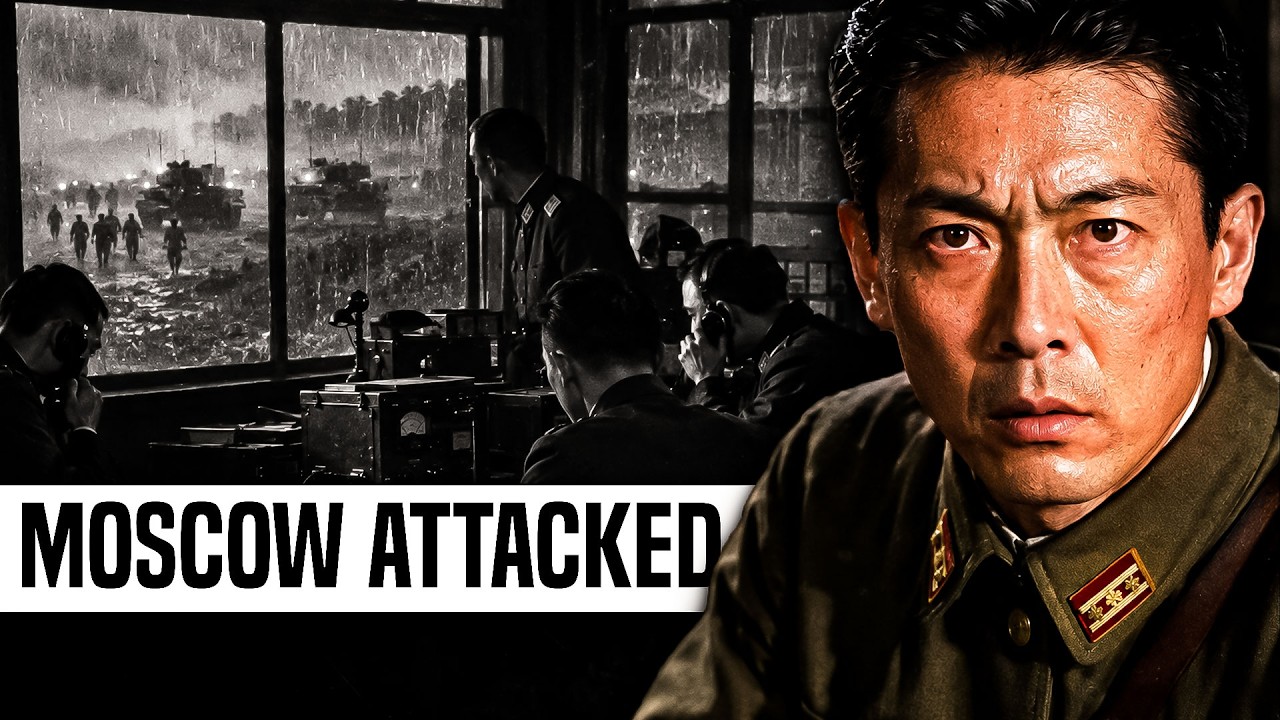
on August 8, Moscow time. Tokyo had hoped Moscow would receive a peace envoy from the emperor. Instead, Molotov handed Sato a declaration of war, effective the next day. Far to the east, along Manchuria’s border, heavy rain fell for about six hours that evening.
Across most of the front, Soviet attacking armies dropped their planned artillery preparation and crossed the border without it. At the Kwantung Army headquarters in Changchun, the city Japan had rebuilt as the capital of its puppet state of Manchukuo, radios were kept tuned to Moscow through the night. For the first hours of the war, there was nothing to pass on. Sato’s cable announcing the declaration never reached Tokyo.
**CONTENT (continued)**
**How Tokyo Learned It Was at War**
The central question—how the Japanese government found out it was at war with the Soviet Union—is answered in Japanese Monograph Number 154, written between 1949 and 1951 by twelve former Japanese officers who had returned from Soviet captivity. At about 1:00 a. m. on August 9, a telephone report came in from the First Area Army in the east: the enemy had attacked in front of Dongning and Suifenhe.
A second report followed that Mudanjiang was being bombed. Around 1:30, several aircraft bombed Changchun itself, and staff officers hurried to their offices. For years, the Kwantung Army had followed a policy of keeping peace with the Soviet Union. Its standing orders told frontline commanders to keep border clashes small and local.
Before headquarters could order anyone to fight, it first had to lift its own restrictions. At 2:00 a. m. , with no declaration of war in hand, it ordered every army to hold the enemy at the border and prepare for war.
At 6:00 a. m. , it put its delaying plan into force and canceled the border guide issued the previous August to prevent incidents from spreading. The commander-in-chief was absent.
His staff had warned General Otozo Yamada against a scheduled trip south to Dairen, but he went anyway on August 8. He returned to Changchun on the evening of August 9. **The Broadcast That Revealed Everything**
At 4:00 a. m.
, the headquarters monitoring sets caught a TASS bulletin announcing the declaration. The same broadcast was picked up in Japan by the Domei news agency. That is how Imperial General Headquarters in Tokyo learned the Soviet Union was at war with it. The Kwantung Army had sent Tokyo its own report with the steps already taken, but the monograph notes that its message arrived after the news agencies’ reports.
Sato’s cable never left the Soviet capital at all, in all probability held at the telegraph office on government orders. That is as far as the evidence reaches. A government that had staked its way out of the war on the Kremlin got the Kremlin’s answer the way a newspaper does. In Tokyo, the telephone call went to Hisatsune Sakomizu, chief cabinet secretary to Prime Minister Admiral Kantaro Suzuki.
He had been up until 2:00 a. m. arranging a meeting of the six-man Supreme Council for the Direction of the War—the prime minister, foreign minister, army and navy ministers, and two chiefs of staff—which Suzuki had wanted convened after Hiroshima was bombed on August 6. It had taken three days to arrange, the secretary later explained, because some military leaders had prior commitments.
It was set for the morning of August 9. He went to bed thinking about Sato’s appointment. A Domei newsman woke him with the Tass report. **Disputed Details of the Morning**
The hour of that call is one of the stubborn gaps in the record.
In the memoir Sakomizu published in 1964, the telephone rang at 3:00. In the version he published in 1973, it rang around 1:00. The Domei man’s own account puts it at 4:00. An American document settles which version is possible.
In Washington that afternoon, the senior Soviet diplomat there told Acting Secretary of State Joseph Grew that Molotov would announce the war at 10:00 p. m. Moscow time, which was 4:00 a. m.
in Tokyo. Grew, who had spent ten years as ambassador to Japan, remarked that this gave the Japanese two hours to get ready. The 1:00 version cannot be right unless Domei had the story before Moscow put it on the air. The man who picked up the receiver is the one witness who told it two different ways.
**A General’s Private Admission**
Across the city, the deputy chief of the army general staff, Lieutenant General Torashiro Kawabe, was asleep at General Staff Headquarters. At about 6:00, his aide woke him. The Army’s Intelligence Division had intercepted broadcasts from Moscow and San Francisco, both reporting the declaration. Kawabe put his first reaction into his diary: “The Soviets have finally risen.
My judgment has proven wrong. ”
Few generals put that sentence on paper at all, and he did it not long out of bed. He had reason to write it that way. The Army’s whole plan for meeting an American invasion of the home islands rested on the Soviet Union staying out.
He had pushed the Foreign Ministry hard to keep it out through negotiation. In the same entry, he wrote that the Soviet move had been half-expected, that there was nothing left to think about, and that the only way to save the nation’s honor was to keep fighting. Togo was woken with the news as well. According to the monograph’s editors, he was stunned because Moscow knew that Tokyo was weighing whether to accept the Potsdam terms.
The Soviet ambassador in Tokyo, Jacob Malik, did not hand him the formal notice until 11:15 on the morning of August 10. **A Secret Kept Too Tight**
At the Navy General Staff, Admiral Soemu Toyoda had kept the Moscow approach even tighter. Questioned by the Strategic Bombing Survey in Tokyo in November 1945, he said just two men in the entire Navy had known about it—himself and the Navy Minister. He had told his own deputy that talk of ending the war was not an affair for officers.
The answer Tokyo got from Moscow, he told his questioners, was a break in relations. The whole effort had ended in a flat failure. **Two Roads for the Prime Minister**
Suzuki, as American investigators later rebuilt his morning from testimony, saw two roads. He could resign, or he could act at once.
Acting meant either declaring war on the Soviet Union and fighting until the country was destroyed, or accepting the Potsdam Declaration. Their report has him with the emperor at around 7:00 and settled on Potsdam within a couple of hours, with the emperor’s agreement. The premier still needed someone to tell him what the Kwantung Army could do about the invasion. The man who could tell him was already inside the government.
Lieutenant General Sumihisa Ikeda ran the Cabinet Planning Board and had served with the Kwantung Army before coming home. After the war, he told American interrogators that when he heard the Soviets were in, he felt Japan’s chances were gone. By Ikeda’s own later account, Suzuki asked him that day whether the army in Manchuria could throw the Soviets back. “The Kwantung Army is hopeless,” Ikeda told him, “and Changchun would be in Soviet hands within two weeks.
”
Suzuki asked whether it was that week. Ikeda said it was. Suzuki said the game was up. The accounts of that exchange put it at a meeting in Tokyo that day and give no hour.
**The Army’s Real Strength**
What Ikeda knew is in the monograph in figures. The First Area Army, facing the main Soviet blow in the east, had ten divisions and about 160,000 men—almost half the Kwantung Army’s fighting strength. Over the previous year, the army had shipped its old first-class divisions out to the Pacific and filled the gaps with new ones built from Japanese residents of Manchuria who had been exempt from call-up until then. Its units had never been in battle.
Everyone was short of men and equipment, and few commanders had held their posts for a year. One of the new divisions had a paper strength of 23,000 men and had 12,634. To arm its new artillery units, the army had pulled guns out of its own border forts. It forged swords and bayonets from the springs of scrap motor vehicles.
A third of its rear-area troops still had no bayonet. The staff rated the whole area army at the fighting power of two and three-quarter first-rate divisions. Its best division scored 55 percent. Several scored 15.
The brigade holding Dongning scored 10. Changchun had hoped to hold the Soviets for three months. On ammunition and fuel, it expected about one before retreating into the redoubt. Against that, the Soviet Union had massed about one and a half million men on three fronts.
**The Supreme Council Splits**
The Supreme Council was called for 10:00 a. m. Suzuki, Togo, and Navy Minister Admiral Mitsumasa Yonai wanted to accept Potsdam with a single reservation: the emperor’s position be left intact. The other three wanted more.
War Minister General Korechika Anami, Army Chief of Staff General Yoshijiro Umezu, and Toyoda held out for three further conditions on top of the emperor’s position: no occupation of the home islands, disarmament of Japan’s forces abroad by Japan itself, and trials of Japanese war criminals by Japanese courts. Word arrived during the argument that a second atomic bomb had been dropped on Nagasaki. Two hours in, the council was still split three against three. **A Plan for Dictatorship**
The army side of the day had already been written down.
After his diary entry, the deputy chief set out his decisions in a short, clipped memorandum. It listed four measures. The war against the United States remained the main task. To carry it on, martial law was to be proclaimed, the cabinet dismissed, and a military dictatorship formed.
Manchuria would be given up. Korea would be defended with troops brought from northern China to the border between the two. The emperor of Manchukuo would be brought to Japan. A proclamation would go out in the war minister’s name to keep the army itself from coming apart.
Martial law never came. The part about Manchuria and Korea is recognizable in Army Department Order Number 1374, the first order Imperial General Headquarters sent out after the attack. **The Emperor’s Order**
The order was signed by the emperor early in the afternoon of August 9 and sent out at once to the armies in Manchuria, Korea, China, Hokkaido, and the home islands. It opened with the facts as Tokyo had them: the Soviet Union had declared war and attacked at several places along the border at midnight.
However, the scale of these attacks is not large. The monograph does not say what that sentence rested on. Changchun’s own staff had known before dawn that the attack was coming on every front. By evening, Soviet tanks were bearing down on Hailar in the far northwest from three directions at once.
The rest of the order set the course. Headquarters would prepare for all-out war against the Soviet Union. For the time being, troops already on the border would hold the enemy up. The army in Manchuria was to direct its main effort toward defending Korea, which Tokyo counted as Japanese territory, leaving a minimum force in southern Korea against an American landing.
The army in Korea came under its command from 6:00 the next morning, bringing it to 31 divisions on paper. The army in China was to prepare to send part of its troops and ammunition north into southern Manchuria. The monograph’s editors draw the conclusion themselves: the order changed the Kwantung Army’s first mission to the defense of Korea. The plan behind it had been approved at the end of May—a fighting withdrawal toward a redoubt near the Korean border.
**The Civilians Left Behind**
Along the railway between Dairen and Changchun lived about 1,100,000 Japanese residents. The order, as the monograph gives it, says nothing about them. When the headquarters asked the Manchukuo government the next day to evacuate the capital, the government found it could not move fast. All it managed to put on the trains were the families of officers and of civilians attached to the army.
Whether those first hours ended the war is an argument that started within months and has not stopped. The Strategic Bombing Survey questioned more than 700 Japanese officials—though not Togo, who was being held for trial. **The Enduring Debate**
In 1946, the Survey concluded that the Soviet entry neither defeated Japan nor materially hastened the acceptance of surrender. Historians working later from the same diaries and post-war statements—Tsuyoshi Hasegawa foremost among them—have argued nearly the opposite: the Soviet attack hit Tokyo harder than the atomic bombs because it ended the last hope of a settlement short of unconditional surrender.
Others, weighing the same papers, give the bomb the heavier share. Toyoda, asked outright that November, would not name either one as the direct cause. What he said was that the two together let Japan stop without too much chaos at home. Tokyo got the biggest news of its war second-hand, off a news agency’s radio set at 4:00 in the morning.
Set down as numbers, August 9 comes to this. The first telephone report reached Changchun at about 1:00 a. m. The Moscow broadcast came in at 4:00, heard in Changchun and Tokyo at the same hour.
Two orders went out: one from Changchun at 2:00 with no declaration in hand, one from Tokyo early in the afternoon to an army of 31 divisions whose Eastern Area Army its own officers rated at two and three-quarter divisions worth of fighting power. Committed against it were about one and a half million Soviet troops. Along the railway lived about 1,100,000 Japanese residents. The six men of the Supreme Council had sat for two hours and divided three and three.
At 11:30 that night, with the council still split and the Soviet columns still moving, the six men and the president of the Privy Council sat down before the emperor.