On the morning of September 11, 2001, American Airlines Flight 11 departed from Boston’s Logan International Airport bound for Los Angeles with 92 people on board, including 11 crew members and 81 passengers. Approximately 15 minutes after takeoff, five of those passengers overtook the aircraft, forcibly breaking into the cockpit. Among them was Mohamed Atta, a 33-year-old Egyptian national who had received pilot training. Atta took control of the aircraft and redirected it toward New York City.
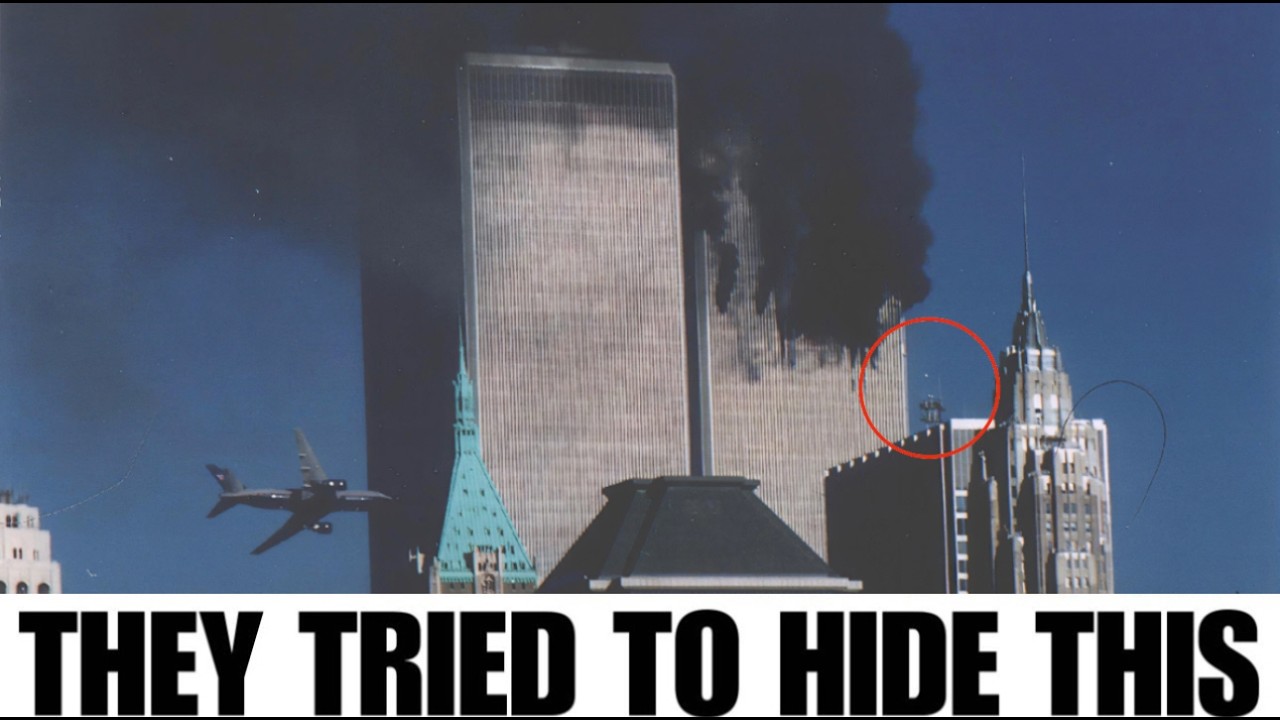
At 8:46 a. m. , the plane was deliberately flown into the North Tower of the World Trade Center. At that moment, President George W.
Bush was on his way to visit an elementary school in Florida. When his aide relayed news of the crash, the president found it difficult to believe. He suggested the pilot might have suffered a heart attack and questioned how such an event could otherwise occur. A White House aide later recalled that the initial reaction was that it must have been a horrible accident.
Seventeen minutes after the first impact, United Airlines Flight 175, also hijacked by five men who subdued the flight crew, was deliberately crashed into the South Tower of the World Trade Center. By this point, President Bush had arrived at the school and was inside a classroom with second-grade students participating in a reading activity. His chief of staff, Andrew Card, entered the room and whispered into the president’s ear that the nation was under attack. President Bush remained seated, continued the reading lesson, posed for photographs, and offered compliments to students and teachers for another seven minutes while news of the two plane crashes spread across the globe.
Shortly after the second crash, reports emerged that two additional aircraft had been seized. American Airlines Flight 77, which had departed from Washington Dulles International Airport, was redirected toward the nation’s capital. The hijackers crashed that aircraft directly into the Pentagon, the headquarters of the U. S.
Department of Defense, located just outside Washington, D. C. Following the third crash, all U. S.
airspace was officially closed, with every airborne aircraft ordered to land at the nearest available airport. At 9:59 a. m. , the damage and intense fire from the South Tower impact critically weakened the building’s structure, and the entire tower collapsed.
Meanwhile, attention turned to the fourth hijacked aircraft, United Airlines Flight 93, which had departed from New Jersey bound for California with four hijackers on board. Fears grew that its intended target was either the White House or the U. S. Capitol Building.
After the hijacking, several passengers made phone calls to relatives, who informed them of the attacks unfolding across America. Realizing their plane would likely also be crashed, the passengers initiated a counter-assault against the hijackers, and chaos erupted inside the aircraft. The precise sequence of events aboard the flight remains unclear, but the aircraft ultimately crashed in an unpopulated field in Pennsylvania. It is believed the passengers’ resistance prevented the plane from reaching its intended target and saved lives on the ground.
At 10:28 a. m. , the North Tower of the World Trade Center also collapsed. By the time the morning ended, more than 3,000 people had lost their lives across the attacks, with more than 6,000 injured.
In an address to the nation, President Bush said, “Our fellow citizens, our way of life, our very freedom came under attack in a series of deliberate and deadly terrorist acts. Thousands of lives were suddenly ended by evil, despicable acts of terror. ”
Suspicion quickly fell on Osama bin Laden and the terrorist organization al-Qaeda. A few days after the attacks, bin Laden issued a statement denying any involvement.
However, in 2004, during the U. S. election period, a recorded tape was released in which bin Laden publicly acknowledged responsibility. In that recording, bin Laden cited a series of motivations for the attacks, including U.
S. interference in the Middle East, American support for Israel, U. S. actions affecting Muslims in Lebanon, U.
S. backing of Russia regarding offenses against Muslims in Chechnya, sanctions imposed on Iraq, U. S. cooperation with Saudi Arabia, and the deployment of U.
S. military forces to Saudi Arabia. The overarching argument connecting those reasons was that Muslims were being persecuted, which is why the attacks were carried out. The 9/11 Commission report identified Khalid Sheikh Mohammed, a Pakistani militant, as the principal architect of the attacks.
He was also linked to the 1993 World Trade Center bombing. He and four other suspects were held at the Guantanamo Bay detention facility, where his trial continues to this day. Osama bin Laden was killed by U. S.
forces in May 2011. The events of that day left a fractured story: a president who remained in a classroom for seven minutes after learning the nation was under attack, an alleged mastermind who first denied and later claimed credit, and motives of intervention and persecution that were buried under a simpler narrative. The official account was sealed, and the world changed. Yet questions persist about why certain motives were hidden, how the plot succeeded with such precision despite scattered intelligence, and why the official story requires so much faith to believe.
The case may be closed, but history remains open to those willing to examine it closely. What truly changed the world that day, the attack itself or the story built upon its ruins?