On the afternoon of June 25, 1876, on the banks of the Little Bighorn River in Montana, the world lasted only 30 minutes for George Armstrong Custer’s 210 soldiers.
What they experienced in those final moments was one of the most terrifying endings in military history.
Custer was already a controversial figure entering the summer of 1876. He had earned fame during the Civil War with the nickname Boy General. He was brave but also overly ambitious.
Now 36 years old and commanding the Seventh Cavalry Regiment, he was sent to the Montana Territory as part of the Great Sioux War. The goal was simple. Find the Native American groups refusing to settle on reservations and force them to surrender or neutralize them.
Generals and politicians in Washington thought this would be a quick and easy operation. But the reality facing Custer was something the army had never calculated.
On the banks of the Little Bighorn River, a massive camp consisting of Lakota Sioux, Northern Cheyenne, and Arapaho tribes led by Sitting Bull and Crazy Horse had been established. In this community of approximately 7,000 to 8,000 people, there were at least 1,500 to 2,000 warriors.
Sitting Bull’s vision during the Sun Dance, of white soldiers falling into the camp like grasshoppers falling from the sky, had become a major source of morale and spiritual power among the tribes.
Experienced war chiefs like Crazy Horse and Gall had prepared their men. This was not just a camp. It was the last great gathering place of the Plains indigenous peoples, united to defend their lands and way of life.
Custer, however, thought there were only a few hundred natives facing him. He had not taken scout reports seriously. Despite warnings from some scout officers, Custer insisted on advancing.
His arrogance and quest for fame would become the death warrant for himself and his men.
On the morning of June 25, as the sun rose over the hot hills of Montana, Custer divided his forces into three. Major Marcus Reno would attack the camp from the southwest with about 140 soldiers. Captain Frederick Benteen would block potential escape routes and provide support from the west with about 125 soldiers. Custer would complete the encirclement from the north with his 210 men.
This was a classic pincer tactic, squeezing the enemy from three sides to leave no escape.
But Custer made several mistakes. He completely miscalculated the enemy’s numbers, divided his forces over too great a distance, and did not guarantee communication between them. He also left the Gatling machine guns behind because he thought their weight would slow down movement speed.
He wanted speed. He wanted a surprising blow. Perhaps he wanted this to be the last great victory of his career.
Around 3:00 in the afternoon, Custer and his men began to descend toward the Little Bighorn River. They were passing through a valley called Medicine Tail Coulee. It was narrow, dusty, and wild terrain.
Most of the soldiers were overwhelmed by the heat. The horses were tired, and some men had not slept properly for two nights. But Custer still believed in victory.
Reno’s initial attack from the southwest had already been repelled. Native warriors had chased Reno’s men to the other side of the river and trapped them in a wooded area. Reno’s men scattered in panic. Some drowned in the river. Some fell to arrows.
Reno himself was lucky. He survived. But his morale collapsed, and he retreated to a hill to take a defensive position.
Now the warriors turned their attention to Custer.
At that moment, Custer saw the true size of the camp. Thousands of teepees, thousands of people, and most importantly, thousands of warriors. Dust clouds rose from the river valley. Mounted warriors moved into position. War cries filled the air.
Some of the officers beside Custer began to fear. Some suggested retreating, but Custer was undecided.
Custer tried to cross the river, but native warriors appeared on the opposite bank. Hunkpapa Lakota warriors led by Gall opened fire from the riverbank. A rain of arrows and bullets began.
Some of the first soldiers fell from their horses. Some were wounded. Custer’s trumpeter, John Martin, was sent to take a call for help to Benteen. It was the last message.
Custer ordered a retreat. The soldiers were confused. The plan was broken. This was the beginning of the end.
Custer and his men retreated from Medicine Tail Coulee and climbed toward the hills. It was between about 4:00 and 4:15.
Custer positioned his five companies, C, E, F, I, and L, into two defensive lines. Captain Miles Keogh established the first defensive line at a point called Calhoun Hill. Custer chose a hill further north, known today as Last Stand Hill.
There was a distance of about a kilometer between them. The plan was to wait for Benteen and Reno to come and help. But they would not come.
Reno was already drowning in his own defense, and Benteen would decide to join Reno on the way. Custer and his men were alone.
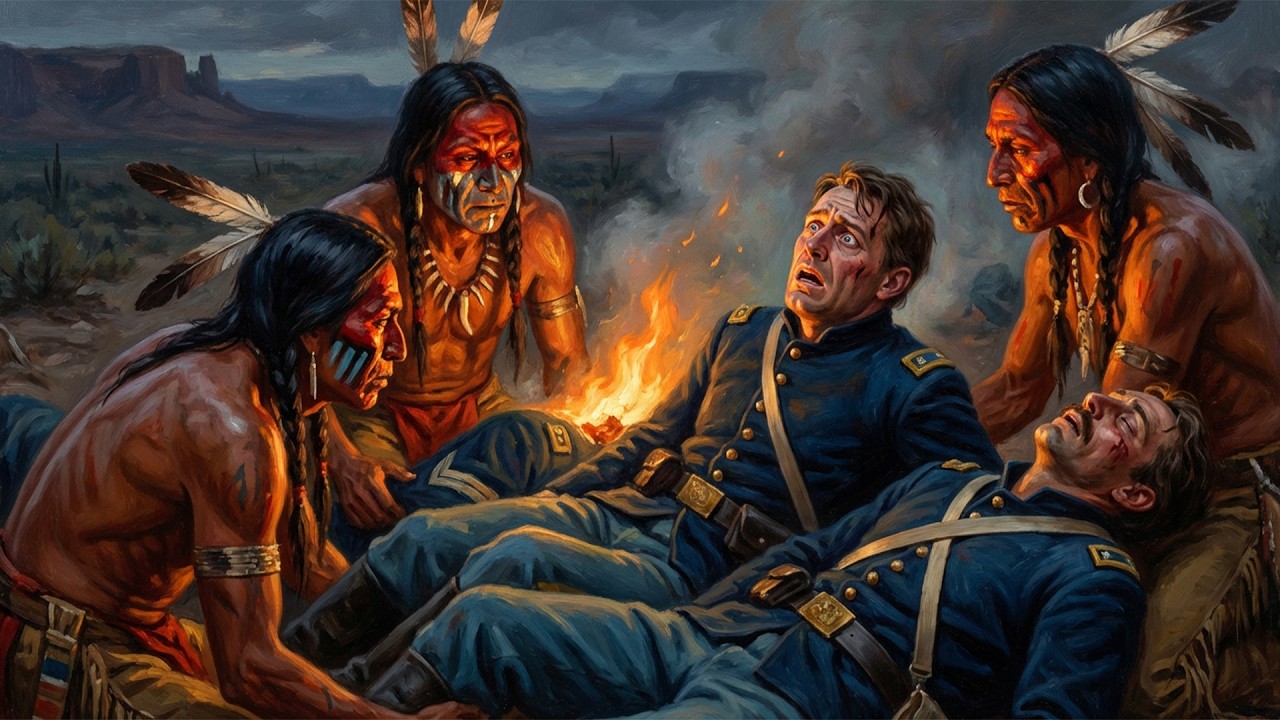
Native warriors began to encircle the hills. Crazy Horse attacked from the northwest, Gall from the southeast, and other Cheyenne leaders from the east and west.
This was not an undisciplined crowd. Native warriors were experts in Plains warfare, more skilled in mounted combat than US cavalry soldiers.
The soldiers dismounted, shooting some of the horses to use as cover. The screams of horses, dust, and the smell of gunpowder filled the air.
Most of the soldiers were young men. Some were recent immigrants of Irish, German, or Italian descent. Some did not even speak English fully. Now, in the middle of Montana, thousands of kilometers away from home, they were face to face with death.
Between 4:15 and 4:20, the siege was complete. The first wave of attacks began.
Hundreds of native warriors ran toward the hills on horseback, fired with arrows and rifles, then retreated. This tactic was meant to tire the enemy, make them waste bullets, and break morale.
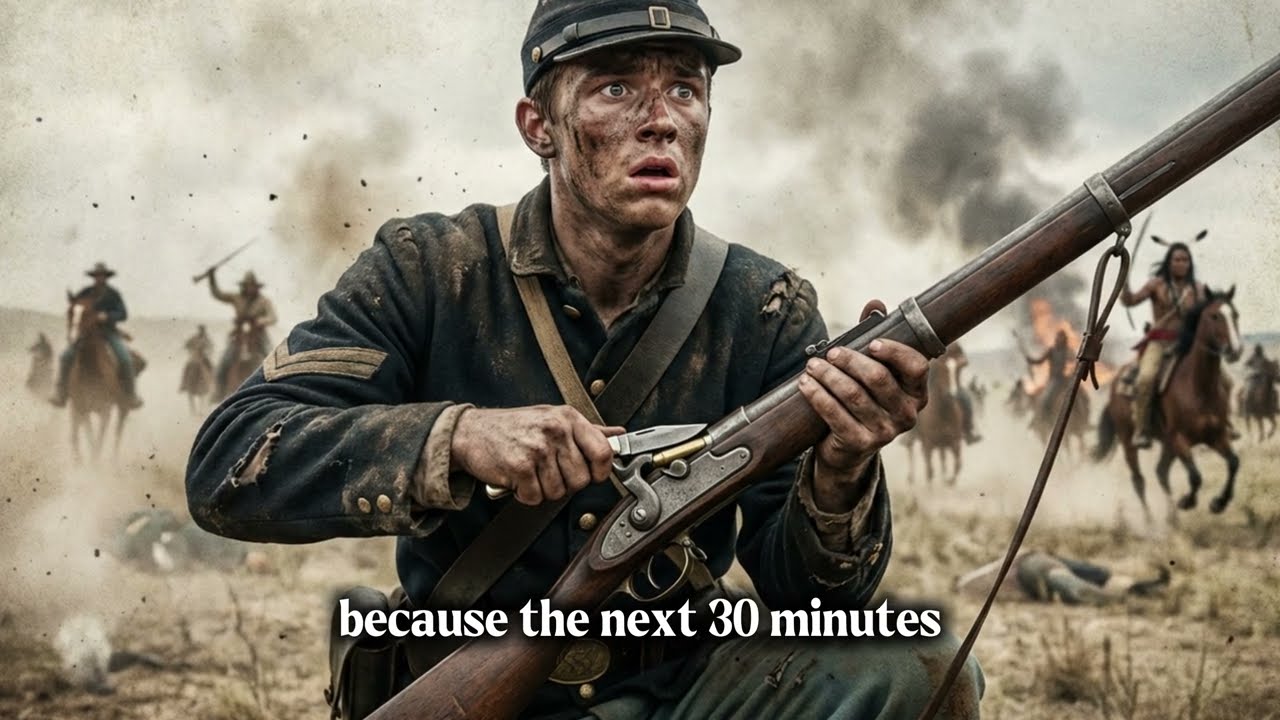
The soldiers responded with Springfield carbines, but their ammunition reserves were limited, and the guns began to overheat. The Springfield Model 1873 carbines had a known problem. Used casings would jam in the hot barrel.
Soldiers were left defenseless while trying to remove casings with pocket knives.
It is hard to imagine the fear soldiers felt in these moments. A gun in their hands that wouldn’t fire. A rain of arrows and bullets coming from all four sides. The shouts of their friends. The groans of horses.
Some soldiers began to cry. Some prayed. Some just continued to fire because there was nothing else to do.
At Calhoun Hill, Captain James Calhoun and his men took the first heavy blow. Warriors led by Gall surrounded the hill from three sides.
Gall had a personal rage. His wife and three children had been killed in Reno’s attack. Now he was taking revenge.
The attacks intensified. Native warriors were now firing from closer range, some crawling up to a distance of 50 to 60 meters. Part of the soldiers panicked.
Some tried to leave the hill and flee to the point where Custer was, but native warriors caught them.
A Miniconjou Lakota chief named Red Horse recounted this after the battle. The soldiers left the hill, some fled on foot, some on horseback, but we caught them. They all died. Some knelt down and raised their hands, but we did not stop.
This testimony is striking because it shows that even soldiers who wanted to surrender were killed. In Plains culture, taking prisoners was rare, especially in such intense warfare and a state of rage.
Between 4:25 and 4:30, Calhoun Hill fell. Forty to fifty soldiers lost their lives there. The hill was covered with corpses.
Some soldiers had been shot in the back, killed while fleeing. Some had their heads crushed with war clubs.
In these moments of horror, Custer’s men on Last Stand Hill were trying to understand what was happening. The firing from the south had ceased. That was a bad sign. It meant Calhoun had fallen.
Now thousands of warriors would focus only on the 120 to 150 soldiers around Custer.
When Calhoun Hill fell, a few surviving soldiers fled toward Last Stand Hill. But the siege was tightening. Crazy Horse was charging from the northwest.
Crazy Horse was one of the most charismatic and brave leaders of that day, leading from the front with hundreds of warriors behind him.
The soldiers had now switched to a circular defense, back to back. About 100 to 120 soldiers remained.
Beside Custer were his brother Tom Custer, his nephew Autie Reed, his brother Boston Custer, and his closest men. The Custer family was all there. They would all die.
We cannot know what Custer himself was thinking in that final moment. Some testimonies say he tried to stay calm, giving orders to his men. Perhaps he still hoped Benteen would come. Or perhaps he knew everything was over.
Native warriors were now approaching like infantry, crawling and coming from pits and hollows. The rain of arrows never stopped.
Arrows were quieter than bullets, but equally deadly. Lakota and Cheyenne bows were very strong. Even if they didn’t pierce armor from 50 to 60 meters, they would easily sink into the human body.
Soldiers hid behind the corpses of their horses. But this was insufficient. Arrows came from above in a parabolic trajectory, seeming to rain down on the soldiers.
According to Crazy Horse’s later account, the white soldiers were very scared. Some tried to escape, but no one survived. We kept them in a circle.
Another Lakota warrior, Kill Eagle, said the soldiers were lying on the ground, some pretending to be dead, but we didn’t leave them. We checked every single one.
Between 4:35 and 4:40, the last bullets ran out. Some soldiers were now only responding with their pistols. Colt revolvers were six-shot, short-range weapons. Some attached bayonets.
But the native warriors were aware of this. Attacks intensified even more.
Gall recounted, “The soldiers gathered. Then a group tried to escape, but we stopped them. None lived. Some shot themselves. I saw this.”
That last sentence is a very controversial subject. Some historians claim that some soldiers committed suicide using their last bullets on themselves because being a native prisoner meant torture and a long death.
Some soldiers knew this and made a choice. But there is no definitive proof. Only native testimonies and the fact that some corpses were shot in the temple.
On the hill, a group of soldiers, perhaps 30 to 40 people, resisted until the last moment. These were the most loyal, most disciplined soldiers, where they had no strength left to run.
Everything around them was dust and smoke, the smell of gunpowder, the smell of blood, the smell of death.
Some soldiers were wounded but standing because falling down meant death.
Crazy Horse and his warriors made the final charge on horseback and on foot, from everywhere. Soldiers could no longer fire regularly. Everyone was on their own.
Bayonets clashed. War clubs and sticks were swung. Pistol sounds, screams, and groans filled the air.
And in that moment, it all ended.
It is not certain exactly how Custer died. Some native testimonies say he was hit by two bullets, one in his left chest, one in his left temple.
His body was less damaged compared to others. It was not stripped and not mutilated. Some sources state that Lakota women recognized him and showed respect because Custer had established peaceful relations with some tribes in previous years.
But this is a controversial subject and not certain. Perhaps his body was just not fully identified in the confusion after the battle.
Custer’s long blonde hair had not been cut. This could be a sign of respect or just skipped in the speed of battle.
Between 4:45 and 4:50, the last soldier fell on Last Stand Hill. The total duration, according to some estimates, was between 20 and 40 minutes.
Some modern archaeological studies have reconstructed the soldiers’ movements by looking at the distribution of bullet casings. These studies show that some soldiers left the hill and tried to flee to a valley called Deep Ravine.
Twenty-eight soldier bodies were found there, all shot while fleeing. Some in the back, some in the head.
This final moment of desperation was perhaps the most tragic. People desperately trying to survive, running toward the river, perhaps imagining hiding in the water or crossing to the opposite bank. But they had no chance.
Native warriors caught and killed them. None survived.
Native warriors stripped the bodies after the battle. This was part of the war tradition of Plains native tribes, showing disrespect to the enemy and collecting the spoils of war.
Uniforms, boots, weapons, watches, rings. Everything was taken.
Some bodies were mutilated. Some soldiers were beheaded. Some had organs removed. Some bodies were riddled with holes.
These terrifying details later caused great shock in the American public and fueled a hardening against native peoples. Newspapers presented these mutilations as savagery.
But the same newspapers did not write much about the massacres committed by the US Army in native villages, the killing of women and children.
It is useful to stop and think at this point. Indigenous peoples were defending their own lands, their own way of life. The US Army was coming to confine them to reservations, destroy buffalo herds, and wipe out an entire culture.
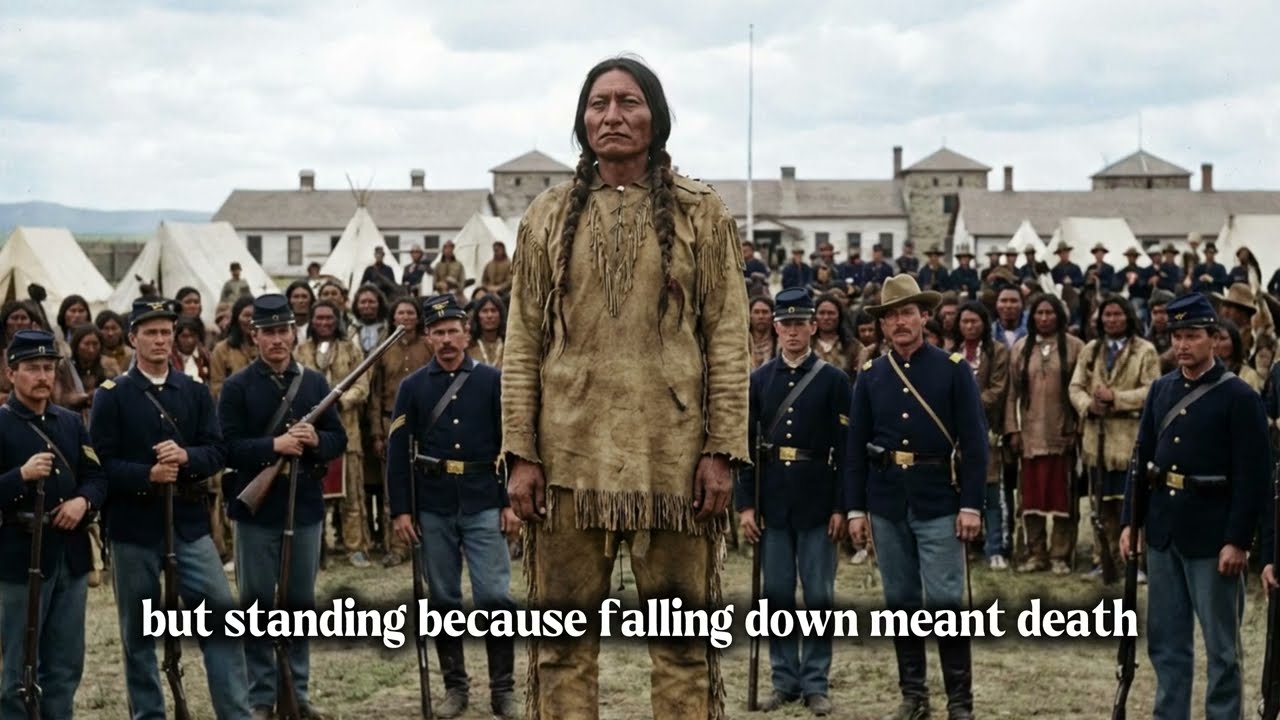
Little Bighorn was a great victory for indigenous peoples, the greatest native victory in history. But at the same time, it was the beginning of the end.
After this defeat, the US government pursued a harsher policy. More soldiers were sent. Operations against native tribes intensified.
Within a year, Sitting Bull was forced to flee to Canada. Crazy Horse surrendered and was killed by a bayonet stab at a military post in 1877. Gall eventually surrendered too.
Buffalo herds were systematically destroyed. The main source of livelihood for indigenous peoples was eliminated. Reservations turned into prisons.
Was the victory at Little Bighorn truly a victory, or just a delay of the inevitable end?
None of the 210 soldiers survived. But one living being did.
Captain Miles Keogh’s horse, Comanche.
Two days after the battle, when the forces of Colonel John Gibbon and Brigadier General Alfred Terry reached the battlefield, they found Comanche severely wounded. The horse had seven arrow and bullet wounds, but was alive.
The horse was treated, recovered, and became the symbol of the Seventh Cavalry Regiment. It was never ridden again. It only walked with a flag in ceremonies, always with an empty saddle and reversed boots.
When it died at Fort Riley in Kansas in 1891, its body was preserved. It is displayed today at the University of Kansas Natural History Museum.
Comanche was the only living witness to that terrible day.
The bodies of Custer and his men were buried in a rush a few days later. Gibbon and Terry’s men were shocked when they saw the condition of the bodies. Most were unrecognizable. Mutilations were very severe.
Soldiers hastily dug shallow graves and buried the bodies. In 1877, Custer’s body was exhumed and moved to the military cemetery at West Point.
The other soldiers remained on the battlefield. In 1881, the bodies were gathered again, and a more proper cemetery was built.
Today, the Little Bighorn Battlefield National Monument commemorates both fallen soldiers and native warriors. In 2003, a memorial was erected for native warriors as well. For the first time, native heroes were also officially recognized.
The consequences of the war were profound. The American public was shocked. Custer turned into a legend.
Some declared him a hero. Some called him a megalomaniac who sent his men to death with his stupidity. Debates continue even today.
Some historians view Custer as a brave but imprudent leader. Others see him as someone deliberately chasing fame and disregarding soldiers’ lives.
For indigenous peoples, Little Bighorn is a symbol of honor and resistance. Leaders like Crazy Horse, Sitting Bull, and Gall are remembered as heroes by native communities even today.
History shows us that the distinction between winner and loser in war is not always clear.
Indigenous peoples won at Little Bighorn, but eventually lost everything. The US Army lost, but eventually brought the entire continent under control.
And in the middle, on both sides, thousands of people died. Soldiers, warriors, women, children. Each was a human being. Each had a story. Each had a family.
Custer’s 210 soldiers did not just become statistics in those 30 minutes. Each experienced fear, pain, and despair. Some thought of their homes. Some thought of their mothers or their lovers. Some prayed. Some cursed.
And they all died.
The last 30 minutes of Custer’s men was not just a defeat. It was one of the most tragic endings in history.
This story reminds us of the impact of courage, fear, and war on the human being. Soldiers paid the price for their commander’s arrogance and faulty decisions with their lives.
Indigenous peoples won a great victory, but this victory could not protect them from a greater disaster.
Even today, these moments provoke thought. Is Custer a hero or a victim of his own ambition? Were indigenous peoples freedom fighters defending their lands?
History does not give definite answers to these questions. But it shows us this. Even the winning side loses in war because human life is lost on both sides.
The Battle of Little Bighorn was a turning point in American history. Every moment experienced there reminds us of the humanity, courage, and tragedy of both soldiers and native warriors.
History exists not to be forgotten, but to be learned from.