It is the autumn of 1944. The war in Europe is turning, but it has not yet turned. Somewhere in the mud and gray mist of northeastern France, inside a converted farmhouse, a group of senior American officers are having a conversation they will never put in writing. They are talking about removing one of their own. Not a colonel, not a brigadier. They are talking about George S. Patton. And Patton already knows.
That is the thing about George Patton that his enemies perpetually underestimated. The man was brash, theatrical, deliberately provocative. He wore pearl-handled revolvers he called his killing irons. He gave speeches that made war correspondents reach for their notebooks in something close to awe. And behind all of that was a mind of startling precision. When word reached him that certain figures within his own command structure were moving against him, Patton did not panic. He did not rage. He plotted.
To understand why men were conspiring against Patton in the autumn of 1944, you have to understand what Patton represented to the American military establishment. By September of 1944, the Third Army had swept across France at a pace that defied conventional military logic. In just over two months of operations, Patton's forces had advanced further, faster, and at lower cost in men than any comparable Allied formation. The problem was not that Patton was failing. The problem was precisely that he was succeeding, and succeeding in ways that embarrassed everyone around him.
His operations made other commanders look cautious. His requests for fuel and supplies put him in direct competition with Field Marshal Bernard Montgomery's 21st Army Group for resources that Supreme Commander Dwight D. Eisenhower was rationing. Patton had already survived one near-fatal scandal. In August 1943, during the Sicily campaign, he had slapped two soldiers under his command. The story had been suppressed for months before journalist Drew Pearson broke it, triggering a firestorm of public outrage. Eisenhower had been forced to publicly reprimand him. He had survived that, but his enemies had not forgotten it.
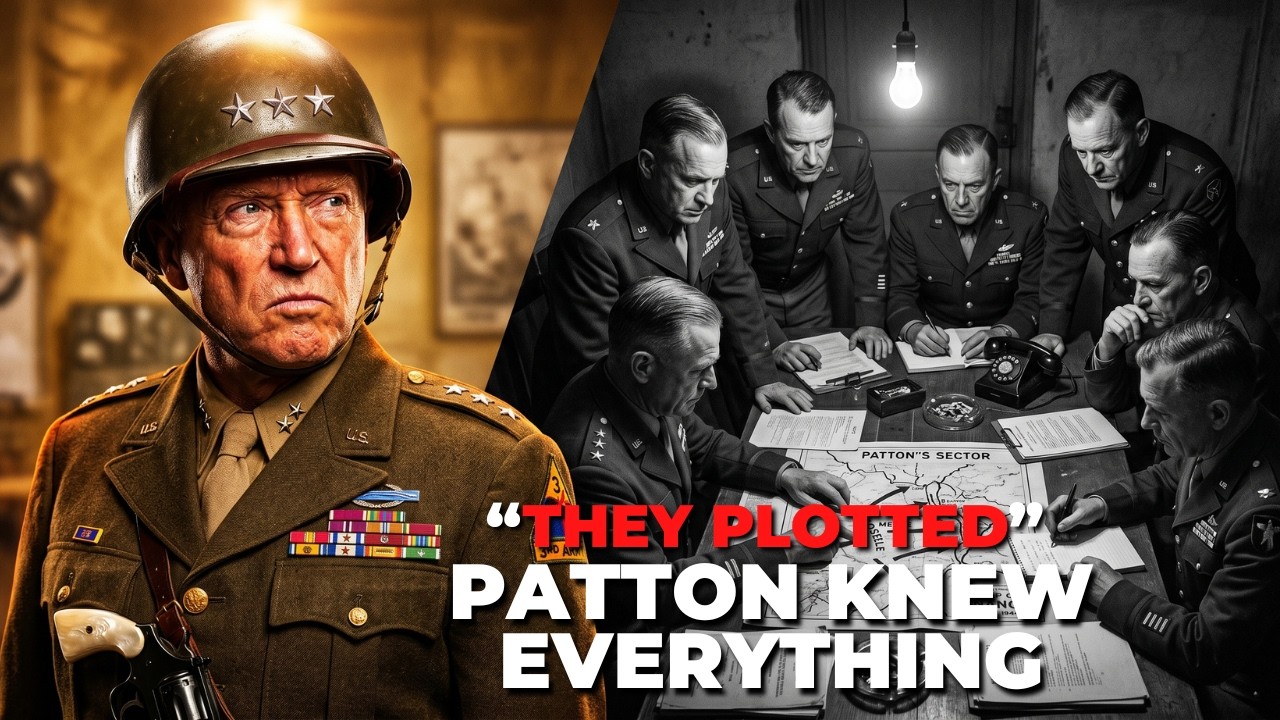
In the autumn of 1944, with the Allied advance stalling, certain influential figures began to feel that the moment had come. Patton's aggressive demands for resources, his public criticisms of the broad front strategy, and his barely veiled contempt for both Bradley and Montgomery made him a liability. The question was how to move against a man who had just delivered one of the most electrifying campaigns in modern military history.
The mechanics of how Patton became aware of the maneuvering against him are imperfectly documented. What his diary and the accounts of those closest to him suggest is that his intelligence network was not limited to German dispositions. Patton had spent decades inside the American military. He knew its culture, its rivalries, and above all, its gossip. Through this network, Patton was receiving fragments of information that painted an unmistakable picture. There were conversations happening in which his name was mentioned, and his future was being discussed in the past tense.
Bradley had been making noises to Eisenhower about Patton's temperament. There were suggestions that a command reorganization might see the Third Army absorbed into a different structure. What Patton understood was that a direct confrontation would be fatal. He could not march into Eisenhower's headquarters and demand to know whether he was being undermined. He had to be smarter than that, and he was.
Patton's response operated on several levels simultaneously. The first thing he did was make himself essential. In the late autumn of 1944, as Allied momentum stalled, Patton kept his Third Army in aggressive motion wherever he could find the fuel to do it. He understood that the surest protection against institutional enemies is operational irreplaceability. A commander who is winning cannot be removed without consequences. The American public knew Patton's name. To relieve him was to invite a national conversation that Eisenhower had no appetite for.
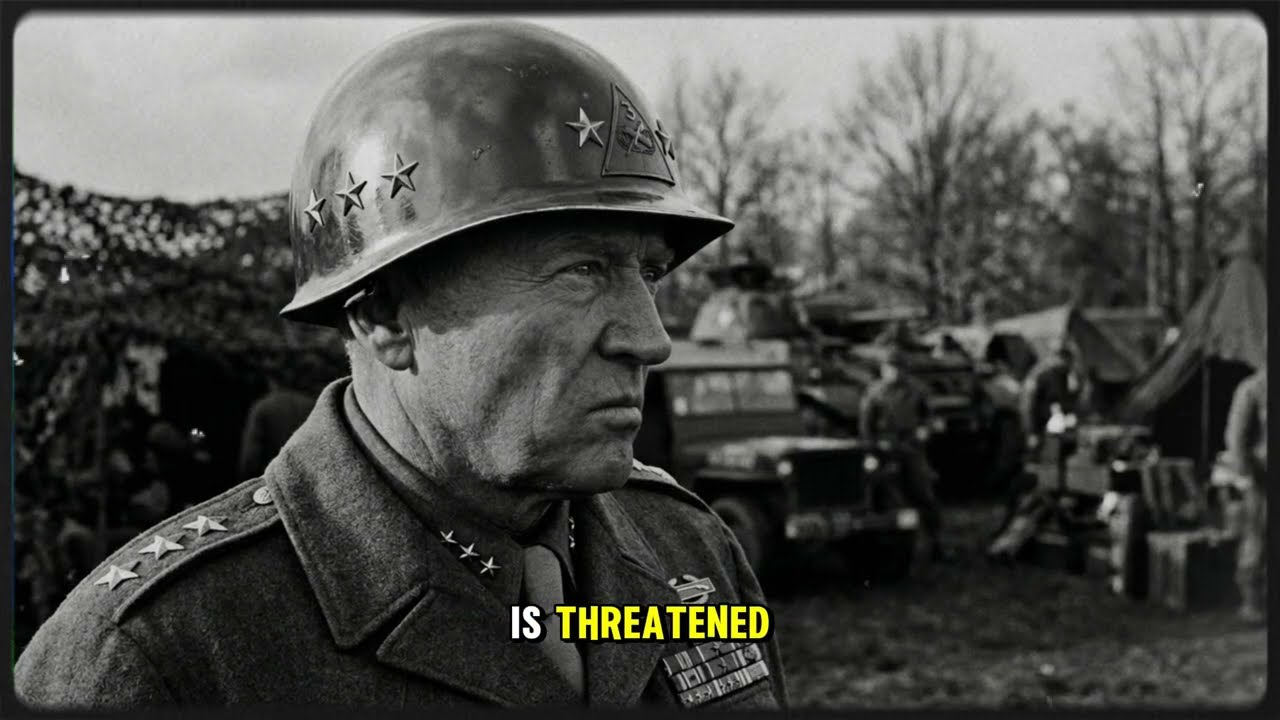
The second thing Patton did was quieter. He began, through intermediaries and carefully worded letters, to reinforce his relationships with the people who mattered. He was performing the thing that his enemies claimed he could not do. He was being a team player, or at least a convincing facsimile of one.
The third element of his response was the relationship he repaired and deepened with Eisenhower himself. Eisenhower understood Patton's value. He had fought for him after the slapping incident. He continued to fight for him now, quietly. Patton recognized this and chose, with unusual discipline, to give Eisenhower the latitude he needed. He modulated his complaints. He delivered his assessments of Bradley and Montgomery in private, rather than public.
The conspiracy against Patton did not produce the result its architects had hoped for. No formal move was made to relieve him. And then, on December 16th, 1944, the strategic situation changed so dramatically that the entire conversation became irrelevant. The German offensive in the Ardennes struck the American line with a force that stunned Allied command. At the crisis meeting in Verdun on December 19th, Eisenhower asked his commanders how long it would take to turn a major force north to relieve the surrounded American garrison at Bastogne.
George Patton looked up from the table and said he could attack in 48 hours with three divisions. The room went silent. To move an army of that size already engaged in active operations 90 degrees on the compass and over more than 150 km of winter roads in 48 hours was a logistical impossibility by any normal measure. Eisenhower asked if he was serious. Patton was serious. He had, characteristically, already planned it.
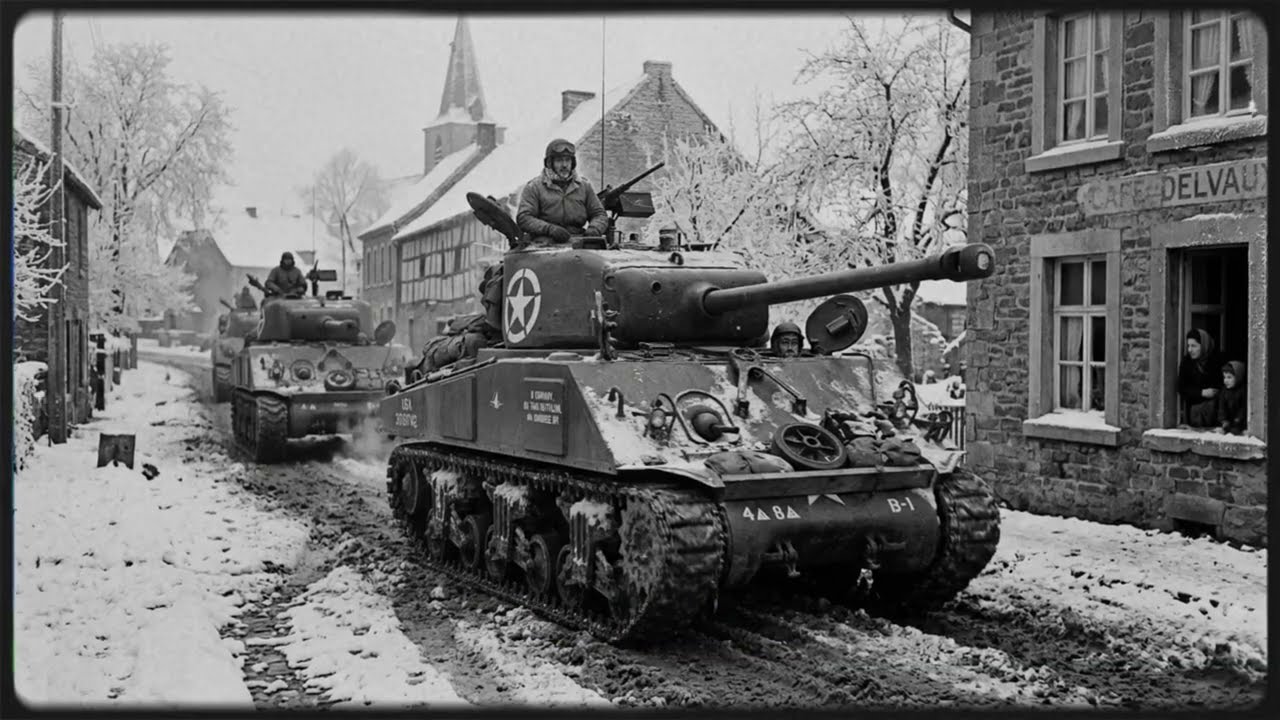
The Third Army turned north and in weather that grounded all Allied air support, began one of the most demanding forced marches of the entire European campaign. By December 26th, lead elements of the 4th Armored Division had broken through to Bastogne. The siege was lifted. The German offensive's momentum was broken. In the weeks that followed, Patton drove his army north and then east with a ferocity that left the German line in pieces. No one was talking about removing George Patton anymore.
His enemies had made a fundamental miscalculation. They had looked at the surface of George Patton, the theatrics, the profanity, the spectacular self-presentation, and concluded that the surface was all there was. They had confused flamboyance for simplicity. They had assumed that because he wore his aggression so openly, he must therefore be unguarded, unsubtle, politically naive. He was none of these things.
The pearl-handled revolvers were real. The riding crop was real. The speeches were real. But they were also a performance, a carefully constructed public identity that Patton used to project an image of himself so overwhelming that it was difficult for anyone to see clearly past it. His enemies saw a dangerous lunatic they needed to control. His soldiers saw a figure from legend who made them believe they could do the impossible. What neither group fully perceived was the cold, disciplined intelligence that made both of those perceptions possible.
George Smith Patton died on December 21st, 1945, exactly one year and five days after his armies had begun the turn north to Bastogne, following injuries sustained in a road accident near Mannheim. He was 60 years old. He is buried in Luxembourg at the head of the American military cemetery at Hamm, among 10,000 of the soldiers he commanded. He asked to be placed there. The conspirators had sought to remove him from history. Instead, they placed him at the center of it. They had badly misjudged him. They were not the first.