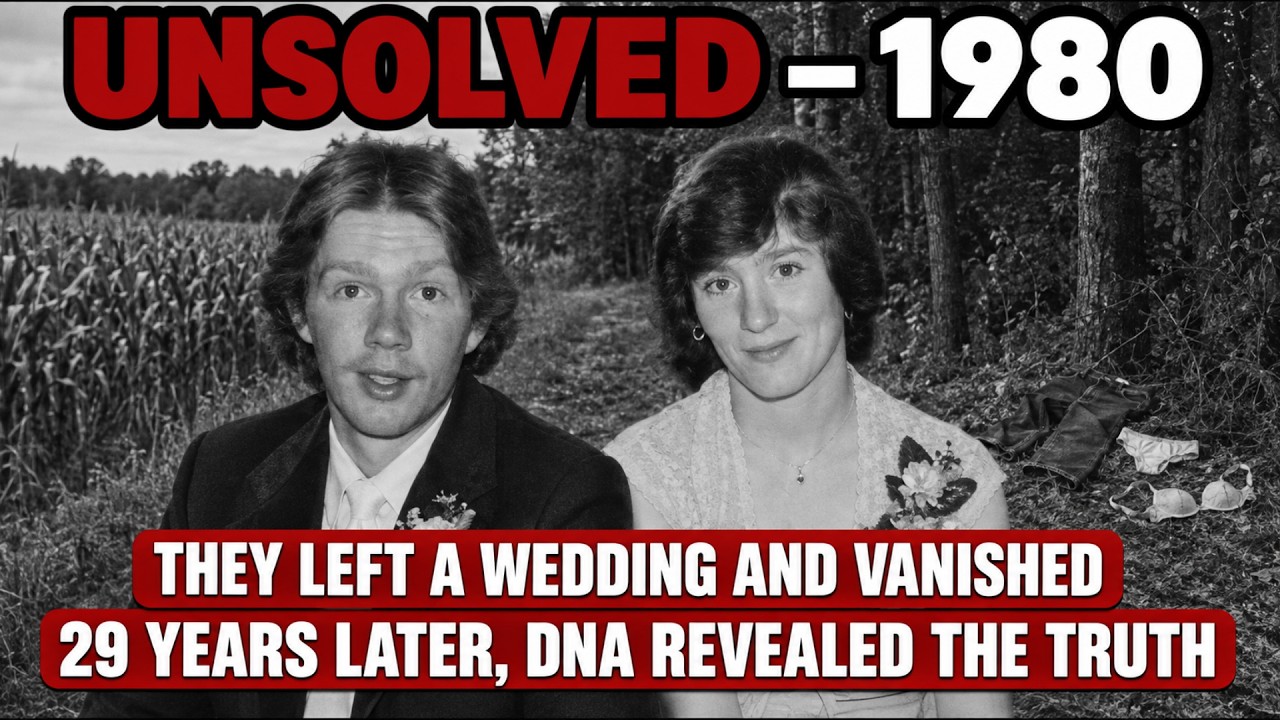
On the night of August 9, 1980, 19-year-old Tim Hack drove his brown Oldsmobile into the parking lot of the Concord House in Sullivan, Wisconsin. He was with his girlfriend, Kelly Drew, also 19, and they were attending a friend’s wedding.
Tim was a young farmer from Hebron who drove a tractor he had nicknamed “The Only Loser.” Kelly had just graduated from beauty school in Fort Atkinson. They had gone to the same high school and had been together since those days. No one in their small community doubted they would eventually marry.
That night, they planned to meet friends at Fort Fest after leaving the wedding. They were last seen leaving the Concord House around 11:00 p.m. They never made it to the festival. They never made it home.
The next morning, Tim’s father, David Hack, found the Oldsmobile still parked in the lot. It was locked. Inside were a coat, a checkbook, a wallet, and $67 in cash. There were no signs of violence. There were no witnesses. Two people had simply vanished.
Five days later, police found Kelly’s pants, underwear, and bra torn and scattered on a road about three miles from the Concord House. The discovery turned a missing persons case into a tragedy.
Jefferson County launched one of the largest searches in Wisconsin history. It lasted 72 days. Then two hunters from Milwaukee found the bodies on the edge of a woods next to a cornfield, about eight miles from the Concord House.
Kelly had been bound and strangled. Tim had been stabbed. They were buried side by side under a headstone shaped like two hearts. Engraved on it were the words “Kidnapped” and “Murdered.”
Police had a suspect: a maintenance man at the Concord House whose nose was bleeding the weekend the couple disappeared. He left Wisconsin immediately after being questioned. But there was not enough evidence to arrest him. The case went cold.
For 29 years, there were no answers. Only a headstone and two families living with an unanswered question.
In 2009, a 48-year-old woman sat at her computer searching for old criminal cases in the towns where her family had lived. She found the story of Tim and Kelly. She recognized the Concord House. That woman was the killer’s daughter. She was about to call the police.
This is the story of the longest cold case in Jefferson County history.
Tim grew up in Hebron, a small town in Jefferson County where life revolved around the land, the crops, and neighbors who had known each other since childhood. His father, David Hack, was a farmer. Tim knew how to drive a tractor before he knew how to drive a car.
He graduated from Fort Atkinson High School, where he met Kelly Drew. She was from Fort Atkinson, not far from Hebron. She had just finished beauty school. Her future was bright, and her plans were the kind only young people believe in.
Tim and Kelly had been in love since high school. Friends looked at them and said it was only a matter of time before they married. No one expected their story to end anywhere but at a country church wedding, with children and a quiet life like their parents had.
It was the summer of 1980. Ronald Reagan was running for president. Disco was dying. In Jefferson County, Wisconsin, life moved at its usual slow pace. Crops, weekend weddings, and long summer nights with teenagers driving country roads with the windows down.
The night of August 9, 1980, was one of those nights. A friend was getting married at the Concord House, a wedding and dance hall in Concord, about 40 miles west of Milwaukee. It was a wooden hall in the countryside where the community held weddings, birthdays, and weekend dances. Next to the hall was a campground. Around it were pastures, cornfields, and country roads that went dark at night.
Tim drove the brown Oldsmobile with Kelly to the wedding. The plan was simple: go to the wedding, then meet friends at Fort Fest, a local festival in Fort Atkinson. A normal summer night for two 19-year-olds in rural Wisconsin.
Music played in the hall. People danced and laughed. Tim and Kelly were there among their friends. They were last seen leaving the Concord House around 11:00 p.m. No one saw anything unusual. No one heard a scream. No one saw a struggle.
Tim and Kelly walked out of the hall, into the dark, and disappeared.
They never reached Fort Fest. Their friends waited, but they never showed up. There were no calls. In 1980, there were no cell phones. When someone did not show up, you waited, you went home, and you started worrying the next morning.
On the morning of August 10, David Hack began to worry. His son had not come home. He drove to the Concord House and found Tim’s brown Oldsmobile still in the parking lot. Tim’s jacket was folded on the seat. His checkbook was still there. His wallet was still there with $67 inside.
Everything Tim had brought was in the car, except Tim and Kelly.
Imagine that. A 19-year-old leaves a wedding, leaves his wallet, checkbook, and coat in a locked car, and disappears with his girlfriend without taking anything. This was not a couple who decided to run away. This was not a fight followed by a split. This was two people taken so suddenly they had no chance to react, not even to grab a wallet.
David Hack reported it to the police. The search began.
Five days after Tim and Kelly disappeared, investigators found what no one wanted to find. On a road about three miles from the Concord House, they found Kelly’s pants, underwear, and bra. The clothes were torn, not removed. Torn with force. They were left on the road as if the person who left them did not bother to hide them.
That discovery changed everything. This was no longer a missing persons case. It was a criminal case, and everyone in Jefferson County knew it.
The Jefferson County Sheriff’s Office launched what was described as one of the largest searches in Wisconsin history. Volunteers, state troopers, search and rescue teams, and tracking dogs flooded the countryside around the Concord House. They searched cornfields, woods, riverbanks, abandoned barns, every dirt road, and every trail for dozens of miles.
Hundreds of people walked in lines across fields, eyes on the ground, looking for any trace. Day after day, week after week. For 72 days, the Hack and Drew families lived in a hell that only those who have lost someone can understand. The hell of not knowing.
Every phone ring was a heart attack. Every police car stopping in front of the house was a moment when time stopped. 72 days without a single answer. Only torn clothes on a road, a locked car in a parking lot, and a question no one could answer: Where were Tim and Kelly?
On October 19, 1980, after 72 days, the final answer came in the worst possible way. Two squirrel hunters from Milwaukee were walking in the woods near Hustisford Road in the town of Ixonia, about eight miles from the Concord House. They were not looking for missing teenagers. They were looking for squirrels.
On the edge of the woods, next to a cornfield, they found Kelly Drew’s body. The next day, searchers returned to the area and found Tim Hack’s body in the same patch of woods.
The bodies were badly decomposed. More than 70 days of rain, sun, insects, and Wisconsin weather had done what time always does to human remains. But even in that state, the medical examiner could read the stories the bodies told.
Kelly Drew had been bound before she died. The marks on her body showed she had been restrained, tied up, deprived of any chance to resist. Cause of death: strangulation. Someone strangled her until she stopped breathing. She was 19 years old, just out of beauty school, at a friend’s wedding, dancing and laughing hours earlier. Someone bound her and killed her with their hands.
Tim Hack had been stabbed. The killer did not use the same method on both victims. He strangled the girl and stabbed the boy. This pointed clearly to the type of killer the police were facing. This was not a crime of impulse. It was not a robbery that turned into murder. It was deliberate, controlled brutality with a sexual motive.
The examiner found semen on Kelly’s pants. This detail, along with the torn clothes found five days after the disappearance, painted a horrifying picture of what happened between the moment the two left the Concord House and the moment they died in that woods.
The eight-mile distance from the Concord House to where the bodies were found indicated the killer transported them by car. He took them from the wedding parking lot, drove on the dark rural roads, and ended their lives at the edge of a woods next to a cornfield, where no one could hear anything.
The community of Jefferson County knew the worst had happened when Kelly’s clothes were found. But when the bodies were discovered and the forensic results came back, fear turned into something else. Pain. The pain a whole community shares when two of its children are killed and no one knows why.
Tim and Kelly were buried side by side in a cemetery in Fort Atkinson. Their families chose a shared headstone shaped like two intertwined hearts. Below their names and dates, a line was carved into the stone: “Kidnapped and Murdered.”
Not “At Peace.” Not “Forever in Our Hearts.” “Kidnapped and Murdered.” The families chose those words because they wanted everyone who stood at that grave to know that these two children did not die in an accident, did not die of illness, did not die for any reason a person could accept. They were kidnapped. That line remained as a permanent condemnation, a reminder that someone did this, and someone had not yet paid.
While the families buried their children, the Jefferson County Sheriff’s Office was building the case file. They had a name: Edward W. Edwards.
Edwards worked in maintenance at the Concord House and the adjacent campground. He was not a wedding guest. He was a hired worker, a maintenance man who knew that building inside and out, knew the parking lot, the exits, and the dark roads around it. He was there that night.
Witnesses remembered one detail in particular. The weekend Tim and Kelly disappeared, Edwards’ nose was bleeding. When asked, he said he was injured while deer hunting. In August. Deer hunting season in Wisconsin starts in September. A small detail, but the kind a good investigator does not miss.
Police questioned Edwards. He denied any involvement. The problem was that police did not have enough evidence to convict him.
In 1980, DNA technology did not exist in the criminal justice system. The semen on Kelly’s pants was biological evidence, but at that time there was no way to match it to a specific person. No DNA database. No genetic analysis. Just a biological sample that police could do nothing with except preserve it, hoping science would one day catch up to the crime.
Then Edwards left. In September 1980, just weeks after his first interview, Edwards and his family left Wisconsin. Without notice. Without a forwarding address. They simply disappeared, the same way Tim and Kelly had disappeared. Except Edwards chose to disappear. He was not kidnapped. He fled.
The Jefferson County Sheriff’s Office noted the departure. But noting it and having enough evidence for an arrest warrant were two different things. No fingerprints. No witness who saw Edwards with Tim and Kelly that night. No murder weapon. No confession. Just a bloody nose, a hunting season that was not hunting season, and a hasty departure.
What the Jefferson County Sheriff’s Office did not know then, what no one knew, was that Edward W. Edwards had killed before. And he knew how to disappear.
The case began to fold. Month after month, year after year, the file stayed in a drawer. The semen sample stayed preserved in the lab. The words “Kidnapped” and “Murdered” stayed carved in stone. There was no progress, no new suspect, no breakthrough.
The small community of Jefferson County continued to live, but the murders of Tim Hack and Kelly Drew never left their minds. In small towns like Hebron and Fort Atkinson, people do not forget. People know each other. People remember. They talked about the case in church, at the coffee shop, in late-night neighborly conversations. The question was always the same: Who did this?
David Hack knew the answer was out there somewhere. Kelly’s family knew it too. But knowing an answer exists and actually finding it are two different things.
While they waited, while the DNA sample sat in the lab, while the case went cold, Edward W. Edwards was living free somewhere outside Wisconsin, carrying his secret and the darkness he had poured onto two young lives in a woods next to a cornfield on an August night in 1980.
To understand the man who killed Tim Hack and Kelly Drew, you have to go back to before that August night in 1980.
Edward Wayne Edwards was born in 1933 in Akron, Ohio. He did not have a childhood in any conventional sense. His father left early. His mother could not raise him. Edwards grew up in an orphanage where, as he later wrote, he was physically and psychologically abused by the nuns. No one visited him. No one adopted him. No one wanted him.
In the emptiness where love should have been, something else began to grow.
From the orphanage, Edwards went to reform school. From reform school, he joined the U.S. Marine Corps. Maybe the military would give him discipline, order, and purpose. But Edwards went AWOL. He was dishonorably discharged, the kind of military ending that does not get framed on walls.
He returned to the streets and began doing what he would do for the rest of his life: fraud, theft, and running.
Edwards robbed gas stations, not once but many times, across different states during the 1950s and early 1960s. And he did something most criminals do not do: he did not wear a disguise. No mask. No hat. He walked into gas stations with his face exposed, looked directly at the camera, and later wrote that he did it because he wanted fame.
Think about that. A thief who wanted to be known. Not because he was stupid, but because he craved attention so badly he was willing to sacrifice his freedom for it. That is the kind of pathological narcissism psychologists call it. The kind of person who needs the world to look at him at any cost, whether in admiration or terror.
He escaped from prison. He was caught again. He escaped again. In 1960, while held in Portland, Oregon, on charges of impersonating a federal officer, he escaped again. This time he disappeared completely. State police chased him. The FBI got involved.
On November 10, 1961, Edward Wayne Edwards was placed on the FBI’s Ten Most Wanted Fugitives list. He was number 160 in the history of that list. An orphan boy from Akron, Ohio, now stood on the same list as serial killers, mob bosses, and terrorists.
Edwards was arrested on January 20, 1962, in Atlanta, Georgia, along with his first wife, Marilyn. He was sentenced to 16 years in federal prison and held at Leavenworth, Kansas, one of America’s most secure prisons.
Then something unexpected happened. Edwards announced he had reformed. He said a kind guard at Leavenworth changed his life. He joined vocational training programs inside the prison. He expressed remorse. In 1967, he was released on parole.
Edward Wayne Edwards, former FBI Ten Most Wanted fugitive, walked out of the federal prison at Lewisburg, Pennsylvania, a free man.
He married again, had children, and began building the image that would become the greatest irony in modern American crime history. Edwards became a motivational speaker. He traveled the country talking about rehabilitation, about how a criminal can change, about the power of human will.
In 1972, he published his autobiography titled “Metamorphosis of a Criminal,” a book about his life of crime and his transformation into a good citizen. That same year, he appeared on the national television show “To Tell the Truth,” where a panel of celebrities had to guess which of three contestants was the real Edward Edwards, the former FBI fugitive who had reformed.
He also appeared on “What’s My Line?” A gas station robber, an AWOL soldier, a fugitive from justice, now sitting under television lights, smiling, shaking hands with celebrities, telling his story of redemption to millions of viewers.
America loves redemption stories. America wants to believe people can change. Edwards gave them exactly what they wanted to hear.
But Edwards did not change. He never changed.
Detective Larry Lee, who later led the Hack-Drew investigation, said of Edwards in one sentence: “He was a con man all his life. He was a smart guy who could have accomplished a lot with his intelligence and cunning.”
A con man. That is the right word. Not insane. Not an uncontrollable beast. A professional con man in complete control of his behavior, who knows how to read people, knows how to say what they want to hear, and knows how to hide the darkness inside him behind a smile and speeches about change.
In 1977, three years before Tim and Kelly were killed, Edwards committed murder for the first time, or at least the first time we know of. In the suburbs of Akron, Ohio, where Edwards grew up, William “Billy” Lavaco, 21, and Judith Straub, 19, a young couple like Tim and Kelly, were killed. It was the same pattern that would repeat three years later in Wisconsin.
But in 1977, no one connected Edwards to that crime. The Ohio case went cold, just as the Wisconsin case would later.
Edwards continued his life, constantly moving. His family, his wife and children, lived a kind of forced nomadism. One year in each town at most, sometimes only a few months. His daughter later said the family often moved in the middle of the night, without explanation, without saying goodbye to neighbors. They simply packed up and drove off into the dark.
Edwards beat his wife. He punched her while she was pregnant. He broke her jaw. He threw his daughter across the room. The family lived in constant fear, the kind of fear that is not spoken about, not told to anyone, because the person who terrifies you is the same person who shares dinner with you every night.
Mixed with the violence was something that made it even more complicated. Edwards was capable of love. He was funny, humorous, affectionate. He was the father children wanted to love. That was the most terrifying part. Not the pure darkness, but the alternation between light and dark, between love and violence. The children never knew which version of their father would appear when the door opened.
Edwards was obsessed with murder stories and detectives. In every town the family lived in, he found a way to get close to the local police, volunteer as an informant, and insert himself into investigations. He wanted to be close to the process of solving crimes. He wanted to know what the police knew. That kind of behavior, seen in hindsight, looks like an obvious killer’s tactic for controlling information. At the time, it just seemed like an enthusiastic, slightly eccentric citizen.
After leaving Wisconsin in September 1980, Edwards showed up in Pennsylvania, where he rented a house, sold his furniture, and then burned it down. He was convicted of arson in 1982 and spent more than two years in prison.
After that, he disappeared into the 1990s, moving between states, working odd jobs, anything that did not require a background check. Finally, he settled in Louisville, Kentucky, where he lived quietly in a mobile home park for more than a decade. An old man in a mobile home park. No one knew him. No one knew what he had done.
Meanwhile, in Jefferson County, Wisconsin, the headstones still stood. The words “Kidnapped” and “Murdered” remained readable under rain and sun through the seasons. David Hack still lived with an unanswered question. Kelly’s family still carried pain that had not been folded away.
Edward Wayne Edwards, the man who killed at least four people in two different states, who appeared on national television claiming he had changed, who wrote an entire book about his rehabilitation, sat in a mobile home park in Louisville, Kentucky, thinking he had gotten away with it. He was 76 years old, suffering from diabetes and a weak heart. His life was nearing its end, and he thought his secret would die with him.
He was wrong.
In 2009, nearly 29 years after Tim Hack and Kelly Drew were killed, the state of Wisconsin decided to reopen the case. It was not a random decision. DNA technology had advanced significantly since 1980. The semen sample on Kelly’s pants, which police could previously do nothing with except preserve, could now be analyzed to produce a complete genetic fingerprint of the killer.

The state’s cold case unit built that fingerprint. They had the killer’s DNA. All they needed was to find its owner.
Investigators released information about the case to the public, hoping someone somewhere would see it, remember something, know something that had not been shared. That is how many cold cases are solved. Not by a single technological breakthrough, but by a combination of modern science and old memory. Sometimes all it takes is the right person reading the right article at the right time.
That is exactly what happened.
Hundreds of miles from Wisconsin, a 48-year-old woman named April Balascio sat at a computer. April was not a journalist, not an investigator, not anyone connected to the case in any way. She was the daughter of Edward Wayne Edwards. And she was doing what she had done for years: searching online for old cases in the towns where her family had lived when she was a child.
It was not a casual hobby. It was the result of decades of unspoken suspicion.
April grew up knowing something was wrong with her father. Not in a way a child can clearly express, but in a way the body knows before the mind can process it. The family never stayed in one place long. A year in a town at most, often less. And their moves were never normal. Not the kind where you pack up over a week, say goodbye to neighbors, and drive off on a Saturday morning. The kind where her father suddenly announced in the middle of the night that they had to leave. Now. Without explanation or discussion.
Luggage was thrown in the car. Children half-asleep in the back seat. The car drove off into the dark toward a new town whose name the children would not know until they arrived.
April remembered her father hitting her mother. She remembered him punching her in the stomach while she was pregnant. She remembered him breaking her jaw. She remembered him throwing her across the room. She remembered a state of constant fear. The kind of fear you cannot explain to strangers because the person who frightens you is the same person who makes your meals. The same person who sometimes hugs you, sometimes tells jokes, sometimes is the best father you could imagine. Then, suddenly and without warning, becomes the most terrifying person in the room.
There had been a conversation between April and her siblings once, after their father stabbed their mother with a kitchen knife because one of the boys ate half a bag of french fries he wanted. A kitchen knife over french fries. In that conversation, the siblings wondered whether their father had committed other crimes beyond domestic violence. They did not say the word “murder” out loud, but the question hung in the air and never went away.
In 2009, April sat at her computer and typed the names of the towns where the family had lived into a search engine, along with the phrases “cold case” and “unsolved murder.” She had done this many times before. Each time, she found a case in one of the towns, read it, compared dates, and tried to remember whether the family had lived there at that time. Most of the time, there was no match.
This time was different.
This time she found a story about two teenagers who disappeared after a wedding in Sullivan, Wisconsin, in 1980. She read the name “Concord House” and everything stopped.
She did not know the Concord House from the news. She knew it because she had been there. Her father worked there. He was the maintenance man at the hall and its adjacent campground. Her family lived in Watertown, Wisconsin, in the summer of 1980. And she remembered with horrifying clarity, the kind that only traumatic memories bring, that her family fled Watertown two days after the teenagers disappeared. Not weeks later. Not at the end of the month. Two days.
April described that moment later: “I started reading, and then I started shaking. I was shaking because I knew immediately who committed the murders.”
She shook. Not from cold. The kind of shaking that comes over the body when the mind finally realizes what it has known for a long time but never dared to admit.
Then another memory returned. A memory she had carried for decades without understanding its meaning. When she was a child, her father took her to an area on the outskirts of town. She did not remember why. Maybe he said they were going for a drive, or out for a bit, any reason a father gives a young daughter.
But now, reading about the case, about where the bodies were found, she realized the place her father had taken her was the area where police had found the bodies of Tim and Kelly. Her father had taken his young daughter to the place where he had hidden the bodies.
Imagine that. A killer takes his daughter to the burial site of his victims. No one knows why. Maybe he was checking whether the bodies had been found. Maybe he used the child as cover. A father walking with his daughter looks more ordinary than a man walking alone in the woods. Or maybe, and this is the most horrifying possibility, he wanted to return because he liked returning. Because a killer like Edwards often returns to the crime scene. For the feeling of power, of control, of holding a secret no one else knows.
April faced a decision no one should have to face. Call the police and report her father as a killer, or stay silent and live with what she knew for the rest of her life.
She did not decide immediately. She struggled with it. She lay awake at night. She weighed every possibility. Maybe she was wrong. Maybe it was just a coincidence. Maybe her father worked at the Concord House but had nothing to do with the crimes.
But she knew who her father was. She knew he was violent. She knew he had stabbed her mother with a knife. She knew he was obsessed with murder stories and detectives. She knew he found ways to get close to police in every town, inserting himself into investigations, asking about cases. She now understood that behavior was not the curiosity of a good citizen. It was the tactic of a killer who wanted to know what the police knew.
She knew the family moved in the middle of the night. And that two days after two teenagers disappeared from her father’s workplace, her family fled Wisconsin.
April called her sister. She said, “I’m thinking about calling the investigator.” Her sister replied, “If you have to, do it.” No one in the family said don’t do it. No one said she was crazy. Because they all knew. In different ways, at different levels, all of Edward Edwards’ children had lived with the same ghost.
She called Detective Chad Garcia, the investigator on the Hack-Drew case, the reopened case. She identified herself and said, “I might be wasting your time, and you might think I’m crazy.”
She did not know the opposite was true. She was not a dead end. She was the turning point. That call from a 48-year-old woman shaking on the phone, afraid of betraying her father, but even more afraid of protecting a killer, changed everything. It woke up a case that had been dormant for 29 years. It gave police the name they needed. It started the chain of events that would end with Edward Wayne Edwards in handcuffs, facing the crime he thought he had buried with two bodies in a woods next to a cornfield nearly three decades earlier.
A few weeks after April Balascio’s call, everything began to move with a speed that made 29 years of stagnation almost unbelievable. Investigators from Jefferson County contacted law enforcement in Louisville, Kentucky, where Edward Wayne Edwards was living in a mobile home park. A 76-year-old man with diabetes and a weak heart. An elderly man his neighbors knew as a quiet resident who caused no problems and drew no attention.
No one in that mobile home park knew the man next door had once been on the FBI’s Ten Most Wanted list. Had appeared on national television describing himself as a reformed man. Had killed at least four people in two different states.
In June 2009, investigators traveled to Louisville and interviewed Edwards. The interview took place nearly 30 years after the first interview conducted by the Jefferson County Sheriff’s Office, when he was still the maintenance man at the Concord House, with a bleeding nose and a story about a deer hunting trip in August.
This time, the investigators arrived with more evidence than they had in 1980. They had a full DNA analysis from the semen on Kelly’s pants. They had April’s connection. They had 29 years of scientific progress. And they had the kind of patience that only investigators working a cold case have. The patience of those who know they only need one thing from the man sitting in front of them, and that thing is DNA.
Edwards acted exactly as he always had: like a con man. At first, he denied everything. He said he had never heard of the missing couple. He had never heard the names Tim Hack or Kelly Drew. He did not know what happened at the Concord House in August 1980.
A man who worked at the very hall where two teenagers were abducted, who lived in the same town, who was questioned by police immediately after the incident, now saying he had never heard of it.
When the investigators pressed, Edwards changed his story. He admitted he was drinking beer at the Concord House that night. Maybe he saw the couple. Maybe. He was not sure.
The shift from “I know nothing” to “Maybe I was there” is the kind of shift investigators recognize immediately. That is how guilty people often behave. They do not confess everything at once. They offer piecemeal admissions, each one enough to explain the previous one, but not enough to convict.
Edwards thought he was controlling the conversation. He had always controlled his conversations with police throughout his life. But this time, the investigators did not need his confession. All they needed was a sample of his saliva.
They took a DNA sample from Edwards. He agreed, perhaps because refusing would look worse, or perhaps because after 29 years he thought nothing connected him to the crimes. He had lived free for nearly three decades. He had escaped the police, the FBI, the justice systems of two different states, and time itself. Why would one saliva sample matter?
The DNA sample was sent to the Wisconsin State Crime Laboratory. The results came back: a match. Edwards’ DNA matched the semen found on Kelly Drew’s pants. Not a probable match. Not a similarity. A complete match.
After 29 years, a name was finally attached to the biological sample collected by the Jefferson County Sheriff’s Office from the clothing of a 19-year-old girl. That name was Edward Wayne Edwards.
He was arrested at his home in Louisville in July 2009. There was no chase, no resistance, no dramatic scene. A 76-year-old man in a mobile home park, handcuffed and placed in a police car. 29 years of running did not end with gunfire. It ended with the sound of steel handcuffs.
Edwards was returned to Wisconsin. And there he did what he always did. He told a story. Not the truth. A story.
In his post-arrest statement, Edwards told investigators he had sex with Kelly Drew that night. He said it was consensual. Then he said he saw a group of men stomp the couple to death. He did not know who they were. He could not describe them. He just stood there and watched.
That was his story. Consensual sex with a 19-year-old girl, then a mysterious group of men emerging from the dark and stomping two young people to death. And Edwards was just a witness.

The forensic evidence completely disproved that account. Kelly Drew was not stomped. She was bound and strangled. Tim Hack was not stomped. He was stabbed. The method of killing was completely different from what Edwards described. And the fact that she was bound indicated this was not the act of a chaotic mob. It was the act of a single person controlling the victim, restraining her, then deliberately killing her.
One person. Not a group. One person who was at the Concord House that night, who had access to the area, who knew the surrounding roads, and who left DNA evidence on the victim’s clothing.
Edwards lied. That was not surprising. What was surprising was that he still believed he could lie successfully after DNA had revealed the truth. A con man to the last moment.
But Edwards’ story did not stop with Tim and Kelly. After his arrest, the threads of the case began to unravel. Investigators connected Edwards to the 1977 murders in the suburbs of Akron, Ohio. William “Billy” Lavaco, 21, and Judith Straub, 18. Another young couple, killed in a different way, but with the same pattern: targeting couples, attacking suddenly, killing them all.
Edwards eventually pleaded guilty in that case and was sentenced to two consecutive life sentences in Ohio.
Then he confessed to other crimes. Danny Boy Edwards, or Danny Locker, his real name, was Edwards’ “adopted son,” a 25-year-old young man Edwards had taken in, lived with, and considered his son. In 1996, Edwards killed Danny Boy. The motive was not anger or conflict. Edwards had purchased a $250,000 life insurance policy on Danny Boy. He killed his adopted son for insurance money. A quarter of a million dollars. That was the price Edwards placed on the life of someone he considered his son.
In total, Edwards confessed to five murders. Lavaco and Straub in Ohio in 1977. Tim Hack and Kelly Drew in Wisconsin in 1980. And Danny Boy in 1996. Five victims, over nearly 20 years, in two states, at the hands of a man America once watched on television talking about his rehabilitation.
When news of his arrest spread, David Hack, Tim’s father, then 71 years old, spoke to the press. He had waited 29 years to say these words. He said, “I’m glad it’s over.” Then he added what he had been thinking for 29 years: “I don’t know how they can’t plead guilty if the DNA matches.”
He did not shout. He did not pound the table. He spoke with the voice of a father who had carried pain so long it had become part of him, inseparable, unremovable.
And he asked a question no one ever answered satisfactorily. “All I want to know is why he picked my son and his girlfriend. Why Tim? Why Kelly? Why two 19-year-olds leaving a wedding on the most ordinary summer night of their lives? Why them?”
That question was never answered. Edwards never explained why he chose Tim and Kelly. Perhaps there was no reason except opportunity. He was there. They were there. A dark parking lot. Empty country roads. And he was the kind of person who does not hesitate when opportunity presents itself.
The final part of the Tim and Kelly story was still waiting.
Edwards was returned to Wisconsin to face the justice he had escaped for 29 years. He was charged with two counts of first-degree murder in the deaths of Tim Hack and Kelly Drew.
The trial was held in Jefferson County. The scene in the courtroom was unforgettable. Edwards sat in a wheelchair, handcuffed, 77 years old, about six meters from the families of the victims. He did not speak. He did not look at them. He showed no emotion. Most of the time, he sat with his head down, staring at the floor, as if the trial were happening to someone else, somewhere else, in someone else’s story.
An elderly man in a wheelchair, eyes on the ground, while the families of the two children he killed 29 years earlier sat a few steps away, weeping.
The victims’ families were allowed to speak to the court. They did.
Norma Walker, Kelly Drew’s mother, looked directly at the man who killed her daughter. She said, “You are a lying, evil murderer, and God has a special place for you in hell.” She added that Edwards deserved to be hanged.
29 years. She had carried that sentence in her heart for 29 years, waiting for a face to say it to, eyes to look into while she said it. Edwards did not raise his head.
Wendy, Kelly’s sister, read a statement. Her voice was clear and cold as steel. “I’m glad Wisconsin doesn’t have the death penalty, because I want this bastard to rot in prison for as long as possible.”
She did not want Edwards to die quickly. She wanted him alive in his cell every day until his body fell apart. She wanted him to know he would never see the sky without bars in front of it.
The court sentenced Edwards to two consecutive life sentences for killing Tim Hack and Kelly Drew. He would die in prison.
But Wisconsin was not the only place demanding justice. Ten days before the Wisconsin trial, Edwards had already been sentenced in Ohio. Two consecutive life sentences for killing William Lavaco and Judith Straub in 1977, the first young couple, the first two victims we know of.
Then the fifth case. Danny Boy, the adopted son he killed for $250,000 in insurance money. In Ohio, Edwards was sentenced to death for killing Danny Boy.
And here the story takes another turn that only Edwards could have written. He wanted the death penalty. He stated it publicly. He said he wanted to die. In an interview from prison, he told the Associated Press that the reason he confessed to killing Danny Boy was his desire to receive the death sentence.
Ohio has the death penalty. Wisconsin does not. That is why he chose to confess in Ohio. Even at the last moment, Edwards was still trying to manipulate the system. Still trying to control the ending of his story. He had controlled how people saw him his whole life, from the reformed speaker on television to the quiet old man in a mobile home park. Now he wanted to control his death too.
Jayden Copley, Danny Boy’s half-sister, stood before the sentencing panel and begged them not to give Edwards what he wanted. She said executing Edwards would give him exactly what he was asking for. The panel rejected her request. An execution date was set for August 31.
Edwards never saw it. On April 7, 2011, about a month after the death sentence was issued, Edward Wayne Edwards died of natural causes at the Ohio Department of Rehabilitation and Correction medical center in Columbus. His body gave in to illness before the state could take any action. Leukemia, heart disease, and diabetes. He was 77 years old.
He died in a prison hospital room. Not on a gurney. Not the way he wanted. Perhaps that was the last small act of justice the system delivered. Even death did not go according to Edwards’ plan.
After Edwards’ death, the story continued, but it belonged to the living.
April Balascio, the woman who called Detective Chad Garcia in 2009, had to live with the consequences of that call for the rest of her life. Not legal consequences. Emotional ones. She had reported her father. She had helped put him in prison. She felt guilt. Not the guilt of calling, but the guilt of not calling sooner.
She wondered if she had realized it earlier, if she had called the police in 1996, would Danny Boy still be alive? If she had called in 1990, would someone somewhere not have become a victim?
That kind of guilt has no logic. She was a child when the murders happened. She did not know. She could not have known. But guilt does not follow logic. It follows feeling.
And April loved her father. She said, “That’s the hardest thing for people outside to understand. He was still so affectionate, and I still remember the good things. And I choose to remember the good over the bad.”
A serial killer who once held his daughter, who once told jokes, who was once the father a child wanted to love. And that child grew into a woman who had to reconcile two irreconcilable truths: my father loved me, and my father killed people.
In 2019, April collaborated with journalist Josh Dean to produce the podcast “The Clearing,” which tells the story of her discovery of her father’s truth. The podcast is not just about the crimes. It is about memory, about how a child processes what she witnessed, about the distance between knowledge and acknowledgment, and about the heavy price one pays when choosing truth over family loyalty.
In 2014, she published her memoir “Raising a Serial Killer” through Traya Books. The memoir is 288 pages. It talks about the family’s nomadic life in the 1970s and 1980s, about the violence and fear, and about the strange love she still holds for the man who caused all of it.
The Tim Hack and Kelly Drew case also became the subject of an episode of “Cold Case Files” on A&E, titled “Silence of the Lambs.” The episode tells how a killer wrote a book about his past as a con man, and how that book itself, the fame Edwards had always craved, became part of the chain of evidence that solved a 29-year-old mystery.
His narcissism, his desperate need for visibility, fame, and attention, was what ultimately destroyed him.
Some people online have tried to connect Edwards to other famous cases, such as JonBenet Ramsey, Laci Peterson, and others. These conspiracy theories have no basis in fact. Edwards was a convicted serial killer, but he was not the cause of every mystery in America. Five victims are enough to inspire horror. There is no need for more myths.
What this case leaves behind is not Edwards himself, but what came after his death. David Hack, the 71-year-old father who finally knew who killed his son. Norma Walker, the mother who finally stood before her daughter’s killer and told him plainly he would go to hell. April Balascio, the daughter who chose ethics over family loyalty, who chose justice for strangers over her own peace of mind, and who must live with that choice every day for the rest of her life.
And Tim and Kelly. Two 19-year-olds leaving a wedding on a warm summer night in rural Wisconsin. Tim, the young farmer with the tractor, the Only Loser. Kelly, the girl who just graduated from beauty school, her future bright before her. They loved each other. They had plans. They walked out of the Concord House around 11:00 p.m., into the dark, and never came out of it.
Their headstone still stands in the Fort Atkinson cemetery. Two intertwined hearts. “Kidnapped and Murdered.” That line has stood for more than four decades, through rain and sun and snow, through 29 years without an answer, and every year after. It is still readable. It still stands.
Just as the story of Tim and Kelly still stands, refusing to be forgotten, refusing to be buried, until a woman shaking on the phone decided that the truth was more important than silence.