Barbara “Babe” Paley spent decades being described as the most perfect woman in New York. She was a fashion editor at Vogue, a fixture on the international best-dressed list, and the wife of William S. Paley, the man who built CBS into the most powerful media company in America.
Her life appeared to be a fairytale of old money, elegance, and influence. Beneath that carefully maintained surface, however, was a marriage marked by loneliness and a friendship that would end in public betrayal.
Barbara Cushing was the youngest of three daughters of Harvey Cushing, a celebrated neurosurgeon, and Katherine, a mother who wanted her girls to marry well. The lesson took hold. Her sisters married into the Astor and Roosevelt families. Babe, as she was called, understood early that beauty was not a gift but a material that could be shaped and deployed.
After a car accident at 17 left her with scars and knocked out her front teeth, reconstructive surgery left her, by some accounts, even more striking. She learned that beauty could be repaired and maintained. By the late 1930s, she was working at Vogue, absorbing the grammar of high society.
Her first marriage, to Stanley Grafton Mortimer Jr., lasted six years and ended in divorce in 1946. The war had changed him, and the marriage had soured. She then met William S. Paley, the founder of CBS, who had built a media empire but lacked the social access that Babe’s lineage provided.
They married on July 28, 1947. She left Vogue the same week. She transformed their apartment at the St. Regis and their 80-acre estate, Kiluna Farm, in Manhasset, Long Island, into a world of curated perfection. She archived dinner menus so no guest was served the same meal twice and hired Russell Page to design the gardens.
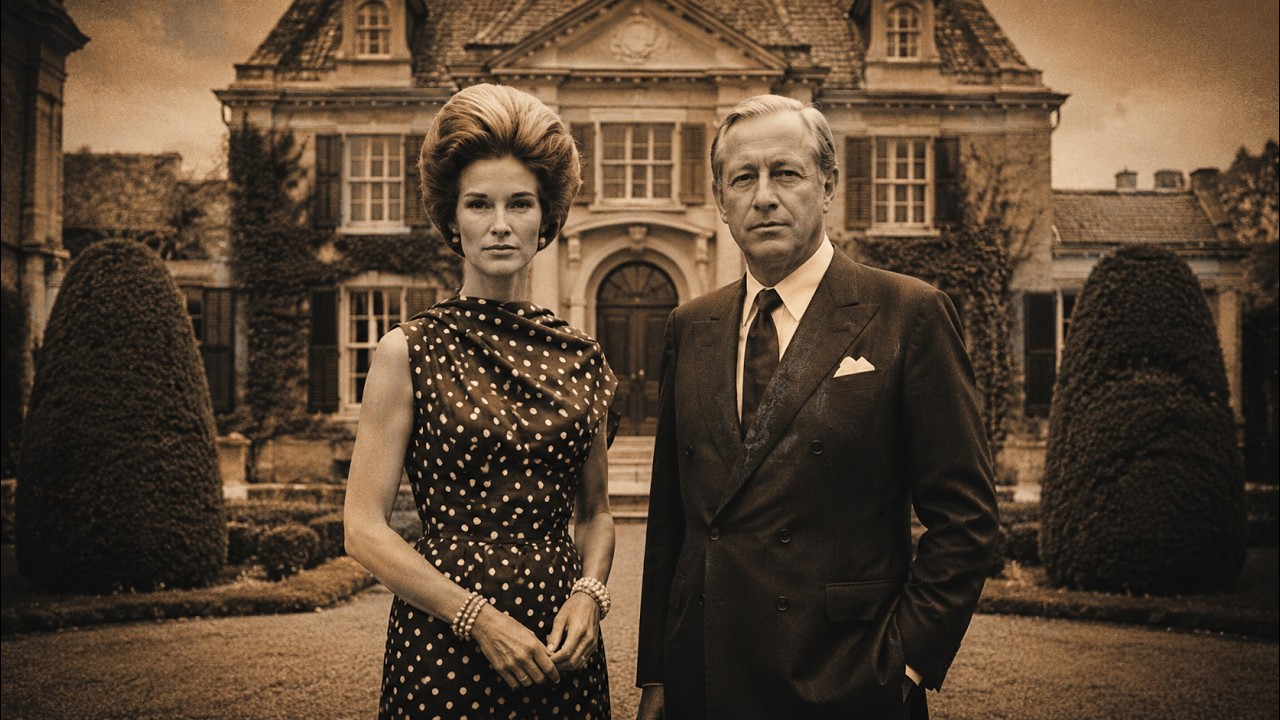
From the outside, it was everything her mother had wanted. From the inside, it was a performance. Bill Paley was a womanizer, and Babe knew it. She said nothing.
In the summer of 1955, on a plane to Jamaica, she met Truman Capote. The writer, already famous for *Breakfast at Tiffany’s*, was brought along by friends. They fell into an intense friendship. He called every morning, appeared unannounced with flowers, and made her laugh.
Capote became her only real confidant. She told him about Bill’s infidelities, the humiliations she swallowed, and the gap between the life she appeared to live and the one she inhabited. He told her to treat being Mrs. William S. Paley as a job, the best job in the world.
What she did not know was that he was also working. Capote had been writing a novel he called *Answered Prayers* since the early 1960s. He spoke of it as his masterpiece, a reckoning with American society. He was collecting material, and the confidences of the women he called his Swans were turning into sentences.
In November 1966, Capote threw the Black and White Ball at the Plaza Hotel. It was the apex of his social power, and Babe was beside him. But even then, he was writing.
In 1974, Babe was diagnosed with lung cancer. She had smoked two packs of cigarettes a day for most of her adult life. She began chemotherapy, and her hair fell out. She bought silk turbans and continued to attend dinners and the theater. Women across New York began wearing turbans themselves.

That same year, Capote was under pressure from his publisher to deliver *Answered Prayers*. He agreed to submit a single chapter to Esquire magazine. It was called *La Côte Basque, 1965*, named after a restaurant on West 55th Street.
The chapter was officially fiction. The names were changed. But the details were not imagined. A character named Sidney Dillon, a media executive, was transparently Bill Paley. The chapter described his infidelities with a specificity that could only have come from Babe’s private disclosures.
An advanced copy was sent to Ann Woodward, a socialite who had shot and killed her husband in 1955. The shooting had been ruled accidental, but the story had followed her for decades. After reading the chapter, she took a handful of barbiturates and died.
Slim Keith called Babe to tell her. Babe’s response was quiet. “Well,” she said, “I want to die, too.”
When the November 1975 issue of Esquire reached newsstands, Babe read it. She recognized details that could only have come from her. She called Slim Keith and asked if she had seen it. She never spoke to Truman Capote again.
The other Swans cut him off as well. The world that had made him possible closed around him. He tried to explain himself, saying, “What did they expect? I’m a writer.” It explained nothing.

Babe continued to live for three more years. She appeared at events perfectly, because perfection was a reflex. In her final year, she sat in her apartment and wrapped her jewelry in tissue paper, tucking a small card with a name into each parcel. She was distributing herself to the people who had not left her.
She died on July 6, 1978, of lung cancer. She was 63 years old, one day after her birthday. Her funeral was held at Christ Episcopal Church in Manhasset. The wine she had selected herself was served. Truman Capote was not invited.
C.Z. Guest called Capote to tell him Babe was gone and that he was not welcome at the funeral. He had been working on a piece called *Beautiful Babe*, a eulogy he could not finish. He read what there was of it alone and put it away.
*Answered Prayers* was never finished. Capote died in August 1984, and the manuscript remained incomplete. The women he used outlasted the work he used them for.
Bill Paley attended the funeral and wept openly. In 1985, Cosmopolitan magazine listed him among the 10 most eligible bachelors in the country. He was 83 years old. He died in October 1990 at 89, leaving an estate valued at half a billion dollars.
He was buried beside Babe at the Memorial Cemetery of St. John’s Episcopal Church in Cold Spring Harbor, New York. The man who had spent 30 years finding reasons to be elsewhere was placed in the ground next to the woman whose patience had outlasted his faithlessness.
Kiluna Farm burned and was demolished around 1990. The secret garden is gone. What remains is the question Babe carried and never answered out loud: whether she had ever been truly loved.