In June of 1970 at Royal Ascot, a princess not yet 20 and a cavalry officer of 30 were seen together often enough that the whole enclosure understood what it was watching. He was the most eligible man in the Household Cavalry, and for one season the queen’s only daughter wanted him.
But Andrew Parker Bowles had been born a Catholic. The law that had guarded the throne for close to three centuries meant that to marry him, she would have to leave the line of succession altogether.
Within three years, he had married another woman and she another man. The season at Ascot was folded away as though it had never happened.
He would spend the next 55 years as her closest friend and say almost nothing about her to anyone.
The one man who could tell the truth about Princess Anne is the one who never will.
### The witness who never spoke
There is a photograph taken most summers that almost no one looks at twice. Two people in their later years stand together at the races at Royal Ascot, heads bent toward each other, laughing at something no camera caught.
She is the hardest working member of the royal family, the king’s only sister. He is the first husband of the queen.
More than half a century before that photograph, at the very same meeting, on the very same lawns, the two of them had been something the whole enclosure was quietly watching.
The story of what passed between Princess Anne and Andrew Parker Bowles begins and ends at the same racecourse.
In that season, Andrew Parker Bowles courted the queen’s daughter. At the same moment, the woman he had been seeing on and off for years, Camilla Shand, was falling for the queen’s son.
When both royal romances closed, the two commoners turned back to one another and married. The two royal children married elsewhere.
The small world that had watched it all pretended, with its usual good manners, that nothing had happened.
### The great silence of the modern monarchy
Andrew Parker Bowles is the great silence of the modern monarchy. Every other figure in the long drama that engulfed his life spoke or was made to speak.
The Prince of Wales confessed his adultery to some 13 million people on television. The Princess of Wales gave her interviews and cooperated with her biographer.
Andrew Parker Bowles stood inside all of it. He was the wronged husband, the most famous cuckold in England, a decorated brigadier and one of the queen’s own ceremonial guardians.
He never sold a word. He never wrote the memoir the country half expected of him. He never once settled the score.
The single relationship in his life that survived every storm, unbroken and unspoken, was his friendship with the princess he had loved first.
### A truth that is not a confession
The truth here is not a confession. Andrew Parker Bowles has given almost nothing on the record about Princess Anne.
There is no interview in which he opens the door, no memoir, no tell-all, no moment where the old soldier at last unburdens himself.
The men who have written about the courtship are biographers and royal writers speaking about him, not for him. When one of those writers called Anne his first love and said their bond went very deep, it was the writer speaking, not Andrew.
When a reporter only recently asked the man himself about his private life, he answered with four words. Mind your own business.
Andrew Parker Bowles reveals the truth about Princess Anne the way any true witness reveals a person. Not by talking, but by 55 years of conduct that tells you exactly what she was worth to him.
He courted the queen’s daughter and could not marry her because of the church his family knelt in. He married the woman he had kept waiting and lost her to the heir to the throne.
He endured the most public humiliation an Englishman of his generation suffered.
Through all of it, the one thing that never bent was his loyalty to Anne. He is godfather to her daughter. He is at her side at the races every June.
When his second wife died, Anne was there among the mourners.
### Two people built the same way
Both of them, across long and eventful lives, held more secrets than the rest of the family put together and told none of them.
She endured a kidnap attempt on a London street, a theft from inside her own palace, a marriage that ended in the courts and a private grief on the far side of the world. She has never given an account of any of it.
He watched his wife loved by a future king for the length of their marriage and said nothing. Then he applauded from a pew as she was crowned queen.
They are the counterexample inside their own generation. The two who decided long ago and quite separately that the world was owed their service and never themselves.
Most friendships between former lovers do not last. The ones that do rarely survive the marriages, the divorces, the scandals, and the sheer passage of 50 years that this one survived.
Between two people who have both decided that their private lives are their own, a confidence is perfectly safe. A bond can be kept simply by keeping it.
### The most eligible man in the Blues
By the time he was 30, Andrew Parker Bowles wore the sovereign’s own uniform and carried a reputation that reached every drawing room in the county before he did.
He had been born on the 27th of December 1939 in Surrey, the eldest of four children. His father, Derek Parker Bowles, kept a house called Donington Castle House in Berkshire and moved with easy familiarity through the worlds of racing and the court.
His mother, Anne, was a de Trafford, a granddaughter of Sir Humphrey de Trafford, a famous racing baronet. On his father’s side, the family reached back to the earls of Macclesfield.
They were old Catholic gentry, secure in themselves, rooted in land and faith.
That Catholicism would decide quietly and completely the shape of his life. He was sent to Ampleforth, the great Benedictine school set among the folds of the Yorkshire Moors.
To be a Catholic of good family in the England of that time was to belong and yet to be held slightly apart.
His christening had signaled how close to the center of things the family stood. Several accounts hold that Queen Elizabeth, the Queen Mother herself, stood as one of his godmothers.
From Ampleforth, he went to the Royal Military Academy at Sandhurst. In 1960, he was commissioned into the Royal Horse Guards, the regiment known simply as the Blues.
For a young man of his background, it was the perfect billet, glamorous and ancient, and close to the throne.
He was a bold amateur jockey, one of the genuine article. In 1969 he rode a horse called The Fossa in the Grand National at Aintree, the most punishing steeplechase in the world.
He served as aide-de-camp to the governor general of New Zealand. He was adjutant of the Royal Horse Guards from 1967.
In 1972, he led a squadron during Operation Motorman in Northern Ireland, the largest British military operation mounted since the Suez crisis.
At the end of the decade, he went to Rhodesia as senior military liaison officer to Lord Soames, the last governor through the tense and lethal transition to an independent Zimbabwe.
For that service, he was given the Queen’s Commendation for Bravery in 1980 and promoted lieutenant colonel the same summer.
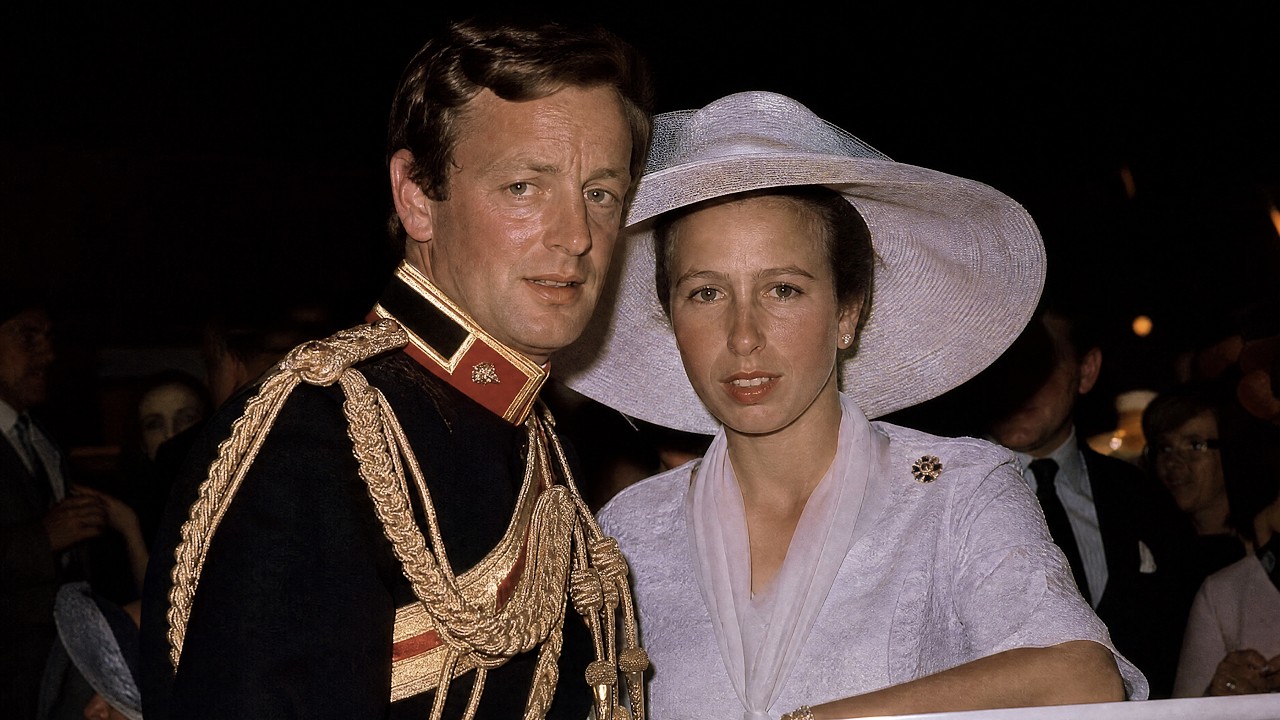
He commanded the Household Cavalry Mounted Regiment in the early 80s. He was appointed to the Order of the British Empire in 1984.
From 1987, he held the office of Silver Stick in Waiting to the Queen, one of the sovereign’s own ceremonial guardians.
He was made a brigadier in 1990 and closed his career as director of the Royal Army Veterinary Corps, retiring in 1994 after 34 years in uniform.
### The princess who won on her own
She was born third in line to the throne, and she watched two younger brothers step ahead of her before she was 14 years old.
Anne Elizabeth Alice Louise came into the world at Clarence House in London on the 15th of August, 1950. She was the second child and only daughter of the young Princess Elizabeth, not yet Queen, and Philip, Duke of Edinburgh.
When her mother acceded to the throne in the winter of 1952, Anne became at 18 months old the daughter of a reigning queen.
Under the old law of male preference, a son displaced a daughter no matter who had been born first. When her brother Andrew arrived in 1960 and again when Edward arrived in 1964, each of them stepped ahead of her.
As matters stand, she is 18th in line.
She was educated at home by a governess named Katherine Peebles, then sent to Benenden School in Kent where she boarded from 1963 to 1968.
She began her official public duties in 1969 at 18.
The proof of her sporting ability came in 1971 and it was total. That year, aged 21, she won the individual gold medal at the European Eventing Championships at Burghley House in Lincolnshire, riding a horse called Doublet that had been bred by her own mother.
The same year the country made her its Sports Personality of the Year, the first member of the royal family ever to be given the title.
Asked on television what the secret of her success was, she gave the answer that has followed her ever since. Dry as a bone.
At the European Championships in 1975, she took individual and team silver on a horse called Goodwill.
The next year at the Montreal Olympics, she became the first member of the British royal family ever to compete at an Olympic Games. On the cross-country day she was thrown, was knocked senseless, climbed back into the saddle, and finished the course with no memory of having ridden it.
Alongside the sport ran the work that would come to define her. In 1970, the very year the cavalry officer began to court her, she became president of the Save the Children Fund at 20 years old.
She made it her life’s cause, traveling to Uganda, to Bangladesh, to Sierra Leone, to South Africa and Mozambique and Ethiopia.
She would be nominated for the Nobel Peace Prize in 1990 by the president of Zambia. She became chancellor of the University of London in 1981.
In 1987 her mother created her Princess Royal, a title given at the sovereign’s own discretion to the eldest daughter.
### Ascot, June 1970
They began where two riders would begin, at the races in June of 1970, weeks before her 20th birthday.
He was 30, an officer of the Blues and Royals stationed in London, dark and tall and effortlessly amusing. She was the queen’s only daughter, 19, turning 20, sharp and unillusioned, and happiest on a horse.
Andrew Parker Bowles had by then ended, for the time being, his long and unsteady romance with Camilla Shand. It was Princess Anne he was courting through that season and into the next.
For a time, it was serious enough to be noticed at court.
One royal writer, looking back, would call Anne his first love, and say the bond between them went very deep.
The thing that drew them was in part the thing they had most in common, which was horses.
Anne was not a princess who happened to ride. She was one of the finest event riders in the country, about to become the best in Europe.
He had ridden the Grand National. She would ride at the Olympics.
In the summer of 1970, no one yet knew how it would end. The papers noted the young officer at the princess’s side.
### The faith that closed the door
The thing that made the match impossible was not a person, but a sentence written into an act of Parliament at the turn of the 18th century.
The Bill of Rights settled in the year 1689 and the Act of Settlement that followed in 1701 together shut the door.
It was not only that a Catholic could not be sovereign. It was that any member of the royal family who so much as married a person of the Catholic faith would be struck out of the succession as though they had died.
The penalty did not fall on the Catholic. It fell on the royal.
Andrew Parker Bowles risked nothing by loving a princess. It was Anne who stood to lose.
In 1970, she was fourth in line to the throne. Had she married her cavalry officer, she would herself have been removed from the line of succession.
On top of that ancient bar sat a second law, the Royal Marriages Act of the year 1772, which required the sovereign’s own consent before a descendant of the old King George could marry at all.
None of this was theoretical to a family like the Parker Bowles. The de Traffords, Andrew’s mother’s people, were what the English called recusants, one of the old Catholic families who had held to Rome through three centuries of penalty and suspicion.
There was no scene, no royal command, no father putting his foot down at the head of a table. There did not need to be.
Everyone in the closed circle knew the law, knew what it would cost the princess, and knew therefore that the courtship could only ever be a season and never a marriage.
### The other pair
While Andrew courted the queen’s daughter, the woman he had been seeing on and off for years was falling for the queen’s son.
Camilla Rosemary Shand had been born on the 17th of July 1947 at King’s College Hospital in London.
Her father was Major Bruce Shand, a cavalry officer twice decorated for gallantry, a wine merchant and a master of foxhounds.
Through her mother Rosalind Cubitt, she carried a piece of Edwardian history that would matter greatly before her life was done. Her great-grandmother had been Alice Keppel, the celebrated mistress of King Edward VII.
She had met Andrew Parker Bowles in the late 1960s. From the first it was an unstable thing, passionate and on and off, broken again and again by his wandering eye.
Camilla wanted him and wanted him badly and had done for years.
It was into this long unresolved waiting that a prince walked around the years 1970 and 1971.
Camilla met Charles, the Prince of Wales, at the polo through a mutual friend, a young woman named Lucia Santa Cruz.
The prince, shy and uncertain and starved of exactly the easy warmth Camilla carried so lightly, found in her something he had never had.
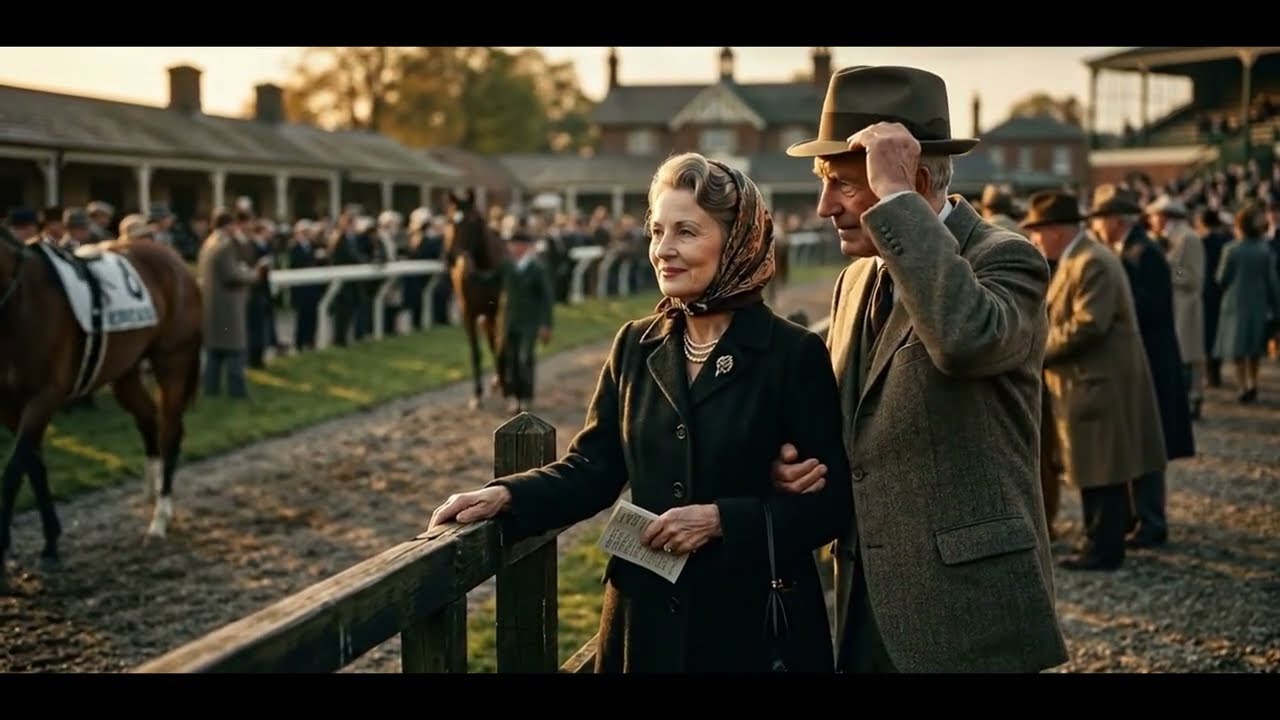
The romance between Camilla and the prince belongs to the very same stretch of months as the courtship between Andrew and the princess. They were not sequential. They were simultaneous.
In the same season that the queen’s daughter was being escorted about by the dashing Catholic officer, the officer’s own former companion was being courted by the queen’s son.
### The hand publicly forced
After nearly seven years of an on-and-off romance, the thing that finally ended the waiting was not a proposal, but an announcement.
Andrew Parker Bowles had been seeing Camilla Shand on and off for the better part of seven years. In all that time, through all his other pursuits, through the season he spent courting Princess Anne, he had never brought himself to the point of marriage.
So Derek Parker Bowles, Andrew’s father, and Bruce Shand, Camilla’s, took the matter into their own hands and simply published an engagement notice for their children in the pages of the Times.
His hand publicly forced, in biographer Sally Bedell Smith’s phrase, Andrew proposed to the girlfriend he had kept waiting for nearly seven years.
The engagement was settled in 1973 in the very stretch of months when the last of the royal romances were closing.
### Two weddings, one summer
On the 4th of July 1973, Andrew Parker Bowles married Camilla Shand at the Guards Chapel in Wellington Barracks in a Roman Catholic service before a reported 800 guests.
It was called the society wedding of the season.
The Queen Mother came, Princess Margaret came, and Princess Anne, the groom’s own former girlfriend, came to watch him marry someone else.
Camilla wore the Cubitt-Shand tiara.
Princess Anne sat in the Guards Chapel and watched Andrew Parker Bowles marry another woman. There is no record of a flicker.
Four months later, almost to the day, it was Andrew’s turn to watch.
On the 14th of November 1973, Princess Anne married Captain Mark Phillips at Westminster Abbey in a wedding watched by a television audience of many millions.
Mark Phillips, born on the 22nd of September 1948, was a lieutenant in the 1st Queen’s Dragoon Guards and an Olympic horseman of the very first rank.
The year before the wedding, at the Munich Olympics, he had won a team gold medal in the three-day event.
But where Andrew was a Catholic, Phillips was safely Protestant. Where Andrew came trailing a reputation for restlessness, Phillips came with a clean and sporting name.
Phillips was offered an earldom on his wedding and he turned it down, choosing to remain simply Captain Mark Phillips.
### The captain who would not be an earl
In 1976, the Queen bought the young couple a country home, a fine Georgian house called Gatcombe Park in Gloucestershire.
The price was never disclosed, though it was believed to fall somewhere between £500,000 and £750,000.
After the crown had paid for its renovation, the couple moved in late in 1977, just days after the birth of their first child.
They had two children. Her son Peter was born in November of 1977 and her daughter Zara in May of 1981.
Neither of them was given a royal title. Anne offered the styles and dignities that were hers to pass on, declined them, and raised her children as commoners.
For a decade or so the marriage held its public shape.
Anne, through these years, was becoming the hardest working member of her family. She was created Princess Royal in 1987.
By the middle of the decade, the marriage was, in the language the newspapers would eventually reach for, a marriage in name.
### 90 seconds on the Mall
Four months into her marriage, a man blocked her car on the Mall and tried to take her at gunpoint.
It was the evening of the 20th of March, 1974. Princess Anne and Captain Mark Phillips were being driven back to Buckingham Palace along the Mall when a car swerved in front of them and forced their driver to stop.
Out of it came a man named Ian Ball, an unemployed laborer of 26 with a history of mental illness, who had planned for years to kidnap the Queen’s daughter.
Ball was armed with two pistols, and he began to shoot.
Anne’s personal protection officer, Inspector James Beaton, got out of the car and put himself between the gunman and the princess. He was shot three times.
The chauffeur was shot in the chest. A police constable who came running was shot in the stomach. A passing journalist was shot in the chest.
A passerby named Ronald Russell, a large former boxer, ran up and punched the gunman twice.
The gunman had opened the door and taken hold of her, telling her to come with him.
The line that history has handed down is that Princess Anne looked at the man trying to abduct her at gunpoint and replied, “Not bloody likely.”
It is a magnificent line, and it may well be close to what she said, but there is no verbatim record of it.
What she herself has said is drier and somehow more convincing. She said she kept telling the man she did not want to get out of the car and was not going to get out of it.
She said of the whole terrifying business that she had been scrupulously polite, because it seemed silly to be too rude at that stage.
Inspector Beaton, who had taken three bullets shielding the princess with his body, was given the George Cross.
The wounded constable and the boxer who punched the gunman were each given the George Medal.
The gunman himself pleaded guilty and was detained without limit under the mental health law and sent to Broadmoor.
### The arrangement next door
By the accepted testimony of every serious biographer of the period, Andrew Parker Bowles was across his marriage a serial adulterer.
By the same accepted account, his wife’s old attachment to the Prince of Wales revived toward the end of the 1970s and endured in one form or another for years.
The marriage settled into the oldest arrangement the English upper classes knew, a union in which both partners took lovers.
In the summer of 1980, the Duchy of Cornwall bought a house called Highgrove near Tetbury in Gloucestershire for a sum believed to lie between £800,000 and a million pounds.
Highgrove sat in the same hunting country the Parker Bowles moved in, only a short drive from their own homes.
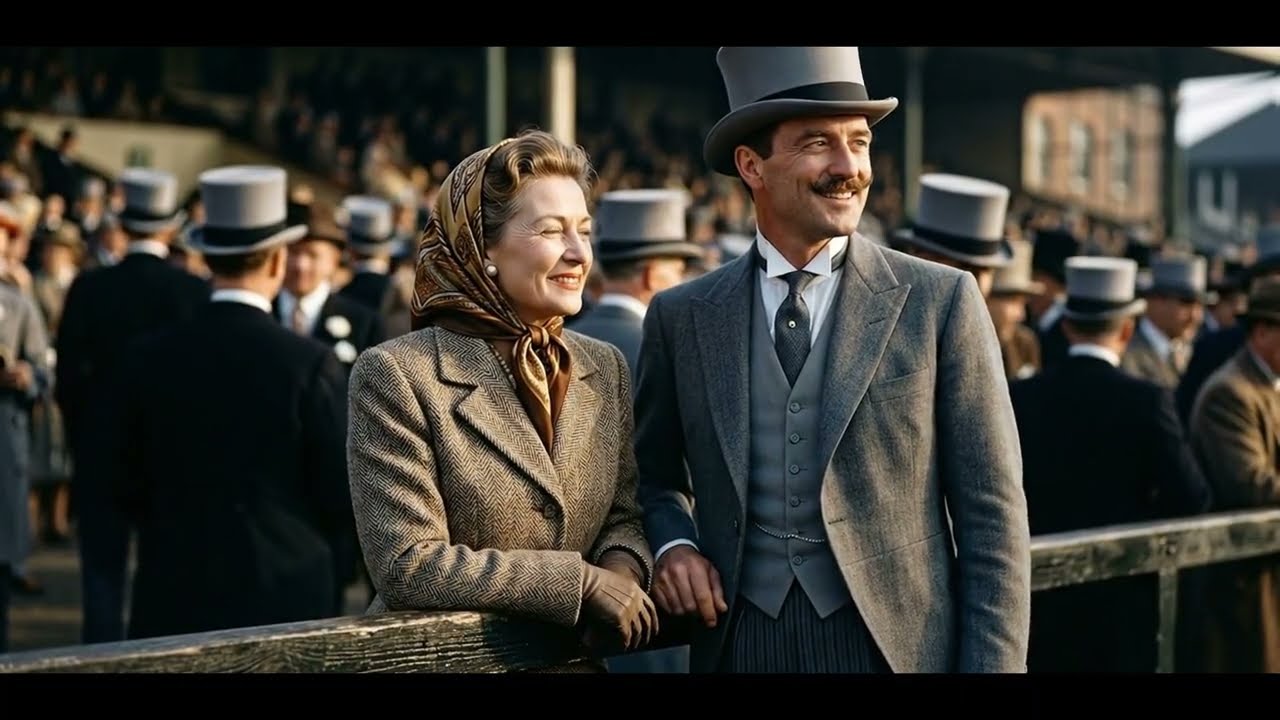
It was also, by an accident of the map, only about 10 miles from Gatcombe Park, where Princess Anne was living out the slow end of her own marriage.
### The letters and the silences
In the spring of 1989, someone stole a small number of private letters from inside Buckingham Palace and handed them to a newspaper.
The letters had been written to Princess Anne by a naval officer named Commander Timothy Lawrence, who was then serving as equerry to the Queen.
The palace issued a statement confirming that the letters had been written to the Princess Royal by the Queen’s Equerry.
The newspaper that received the letters did not publish their contents. It handed them to the police.
The thief was never found. No one was ever identified, arrested, or charged.
The contents were never made public.
Four months later, on the 31st of August 1989, Buckingham Palace announced that the Princess Royal and Captain Mark Phillips were to separate.
The marriage made at the abbey in 1973 was over in all but law. It would be formally dissolved by divorce in the spring of 1992.
### The two divorces
Anne went first, and she went quietly. Her divorce from Mark Phillips was granted in the spring of 1992.
Andrew’s marriage came apart in the full glare of the greatest royal scandal of the age.
In the summer of 1994, the prince sat for a television documentary watched by some 13 million people in which he admitted that he had been unfaithful in his marriage.
His private secretary confirmed the following day that the other woman was Camilla Parker Bowles.
In January of 1995, Andrew and Camilla issued a jointly agreed statement.
Throughout their marriage, the statement said, they had tended to follow rather different interests, and in recent years they had led completely separate lives.
The decree was made absolute on the 3rd of March, 1995. The marriage had lasted 21 years.
### The men and the marriages they chose next
On the 12th of December 1992, only months after her divorce, Anne married Commander Timothy Lawrence.
The wedding was held at Crathie Kirk, the small parish church near Balmoral, in a Church of Scotland service.
Timothy Lawrence was in almost every way a self-made man. He was the son of a naval officer who had become a salesman.
He was given no peerage on marrying the queen’s daughter, and he holds no royal title to this day.
He rose on his own merit to the rank of Vice Admiral before he retired in the year 2010 after 37 years of service.
Andrew’s second act came a little later. In 1996, the year after his divorce, he married Rosemary Pitman, a woman he had known and cared for over a long time.
By all accounts, the marriage was a happy one. It gave him 14 quiet years.
Rosemary died of complications from cancer in January of the year 2010.
The service was held at a Roman Catholic church in Wiltshire. Among the mourners who came to bury Andrew Parker Bowles’s second wife was Princess Anne.
### Godfather
When Princess Anne’s daughter Zara was born in 1981, Andrew Parker Bowles was named among her godparents.
He has remained one of the constants of her life ever since.
A princess does not make the former boyfriend she was barred from marrying the godfather of her daughter unless the thing between them had turned into something durable and clean enough to last a lifetime.
Zara, raised without a royal title, became a champion horsewoman like her mother and her father before her, an Olympian in her own right.
The two of them have gone on decade after decade exactly as they began. They are photographed together at Royal Ascot most years.
In the spring of 2005, Andrew and Rosemary were guests at the wedding of the Prince of Wales and Camilla at Windsor.
On the 6th of May 2023, Andrew Parker Bowles sat inside Westminster Abbey and watched Camilla be crowned queen beside King Charles III.
The wronged husband in his 80s applauding as his former wife was crowned beside the man who had taken her.
Late in 2023, Andrew Parker Bowles, then in his 80s, was reported to have begun a relationship with the broadcaster Anne Robinson. A reporter inevitably asked him about it.
His answer was four words long. Mind your own business.
### The truth about her
Everyone else in the story spoke or was made to. The two who never did were the two least diminished by all of it.
Princess Anne endured a kidnap at gunpoint, a theft from inside her own palace, a marriage dissolved in the courts, and a private grief carried across the world. She has never given an account of any of it.
Andrew Parker Bowles lost his wife to a king, was made the most famous cuckold in England, and never sold a word.
The two who said nothing came through the wreckage of that family with more dignity than anyone who spoke.
Andrew Parker Bowles revealed the truth about Princess Anne. Not in a confession he never gave, but in the shape of a 55-year loyalty.
The courtship he never discussed, the friendship he never broke, the child he stood godfather to, the funeral he shared with her.
The truth about her is written in what he did, not what he said.
And what he did says that the queen’s daughter is a woman who keeps the people she chooses for life, who never trades a confidence and who decided as he did that the world had no claim on her heart.
Return at the last to the racecourse where it began. To the June afternoon in 1970 when a princess not yet 20 and an officer of 30 stood together at the rail and the whole enclosure understood what it was watching and no one said a word.
More than half a century later, there they are still at the same meeting in the same light. Two old riders with their heads bent together, laughing at something no camera caught.
Ask Andrew Parker Bowles about it, even now, and he will give you the only answer he has ever given.
Mind your own business.
It is not a refusal. It is the truth kept where he has always believed the truth belongs.