The Walgreen family’s story begins in 1901, when a 27-year-old pharmacist named Charles Rudolph Walgreen paid $6,000 for a small drugstore on Chicago’s South Side. The store, located at the corner of Cottage Grove and Bowen Avenues, was just 20 feet wide and 50 feet deep. The previous owner, Isaac Blood, was eager to sell.
Walgreen had apprenticed under a druggist in Dixon, Illinois, before moving to Chicago in 1893. He earned his pharmacist’s registration in 1897. His early life had been shaped by near misses. A factory accident had cost him part of a finger, and a doctor recommended pharmacy as a safer occupation. During the Spanish-American War, he contracted both yellow fever and malaria in Cuba. He was placed on a casualty list under the heading "dead" before recovering, though the fevers plagued him for the rest of his life.
Walgreen’s early innovations were practical. He placed merchandise on open display, manufactured his own pharmaceutical products, and built his own ice cream factory. By 1913, he had four stores. By 1916, the chain had grown to nine stores and was formally incorporated as the Walgreen Company. By 1919, there were 20 stores on Chicago’s South Side.
The chain’s explosive growth in the 1920s is often attributed to the soda fountain. In 1922, an employee named Ivar "Pop" Colson added two scoops of Walgreen’s house-made vanilla ice cream to a standard malted milk drink. Customers stood three and four deep at the fountain the same day. The innovation spread to every location, and the soda fountain became a destination.
Prohibition also played a significant role. The Volstead Act allowed physicians to legally prescribe up to a pint of whiskey per person per 10 days for medicinal purposes. Pharmacies could fill those prescriptions. Walgreens operated 20 stores before Prohibition and 525 stores by 1929. Prohibition historian Daniel Okrent wrote that it was doubtful milkshakes alone were responsible for that growth. Charles Walgreen Jr. later recalled that his father worried about fires in the stores but wanted the fire department out quickly, because whenever firemen came in, the stores would lose a case of liquor from the back.
Charles Walgreen Sr. resigned the presidency in August 1939, too ill with cancer to continue. He left behind 494 stores in 37 states employing approximately 12,000 people. He died later that year at age 66. His son, Charles R. Walgreen Jr., succeeded him. The father’s parting instruction was brief: "Here is your desk. Here are the keys. I'm going fishing."
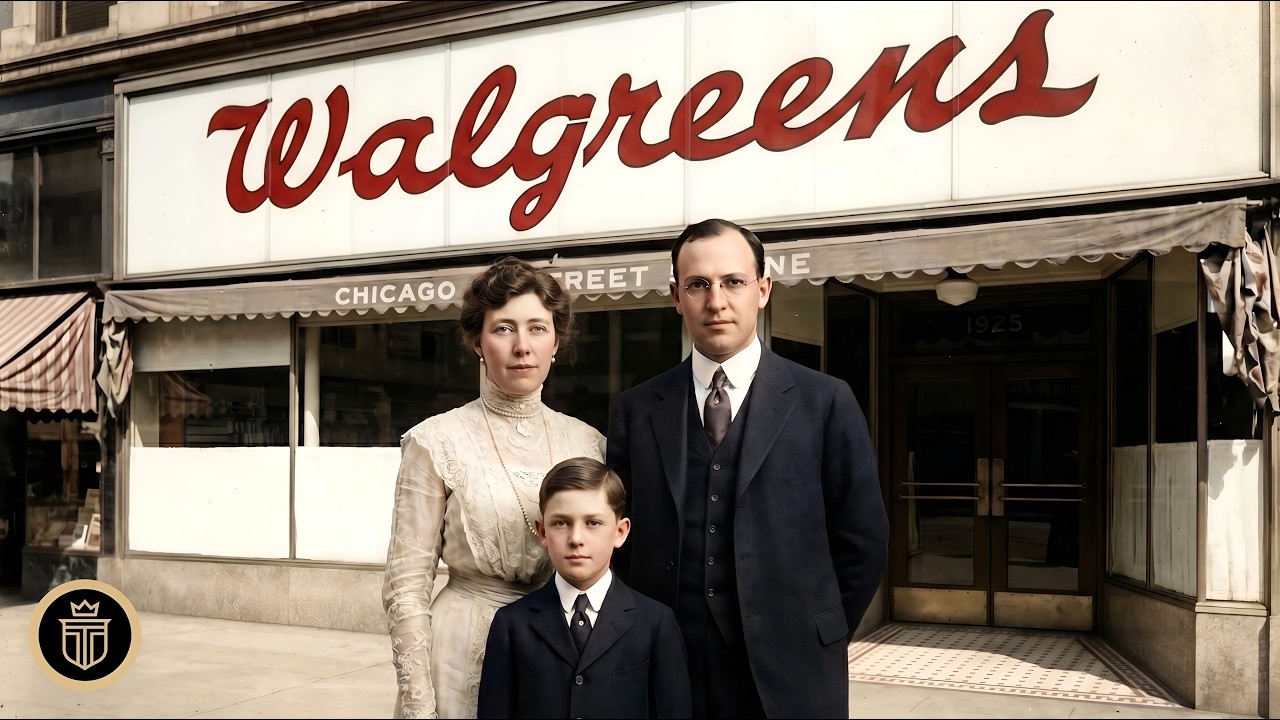
Charles Walgreen Jr. was born in 1906 and lived exactly 100 years. He joined the company in 1925, starting at the bottom. He earned his pharmacy degree from the University of Michigan in 1928. His tenure was defined by a transition to self-service retailing. In 1949, he canceled a planned merger with Thrifty Drug Company because their counter service model was incompatible with the future he was building. He expanded internationally, acquiring Sanborns department stores in Mexico in 1946.
The family’s relationship with the empire became complicated early. In April 1939, the founder’s daughter, Ruth, divorced Justin Whitlock Dart, a man her father had brought into the company. Dart had been left a substantial share of the business in the founder’s will. By November 1941, friction within the board led to a formal demand for his resignation. Dart then joined United Drug Incorporated, rebranded it Rexall drug stores, and became a direct competitor to the Walgreen chain for the next several decades.
Charles Richard Walgreen III, known as Cork, was born in 1935. He started as a stock boy in 1952 at age 16. He earned his pharmacy degree from the University of Michigan in 1958 and became president in 1969, then CEO in 1971. His most consequential decision was to strip away the company’s restaurants, discount stores, and other distractions, refocusing entirely on the stand-alone drugstore. The company achieved 23 consecutive years of record sales and earnings. Cork grew the company’s sales from $817 million to $13 billion and its market capitalization from $164 million to $19 billion.
While Cork was building the company, something was happening in his own household. His son Tad, formerly Charles Alexander Walgreen, grew up at a remove from the family wealth. He was estranged from his father through much of his youth. He struggled with a drinking problem and met a woman named Lauren in a rehabilitation program in the late 1980s. They married in 1988 and had two children, a son named Alex and a daughter named Brooke. They descended together into addiction.
Tad served time at Joliet Penitentiary for a drunk driving conviction. At the time of his death, he was facing additional criminal exposure for illegally obtaining prescription painkillers from a Walgreen’s store. In the spring of 1996, at age 36, Tad died of a cocaine overdose in a modest apartment in Berkeley, Illinois.
Before he died, Tad agreed to let Cork and Cork’s wife Kathleen legally adopt Alex and Brooke. Lauren fought to rescind the adoption consent. In a Cook County courtroom in 1996, Cork described visiting Tad and Lauren’s apartment and finding waste, soiled clothes, dirty cookware, stained carpets, and a wall with a hole punched in it. Lauren said, "Money equates to authority. It grants them permission to take my children."

Lauren’s history was severe. She had narcotics offenses, multiple hospitalizations, and a suicide attempt in 1993. In 1997, she was accused of attempting to buy heroin from an undercover officer while her son sat in her vehicle. In 1998, she pleaded guilty to a prostitution charge. She was 31 years old when she died of a drug overdose. Cork released a statement through his attorney: "These substances ultimately proved too strong. And we hope she has now found peace."
Two deaths from drug overdoses in three years. One was the heir to the company. The other was the mother of his children.
The family’s formal presence in the company ended gradually. In January 2009, the Chicago Tribune reported that Kevin Walgreen, Cork’s son and the founder’s great-grandson, had resigned. He had started working at Walgreens in 1979 as a shelf stocker and worked his way up to senior vice president of store operations. He was the last member of the founding family to hold any position in the company. Cork retired from the board in January 2010, ending 46 years of board service.
The 2014 Walgreen’s proxy statement contained a sentence that served as the formal death certificate of the dynasty: "There are no family relationships among any of our directors or executive officers."
Cork Walgreen died on September 26, 2016, at his Lake Forest home at age 80. The tribute to his legacy was delivered by Alex Gourlay, a former Boots executive serving as chief operating officer of Walgreens Boots Alliance.
Stefano Pessina was born in Italy and trained as a nuclear engineer. He inherited a small pharmaceutical distribution business from his father in 1977. Over four decades, he made over 1,000 acquisitions across Europe. He merged his holdings with the Boots UK pharmacy chain to create Alliance Boots, then took it private in a $22.3 billion leveraged buyout with KKR in 2007.
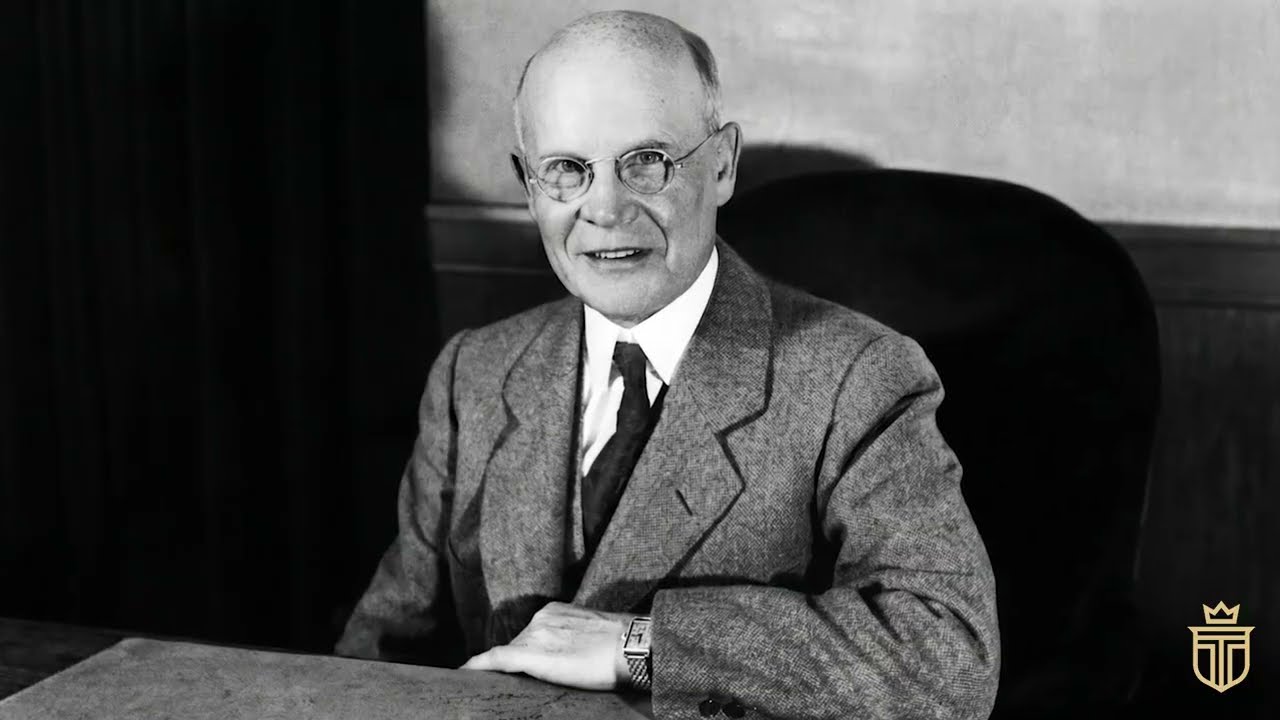
The acquisition of Alliance Boots by Walgreens was negotiated beginning in 2012. A Pessina deputy described the dynamic as "Men against boys." By December 31, 2014, Walgreens Boots Alliance was formally constituted. Pessina held 141 million shares worth approximately $11.3 billion. Greg Wasson, who had been named as the future leader of the combined entity, was replaced by Pessina as acting chief executive. Pessina was formally confirmed as CEO in July 2015.
In the spring of 2014, investors including Goldman Sachs, Jana Partners, Corvex, and Och-Ziff met with Wasson and Pessina in Paris. They recommended moving the corporate headquarters to Switzerland to capture an estimated $4 billion in tax savings. President Obama excoriated the practice of corporate inversions. Illinois Senator Dick Durbin wrote directly to Wasson. On August 6, 2014, Wasson announced Walgreens would not pursue the inversion. Shares dropped 14% in a single day.
Between August 2012 and March 2023, Walgreens pharmacists filled millions of prescriptions for controlled substances that the Department of Justice would later describe as unlawful. The DOJ complaint filed in January 2025 alleged that Walgreens had systematically pressured pharmacists to fill prescriptions quickly without verifying their validity. In a California case decided in 2022, an expert witness reviewed 2,265 red flag prescriptions filled by Walgreens pharmacies in San Francisco and found that pharmacists had failed to perform required due diligence in at least 95% of them.
In 2022, Walgreens agreed to pay approximately $5.7 billion to states and local governments. In April 2025, the company settled with the Department of Justice for an additional minimum of $300 million. The aggregate liability reached approximately $6 billion.
Walgreens Boots Alliance’s market capitalization peaked in 2015 at approximately $91.86 billion. Nine years later, it had fallen to approximately $8.3 billion. Fiscal year 2024 alone produced a net loss of $8.6 billion. Combined losses across 2023 and 2024 exceeded $11.7 billion.
In February 2024, Walgreens was removed from the Dow Jones Industrial Average and replaced by Amazon. In January 2025, the company suspended its quarterly dividend, ending a 92-year streak of consecutive quarterly payments. The company announced 1,200 store closures in late 2024, concentrated disproportionately in Black and Latino neighborhoods.
While the company was collapsing, the founder’s great-grandson, Charles Walgreen, was conducting a separate legal battle against the corporation for the right to use his own family name. He had started a company called Walgreen Health Solutions LLC selling health products. The corporation sued him for trademark infringement in December 2023. It was the second such lawsuit. In 2013, the company had sued him over a phone accessories business. The parties settled the 2023 case confidentially in May 2025.
On August 28, 2025, Walgreens Boots Alliance was delisted from the Nasdaq and taken private by Sycamore Partners. The acquisition price was $11.45 per share, yielding approximately $10 billion in equity value. Sycamore split the entity into five standalone companies: Walgreens Retail Pharmacy, the Boots Group, Shields Health Solutions, CareCentrix, and VillageMD. Pessina, then 83, reinvested his own stake in the new structure, with reports indicating he would hold nearly 50% of the Boots division.
No one named Walgreen runs Walgreens. The stores bearing the founder’s name now belong to a private equity firm. The founder’s first store cost $6,000. His son ran the chain for 37 years. His grandson grew it to $19 billion in annual sales. His great-grandson died of a cocaine overdose in a Chicago suburb while facing criminal charges for illegally obtaining controlled substances from a Walgreen’s pharmacy. The company paid $6 billion in opioid settlements for dispensing the substances it should have refused.