For decades, Meryl Streep has been celebrated as the greatest actress of her generation. But long before the Oscars and the flawless accents, she was a young woman from Bernardsville, New Jersey, who was once told by one of Hollywood’s most powerful producers that she was not pretty enough for movies. Streep grew up in a home where she was encouraged to be natural, kind, and beautiful. She lightened her hair, tried out for the cheerleading squad, and played the role of the ideal American girl for years.
It was only after she left home for Vassar College, then an all-women’s school, that she found her own voice and began to think for herself. At Yale School of Drama, one of the most competitive programs in the world, Streep nearly gave up acting altogether. She admitted that she saw acting as self-indulgent at the time, especially when her generation was urged to devote their lives to feeding the world and fighting injustice. She seriously considered changing her life’s direction.
Despite her doubts, she graduated and moved to New York City in the mid-1970s. She threw herself into theater with the New York Shakespeare Festival under Joseph Papp, earning a string of roles in a single year. Critics and directors began to take notice, and eventually, Hollywood came calling. The first major Hollywood meeting did not go well.
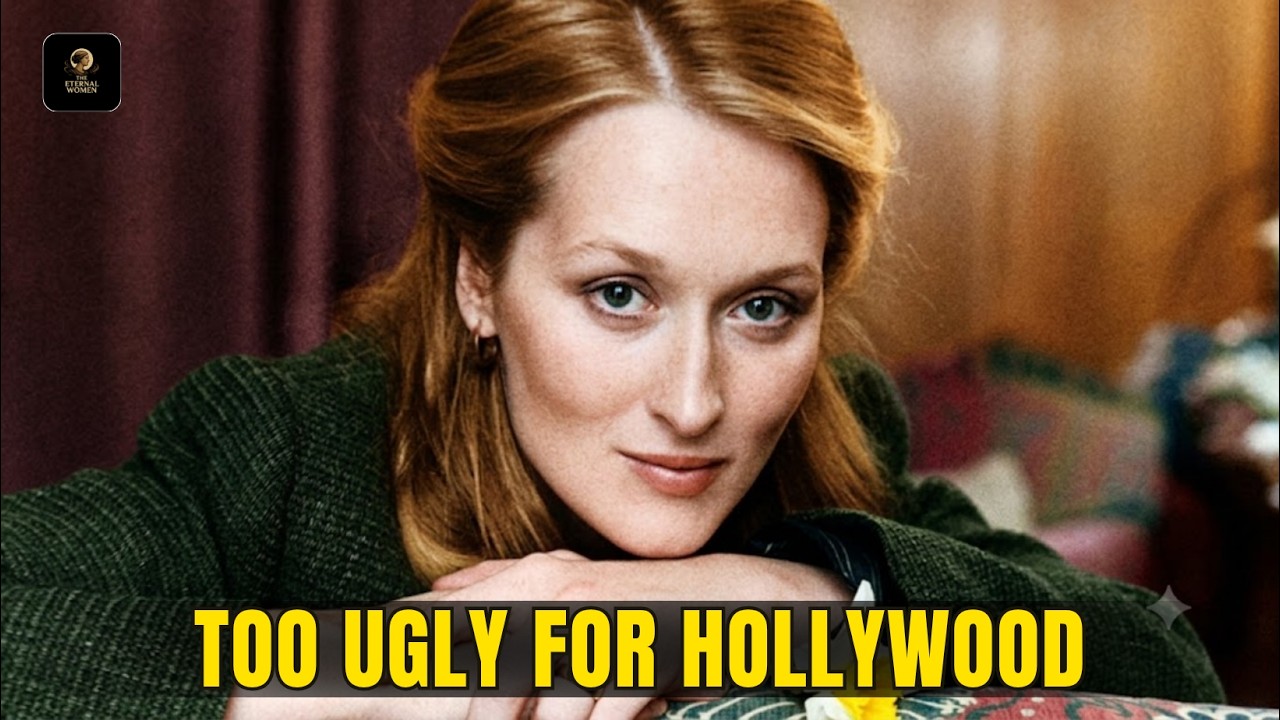
In 1975, at age 26, Streep was invited to audition for the female lead in Dino De Laurentiis’s big-budget “King Kong. ” In his office, he turned to his son and asked in Italian why he had brought him “this ugly thing. ” Streep, who understood every word, calmly replied in fluent Italian that she was sorry she wasn’t beautiful enough for his film. She did not get the role.
Jessica Lange did. Streep returned to the New York stage with no film credits to her name and waited two more years for another real cinematic opportunity. In 1976, Streep starred opposite actor John Cazale in a Shakespeare in the Park production of “The Measure. ” Cazale, known for his roles in “The Godfather” films, was a highly respected character actor.
The two fell in love and moved in together in his Tribeca apartment. For two years, they built what appeared to be a genuine and happy relationship. In the spring of 1977, Cazale began missing rehearsals for a production of “Agamemnon. ” After seeing a doctor, he learned that he had lung cancer that had spread throughout his body.
He was 41 years old. Streep kept the diagnosis a secret from almost everyone for ten months, including Cazale’s own brother and most of their shared friends. She attended rehearsals, social events, and a film shoot thousands of miles away, never revealing the truth. Cazale continued smoking cigars in theater lobbies until his condition worsened, and Streep never scolded him for it.
As his health declined, Cazale was considered such a significant insurance risk that the production of “The Deer Hunter” could hardly cast him. According to reports from people close to the film, Robert De Niro personally helped cover the insurance costs so his friend could appear in the movie. The director rearranged the entire shooting schedule to film Cazale’s scenes first before his health deteriorated further. Cazale completed every scene but did not live to see the film released.
On March 12, 1978, John Cazale died in a New York hospital, with Streep by his side. According to several accounts from people who were present, she struck his chest and begged him to hold on. In his final moments, he opened his eyes and said softly, “It’s okay, Meryl, it’s okay. ” Then he closed his eyes and was gone.
She was 28 years old. She had spent most of the year hiding the severity of his illness while maintaining her rising career. After his death, she had no home of her own, as the apartment belonged to him and she had to move out. Shortly after Cazale’s death, Streep needed help sorting through their shared belongings.
She called her brother Harry, who brought along a friend, a sculptor named Don Gummer, who was about to leave for a long trip to Pakistan. Streep ended up subletting his apartment while he was away. What began as a practical arrangement turned into something more through letters exchanged from a distance. Streep and Gummer married in September 1978, just about six months after Cazale’s death.
Fourteen months later, their first child, a son named Henry, was born. Streep has described her pregnancy as a commitment made during what she called truly difficult times, a candid admission that does not match the glamorous image Hollywood prefers. Once her film career took off, it accelerated rapidly. “The Deer Hunter” earned her an Oscar nomination.
In 1979, she won her first Academy Award for “Kramer vs. Kramer,” and three years later, she won a second for “Sophie’s Choice,” a performance that immediately became the standard against which other great performances were measured. Tensions on the set of “Kramer vs. Kramer” between Streep and Dustin Hoffman have been documented and discussed for decades.
According to numerous accounts, Hoffman pushed for raw and spontaneous performances through methods that would be assessed quite differently by today’s industry standards. Streep has spoken about the period with objectivity, describing it as an example of what a young actress in the 1970s simply had to endure, because there was no real mechanism to respond at the time. Through the 1980s and 1990s, Streep delivered an extraordinary range of roles: a Polish Holocaust survivor, a recovering alcoholic, a small-town housewife, and many others. Critics eventually stopped commenting on her skill and began taking it for granted.
But that assumption became a hidden trap. When brilliance is expected instead of noticed, the effort behind it goes unrewarded. Streep’s work was never accidental. To play a Polish Holocaust survivor, she rebuilt her speech patterns from scratch in a language that was not her native tongue.
To play British Prime Minister Margaret Thatcher, she studied the real woman’s meticulously trained and constantly adjusted voice. It was engineering, repeated dozens of times over five decades. At the 2015 Oscars, host Jared Leto joked that the Best Supporting Actress category included four women plus “what California law requires. ” The joke reflected a reality: her presence in the nominations had become a kind of natural law.
But that sort of praise left no room for a less-than-perfect choice or a moment of human doubt. She was expected to be the best, every time, forever. Streep has stated clearly that motherhood was harder for her than being one of the most famous actresses in the world. Acting, she noted, comes with built-in rewards: praise, salary, premieres, and the satisfaction of finishing a scene.
Motherhood, she said, offers no thanks unless you ask for it more than once, and usually that comes with a request to clear the table. She raised four children with Gummer while maintaining one of the most demanding careers in film history, describing the balance as an ongoing negotiation without a roadmap. Streep has been a vocal critic of the double standard that pushes actresses toward retirement once they reach a certain age. While conventional wisdom said her career should have faded by her forties, she instead starred in “The Devil Wears Prada” in 2006, turning Miranda Priestly into one of the most iconic and quotable characters of that decade.
She followed that with an Oscar-winning performance as Thatcher in “The Iron Lady,” as well as roles in “Mamma Mia! ” and other major films well into her sixties and seventies. She holds the record for the most Oscar nominations of any actor in history, with more than 20 across five decades. She has won three times for three completely different roles.
She also holds the record for the most Golden Globe wins of any actress, along with numerous Screen Actors Guild Awards, a Best Actress award at the Cannes Film Festival, and a Kennedy Center Honor. In 2015, when women held only a small fraction of top creative positions in Hollywood, Streep fully funded a screenwriting workshop for women over 40, an age group the industry usually considers past its prime. Reports at the time indicated her contribution covered the entire cost of the program, which was held in partnership with New York Women in Film & Television and the IRIS Film Group. She has also been a strong supporter of The Public Theater, the institution where her career truly began under Joseph Papp, donating more than one million dollars for its renovation.
The woman who was told early on that she was not beautiful enough and might not last has spent decades quietly working to ensure that the path ahead is less brutal than the one she traveled. But even Streep, who seemed to have figured out how to succeed at everything, had another secret that the world would not learn for six years. In 2012, while accepting her Oscar for “The Iron Lady,” Streep praised her husband Don Gummer, telling the global audience that everything she valued in their life together was thanks to him. It was one of the most talked-about moments of that awards season, a legendary actress publicly crediting an unassuming man as the foundation of her career.
Then in October 2023, a quieter statement was released. A spokesperson confirmed to People magazine that Streep and Gummer had actually been separated for more than six years, since about 2017, even though they had celebrated their 45th wedding anniversary a month earlier and had continued appearing together at public events throughout that period. The statement was careful, almost formal, saying they would always care for each other but had chosen to live separate lives. No legal action was mentioned, no public spectacle occurred, just a candid acknowledgment that came years after the marriage had already quietly ended.
Fans who followed her closely noticed that Streep continued to wear her wedding ring in public even after the separation was confirmed. Whether that reflected lingering affection, simple habit, or a desire not to turn the ring itself into a story, no one outside her close circle could say for certain. Once the news spread, tabloids quickly connected Streep with her “Only Murders in the Building” co-star Martin Short. Multiple media outlets, citing unnamed sources, reported a warm and increasingly serious relationship, along with claims of strain over the slow pace of her formal divorce from Gummer.
One report suggested the duration of the process was causing real pressure as 2026 approached. Neither Streep nor Short has confirmed any of this directly. These remain unconfirmed reports from unnamed sources and should be treated as speculation, not established fact. Streep has been careful her entire career about managing her personal narrative.
She is a woman who hid a terminal diagnosis from her partner’s brother for nearly a year. She let the world believe for six full years that she was living in a successful marriage after it had quietly ended. If there is one thread connecting Streep’s private life, it is this: whatever the public believed at any given moment was likely years behind reality. The story Hollywood sold about Meryl Streep was one of quiet, inevitable genius, a woman who reached perfection and moved from triumph to triumph with seemingly effortless grace.
The truth tells a more complicated, more human, and frankly more admirable story. The real Meryl Streep is a teenager who spent years trying to be beautiful because no one showed her another option. A young woman who nearly abandoned acting at Yale because she suspected it wasn’t a serious enough use of life. A 26-year-old who was told face to face by one of the most powerful producers alive that she wasn’t pretty enough for films.
A 28-year-old who carried a terminal diagnosis alone for most of a year, kept working, and then had to leave her home weeks after her lover died in her arms. She is a wife and mother who built one of Hollywood’s most admired marriages on the ruins of that grief and said flatly that raising four children was harder than any role she was paid to play. A woman who fought her way through an industry that wanted to discard her at forty, and won in a way almost none of her peers were allowed to. In the numbers alone, her career seems statistically almost impossible.
More Oscar nominations than any other actor in history. Three wins across five decades. A résumé filled with Holocaust survivors, British prime ministers, cruel magazine editors, Swedish pop singers, European baronesses, and a green-faced Broadway witch. Every one of those characters was built from scratch through the same grueling process, by a woman who once doubted the whole endeavor was worth it.
At nearly every turn, the facts of Meryl Streep’s life contradict the polished and easy image Hollywood promoted. She wasn’t just talented; she was rejected and kept going. She wasn’t just stable; she was grieving and still built something. She wasn’t just beloved; she had to force an entire industry to make room for her for decades, long after most of her peers had been quietly pushed aside.
None of this diminishes the greatness of her work. It explains it completely. Every ounce of composure she has shown in any role was built by a woman who survived rejection, grief, exhaustion, and disappointment, and kept working because work was the one part of the equation that was always under her control.