On the morning of April 3, 1882, in St. Joseph, Missouri, a small wooden house sat on a hilltop at 1318 Lafayette Street. Inside, a man finished his breakfast. He wore a clean white shirt and two holsters, having carried pistols for seventeen straight years.
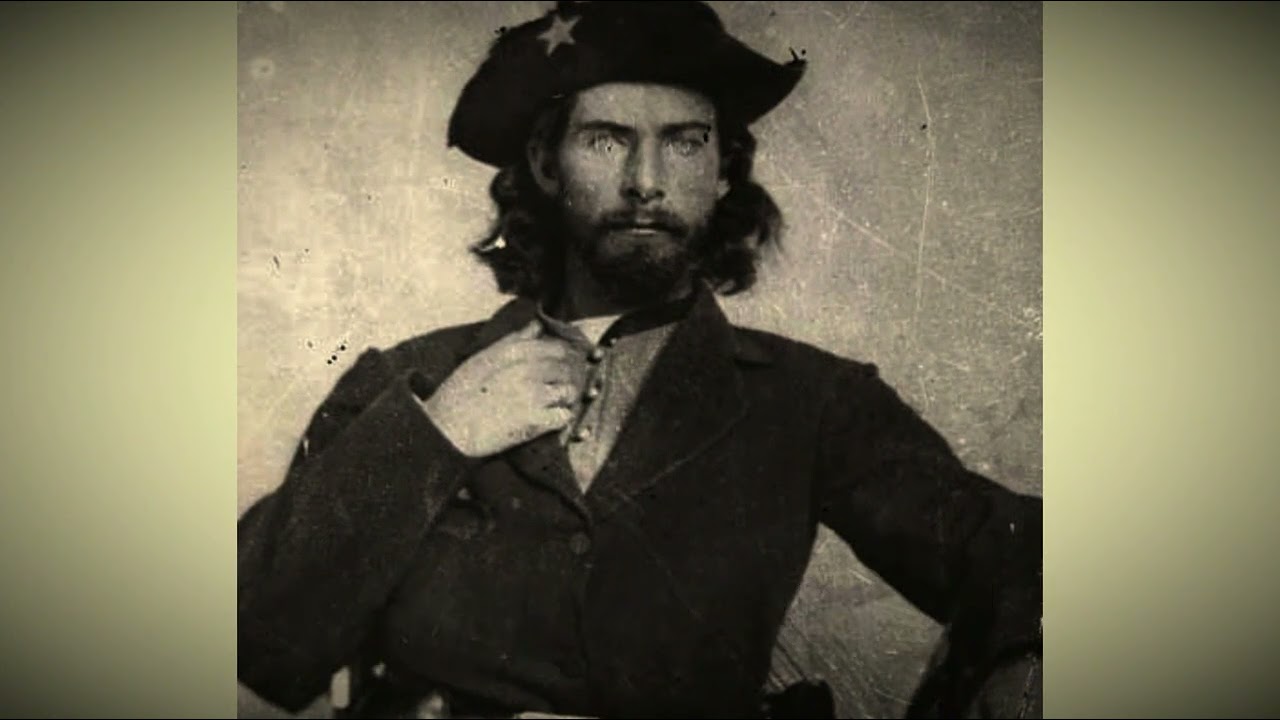
Noticing dust on a framed picture above the fireplace, he removed both holsters, laid them on a sofa, climbed onto a straight-backed chair, and reached for the frame. Two brothers watched him from across the room. One drew a . 44 Colt from its holster.
The most wanted outlaw in America had turned his back and was unarmed, unaware he was about to die. The house deed bore the name Thomas Howard, an alias the man had used for months. His wife and two small children knew him by yet another name. Only a handful of people in the entire country knew his true identity, and one of them was the man about to shoot him.
To understand Jesse James, one must first understand the land where he was raised, not the romanticized version of films but a harsher, older land. Before the James gang, the bank robberies, the train heists, or the dime-novel folk hero on horseback, there was a war. It did not begin at Fort Sumter. It started years earlier along the muddy border between two states, in Clay County, Missouri, in the 1840s, a slaveholding region settled mostly by Kentuckians.
A Baptist preacher named Robert James raised his family on a small farm near Kearney. His wife, Zerelda, was sharp-tongued and sharp-minded. Their first son, Alexander Franklin, was called Frank. In September 1847, a second son arrived: Jesse Woodson James.
The family was not poor. They owned land, grew hemp, and, according to the 1860 census, held seven enslaved people. Robert James left for California in 1850 to preach among gold miners and died there later that year. Jesse was three, Frank seven.
Zerelda remarried unhappily, then married a third time, a quiet rural doctor named Reuben Samuel who stayed on the farm for the rest of his life. It was Zerelda more than anyone who raised the boys, and Zerelda hated the North. In the 1850s, the Missouri-Kansas border became a battleground before the official war began. Congress allowed settlers in the new Kansas Territory to decide the slavery question by ballot.
Instead, men on both sides turned to guns. From Kansas came anti-slavery raiders known as Jayhawkers, who crossed into Missouri and burned slaveholders’ farms. From Missouri rode pro-slavery guerrillas called Border Ruffians, who crossed into Kansas and burned free-state towns. Each raid triggered a response, and by 1861, the border had already bled for six years.
Missouri did not formally join the Confederacy, but thousands of its men did. Frank James was one of them. At eighteen, tall, thin, and quiet, a boy who read Shakespeare in the evenings, he enlisted in the Missouri State Guard, fought at Wilson’s Creek in August 1861, fell ill, returned home, surrendered to Union forces, and signed an oath of loyalty. Within a year, he broke it.
By 1863, Frank James was riding with William Clarke Quantrill. The former Ohio schoolteacher had mustered his own partisan band, and under the Confederate Partisan Ranger Act he became a captain in the Southern army. His men wore no uniforms and fought no fixed battles. They rode fast, struck hard, and vanished into the timber.
The war in Missouri turned brutal. Union militia burned homes of Confederate sympathizers; Confederate guerrillas ambushed Union patrols. Prisoners were rarely taken, and when they were, they often died before nightfall. In 1863, Union General Thomas Ewing issued General Order No.
11, forcing thousands of families in four Missouri counties to leave their homes unless they could prove Union loyalty. Fields burned, and bitterness lasted generations. In May 1863, a Union militia unit rode to the James-Samuel farm. Frank was away with the bushwhackers, and the soldiers came to make the family talk.
They tied Dr. Reuben Samuel to a tree, looped a rope around his neck, hoisted him up, let him down, then hoisted him again, demanding to know Frank’s whereabouts. In the field, they found Jesse, not yet sixteen, and flogged him. The doctor survived, but he was never the same.
For Jesse James, that day was a turning point. That summer, Quantrill led more than 400 bushwhackers into Lawrence, Kansas, a free-state town. Nearly 180 men were killed; the town burned to ashes. Frank James, the quiet Shakespeare reader, was among the raiders.
Jesse was still recovering from the beating and did not ride with Quantrill. His moment came in the spring of 1864. A guerrilla leader named William Anderson, known as “Bloody Bill,” commanded one of the fracturing Confederate bands. After his sister died in a Union prison collapse in Kansas City, Anderson grew merciless.
He rode with a woman’s embroidered shirt and scalp locks tied to his saddle. In the spring of 1864, a lean teenage rider with a sharp gaze joined Anderson’s band. That rider was Jesse James. Under “Bloody Bill,” Jesse learned the trade that would carry him to St.
Joseph eighteen years later. He learned to ride in loose formation, to disguise himself in Union blue, to keep spare horses behind the column, and to carry four or five revolvers so he never had to stop and reload in a fight. On September 27, 1864, everything Anderson taught culminated in the small railroad town of Centralia. Anderson’s band of about eighty men rode in, drank whiskey from the general store, and waited.
A North Missouri Railroad train arrived carrying roughly 125 civilians and about 24 Union soldiers heading home on furlough from Georgia. Anderson pulled the soldiers off the train, lined them up on the platform, and kept one as a hostage. The rest were killed. A surviving passenger later described it as a bloody carnival.
Anderson burned the train, tied down the whistle so it screamed along the tracks, and rode into the woods. Hours later, a Union major newly appointed to the area, named Johnston, arrived with a company of soldiers. Determined to avenge the massacre, he rode after Anderson, straight into a trap. Anderson’s men rose from the tall grass at the field’s edge.
About 120 Union soldiers died within minutes. According to surviving Confederate accounts, the rider who passed closest to Major Johnston was likely Jesse James, and it was Jesse who shot and killed him. He was not yet seventeen. In October 1864, Anderson himself was hunted down and killed near Albany, Missouri, by a Union force under Major Samuel P.
Cox. Anderson’s body was laid out in a courthouse. When the surviving guerrillas heard the news, they swore an oath that Cox would one day be avenged, no matter how long it took. The war officially ended in April 1865 with Lee’s surrender at Appomattox, but for these men, it did not end.
Quantrill was killed in Kentucky weeks later. Frank James surrendered and returned home on a parole. Jesse rode south to Texas for the winter, then headed north in the spring with a few other guerrillas to surrender at Lexington, Missouri. According to Jesse’s own account, they rode under a white flag, but Union cavalry opened fire.
Jesse was shot in the chest. It was the second time he had been wounded that way, and it nearly killed him. He spent months bedridden, nursed by his cousin Zerelda Mims, a nineteen-year-old girl. He would eventually marry her.
After the war, Missouri fell under the control of Radical Republicans, who wrote a new state constitution in 1865, known as the Drake Constitution. It stripped the right to vote from anyone who had supported the Confederacy, anyone who merely cheered for the South, even ministers of Southern Baptist congregations. For Jesse James, a former rebel soldier returning to Clay County, the message was clear: he was no longer a full citizen of his own state. A former guerrilla named Archie Clement kept his men together after the war.
Small, thin, and quiet, he was described by those who knew him as one of the most dangerous men in the state. He harassed Republican officials and terrorized the men who had written the Drake Constitution. On February 13, 1866, in Liberty, Missouri, two young men walked into the Clay County Savings Association. It was a cold, snowy day.
They asked the cashier, Greenup Bird, to exchange a banknote, then drew their pistols. Ten or twelve mounted riders waited outside in the snow. Within minutes, the thieves emptied the bank of about $60,000 in cash and bonds, worth more than a million dollars today. As they turned the corner, one of them shot a college student named George Wymore, who died in the snow.
Historians who have studied the event closely call it the first successful daylight bank robbery in American history. Whether Jesse James himself was present remains debated, but Frank James and Cole Younger, also a former rebel, almost certainly were. By December of that year, when Archie Clement was killed by state militia, leadership of the remnants passed to Frank and Jesse James and to the Younger brothers: Cole, Jim, John, and Bob. The James-Younger Gang had taken shape.
In the years after Liberty, the gang moved carefully. They hit banks in Lexington, Savannah, Richmond, and Russellville, Kentucky. Some jobs went smoothly; some failed entirely. In December 1869, in Gallatin, Missouri, Jesse walked into the Daviess County Savings Association and shot the cashier dead.
He believed the man was Samuel P. Cox, the Union major who had killed “Bloody Bill” Anderson five years earlier. He was wrong. The cashier was a man named John W.
Sheets, a civilian who had never fought in the war. Jesse escaped through a posse, and from that moment his name exploded from Missouri papers to the national press. He was 22 years old. By the end of the following year, he was the most famous outlaw in America.
In 1871, the gang robbed a bank in Corydon, Iowa, while the whole town attended a lecture. In 1872, they robbed the ticket booth at the Kansas City Industrial Exposition in broad daylight in front of 10,000 people. On July 21, 1873, they did what no American outlaw gang had done before: they stopped a train. Wearing white hoods, they pulled a rail near Adair, Iowa.
The Rock Island train derailed, and the fireman, John Rafferty, was crushed and killed. The reward was only about $3,000. But the next morning, telegraph lines carried one story across America: an outlaw gang had derailed a train. The papers nicknamed them the James Gang.
On January 31, 1874, at Gads Hill, a tiny station in southeastern Missouri, Frank and Jesse flagged down the Little Rock Express with a red lantern. This time they were more careful: they examined the hands of male passengers and robbed only those with soft hands, bankers and merchants, leaving workingmen alone. They also left behind a note, written in the third person like a newspaper story, describing the robbery. Historians believe Jesse wrote it himself and sent it to the papers to control the narrative.
He understood that the story was worth more than the money. He was writing his own legend. By the winter of 1875, the railroads had had enough. They hired the Pinkerton National Detective Agency from Chicago.
Allan Pinkerton had been the Union’s intelligence chief during the war, and one of his agents had already been found dead in Clay County a year earlier. Pinkerton was determined to catch the James brothers at any cost. On a bitterly cold night in January 1875, a group of Pinkerton agents approached the James-Samuel farm. Acting on bad information, they believed the brothers were inside.
What exactly the agents threw through the kitchen window remains disputed 150 years later, some say a flare, some say a bomb. But what is not in doubt is the result. The device rolled toward the fireplace and exploded. Zerelda Samuel, mother of Jesse and Frank James, lost her right arm below the elbow.
A member of the family lay dead. The agents fled in the night, leaving behind a revolver stamped with the initials “P. G. ” for Pinkerton’s Government Guard.
Missouri erupted in fury. The same papers that had demanded Jesse James’s head now demanded Allan Pinkerton’s. A bill was introduced in the state legislature to grant Frank and Jesse James a full pardon. It did not pass, but it came close.
Many historians argue the Pinkerton bombing did more to make Jesse James a folk hero than any train robbery ever did. For a time, the brothers tried to live more quietly. On April 24, 1874, Jesse married his cousin Zerelda Mims, the woman who had nursed him back to health a decade earlier. Frank married secretly that same year.
Jesse and Zerelda had children; the family moved around under assumed names, sometimes Tennessee, sometimes Missouri. But the robberies continued: a bank in West Virginia in 1875, a train near Otterville, Missouri, in 1876, that netted $15,000 in gold. In the summer of 1876, Jesse and Cole Younger planned their biggest job yet, far north in Minnesota. The town was Northfield.
The gang rode in on September 7, eight men strong: Frank and Jesse James, the three Younger brothers, and three others. Around two in the afternoon, three men entered the First National Bank of Northfield. Frank James, Charlie Pitts, and Bob Younger jumped the counter, pointed pistols at the clerks, and ordered the acting cashier, Joseph Lee Heywood, to open the safe. Heywood was a mild-mannered accountant with a wife and daughter.
He looked them in the eye and lied, saying the safe was on a time lock. It was not locked at all, and he knew it. He refused to open it. Outside, everything went wrong.
A hardware store owner named J. S. Allen was shoved by an outlaw and ran down the street shouting that the bank was being robbed. A medical student named Henry Wheeler grabbed a rifle.
A gun shop owner named Ansel Manning took position across the street. The townspeople armed themselves with anything they could find. When the outlaws fired into the air to clear the streets, the streets fired back. In about seven minutes, the most dangerous outlaw gang in America was destroyed.
Clay Miller was killed by Henry Wheeler. Bill Chadwell was shot dead from his horse by Ansel Manning. Cole Younger took a bullet in the shoulder; Jim Younger was hit in the jaw; Bob Younger’s elbow was shattered; Frank James was shot in the leg; Charlie Pitts was wounded; Jesse may have taken a superficial wound. Inside the bank, as the raiders fled empty-handed, one of them shot cashier Joseph Lee Heywood.
He did not survive. A Swedish immigrant, Nicholas Gustafson, who did not understand the order to get inside, was also struck by a stray bullet and died days later. The whole state of Minnesota rose in pursuit. The surviving gang split.
Frank and Jesse, both wounded, escaped west and south, riding for weeks, sleeping in ditches and stealing corn from farmers’ fields. They eventually reached Missouri, but by then they had lost their horses and almost their lives. The Younger brothers were less fortunate. Two weeks after Northfield, they were cornered at Hanska Slough.
Charlie Pitts was dead, and Cole, Jim, and Bob Younger surrendered, all seriously wounded. To avoid the gallows, they confessed to killing Heywood and were sentenced to life in prison at Stillwater. The James-Younger Gang was finished. Frank and Jesse lay low for nearly three years under assumed names in Tennessee, farming and reading newspapers.
Frank may have been content to continue that life, but Jesse could not stop. In the fall of 1879, he returned to Missouri and formed a new gang, younger, more reckless, less skilled. They hit a train near Glendale, Missouri, in October and another near Winston, Missouri, in the summer of 1881, during which a passenger and a train conductor named William Westfall were killed. By the fall of 1881, Missouri’s new governor, Thomas Crittenden, set to work.
He offered a $10,000 reward for the capture and conviction of Frank and Jesse James. That reward, more than Pinkerton or any posse, brought Jesse James to the end of his story. In the winter of 1881, Jesse took two brothers into the remnants of his gang: Charlie and Robert Ford. Charlie was in his mid-twenties; Robert was only twenty.
They were distant kin of the Younger brothers. Jesse trusted them, or so he thought. He moved with them, his wife, and his children into a rented house on Lafayette Street in St. Joseph, under the name Thomas Howard.
He was planning one last job, a bank in Platte City, then he intended to disappear forever. Robert Ford had already met secretly with Governor Crittenden. The deal: $10,000 and a full pardon for any crime Ford had committed. In return, Ford would deliver Jesse James, alive or dead.
On the morning of April 3, 1882, Jesse finished breakfast and came into the front room with Charlie and Robert Ford. He unbuckled both pistols and laid them on the sofa, because it was warm and because a man in shirtsleeves wearing two guns might draw attention from a neighbor’s window. Noticing dust on a picture above the fireplace, he said aloud that it needed cleaning. He climbed onto a straight-backed chair and reached toward the frame.
Behind him, Robert Ford drew his pistol, cocked it, aimed at the back of Jesse James’s head, and pulled the trigger. Jesse James was 34 years old. The Ford brothers telegraphed the governor within the hour. They were arrested, charged with murder, pleaded guilty, and were sentenced to hang.
On the same day as the sentencing, Governor Crittenden pardoned them. Within a month, a song was being sung in the streets of Missouri calling Robert Ford a “dirty little coward. ”
Robert Ford spent the rest of his life trying to profit from what he had done, performing reenactments of the murder in traveling shows. The country never forgave him.
In 1892, in a mining camp called Creede, Colorado, a man walked into the tent saloon Ford ran and shot him dead with a shotgun. Ford was 30. His brother Charlie had taken his own life eight years earlier. Frank James surrendered in Jefferson City on October 5, 1882, six months after his brother’s death.
He walked into Governor Crittenden’s office, laid down his pistol, and said quietly that he was Frank James and tired of running. Tried twice for murder in two states, he was acquitted both times. He lived another 33 years, working as a shoe salesman and a theater doorman. He died in his bed in 1915, on the same farm where he was born.
Cole Younger was released from Stillwater in 1901 and toured with Frank in a Wild West show before going bankrupt. He died in 1916. Zerelda Samuel lived until 1911, insisting to anyone who would listen that the war and the northern men who would not let them live in peace had driven her sons to what they became. She was buried near them.
In 1995, forensic scientist James Starrs exhumed Jesse James’s remains and ran DNA analysis. The results matched with 99. 7 percent certainty. It was Jesse, disproving rumors that he had faked his death and lived into old age under another name.
The question remains: who was Jesse James really? A soldier who never accepted his war’s end, or a criminal who wrapped his crimes in the banner of a lost cause? A folk hero to the poor Southern farmer, or a killer? Perhaps a little of all of them.
War made him before he made himself. In the end, it was no Pinkerton agent, no sheriff, no soldier, no marshal who brought him down. It was a boy of twenty, standing behind him in his own front room on a warm April morning while he stood on a chair to clean a picture.