On June 22, 1941, German forces crossed the Soviet border and launched Operation Barbarossa. Behind the front lines came the mobile killing units known as the Einsatzgruppen, tasked with exterminating entire populations in Eastern Europe, including Jews, communists, and other groups deemed enemies of the Reich.
Among the first territories occupied by Nazi forces was Latvia, one of the three Baltic states brutally annexed by Stalin in the summer of 1940. The Nazi plan for the newly occupied Baltic territories was not limited to defeating the Soviets. It also meant beginning an ethnic war, and the Jews were to be rounded up and killed.
In October 1941, the Riga Ghetto was established. Thousands of Jews were forced from their homes and packed behind barbed wire under heavy guard in the Latvian capital. Overcrowding, starvation, and disease spread quickly. Families were crammed into small rooms without adequate food, heating, or medical care.
To carry out the liquidation of the Riga Ghetto, Heinrich Himmler, head of the SS, turned to SS Group Leader Friedrich Jeckeln, a man with proven experience in mass murder. Jeckeln had previously organized large-scale executions in Ukraine, including the Babi Yar massacre near Kyiv, where more than 30,000 Jews were shot in September 1941. His methods were efficient, systematic, and cruel.
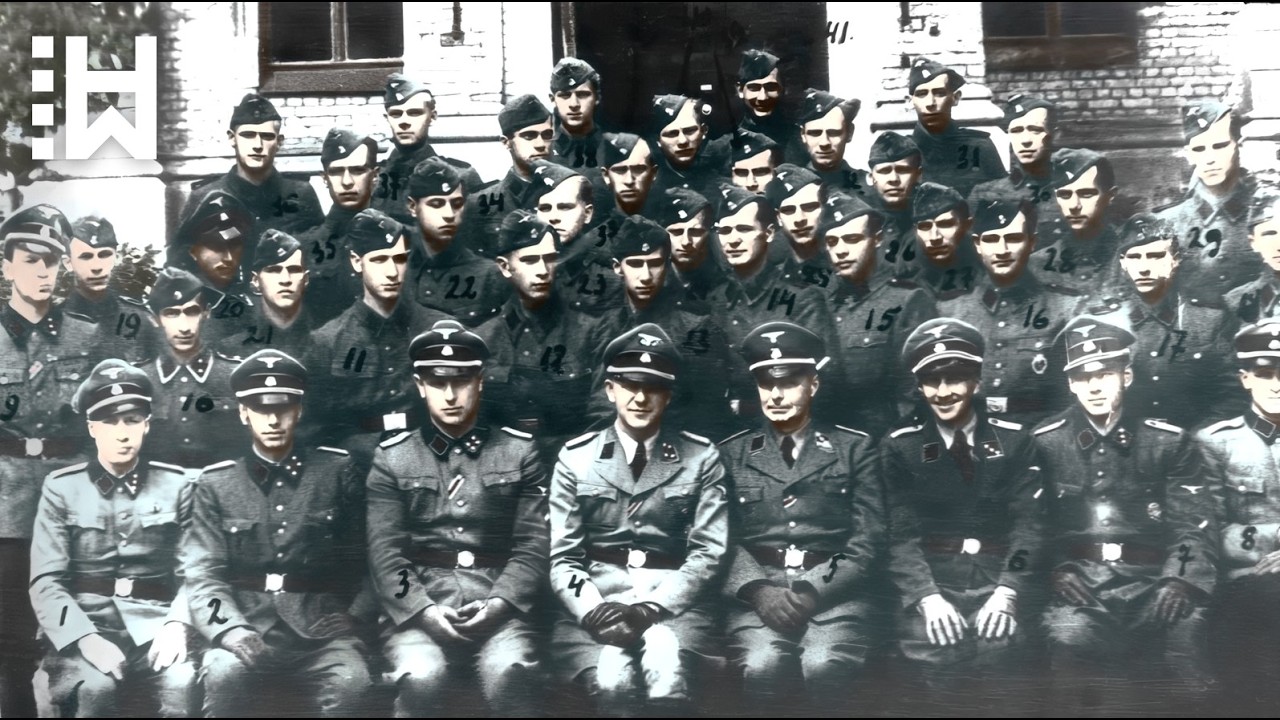
On November 5, 1941, Jeckeln’s unit of about 50 killers and support personnel arrived in Riga. Jeckeln himself traveled to Berlin, where he met with Himmler between November 10 and 12. Himmler ordered him to kill all the inhabitants of the Riga Ghetto. He told Jeckeln to inform the Reich Commissioner for Ostland, Hinrich Lohse, that this was his order and also the wish of Hitler himself.
Jeckeln returned to Riga and began searching for a site for the massacre. He chose the Rumbula Forest, about 15 kilometers southeast of the city. The sandy soil there was easier to dig than the marshy ground around most of Riga, allowing large mass graves to be prepared quickly. The site was near railway lines but far enough from the city to conceal the operation.
The operation began in the middle of the night on November 29, 1941. SD squads, protective police, Latvian collaborators, and about 80 Jewish ghetto police stormed the sealed streets. Residents were pulled from their sleep and ordered to assemble within half an hour. Holocaust survivor Max Kaufmann later described thousands of Germans and Latvian collaborators, many of them completely drunk, breaking into apartments and chasing residents amid hysterical screaming.
Doors were smashed and families were beaten out of their beds. Panic spread from building to building as gunmen forced their way into cramped rooms and courtyards. Children were torn from their parents, and some were thrown from third-floor windows. The Arajs Unit, a Latvian auxiliary unit formed under German authority and led by Viktors Arājs, played a central role in the violence. Anyone who resisted or moved too slowly was killed on the spot.
Within hours, thousands stood gathered in the bitter darkness, waiting to be pushed toward the forest. By the time the evacuation of the ghetto was complete, the violence had already claimed hundreds of lives. Between 600 and 1,000 people were killed during the night. Bodies of those who resisted, moved too slowly, or could not endure the brutality lay scattered in the streets.
Eventually, columns of about 1,000 people were formed and pushed toward the eastern edge of the city. With the first daylight on November 30, 1941, the columns began to move. The Jews were told to bring small luggage, a trick meant to convince them they were being relocated rather than led to their deaths.
The first column reached the Rumbula Forest at around 9 a.m. on November 30. Near the edge of the forest, people were ordered to hand over their luggage. Coats were removed, shoes were piled up, and clothing was stacked in separate heaps. The undressing area was under close watch. Here, in the brief moment before death, resistance could have broken out. Nothing happened.
The process moved with mechanical precision. Men, women, and children stripped to their underwear in the freezing air and walked through police cordons toward the pits. From the edge of the graves, they could see the bodies below, some still, some still moving. They were pushed down the slopes in single file, ten at a time.

Victims were forced to lie face down on top of those already shot, who were still writhing and moving, bleeding and reeking of brains and excrement. Using automatic Russian weapons set to single fire, the shooters fired from about two meters away, hitting each person in the back of the head. When the bottom layer was dead, another group was ordered into the grave and forced to position themselves with their heads at the feet of those beneath them. They too were shot from above.
The pit filled layer by layer until no space remained. Jeckeln referred to this system as sardine packing, a method he had already used while personally leading mass killings in western Ukraine. It was later noted that even some experienced members of the Einsatzgruppen were horrified by the cruelty of the procedure.
Inside the pit, suffering continued. Some cried, others prayed or recited the Torah. Victims helped each other, assisting the elderly and disabled into the grave. The shooting continued in dim light and likely ended around 5 p.m. as darkness fell. By the end of the first day, about 13,000 people had been shot, but not all were dead.
Max Kaufmann later wrote that the ground trembled for a long time due to the many people still alive. Naked and wounded survivors wandered near the pits until 11 a.m. the next day, searching for help, but in vain. Historian Andrievs Ezergailis described what was still inside the graves. The pit itself was still alive. Bleeding and writhing bodies were regaining consciousness. Moans and groans were heard late into the night.
Guards were placed at the pits, and a unit of Latvian auxiliary police was sent to guard the area. Orders were given to finish off all survivors on the spot. Anyone found moving was shot again.
The killings did not resume immediately after November 30. It was later said that Jeckeln may have been unsettled by the difficulties he faced during the first massacre, including resistance and disorder in Riga. Executions stopped for a week. Many in the ghetto believed the worst had passed.

However, on Monday, December 8, 1941, the violence began again. The brutality inside the ghetto was even worse than before. About 300 Jews were killed while being forced from their homes. Snow was falling that morning. This time, the 20-kilogram bags were left behind, as people were told their luggage would be transported by trucks to a fake resettlement point. Mothers with small children and the elderly were told they could ride on sleds, reinforcing the deception.
When the columns reached the forest, the shooting had already begun. One of the few survivors, Frida Michelson, who was forced to march that day, recalled hearing gunfire as they approached the woods. She said it was a terrible omen for their future, and if she had any doubts about the intentions of her tormentors, they all vanished.
Of the approximately 12,000 people taken to Rumbula on December 8, only three known individuals survived. Frida Michelson escaped by pretending to be dead under piles of shoes. Elle Madre claimed to be Latvian. Matis Lutrage hid under clothing in a truck returning to Riga.
In total, an estimated 25,000 Jews were executed in the Rumbula Forest. About 24,000 of the victims were Latvian Jews from the Riga Ghetto. Around 1,000 were German Jews transported to the forest by train, which left Berlin on Thursday, November 27, and arrived in Riga on Saturday, November 29, 1941. They were the first group killed on Sunday, November 30, 1941.
World War II in Europe ended on May 8, 1945. But for many who organized and carried out the Rumbula massacre, the moment of reckoning had just begun. Friedrich Jeckeln was captured by Soviet forces in 1945. He was tried before a Soviet military court in Riga, convicted of war crimes, sentenced to death, and publicly hanged in February 1946.
Rudolf Lange, an SS leader and one of the main organizers of the Rumbula massacre, disappeared during the Battle of Poznań in February 1945. He was likely killed fighting Soviet forces or committed suicide when the city fell. Franz Walter Stahlecker, commander of Einsatzgruppe A and one of the main organizers of mass executions in the Baltic region, was fatally wounded on March 22, 1942, and died the following day.
The leaders of the Einsatzkommando units faced varied fates. Herberts Cukurs escaped to South America, but faced his end in 1965 when Mossad agents lured him into a trap near Montevideo, Uruguay. Initially, they wanted to kidnap him, but he resisted fiercely. So they killed him on the spot and left his body with documents detailing his crimes and responsibility for the deaths of 30,000 people.
The Soviet Union tried the majority of captured Kommando members. Between 1944 and the mid-1960s, trials were held in Riga and other Latvian cities. Of the 356 identified members, 352 were tried. Forty-four were sentenced to death, and 30 of them were executed.
During World War II, about 75 percent of Latvia’s pre-war Jewish population was killed, making Latvia one of the countries with the highest proportion of Jewish victims in all of Europe.