In 1934, a British surveyor named Alaric Vain crossed nine days of high Himalayan trail and entered a valley that did not appear on any map. He went in believing he was filling in a blank space on paper. He came out carrying the name of that valley written in his notebook, in an ink that was not his, in an alphabet no scholar could later identify. Vain, 41 at the time, was under contract with a London society to chart a mountain range that had never been properly surveyed.
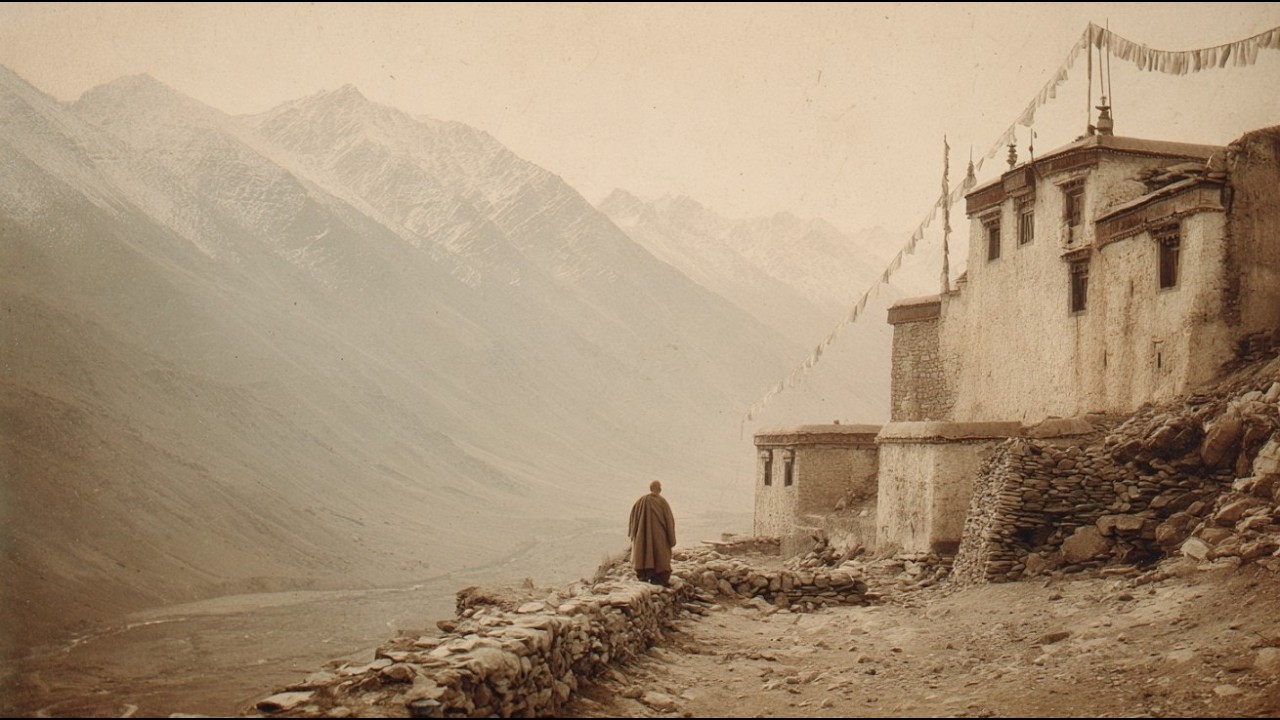
He was accompanied by a porter named Dorje, a man who knew the trails and grew quieter with each day of the journey. On the seventh day they passed a cairn, a heap of stones built to mark a death, and set into its top was a rusted surveyor’s chain. Dorje told Vain that a previous surveyor, a man like him, had gone up into the high country years before and never come down. Stones were built for him, Dorje said, because there was no body to bury.
On the ninth day they reached a monastery. Eleven old monks lived there, every one of them over sixty, and there were no young men at all. When Vain asked why, Dorje explained that no one was sent there anymore, and that when the old monks died, the monastery would be empty. They knew this, Dorje said, and they chose it.
Someone has to keep watching. The monks’ leader was an old man named Rinchen. The monastery’s great hall contained a bronze bell larger than a man, with no rope and no clapper, and had not been rung in living memory. Rinchen said it was not for ringing but for listening, to hear whether it rings on its own.
That first night, eleven old voices chanted a low, multi-toned drone that Vain identified as no music, but a wall. When Vain unrolled his survey map by the fire, Rinchen pointed to an unmarked valley one ridge away. You will leave that one empty, he said. There was a village there once, he told Vain.
It had a name, but I will not say it to you, because saying it is how it begins. The valley had not been burned or buried or carried off, he said. It was gone the way a word is gone when you stop saying it. That night, Vain told himself the story was a folktale.
But the wind stopped completely, and before he slept he heard a single low note, like a bell, from beyond the ridge. In the morning, Vain decided to cross the valley anyway. Rinchen did not argue, but he warned him: go before the light leaves, be out the other side before dark, do not sleep in the valley, do not eat anything growing there. And if you hear the bell, do not stop to listen for it again.
Walk faster. Dorje refused to go with him. He said he would take the long way around the mountain, three days instead of one, and would meet Vain at the mouth of the next pass. If Vain was not there in three days, Dorje said, he would not wait.
Vain crossed the ridge alone around noon and looked down into a valley that was green, gentle, and warm, the kind of place anyone would want to build a village. Halfway down the slope he found dry stone walls, then a field, then houses. Nineteen stone houses stood along both banks of a stream, their walls intact, their roofs whole, their doors standing open as if the people had stepped out for a moment and meant to come right back. Inside the first house he found a table set with three bowls of grain porridge, dried hard, with three stools pushed back, as if three people had risen at once and walked out.
In house after house he found the same thing: a loom with cloth half woven, a pot hung over a cold fire, tools leaning against walls, a coat on a peg. In one house a needle still threaded was pushed into folded cloth. In another two cups sat side by side beside a game board left midplay, one move short of an answer. He found a chair by a window facing the ridge, with nine smooth stones lined up on the sill.
He stopped entering houses after the ninth. At the head of the valley stood a larger hall, and its great wooden doors were shut and barred from the outside. Vain lifted the bar and opened them, but he did not cross the threshold. The hall was dark and full of shapes laid out in rows across the floor, arranged carefully, deliberately.
He stepped back, barricaded the doors again, and left. He looked for graves. There were none. Not one marker, not one mound.
Whatever had happened to the people of the village, he wrote, they had not gone into the ground, and they had not gone up to the sky. The light was changing. His watch said nearly a full day had passed, though he had been in the valley only a few hours. He remembered Rinchen’s warning and walked fast toward the far ridge.
Then he heard the bell: low, single, far off, and somehow close. It came a second time. A third time it was behind him, and woven into it was the sound of many voices. Not screaming, Vain was very clear about that.
They were calling. Warm, welcoming, the way you call someone across a field at dusk to come home. Some of the voices used his name, Alaric, the way his mother had said it. He did not turn around.
He counted his steps, one two three four, to keep from listening. Near the top of the far ridge, the calling changed, no longer warm but full of an old, enormous grief, and he slowed for one step and began to turn. Then a real wind hit him, cold and alive, and broke the sound, and he stumbled up and over the edge of the ridge. He looked back.
The valley was empty now, the houses still there in the last of the light, but cold and waiting. He went down the far side in the dark, fell twice, tore his hands, and eventually slept against a rock. He dreamed of the table with the three bowls, of sitting at it, of reaching for the spoon, and of being glad to reach for it. In the dream he was about to agree to something, and he knew he would not want to leave, and that was the worst part.
He woke by biting down on his own torn hand. At first light he checked his notebook to be sure it was real. The notes were there in his own shaking hand. In the corner of the page, small and neat, in an ink that was not his, someone had written a single word in an alphabet he did not know.
He understood, with a certainty he could not explain, that it was the name of the valley, the name Rinchen had refused to speak. Three days later he came down to the mouth of the pass, half starved. Dorje was there, waiting. The porter gave him food and water, helped him down the mountain, and never once asked what he had seen.
Before leaving the high country, Vain made Dorje take him back to the monastery. Rinchen was waiting at the gate. Vain showed him the word in the notebook and asked what was down there, where the people had gone. You ask where they went.
That is the wrong question, Rinchen said. They did not go anywhere. They are exactly where they have always been. It is only that the valley has stopped letting the rest of us see them.
Long ago, he said, there was a sickness in that valley, not of the body but of the place. The people began to want only to stay. They stopped going to the high pastures. They stopped trading at the passes.
They stopped sending their dead up the mountain to the sky, because they could not bear to let anything leave. The valley learned the shape of the people in it, the way a riverbed learns the shape of the water, and it learned to keep. One night it kept everything: the people, the food in the bowls, the cloth on the loom, the warmth of the fires. It folded them into a single evening, and it has been living in that evening ever since.
It will live in it forever, because forever is exactly what they wanted, and the mountain is very old and gives you what you want. Rinchen told Vain that he had been there that night, the youngest of the monks. They had been at evening prayers when his teacher stopped mid-chant and said, very quietly, They have decided. Then the great bell with no rope and no clapper rang once on its own, so deep they felt it in their teeth.
They went up to the wall and looked down into the valley. The window lights had gone strange, steady and gold, not flickering. They understood the people down there were sitting down to a supper they would never finish and never leave. One of the old monks said, We must not envy them.
Rinchen said it took him forty years to understand that this was not pity. The danger was not horror, he said. The danger was longing. A man who looked too long at that golden, never-ending evening might begin, in some quiet hidden part of himself, to want it, and wanting it is the first step through the door.
In the morning, Rinchen said, they took the name off the maps because the name is the door. As long as no one says it, no one new sits down at the table. He told Vain the bargain had held longer than he had been alive. Eleven old monks were singing a wall around an evening that does not end, and when they were gone, the wall would be gone.
Rinchen said Vain had come out because he never sat down, never stopped walking, never listened to the second bell. A place that keeps cannot keep a thing that will not stay still. But the valley had done the only thing left to it: it wrote its name in his notebook, so he would carry it down, and someday, somewhere far away, a man would read it and want to know and come looking. The valley cannot leave, he said.
But it can call. Vain left the mountains a week later. At the cairn with the rusted surveyor’s chain, he stopped and set an English coin between the stones, for the surveyor who had gone up years before and never come down. Dorje told him to go home, lock his door at night, and never say the name, not even alone, not even to himself.
That was the last either of them ever saw of the other. Vain finished his contract and handed in his survey. On the official sheet, in the place where the valley should have been, he left a blank. He never explained it.
He lived another 31 years and never went back to any mountains. He stayed low, stayed near other people, married late, kept bees. By every account he was a quiet, gentle, ordinary man. But his wife later mentioned one thing.
Every evening just at dusk, Vain would go to the front door, open it, and stand there looking out at the dark coming down, his hand on the doorframe, for a minute or two. Then he would close it firmly, lock it, and come back inside. When she asked him once what he was doing, he said, Just making sure I’m the one who decides. The notebook is real.
Photographs of the page exist, and the word is still there in the corner. Scholars could not match the ink to any pen Vain was known to own, nor the alphabet to any known language. The valley is still empty on the maps. Three later expedition maps show the same blank in the same place, as if every surveyor who came that way left the white space alone.
The author of this account states plainly that he has not been to the valley. But he admits that since working on the story, he has begun to want to open his own door at dusk, the way Vain did, with his hand on the frame, looking out at the dark coming down. So far, he says, he has closed it again firmly. He is the oneCONTENT:
In 1934, a British surveyor named Alaric Vain walked nine days into the high Himalayas and found a valley that did not appear on any map.
He went in to fill a blank space on paper. He came out carrying the name of that valley in his notebook, written in an ink that was not his, in an alphabet no scholar has ever identified. Vain, 41, was working under contract for a London society to chart a range that had never been properly surveyed. He traveled with a porter named Dorje, who grew quieter with each day of the climb.
On the seventh day they passed a cairn of stones with a rusted surveyor’s chain set into its top. Dorje told Vain that a surveyor, a man like him, had gone up into that country years before and never come down. The stones were built because there was nothing else to bury. On the ninth day they reached a monastery.
Eleven old monks lived there, every one of them past sixty, and there were no young men at all. Dorje explained that no one was sent there anymore. When these die, he said, the monastery will be empty. They know this.
They chose it. Someone has to keep watching. The monks’ leader, an old man named Rinchen, told Vain that the great bronze bell in the hall, which had no rope and no clapper and had not been rung in living memory, was not for ringing but for listening. That first night, the eleven old voices chanted a deep, multi-toned drone.
Vain understood it as a wall, some kind of nightly barrier held by aging men who knew there would be no one to replace them. When Vain unrolled his survey map by the fire, Rinchen pointed to an unmarked valley one ridge away. “You will leave that one empty,” he said. There had been a village there once, with a name.
“I will not say the name to you, because saying it is how it begins. ” The valley had not been burned or buried or carried off, he said. It was gone the way a word is gone when you stop saying it. That night the wind stopped completely, and before he slept, Vain heard a single low note, like a bell, from beyond the ridge.
In the morning he decided to cross the valley anyway. Rinchen did not argue. He warned Vain to go before the light left, to be out the other side before dark, not to sleep in the valley, and not to eat anything growing there. And if he heard the bell, he said, do not stop to listen for it again.
Walk faster. Dorje refused to go with him. He said he would take the long way around the mountain, three days instead of one, and meet Vain at the mouth of the next pass. If Vain was not there in three days, he would not wait.
Vain crossed the ridge alone around noon and looked into a valley that was green, warm, and sheltered, the kind of place anyone would build a village. He found dry stone walls, then fields, then nineteen houses with their walls intact, roofs whole, and doors standing open, as if the people had stepped out for a moment and meant to come right back. Inside the first house, a table was set with three bowls of grain porridge, dried hard, and three stools pushed back, as if three people had risen at the same instant. House after house held the same evidence of interrupted life: a loom with cloth half woven, a pot hung over a cold fire, tools leaning against walls, a coat on a peg.
In one house a needle still threaded was pushed into folded cloth. In another, two cups sat beside a game board left midplay, one move short of an answer. At the head of the valley stood a larger hall, and its great doors were shut and barred from the outside. Vain lifted the bar and opened them but did not cross the threshold.
The hall was dark, and the floor was covered end to end with shapes laid out in rows, arranged carefully, deliberately. He set the bar back in place and left. He looked for graves and found none. Not one marker, not one mound.
Whatever had happened to the people of the village, they had not gone into the ground, and they had not gone up to the sky for the birds. The light had changed without his noticing. His watch said nearly a full day had passed, though he had been in the valley only a few hours. He remembered Rinchen’s warning and walked fast.
Then he heard the bell: low, single, far off and somehow close. It came a second time. A third time it was behind him, and woven into it were voices. Not screaming, Vain was very clear about that.
They were calling. Warm and welcoming, the way you call someone across a field at dusk to come in. Some of the voices used his name, Alaric, the way his mother had said it. He did not turn.
He counted his steps, one two three four, to keep from listening. Near the top of the far ridge, the calling turned cold and full of an old, enormous grief, and he slowed for one step and began to turn. A real wind hit him then, cold and alive, and broke the sound. He stumbled over the edge of the ridge and out of the valley.
He looked back. The houses were still there, but the valley was empty, cold, and waiting. He went down the far side in the dark, fell twice, tore his hands, and slept against a rock. In his dream he sat at the table with the three bowls, reaching for the spoon, glad to reach for it, knowing he would not want to leave.
He woke by biting down on his own torn hand. At first light he opened his notebook. The notes were there. In the corner of the page, small and neat, in an ink that was not his, was a single word in an alphabet he did not know.
He understood it was the name of the valley, the name Rinchen had refused to speak. Three days later he came down to the mouth of the pass, half starved. Dorje was there, waiting. The porter gave him food and water and helped him down the mountain, and never once asked what he had seen.
Before leaving the high country, Vain made Dorje take him back to the monastery. Rinchen was waiting. Vain showed him the word and asked where the people had gone. “You ask where they went.
That is the wrong question,” Rinchen said. “They did not go anywhere. They are exactly where they have always been. It is only that the valley has stopped letting the rest of us see them.
”
Long ago, he said, a sickness came to that valley. The people began to want only to stay. They stopped going to the high pastures, stopped trading at the passes, and stopped sending their dead up the mountain to the sky, because they could not bear to let anything leave. The valley learned the shape of its people the way a riverbed learns the shape of the water.
It learned to keep. One night it kept everything: the people, the food in the bowls, the cloth on the loom, the warmth of the fires. It folded them into a single evening, and it has been living in that evening ever since. “And it will live in it forever, because forever is exactly what they wanted, and the mountain is very old and gives you what you want.
”
Rinchen had been there that night, the youngest of the monks. At evening prayers his teacher stopped mid-chant and said, “They have decided. ” Then the great bell rang once on its own. They went to the wall and looked down into the valley.
The window lights had gone strange: steady and gold, not flickering. They understood the people were sitting down to a supper they would never finish and never leave. One of the monks said, “We must not envy them. ” Rinchen said it took him forty years to understand.
The danger was not horror, he explained. The danger was longing. A man who looked too long at that steady golden evening might begin to want it, and wanting it is the first step through the door. In the morning, the monks took the name off the maps, because the name is the door.
As long as no one says it, no one new sits down at the table. The eleven old monks have been singing, he said, a wall around an evening that does not end. When they are gone, the wall is gone. Rinchen told Vain he came out because he never sat down, never stopped walking, never listened to the second bell.
“A place that keeps cannot keep a thing that will not stay still. ” The valley had done the only thing left to it: it wrote its name in his book, so he would carry it down, and someday someone would read it and want to know and come looking. “The valley cannot leave,” he said. “But it can call.
”
Vain left the mountains a week later. At the cairn with the rusted surveyor’s chain, he stopped and set an English coin among the stones, for the surveyor who had gone up years before and never come down. Dorje told him to go home, lock his door at night, and never say the name, not even alone, not even to himself. That was the last either of them ever saw of the other.
Vain finished his contract and handed in his survey. On the official sheet, where the valley should have been, he left a blank. He never explained it. He lived another 31 years and never went back to any mountains.
He stayed low, stayed near other people, married late, and kept bees. By every account he was a quiet, gentle, ordinary man. But his wife later told the man who wrote this account: every evening just at dusk, Vain would go to the front door, open it, and stand there looking out at the dark coming down, his hand on the doorframe, for a minute or two. Then he would close it firmly and lock it.
When she asked him once what he was doing, he said, “Just making sure I’m the one who decides. ”
The notebook is real. Photographs of the page exist, and the word is still in the corner. Scholars could not match the ink to any pen Vain was known to own, nor the alphabet to any known language.
The valley is still empty on the maps. Three later expedition maps show the same blank in the same place, as if every surveyor who came that way left the white space alone. The author of this account states plainly that he has not been to the valley. But he admits that since working on the story, he has begun to want to open his own door at dusk, the way Vain did.
So far, he says, he has closed it again firmly. He is the one who decides. So far.