On September 21st, 1996, 15-year-old Danielle “Danny” Houchins drove to a quiet spot along the Gallatin River in Montana, wanting some time alone. She never came home. That night, searchers found her in shallow water, with her keys and water bottle still lying on the trail. Detectives interviewed suspect after suspect, and labs ran test after test, but four hairs sitting in an evidence box for years could not be read by any available technology.
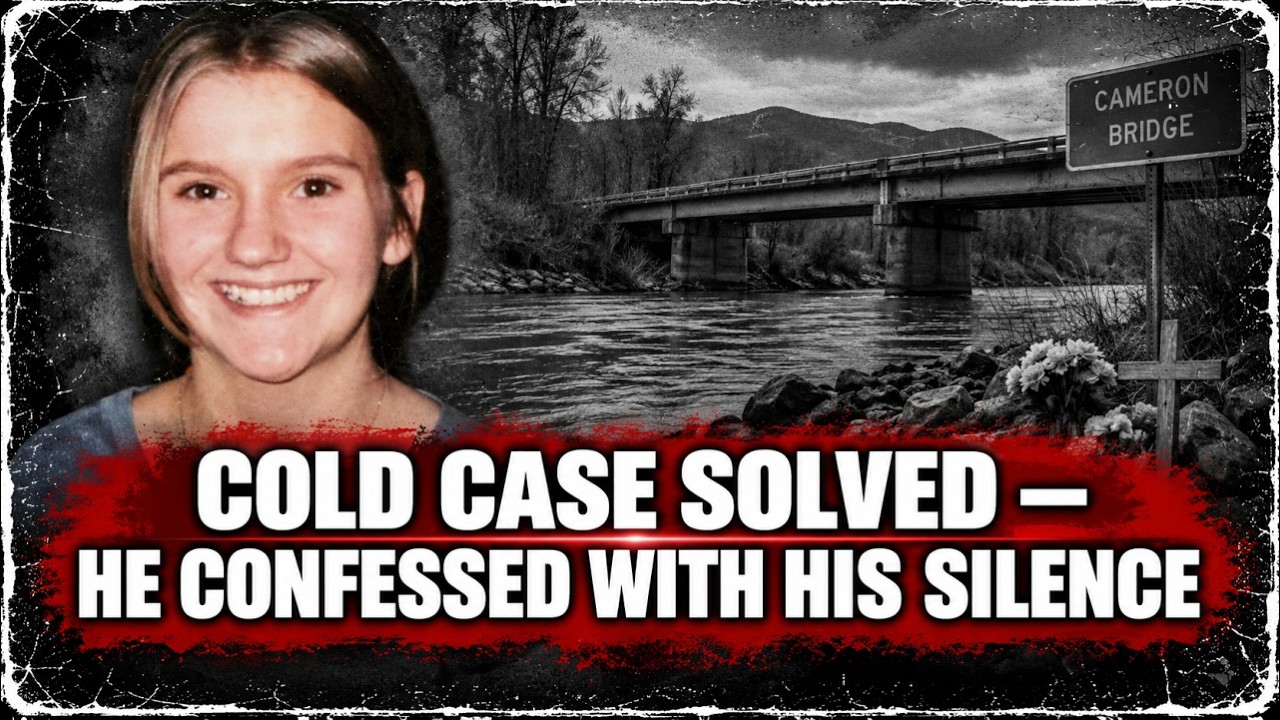
The police had clues, but not the right tools. Then, 28 years later, the answer came from science that did not exist when Danny was alive, leading to a man who never confessed. He never had to. Danny Houchins was born on November 11th, 1980, in Alexandria, Minnesota, but almost everyone called her Danny.
She grew up in Belgrade, Montana, a small town in the Gallatin Valley just minutes from Bozeman. The wide, flat farm country is surrounded by mountains, and her family lived in the outdoors. Danny hiked, climbed rocks, rafted rivers, and skied in the winter. She was a sophomore at Belgrade High School and an honor student whose grades earned her a place in Who’s Who of American High School Students.
She participated in Belgrade Student Ministries and planned to become a biological engineer. Her sister Stephanie remembers her as someone who loved science and was curious about how the world worked. Friends described her as having a quick wit and sense of humor, and she was known for making jokes at her own expense. Danny had earned her driver’s license at 15, which was legal in Montana at the time, and she was proud of it.
She drove a small white Chevy pickup, giving her the freedom to reach the places she loved on her own. That fall, she was also wearing a brace on her left knee after injuring it a few weeks earlier while dancing with friends at a street dance. It was a minor injury, the kind one barely thinks about. Her life was full of school, church, friends, family, and the mountains right outside her door.
On one Saturday morning in September, that truck carried her to a river she knew well. Saturday, September 21st, 1996, began with an argument. It wasn’t a big one, just the kind of family disagreement that happens in almost every house. Danny was upset and wanted some space, so she asked her mother for permission to drive to Cameron Bridge Fishing Access, a popular spot on the Gallatin River a few miles south of Belgrade.
People go there to fish and walk the trails, and part of the area is wooded with marshy ground near the water. When asked why her sister picked that spot, Stephanie’s answer was simple: it’s peaceful. Danny left home shortly after 11 that morning, wearing blue jeans, a gray sweatshirt, and the brace on her knee. She climbed into her white Chevy pickup and told her parents she’d be home in a few hours.
That was the last time her family saw her. A few hours passed, then a few more, and her mother Cheryl went looking, accompanied by a friend. They drove to Cameron Bridge and found Danny’s truck in the parking area with the doors unlocked and nobody inside. A few feet away, in the middle of the trail, lay the truck keys and a water bottle.
Cheryl knew right away something was wrong. They spent about two hours searching the area, calling Danny’s name and walking the trails, but there was no answer and no sign of her, so they called the Gallatin County Sheriff’s Office. Deputies arrived, along with Gallatin County Search and Rescue and community volunteers. They fanned out across the wooded, marshy ground, but the land was thick with brush and soft with water.
As daylight faded, the official search stopped for the night. However, two brothers who lived nearby, friends of the Houchins family, refused to go home. They picked up flashlights, crossed the bridge, and walked back into the dark. Around 9:30 that night, after about 45 minutes of searching, one of them saw her.
Danny was lying in a shallow pool of water in the marsh, not far from the trail, beside a willow tree. It wasn’t a search team that found her, but two men who wouldn’t go home. Deputies arrived quickly, including Gallatin County Deputy Keith Farer, who had been with the department since 1989. Standing there in the dark, he says nothing added up.
Someone who grew up hiking and fishing in these mountains doesn’t just end up in a few inches of water and stay there. The position where she lay, along with other evidence, told them she had been moved and hidden under that willow tree. She had not simply fallen where she was found. Word spread across the valley fast.
In a small Montana town, Farer explained, if you haven’t heard a rumor by 10:00 in the morning, you’ll start one. Michele Shroyer, who went to school with both sisters, remembers the news came in stages. First, she heard someone had drowned, then rumors began that maybe it was murder and a dangerous person was nearby. Stephanie remembers the rumors at Belgrade High School were relentless, yet she went back to school on Monday, trying to be strong so it would be easier for her parents.
On Monday, September 23rd, the state’s medical examiner, Dr. Gary Dale, performed the autopsy. Danny had no alcohol or drugs in her system. He listed the cause of death as drowning but did not say how the drowning happened.
He wrote that the manner of death was undetermined until more information came in. More information did come in, but it took a long time. Investigators collected evidence from the scene, including four hairs. They didn’t look like much but were sealed and stored, and they sat in that evidence file for 27 years.
They had no roots and no skin cells attached, and labs would try to test them again and again over the years, coming up empty every time. Two days after Danny was found, the sheriff’s office shared the first findings from the autopsy. They did not call it a murder. They said the cause was drowning.
Sheriff Bill Slaughter told reporters the lack of cuts and bruises was worth noting and said people should be ready for the possibility that this was an accidental drowning. The Houchins family heard the same message. They heard that their daughter drowned and that it could have been an accident. Maybe she tripped and fell.
She did have that knee brace. To Stephanie, who had grown up on these trails, it made no sense. Deputy Farer was looking for answers of his own. He spoke with Danny’s doctor, who told him nothing about her health or the brace would have stopped her from rolling over in a few inches of water and breathing.
Farer carried that opinion to other investigators, but says the sheriff brushed it off and mocked him. Slaughter tells a different story, saying Farer was an unhappy employee and that his detectives never talked about anything but homicide. He says the scene being in a swamp made it hard to investigate and that the ruling of undetermined frustrated him too. He also admits he held back some information from the family, though he says he never lied to them.
The family disagrees, saying they were told this was likely an accident. Three months after Danny died, on December 31st, 1996, Farer resigned. But the investigation didn’t stop. Detectives interviewed suspects, including people who knew Danny, and the sheriff’s office says they were ruled out one by one.
Investigators sent evidence to the state crime lab several times over the years, hoping for a DNA profile, but each time the lab found nothing usable. Around 2006, Detective Cindy Beech began looking at the case again. She had joined the department just days before Danny was found and the case had bothered her ever since. She says she ran into pushback from her bosses when chasing new leads.
Then there was the technology problem. The FBI’s national DNA database can only match people already in it, and the tools of the time couldn’t read those four hairs. The method that would eventually crack the case, using DNA and family trees to find a stranger, had not yet become a working tool for police. The case went quiet, not dead, but dormant.
To eventually find the man, investigators had to leave the Gallatin Valley and drive about a hundred miles southwest to the town of Dillon. His name was Paul Nathaniel Hutchinson. In September of 1996, he was 27 years old. He had served in the Marine Corps and was a graduate student at Montana State University in Bozeman, about 13 miles from Cameron Bridge.
Investigator Tom Elfmont says Hutchinson also had a work-study job with the Fish and Wildlife Service that would have put him on the waterways around Belgrade. After that year, his life moved in a straight line. He graduated with a degree in fisheries and wildlife biology and went to work as a fisheries biologist for the Bureau of Land Management in Dillon, staying for 22 years. He was married, a father of two, and an outdoorsman who hunted, fished, and trapped.
He was well known in the hunting and fishing world, often posting online about his trips. Michele Shroyer, the same friend who remembers Danny, knew him too. She says he was calm, quiet, and utterly unremarkable. He had no criminal record, no traffic history, and his name never came up during the investigation.
Investigators say Hutchinson and Danny had no connection. They had never met. They described the killing as a crime of opportunity, believing the two crossed paths by chance at the river. In 2019, Stephanie began calling the sheriff’s office to ask them to look at her sister’s case again.
An investigator named Matt Boxmeyer took a deep interest, and in early 2020 he reached out to the family. He had learned how much they had never been told back in 1996. He believed Danny’s death was a homicide and told them so. It was the first time the family heard an official say it out loud.
In 2021, Dan Springer became sheriff. He had been a brand new deputy when Danny was found, and the case had stayed with him. In March of 2023, he sat down for lunch with a retired Los Angeles police captain named Tom Elfmont, who lived near Bozeman. Springer swore him in as a special deputy with full authority to work the case, and Elfmont promised Stephanie he would solve it.
Sergeant Court Depweg from the Newport Beach Police Department, an expert in solving homicides with DNA, helped from California. In August 2023, after new testing on preserved evidence, the sheriff officially changed Danny’s manner of death from undetermined to homicide. The lab also pulled a partial DNA profile, but it went into the FBI’s national database and nothing came back. The man they were looking for had never been in the system, so Elfmont needed another way.
He turned to the four hairs that had been sealed away since 1996. He found a private lab in California called Astrea Forensics, which specializes in pulling DNA from material once thought hopeless. The first two hairs gave nothing, but from the last one, the lab built a full genetic profile of the person who left it. Still, a profile is not a name.
The team turned to genetic genealogy. A genealogist named CeCe Moore, who works with Parabon NanoLabs and has helped solve more than 300 cases, took the job. She traced the profile back to great-grandparents on both sides, then built the trees forward, looking for one couple who fit. She found one with a large family, including three sons.
There was a problem: everyone in that family lived in New Hampshire. What was the link to Montana? She dug through birth records, marriage certificates, and social media, and found that one of the sons had posted that he moved to Bozeman on July 1st, 1996. Danny died that September.
On May 1st, 2024, Moore called the detectives. She believed she had found the person who killed Danny. Then Elfmont called Stephanie with the news. They knew who it was.
He was alive, and they were going to build a case against him. On July 23rd, 2024, Elfmont and Depweg drove to the Bureau of Land Management office in Dillon. They found Hutchinson outside unloading a pickup with two co-workers. Elfmont walked up and introduced himself as a deputy with the Gallatin County Sheriff’s Office, and later described the moment in three words: he turned white.
They gave Hutchinson a cover story, saying they were talking to river experts about cases along the waterways of southwest Montana. It was 98 degrees that day, so Hutchinson invited them inside to a small conference room. Because he invited them in, they didn’t have to read him his rights. Within minutes, the detective saw a change.
Hutchinson began to sweat and asked for a moment to step out. Then Depweg laid out photographs. One was of Danny. He told Hutchinson her name and said she had been killed in September of 1996 near the Gallatin River.
Had he ever fished there? Hutchinson said he had trapped on the Gallatin. Did he know Cameron Bridge? He nodded.
Had he been there? He named the road that leads to it, Jackrabbit Lane. Then they asked if he remembered seeing her. He said he honestly didn’t.
Was there a chance he was there when she was killed? He said no, but the detectives noticed how he sat. When they showed him her photo, he slumped in his chair, leaning back as far from the table as he could get. The sheriff’s office described his nervousness as extreme.
The conversation lasted almost two hours. The detectives never asked him outright whether he killed Danny. Elfmont says they didn’t need to. Near the end, Hutchinson asked if they had anything else to ask him while he was there.
They said no. Then they walked out. There was no arrest. Still, Elfmont says it looked like Hutchinson couldn’t believe they hadn’t arrested him.
The detectives had surveillance teams following Hutchinson when he left. Elfmont says he drove wildly at high speed, making U-turns. Springer later said it looked like he was trying to see if anyone was behind him. Then at 4:17 the next morning, July 24th, Hutchinson called the Beaverhead County Sheriff’s Office.
He said he needed help and hung up. Deputies found him a short time later. He had died by suicide, about 12 hours after the interview. Elfmont called Stephanie with the news.
There was a long pause on the line before he told her what had happened. She told him she didn’t know how she felt about that. For years, she had been preparing for a long court fight, thinking of sitting in a courtroom and looking him in the eye. Now there would be no courtroom.
Days later, the lab compared DNA taken from Hutchinson with the evidence from Danny. It matched. Elfmont puts the odds at about 10. 7 trillion to one.
The sheriff called it 100% confirmation. Springer pointed out that when detectives interviewed Hutchinson, they did not yet have confirmation that the DNA was his. In the sheriff’s words, Hutchinson confirmed it himself before the lab could. That is what people mean when they say he confessed without a word.
Hutchinson never confessed, denied any involvement, and was never arrested, charged, or brought before a judge. Nothing in the case was tested in a courtroom, and he cannot answer any of it now. His wife issued a statement after the news came out, saying the family was heartbroken for the Houchins family and that in 24 years of marriage there was never any hint that something like this was in the background. Springer said he felt sorrow for the Hutchinson family, who he said were also victims of this man.
The case rests on three things: the DNA match, the fact that Hutchinson was living in Bozeman when Danny was killed about 13 miles away, and what he did, the sweat, the slump in the chair, the drive, and the phone call. Investigators and Danny’s family read all of that as a confession without words. Stephanie believes he knew exactly what he had done and could not face either family. On Thursday, August 8th, 2024, Sheriff Springer stood in front of cameras in Bozeman and announced that Danny’s case was solved.
Stephanie stood beside him. She said, “After nearly 28 years without answers, without justice, we celebrate today. ” She thanked Elfmont for pushing through every roadblock and Springer for being a man of his word. She also told people she felt relief that whoever it was, at least it was not someone close to her family.
But Stephanie also told reporters that the institutions meant to protect her sister had failed her, failed her family, and failed the community. She said it wasn’t only about one man or one sheriff. She wanted the system itself to get better so it would not fail other families. Farer and Beech said the same thing, believing the case should have been handled as a homicide from the very start.
Slaughter still says his department never gave up. Springer was honest when asked about it, saying that if the family had been told there were no marks on Danny, that was not the truth. Springer also explained why cases like this are so hard. A killing between strangers is the toughest kind to solve.
“Because there is no relationship to follow. The only trail is physical evidence. ” His office kept the file open because it knew Danny was murdered and because someday the tools would exist. For Farer, the case never left.
He says he has thought about Danny every two or three days for 28 years. Springer took a different lesson, saying, “This is why evidence has to be saved. ” For years, the hairs sat in a box. Nobody could read them, but somebody kept them safe, and in the end they made the difference.
He also said he wished it had not taken 28 years. There are still questions nobody can answer. Why did Hutchinson do it? Investigators say they may never know.
In the words of the sheriff, there will always be more questions than answers. The sheriff’s office also said it would share what it learned with other agencies to check for any connections to other cases, but nothing has been made public. In February 2025, CBS’s 48 Hours told Danny’s story in an episode called “It’s About Danny. ” The sheriff’s office says it is now working with Stephanie to find ways to improve how cases like this are handled.
Danny Houchins was not a case number, a hair in an evidence box, or a DNA match on a laboratory report. She was an honor student who wanted to become a biological engineer, a person who made jokes at her own expense and loved the mountains and rivers. Half of Danny’s ashes were spread on top of Sacagawea Peak, the tallest mountain in the Bridger Range. Stephanie spread the rest on the banks of the Gallatin River.
Hutchinson never confessed in words. He didn’t have to. Four hairs, a genealogist, and one long conversation in a conference room finally told the truth.