In July 1930, a small passenger plane broke apart in the sky over the village of Meopham in Kent, scattering wreckage and bodies across an orchard. Among the five people killed instantly was Lady Rosemary Ednam, a 36-year-old countess, former war nurse, and mother of two, identified only by her string of pearls. She had switched to an earlier flight that afternoon, eager to return home to oversee work on a memorial garden she was designing for her late son. The story of how Rosemary came to be on that plane stretches back nearly two decades and touches the highest levels of the British monarchy.
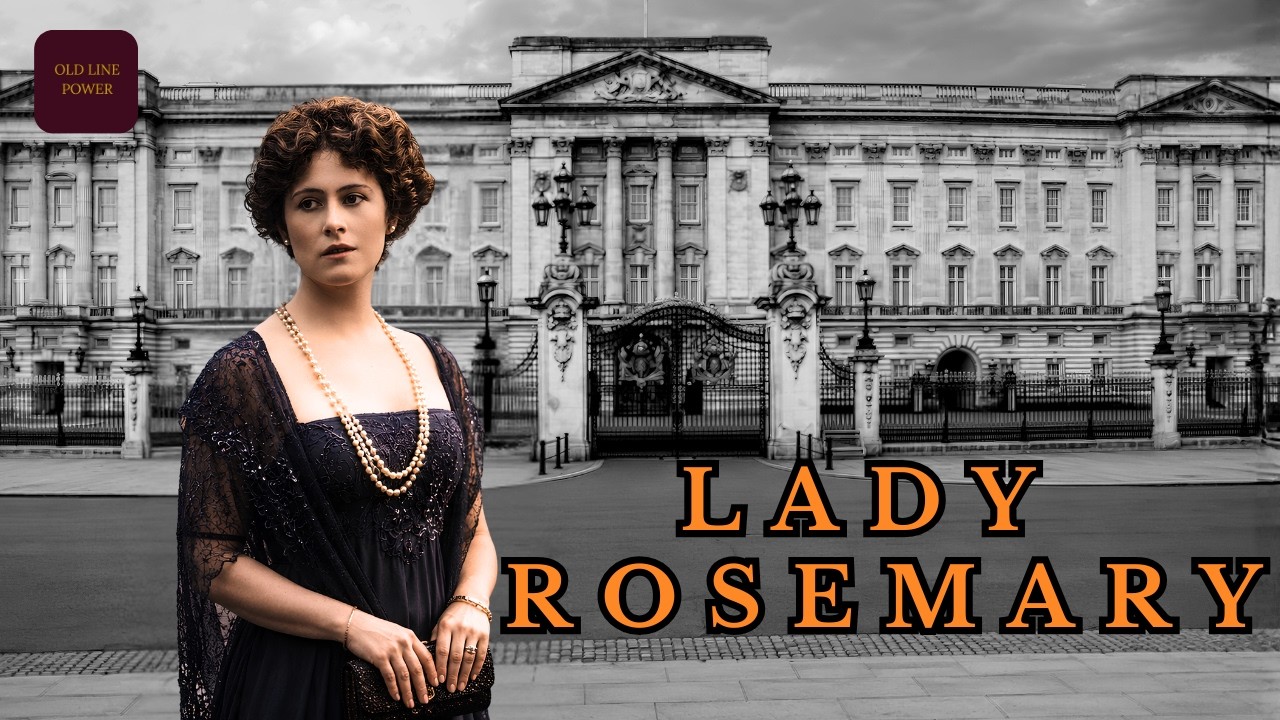
She was born Lady Rosemary Millicent Sutherland-Leveson-Gower at Dunrobin Castle in Scotland in 1893, the youngest child of the fourth Duke of Sutherland. Her family was among the wealthiest in Britain, holding over a million acres, though that fortune was built in part on the brutal Highland Clearances, which had evicted thousands of tenants from their lands in the previous century. During the First World War, Rosemary followed her mother, the formidable Millicent, Duchess of Sutherland, to France and served as a working nurse at a Red Cross hospital near Calais, dressing wounds and tending to soldiers carried in on stretchers. It was there, in the summer of 1917, that she met the Prince of Wales, the future Edward VIII, who was stationed nearby but forbidden from front-line combat.
The two fell in love quickly, and Edward asked her to marry him. The proposal was accepted, but the decision was not theirs to make. King George V refused to approve the match under the Royal Marriages Act. The objection was not to Rosemary herself, who was well-bred, well-connected, and respected, but to her family.
Her half-aunt, Daisy Greville, Countess of Warwick, had been the mistress of Edward VII and had later threatened to publish his love letters unless the crown paid her off, an act widely viewed as blackmail. Her uncle, the Earl of Rosslyn, was a bankrupt compulsive gambler who had become the first hereditary peer forced to earn a living on the stage. The king saw risk in the bloodline, and the veto was final. Within days of the refusal, Edward attended a social gathering where a hostess named Maud Kerr-Smiley was present.
A decade later, that same woman would introduce her sister-in-law, Wallis Simpson, to London society. Biographers have long noted the pattern that followed the veto: after Rosemary, the Prince of Wales never again pursued a woman who was single. Freda Dudley Ward was married. Thelma Furness was married.
Wallis Simpson was twice divorced. Married women did not require his father’s permission. The king had refused Rosemary to protect the monarchy; eighteen years later, his son abdicated the throne to marry the twice-divorced American. About a year after the veto, in March 1919, Rosemary married William Ward, Viscount Ednam, heir to the Earldom of Dudley.
He was one of the Prince of Wales’s closest friends, and the prince later stood as godfather to their eldest son, William. The marriage was a stable one, and the couple had three sons, but tragedy struck the family repeatedly. Rosemary’s brother Alistair died of malaria in 1921 at 31, shortly after the birth of his own daughter. Then, in December 1929, her seven-year-old son, John Jeremy, was killed when he was struck by a truck while riding his bicycle near the family home at Himley Hall.
Six months later, Rosemary was in France with her husband, who was recovering his health at the seaside resort of Le Touquet. The household was part of a summer house party, and Rosemary had an appointment in England with the architect working on the memorial garden she was building at Himley in memory of her son. When an earlier flight became available on the afternoon of July 21, she took it without hesitation, along with the Marquis of Dufferin and Ava, Sir Edward Ward, and a society hostess named Mrs. Seagrief Lafler.
The Junkers F-13 monoplane encountered gale-force winds and driving rain over the Channel. Witnesses in Meopham heard an explosion shortly before 2:35 p. m. and looked up to see the aircraft breaking apart.
The tail separated first, then the engine tore away. All six people on board died, including the reserve pilot, who was found still strapped into his seat in the cockpit wreckage. The fifth body, Rosemary’s, lay in Leland’s orchard, recognizable only by the pearls she wore. The Air Ministry investigation, led by Major Cooper, concluded that the crash was caused by a phenomenon called tail buffeting, in which severe vibration at certain air speeds causes catastrophic structural failure.
It was the first air accident report ever published in Britain, and it set a course that would eventually lead to the creation of the Air Accidents Investigation Branch. The Junkers company and the German government disputed the findings, and the disagreement was never formally resolved. Rosemary was buried in the grounds of Himley Hall, in the memorial garden she had been traveling home to finish. The following year, in 1931, the Prince of Wales traveled to Staffordshire to open a new wing at Harts Hill Orthopedic Hospital, named the Rosemary Ednam Memorial Extension.
According to those present, he was crying as he left. He did not cut her family out of his life. He remained close to her widower and stayed involved with the boys, including his godson, William. In early December 1936, Edward VIII, who had been king for less than a year, spent his final weekend on the throne at Himley Hall, the home where Rosemary had raised her children and the estate where she was buried in the garden she had designed.
On December 11, he signed the instrument of abdication, renouncing the throne to marry Wallis Simpson. He spent the rest of his life in exile, mostly in France, and died in Paris in 1972. Rosemary’s eldest son, William, later inherited the earldom, served in the Second World War, and kept the Duke of Windsor as his godfather for life. He died in 2013 at 93.
Her youngest son, Peter, lived until 2008. His daughter Rachel, Rosemary’s granddaughter, became a model and actress, and in 1983 she was cast as Maggie Cleary in the American television miniseries The Thorn Birds, a story about a woman who falls in love with a man she cannot have. Rachel married her co-star Bryan Brown and moved to Australia. Today, a street called Rosemary Ednam Close stands near the hospital where the Prince of Wales wept.
It is the only remaining monument to a woman who might have been queen, remembered now mostly by those who go looking for her.