The marriage of María del Carmen Martínez-Bordiú and Alfonso de Borbón y Dampierre was presented to Spain as a fairy tale, a union of two powerful bloodlines that seemed destined to unite a nation’s history. The wedding took place on March 8, 1972, in the chapel of El Pardo Palace, with General Franco serving as sponsor for the bride and the presence of European royalty, including Prince Rainier and Princess Grace of Monaco, lending the occasion immense symbolic weight. She was only 21, Franco’s granddaughter, raised within the highest circles of the regime. He was around 15 years her senior, the grandson of Alfonso XIII, born into a branch of the Bourbon family marked by exile and dynastic disputes.
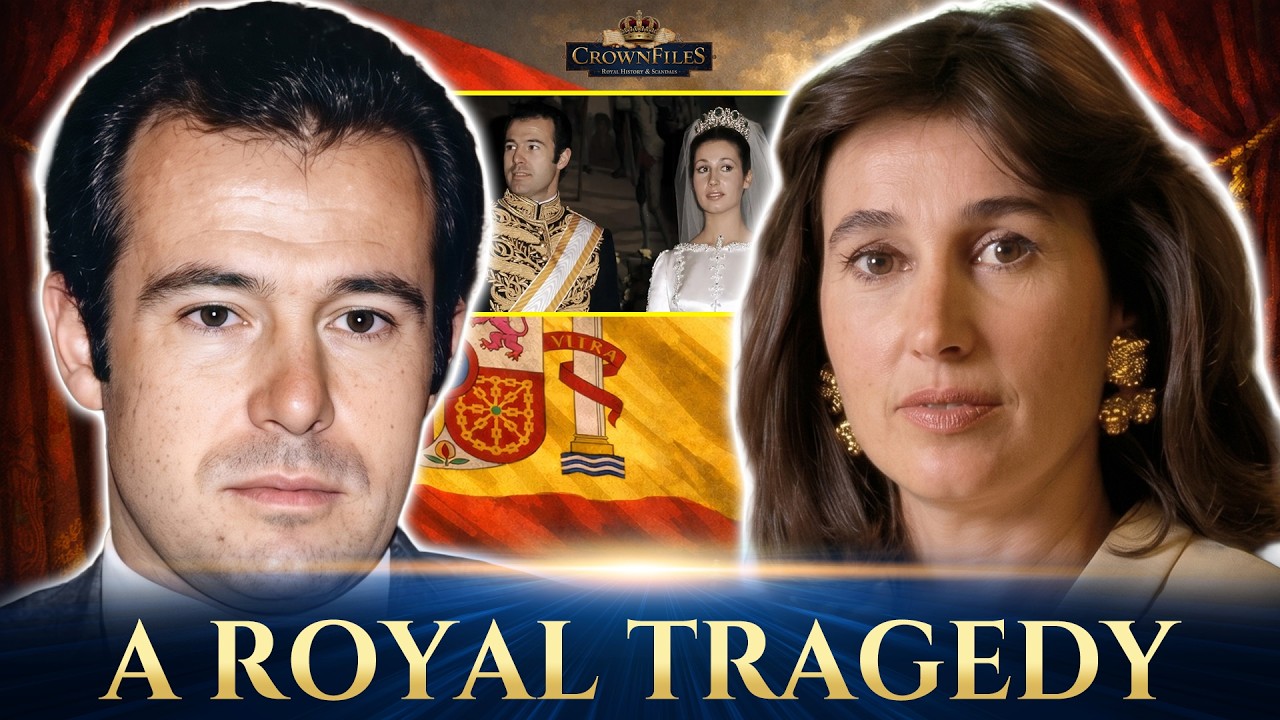
What looked like a perfect balance between youthful glamour and aristocratic composure was, in private, a more fragile arrangement. Alfonso formally asked for Carmen’s hand on December 23, 1971, at El Pardo, before a considerable media presence. Their first son, Francisco de Asís, was born eight months after the wedding, followed by a second son, Luis Alfonso, in April 1974. From the outside, the family presented the perfect ceremonial image, but the pressure of living under constant public scrutiny was already taking its toll.
Later accounts would attribute the marriage’s cooling to Alfonso’s frequent travel and the demands of his increasingly public duties. The separation came in 1979, and by May 1982, Alfonso sought a civil divorce. The legal proceedings introduced harsh language, including suggestions of Carmen’s supposed inability to fulfill the essential obligations of marriage. Carmen later denied press speculation that Isabel Preysler was a catalyst for the breakup, and she maintained that she had not yet met Jean-Marie Rossi when she decided to separate.
The tragedy deepened on February 7, 1984, when the couple’s 11-year-old son, Francisco de Asís, died from injuries sustained in a car crash near Corella in Navarre. Alfonso was returning from a skiing trip with his sons when the accident occurred, and his own injuries prevented him from attending his son’s funeral. The loss transformed the story of a glamorous breakup into a family tragedy, with the entire country watching from a distance. In 1986, the Tribunal of the Rota declared the marriage canonically null, a decision recognized in civil terms in October 1987.
The language used in the annulment proceedings referenced Carmen’s supposed psychological immaturity and a grave defect of judgment, reducing a once-celebrated national union to the cold vocabulary of a legal file. On January 30, 1989, Alfonso died at Beaver Creek in Colorado while skiing during the World Championships, after sustaining fatal injuries to his neck from a low steel cable. The American investigation concluded it was a tragic accident, although some around him continued to speak of negligence. His remains were returned to Madrid and buried at the Monastery of Las Descalzas Reales, with the King and Queen attending the funeral mass.
The surviving son, Luis Alfonso, was left to inherit not only a surname but the full weight of a damaged family memory. Carmen moved forward, rebuilt her life, and remained a prominent figure in Spanish society pages. The story of Alfonso and Carmen endures as a lesson about the loneliness that comes when the world believes you possess everything, a tale of how public splendor can make private ruin even crueler to bear.