Roy W. Allen sold his A&W root beer empire in 1950, a decade before it reached its peak of more than 2,000 stands across America. He never witnessed the company’s greatest triumph or its slow unraveling. The story began in Lodi, California, in June 1919.
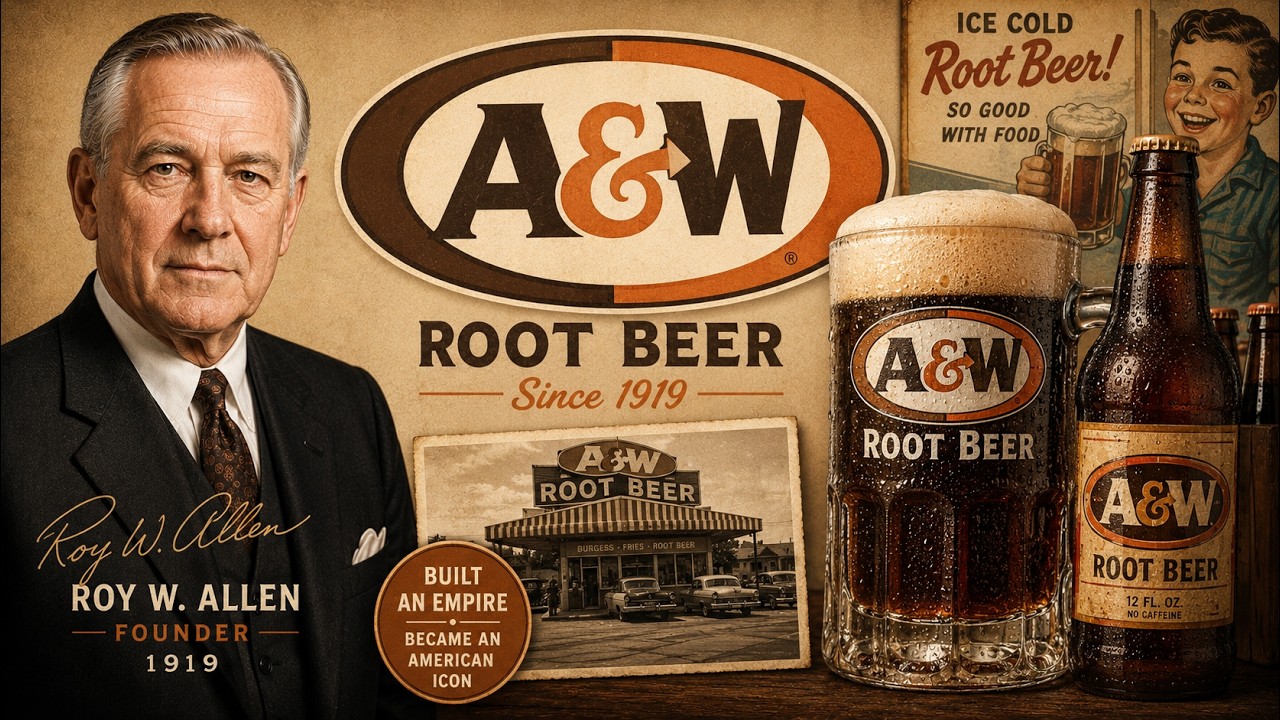
Allen, a hotel manager with no background in beverages, had purchased a root beer formula from a retired pharmacist in Flagstaff, Arizona. He set up a stand at 13 Pine Street during a homecoming parade for soldiers returning from World War I, selling his root beer in chilled mugs for five cents apiece. The timing proved crucial. Prohibition was eliminating saloons across the country, but the appetite for a cold, foamy drink served in a proper glass had not disappeared.
Allen’s root beer looked and foamed like beer without breaking any laws. In 1922, Allen formalized a partnership with an employee named Frank Wright, combining their last names to create the A&W mark. The partnership ended two years later when Allen bought out Wright’s share, but the name remained. The real innovation came in 1923.
Allen and Wright opened a stand in Sacramento with tray boys and tray girls who delivered drinks directly to customers waiting in their automobiles. This drive-in format, delivering a frosted mug by hand to a car window, created an experience no bottle could replicate. By 1950, more than 450 A&W stands operated across the country. That year, Allen sold the entire operation to Nebraska businessman Gene Hurlbut and retired to Southern California.
He would not be present for what came next. Hurlbut allowed franchise operators to expand beyond root beer, adding burgers, hot dogs, and fries. By the end of the 1950s, more than 1,900 A&W restaurants operated across the country, and the first international stand had opened in Canada in 1956. By 1960, the count exceeded 2,000.
At its peak, A&W dominated the root beer category with no serious national competitor. The company built its identity without celebrity endorsements. The frosted mug, the carhop on roller skates, and the parked car under neon light were the brand itself. The first sign of trouble came in 1963 when Hurlbut sold the company to J.
Hungerford Smith Company, the firm that had been supplying root beer concentrate for over four decades. It looked like consolidation, but franchisees had handed control to a company that made flavoring syrup. By 1978, the root beer had passed through two more owners. United Brands management then split the company into two separate businesses.
A&W Restaurants Inc. would run the drive-ins, while A&W Beverages handled bottled and canned root beer sold in grocery stores. Two separate companies carved out of a single brand. In 1982, real estate developer A.
Alfred Taubman purchased the restaurant side. His first major move was a freeze on new franchises. Franchisees watched headquarters relocate away from the culture that built the brand. Within a few years, the number of operating restaurants fell below 500.
While A&W tinkered with its identity, McDonald’s drive-thru windows offered speed no tray girl on roller skates could match. The argument about what fast meant in America had changed. What followed was two decades of the brand changing hands. Yorkshire Global Restaurants took ownership, then tested co-branding A&W locations inside KFC restaurants.
In 2002, Tricon Global Restaurants absorbed Yorkshire and renamed itself Yum! Brands, making the drive-in pioneer one line item among five. By 2011, Yum! Brands sold A&W to a group of its own remaining franchisees under the name A Great American Brand LLC.
The people who still ran the drive-ins bought back the company that corporate ownership had spent 30 years shrinking. The drink itself now belongs to Keurig Dr. Pepper, brewed at industrial scale and sold in supermarkets. The restaurants exist separately, owned by the franchisees who spent decades watching outside owners treat their drive-ins as a line item.
Roughly 450 A&W restaurants still operate across the United States today. Some locations maintain the original format with genuine carhops and frosted mugs delivered to car windows. Vintage mugs, trays, and signage from the brand’s peak years circulate among collectors for prices ranging from $20 to over $100. The corner in Lodi where Roy Allen served his first mug on that parade night in 1919 holds no restaurant today.
A small plaque marks the spot. The man who built the empire missed both its peak and its unraveling, having sold everything a full decade before the company reached its highest point.