The trial that began in Nuremberg in December 1946 was unlike any other in history. Twenty-three defendants stood accused, most of them doctors. They held university degrees, published research, and managed medical programs across occupied Europe. By the time the verdicts were read on August 20, 1947, seven of them had been sentenced to hang.
Their crimes were not battlefield decisions. They were medical procedures performed on prisoners who never consented and often never survived. The defendants offered sophisticated legal defenses. They cited wartime necessity, scientific precedent, and orders from the highest levels of government. The judges heard every argument. Then the evidence from Block 10 at Auschwitz destroyed their case.
The sterilization experiments conducted there were not the deadliest atrocities of the Holocaust. They were not the most publicized. But they forced the tribunal to confront a question that would define modern medical ethics. Can research ever justify treating human beings as laboratory specimens? Can military goals override the fundamental requirement of consent?
The answer was absolute. It changed medicine permanently.
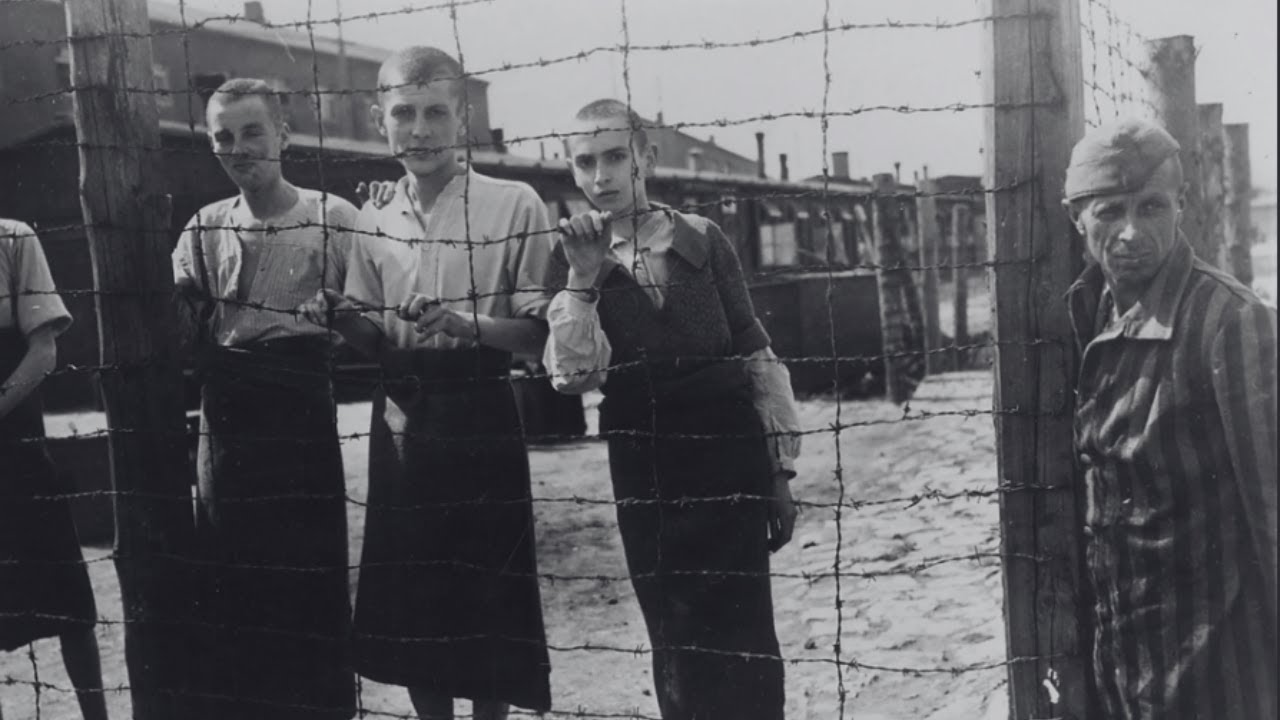
When Soviet forces liberated Auschwitz on January 27, 1945, they found scenes of apocalyptic brutality. Skeletal prisoners, smoldering crematoria, gas chambers still bearing the scratches of victims. But inside Block 10, they found something that stood apart from the chaos. A functioning medical facility. And survivors.
Hundreds of women were found alive in the building. They described being selected from transports, told they were going to work details, and then subjected to procedures they did not understand. Injections that caused excruciating pain. Radiation that burned internal organs. Examinations conducted without explanation, without anesthesia, without consent.
Investigators found equipment for gynecological procedures, X-ray machines, and fragments of paperwork. The SS had tried to destroy the files, but enough remained. Correspondence, requisition forms, approval documents. The evidence established a chain of command. This was not the work of rogue camp guards. It was authorized research, coordinated from Berlin, carried out by licensed physicians.
The sterilization program had an official justification. The Reich was fighting a total war. Occupied territories contained millions of people the Nazis classified as racially undesirable but useful for labor. SS leadership asked a chilling question. How do you exploit the labor of these populations while ensuring they cannot reproduce?
Mass sterilization seemed elegant. Let them work. Prevent them from having children. The population problem solves itself in one generation. Logical if you accept the premise that some humans are less than human. Monstrous if you recognize that premise for what it was.
Physicians across the Reich submitted proposals. Two doctors emerged as the primary experimenters at Auschwitz. Dr. Carl Clauberg, a gynecologist with an established reputation in fertility research, and Professor Horst Schumann, who had experience with the T4 euthanasia program. Both submitted proposals. Both received approval. Both arrived at Auschwitz with equipment, assistants, and authorization to use prisoners as test subjects.
Clauberg's method was chemical. He injected a caustic solution directly into the uterus, causing inflammation and scarring that blocked the fallopian tubes. His goal was a procedure that could be performed in minutes by nurses with minimal training. No anesthesia. No surgical facilities. Just an examination table, a syringe, and a solution refined through trial and error.
Schumann used X-ray radiation. Massive doses targeted at the reproductive organs. Prisoners were positioned between machines. Within minutes, their ovaries or testes were burned beyond function.
Both methods required testing. Dosage calibration. Refinement. And that testing required subjects who could not refuse.
Block 10 became a holding facility for women selected from incoming transports. Jewish women primarily, though political prisoners and Roma women were also used. The selection process was arbitrary and terrifying. Women would survive the initial selection at the ramp, be sent to the camp, and then days or weeks later be pulled from their barracks and told they were being transferred to special medical care.
Inside Block 10, women were strapped to gynecological tables. Without explanation, Clauberg or his assistants injected caustic chemicals directly into the uterus. Survivors described the pain as unbearable, a burning that lasted for hours. Many developed severe infections. Some died. Others suffered permanent damage to internal organs.
Clauberg kept meticulous records. He documented the chemical formula, the injection volume, the time required per procedure, the observed effects. He photographed results. He performed follow-up X-rays to verify that fallopian tubes had been successfully blocked. He wrote reports to Berlin detailing his progress and his projections for scaling up the method.
Schumann's radiation experiments were faster but less precise. Women were positioned with their pelvic region between two machines and exposed to doses far beyond any medical standard. The immediate effects were severe burns. The long-term effects were ovarian destruction, hormonal disruption, and cancers that developed years later. Men were also subjected to the experiments. Radiation targeted at the testicles, followed by surgical removal to study tissue damage.
Both doctors operated with full authorization from the highest levels of SS medical hierarchy. Heinrich Himmler personally corresponded with Clauberg, expressing interest in the research and asking for progress updates. Victor Brack, chief administrative officer in the Chancellery of the Führer, coordinated the program's bureaucratic framework.
All of it was documented. Every approval. Every requisition. Every report. The Nazi bureaucracy's obsessive recordkeeping created a paper trail that survived the war. When Allied investigators began gathering evidence, they found filing cabinets full of correspondence about sterilization experiments. Letters from Clauberg to Himmler describing successful procedures and requesting more subjects. Memos from Brack's office discussing logistics. Budget documents showing funding allocations.
The defendants built their own prosecution case, page by page, memo by memo.
The trial opened on December 9, 1946. The prosecution's opening statement was methodical. The defendants participated in medical experiments that violated the most basic principles of medical ethics and human dignity. The experiments were conducted without consent. They caused death, torture, and permanent injury. They were planned, coordinated, and documented by men who knew exactly what they were doing.
The prosecution began with documents. Report after report describing sterilization experiments. Correspondence between Himmler and Clauberg discussing progress and timelines. Memos from Brack's office allocating resources. Budget documents showing expenditures for X-ray equipment and chemical supplies.
One letter dated June 1942 from Himmler to Clauberg expressed enthusiasm about the research and asked when the method would be ready for mass deployment. Himmler wrote about projecting how many people could be sterilized per day with minimal medical staff. He was not discussing medicine. He was discussing industrial-scale reproductive destruction.
A report from Clauberg to Himmler dated 1943 described successful procedures on multiple subjects and projected that one doctor with ten assistants could sterilize hundreds of women per day. Clauberg included technical details, chemical formulations, procedure times, and success rates. The report read like a business proposal.
Medical experts testified about the damage. A Soviet military physician described examining women from Block 10, finding severe internal scarring, infections, and damaged reproductive organs. An American military doctor explained that the radiation doses used in Schumann's experiments were ten to twenty times higher than any legitimate medical procedure would use.
Then the prosecution brought survivors into the courtroom.
A Polish Jewish woman who was selected for Block 10 in 1943 testified. She described being taken from her barracks without explanation, being brought to an examination room where Clauberg was waiting, and the procedure that followed. The pain. The lack of explanation. The days of agony afterward.
Defense attorneys objected. They argued that memories from traumatic events were unreliable. The prosecution responded with hospital records documenting the witness's injuries. Then they presented a roster found in Block 10 listing prisoners by number, procedure date, and initials indicating which doctor conducted the procedure. The witness's prisoner number appeared on that list.
Another survivor described Schumann's radiation experiments. Being positioned between X-ray machines. Feeling intense heat during exposure. Developing burns within hours. Watching other women go through the same process. Some never returned from the hospital.
Then came the testimony that shifted everything. A survivor who had been a nurse before the war was forced to assist Clauberg during procedures. Her testimony was clinical and devastating. She described Clauberg's demeanor, focused and efficient, treating the procedures as routine. Women begging for explanations. Clauberg ignoring them completely. Equipment that was not properly sterilized. Procedures performed back to back without cleaning the examination tables.
She testified about Clauberg keeping personal notes separate from official reports. Notes where he recorded observations about which subjects responded better, which developed interesting complications, which died, and what he learned from their deaths. Some pages survived the burning.
The prosecution presented fragments of those notes. One described a woman who developed a severe infection, calling it an unexpected variable that required further study. Another discussed a subject who died during a follow-up procedure, noting that future iterations should account for weakened tissue response.
These were not the words of a doctor treating patients. These were the words of a researcher studying specimens. And that distinction destroyed the defense's primary argument.
Throughout the trial, defense attorneys argued that the experiments served legitimate military purposes. That wartime conditions required difficult choices. But Clauberg's notes revealed something else. A researcher pursuing academic questions, testing variables, refining techniques. Not because lives depended on immediate answers, but because he was building a methodology for mass implementation.

The prosecution asked the survivor witness directly. Did any woman volunteer? No. Did any woman give informed consent? No. Did any woman have the option to refuse? No. Were women told what was being done to them or why? No.
The answers were unambiguous. They destroyed the military necessity defense.
The defense tried another approach. They argued that the administrators on trial were not directly involved in conducting experiments. Victor Brack never performed a sterilization procedure himself. He coordinated logistics. He processed paperwork. Can you hold an administrator criminally responsible for actions carried out by others?
The prosecution's answer was yes. Absolutely. When that administrator knew exactly what the resources were being used for and actively facilitated it. Brack's correspondence showed he was not a passive bureaucrat. He was an active participant in planning and coordinating experiments he knew would cause suffering and death.
The defense tried the following orders argument. Several defendants claimed they were implementing directives from Himmler, from Hitler himself. That refusing would have meant their own arrest or execution.
For senior officials, for doctors with professional autonomy, for administrators who volunteered for positions knowing what they entailed, this defense failed completely. The prosecution presented evidence showing these were not men drafted into unpleasant duties. These were careerists who saw opportunities and seized them. Clauberg wrote to Himmler requesting permission to conduct research. Brack actively sought roles in program coordination.
The tribunal established a revolutionary principle. When you are a medical professional, you have obligations that supersede military rank or state authority. The Hippocratic tradition, the fundamental duty to do no harm, creates responsibilities that cannot be overridden by orders. A doctor who participates in torture does not stop being guilty because someone told him to do it.
Before Nuremberg, international law did not clearly establish this principle. The trial was creating new legal ground. Certain human rights are so fundamental that violating them is criminal regardless of domestic law or military orders.
The judges deliberated for weeks. They reviewed evidence meticulously. They consulted legal experts and medical ethicists. And as they worked through the evidence, certain facts became undeniable. The experiments were conducted without consent. The researchers knew subjects were suffering and dying. The documentation proved premeditation and coordination. No military necessity, no state authority, no following orders defense could excuse systematic torture dressed up as medical research.
On August 20, 1947, the tribunal reconvened. Judge Walter Beals presided. The judgment addressing sterilization experiments was sharp and unambiguous. The judges did not just find the experiments criminal. They explained why these acts represented something beyond ordinary war crimes.
The sterilization experiments were part of a genocidal program designed to eliminate populations through reproductive destruction. The experiments served no legitimate medical purpose that could justify the suffering inflicted. Consent was not merely absent but impossible, given that subjects were prisoners with no power to refuse.
The researchers were not trying to develop therapeutic treatments. They were building tools for genocide. Refining methods to efficiently sterilize millions of people. That intent, combined with the systematic torture required to perfect those methods, made the crimes particularly heinous.
The judgment addressed Brack specifically. His central role in coordinating sterilization programs. His correspondence showing full knowledge of what the experiments entailed. His active efforts to expand the program. The judges concluded that administrative participation does not diminish guilt. Brack's coordination made him complicit in every procedure conducted, every woman tortured, every person permanently damaged.
Then the judgment made a broader statement. The tribunal declared that certain principles of medical ethics are universal and absolute. Consent is not optional, not situational, not subject to military override. The voluntary consent of the human subject is absolutely essential.
Those words became the foundation of the Nuremberg Code, ten principles governing medical research that begin with that absolute requirement.
The tribunal announced seven death sentences. Carl Brandt, Hitler's personal physician. Victor Brack, coordinator of sterilization programs. Rudolph Brandt, Himmler's chief administrative officer. Joachim Mrugowsky, chief of hygiene for the SS. Wolfram Sievers, business manager of the Ahnenerbe research organization. Waldemar Hoven, chief doctor at Buchenwald. Karl Genzken, president of the German Red Cross and senior SS physician.
Of these seven, Brack's connection to sterilization experiments was explicit and documented. His sentence specifically cited his role in coordinating the program, facilitating research, and pushing for large-scale implementation. The judges noted that without his coordination, the experiments could not have been conducted at the scale they reached.

The death sentences shocked some observers. There were calls for clemency. Arguments that execution was too extreme for men who did not personally kill with their own hands.
But the tribunal's reasoning was clear. These men did not just violate medical ethics. They systematically corrupted an entire profession. They made doctor a word prisoners feared. They turned hospitals into laboratories of torture. And most damningly, they documented their crimes with pride, intending to publish, to advance careers, to gain recognition for research built on suffering.
The judgment specifically cited sterilization experiments in explaining why execution was necessary. The researchers watched hundreds of people suffer, documented every detail, and never once reconsidered. Senior officials reviewed progress reports and saw opportunities for expansion, not crimes requiring intervention.
On June 2, 1948, at Landsberg prison in Bavaria, the executions were carried out. Seven men climbed thirteen steps to the gallows. Victor Brack's last words were reportedly defiant. He claimed he was serving Germany's interests. History has not been kind to that argument.
The trial established principles that now govern every aspect of human subject research worldwide. The Nuremberg Code became the foundation for all modern medical ethics frameworks. The first principle is absolute and non-negotiable. The voluntary consent of the human subject is absolutely essential.
When you participate in a clinical trial today, you sign a consent form explaining risks, benefits, and your right to withdraw. That form exists because of Block 10 at Auschwitz. When researchers must get approval from institutional review boards before conducting experiments, that requirement exists because prosecutors showed judges what happens when research operates without oversight.
The principle is fundamental and simple. Your body belongs to you. No researcher, no matter how qualified, no matter how important the research, no matter how many lives might theoretically be saved, can use your body without your informed voluntary consent.
That principle seems obvious now. In 1947, it was not codified in international law. It became law because judges in Nuremberg confronted evidence from Auschwitz and drew a line that medicine can never cross.
The legacy of Block 10 extends to reproductive rights and bodily autonomy debates that continue today. The Nazi sterilization program represents an extreme violation of reproductive autonomy. It demonstrates what happens when the state claims authority over individuals' reproductive capacity. When eugenics ideology overrides individual rights. When some people are designated as unworthy of reproduction.
The principle that individuals have fundamental rights over their own bodies, that the state cannot force reproductive choices, traces back in part to the international community's horror at what happened at Auschwitz.
The women of Block 10 carried physical and psychological scars for the rest of their lives. Many could never have children. Many developed chronic health conditions directly resulting from infections, scarring, and radiation damage. Many struggled with trauma that never fully healed.
When those survivors testified at Nuremberg, they were doing more than seeking individual justice. They were establishing a historical record. They were forcing the world to confront what medicine becomes when consent disappears.
The death sentences handed down on August 20, 1947 were not just punishment for individual defendants. They were a statement about accountability. A declaration that some professions carry special obligations. That medical training creates responsibilities that cannot be overridden by state authority or military necessity. That doctors who betray their profession's fundamental principles will face the ultimate penalty.
The question posed at the beginning remains. What made sterilization experiments so legally and morally devastating that they convinced judges execution was necessary?
The answer is multi-layered. The experiments demonstrated premeditation and systematic planning. They showed researchers pursuing academic goals with complete disregard for human suffering. They revealed administrative coordination at the highest levels of government. They produced detailed documentation that made denial impossible.
And most fundamentally, they showed what medicine becomes when consent disappears. When prisoners become specimens. When reproductive capacity becomes a target for elimination.
The tribunal did not just punish individual crimes. It established a framework declaring that certain lines can never be crossed. That certain rights are absolute. That medicine without consent is not medicine at all.
That framework, forged in a courtroom in Nuremberg while judges reviewed evidence from Auschwitz, shapes every medical interaction, every research protocol, every patient's rights form you encounter today.