In August 1943, a group of women lay in the prisoner hospital ward of Block 28 at Auschwitz main camp. They were burning with typhus, barely conscious from dysentery, and trying not to make a sound. An SS doctor was conducting an unscheduled night inspection, and any woman too sick to stand would be marked for selection. Some would be sent to Block 10 for medical experiments. Others would receive a lethal phenol injection directly into the heart.
A 22-year-old Polish political prisoner named Zofia was watching the corridor. She wasn’t watching out of fear for herself. She was timing a movement. In exactly 90 seconds, she planned to move five women from one room to another. If the flashlight beam caught them mid-transfer, or if the count didn’t match the paperwork, everyone in the block could die.
This wasn’t desperation or luck. It was a system refined over months by prisoner nurses and doctors who had learned to exploit a single vulnerability in the Nazi bureaucracy. The loophole existed only at night, only during certain inspections, and only if you understood exactly how the SS conducted their counts. Survivors later called it room switching, or the shuffle. At the time, they didn’t call it anything. They just did it silently, methodically, risking immediate execution to buy sick women a few more days.
Most people assume selections inside Auschwitz were random and chaotic. That was partly true for arrivals on the ramp. But inside the camp, especially in the hospital blocks, selections followed procedures. They happened on schedules. Those patterns created a narrow but repeatable window where prisoner staff could move sick women out of sight just long enough to survive the count.
The trick wasn’t hiding women for days. It was moving them through a selection in progress, using the SS’s own inspection routine against them. By the time a doctor realized a room had fewer patients than the paperwork indicated, he had already moved to the next block. Reversing course would mean admitting his count was wrong, which would mean admitting he had lost control of the process.
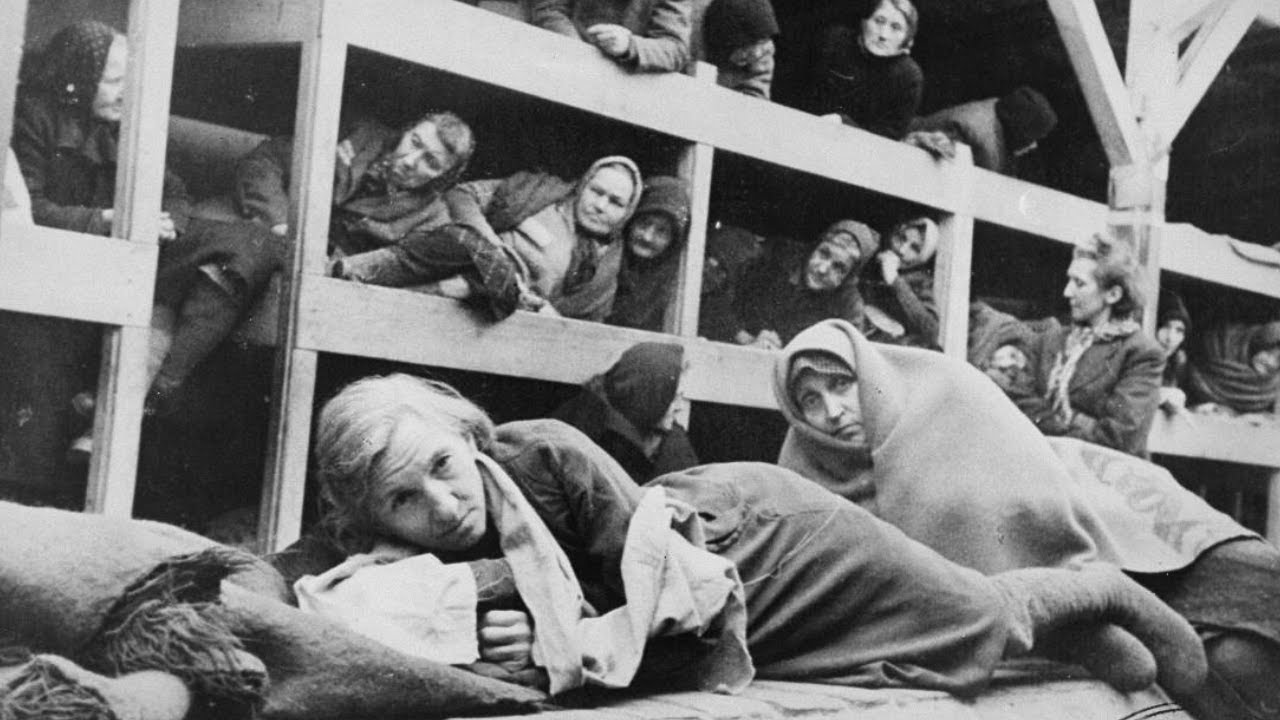
The hospital block, called the Revier, wasn’t designed to heal anyone. Its purpose was to isolate prisoners too sick to work and remove them from the camp population when they became, in Nazi terminology, unproductive burdens. Prisoner doctors and nurses ran day-to-day operations under SS supervision. They had almost no medications and no proper equipment. But they had something the SS needed: medical knowledge and the ability to maintain records that made the extermination process look organized.
The Revier operated on documentation. Every patient had a card with their prisoner number, diagnosis, admission date, and assigned block and bunk. When SS doctors conducted selections, they didn’t examine every patient individually. They walked through wards with a prisoner clerk holding the patient list. The doctor would glance at patients, ask a few questions, and mark names. A check mark meant you stayed. A cross meant selection.
This documentation dependency created the system’s vulnerability. The SS relied on lists, not memory. They didn’t know patients by face or name. They knew them by number and location. If the paperwork said a prisoner was in Room 3, and the doctor saw someone in that bunk when he entered, he marked the list and moved on. The assumption was that prisoners were too terrified, too weak, and too surveilled to manipulate the system.
During daytime selections, that assumption held. Daylight meant visibility, guards at every door, and constant tracking of prisoner movement. But night selections operated differently. They happened after evening roll call, usually between 10 p.m. and 3 a.m. The SS doctor would arrive with one or two guards and a prisoner clerk carrying the room-by-room patient lists. They moved systematically through the block, room by room, inspecting patients by flashlight.
This created a temporal gap. The doctor couldn’t be in two rooms simultaneously. While he inspected Room 1, Rooms 2 through 8 hadn’t been inspected yet. The lists were organized by room, not by individual patient. Prisoner medical staff realized that if they could move patients between rooms after the doctor finished one room but before he reached the next, they could make sick women disappear from the selection.
The doctor inspects Room 1 and moves to Room 2. While he’s in Room 2, you quietly move two sick women from Room 3 back into Room 1, which he’s already cleared. You adjust the paperwork to show those women were always in Room 1. When the doctor reaches Room 3, the count matches the list because you’ve removed two patients. If he notices anything, you claim administrative error.
This required extraordinary precision, timing, silence, and a prisoner clerk willing to falsify records in real time while standing three feet from an SS guard. Many of these clerks were educated women, often doctors or nurses themselves, who had memorized hundreds of prisoner numbers. They also had to identify which SS doctors could be fooled and which couldn’t. Some SS physicians were meticulous and recounted patients obsessively. Others were careless, lazy, or drunk. They trusted the paperwork and wanted the selection finished quickly.
Prisoner medical staff developed profiles of the doctors. They knew which ones conducted selections with clinical precision and couldn’t be manipulated. They knew which ones were often drunk during night inspections and rarely recounted. They knew which guards could be distracted with procedural questions while patients were moved. This intelligence was gathered over months and refined through trial and error. Every successful room switch provided data. Every failed attempt, resulting in immediate executions, clarified the risks.
Imagine being a prisoner nurse with 90 minutes to prepare. You assess which women are most at risk: high fever, visible weakness, chronic illness, anyone who’s been in the Revier more than two weeks. You identify maybe eight women in Rooms 3 and 4 who will certainly be selected. You determine how many can be moved. Can they walk silently? Can they suppress coughing? Can they follow whispered instructions in darkness? Maybe five can be moved. Three cannot. You’ve just decided who lives and who dies.
At 1 a.m., the doctor arrives. You’re in Room 3 with five women who need to be moved. You can hear the doctor questioning patients two rooms away. You estimate you have four minutes before he finishes Room 2. The women are standing now, barefoot, silent, watching you for the signal. One is shaking with fever but insists she can walk. Another is barely conscious, supported by two prisoners. The doctor’s voice gets louder. He steps into the corridor. You have 30 seconds.
You give the signal. Five women move through the doorway toward Room 1, which the doctor has already cleared. They move in darkness. No talking. No sound except bare feet on concrete. You hear the doctor’s boots approaching Room 3. The women aren’t back yet to confirm they made it. The doctor enters. He sweeps his flashlight across the bunks, counting. The clerk reads the list. Room 3, 11 patients. The doctor counts again. It matches. He begins examining the sickest women, the ones who couldn’t be moved. You stand there knowing you’ve just saved five lives while watching him mark three others for death.
The tactic had variations. Sometimes women were moved forward to already inspected rooms. Other times they were moved backward to rooms the doctor hadn’t reached yet, then moved again after he passed through. Occasionally women were hidden in storage areas, latrines, or administrative offices for the duration of the selection. That approach was riskier because it required moving women out of the block entirely, past guards through corridors that might be patrolled.
There were unwritten rules. Never move more than 30 percent of at-risk patients in a single selection, because removing too many would make the count discrepancy obvious. Never move the same woman twice in consecutive selections, because patterns could be noticed. Never attempt the tactic if the SS doctor was accompanied by more than two guards. And never move a woman who might cry out, collapse, or draw attention. One mistake would expose the system and result in mass executions.

Success rates are impossible to quantify because documentation didn’t survive. But testimony from multiple prisoner doctors suggests that in blocks where the tactic was used, between 20 and 40 percent of women targeted for selection during night inspections were successfully hidden or shuffled. Over months and across multiple blocks, that meant hundreds of women avoided immediate death and gained time to recover. Some survived the war because of those extra days.
The limits were brutal. Women too sick to move couldn’t be saved. Women whose names had already been recorded in selection lists couldn’t be hidden, because the SS would search for them specifically. Women in isolation wards for highly contagious diseases couldn’t be moved. And women selected during daytime inspections had no options at all. The tactic worked exclusively at night, exclusively during certain types of inspections, exclusively when the conditions aligned.
One specific night, August 17, 1943, in Block 28, the system nearly collapsed. The details come from post-war testimony by Margita Švalbová, a Slovak Jewish prisoner who worked as a clerk in the hospital blocks. The selection was announced at evening roll call. SS Obersturmführer Dr. Friedrich Entress would conduct a hospital inspection beginning at midnight. Entress was known to prisoner staff as moderately careless, someone who could be fooled if the deception was executed cleanly.
Block 28 had 73 women that night distributed across eight rooms. Švalbová and the senior prisoner nurse identified 12 women who would almost certainly be selected. Seven could potentially be moved. Five could not. The plan was straightforward. Entress would begin in Room 1 and proceed sequentially. While he inspected Rooms 1 and 2, the seven at-risk women from Rooms 4 and 5 would be moved back into Rooms 1 and 2 after he cleared them. The paperwork would be adjusted to show administrative reassignments earlier that day.
At midnight, Entress arrived with two guards and entered Room 1. Švalbová stood beside him, holding the patient list. He marked four selections in Room 1, moved to Room 2, and marked three more. Fifteen minutes elapsed. He stepped into the corridor between Rooms 2 and 3. This was the window. Švalbová gave a barely perceptible nod. The seven women began moving from Rooms 4 and 5, walking silently back toward Rooms 1 and 2. They moved in darkness, barefoot, some supporting each other. Entress was facing away, speaking to one of the guards. Twenty seconds total. Clean execution.
Entress continued. Room 3, Room 4, Room 5. In Rooms 4 and 5, the counts matched the adjusted paperwork. Švalbová had altered the lists to show the seven women as transferred earlier that day. Entress noticed nothing. He marked additional selections in Rooms 6 and 7. By 12:40 a.m., he had finished Room 8. The selection was complete. Fourteen women were marked for phenol injections. The seven hidden women had survived.
Then Entress turned back to Švalbová. He asked about the number of typhus cases in Room 2. The list showed five that morning. Švalbová said three. Her mind raced. Two of the hidden women were typhus patients moved from Room 4. She needed an explanation that sounded routine. She told him two were transferred to Block 29, the isolation ward, that afternoon under standard quarantine protocol. Entress stared at her for five seconds. Ten. Then he nodded once and told her to record the transfers properly. He turned and walked out.
Švalbová stood motionless for 30 seconds, waiting for the sound of boots to fade. If Entress had demanded to see transfer documentation that didn’t exist, the deception would have collapsed. If he had walked back to Room 2 to recount, he would have found women who weren’t supposed to be there. Mass execution would have followed. That night taught prisoner medical staff a crucial lesson: the tactic worked only when everything aligned perfectly. Documentation had to be airtight. Explanations had to be instant and credible. And you needed luck.
The seven women were returned to their original rooms after Entress left. Five recovered enough to be released from the Revier within two weeks. Two remained hospitalized longer. One survived until January 1945 and was evacuated during the death marches. She survived the war. The other died in October 1943 during a subsequent selection that couldn’t be manipulated. Of the 14 women Entress selected that night, all were dead within 48 hours, killed by phenol injection.

Room switching wasn’t a guaranteed survival method. It was a desperate tactic that sometimes bought sick women enough time to recover and sometimes didn’t. It depended on courage, precision, and circumstances beyond anyone’s control. But prisoner medical staff used it repeatedly because doing nothing meant certain death for every woman too sick to pass selection.
This wasn’t a secret the entire camp knew. It wasn’t taught or formalized. Most prisoners never knew it was happening. The tactic was executed by a small group of prisoner doctors, nurses, and clerks who had access to patient lists, understood the inspection procedures, and were willing to risk execution. They didn’t tell patients what they were doing, because patients couldn’t be trusted not to react or accidentally reveal the system under interrogation. The women being moved often didn’t understand why they were being shuffled between rooms in darkness. They were simply told to move, to stay quiet, and to trust that someone was trying to keep them alive.
The prisoner staff who executed room switching had to choose which women to save and which to leave behind. Those choices were made based on medical assessments: who was most likely to recover, who could move silently, who had the best chance of surviving if given more time. But pragmatic triage doesn’t erase the emotional and ethical weight of deciding that one woman gets hidden while another equally deserving of life stays and dies because there wasn’t enough time to move everyone. Survivor testimony describes this burden as unbearable. They saved lives. They also chose who wouldn’t be saved.
The tactic only worked because the SS system was bureaucratic and dependent on documentation. That same bureaucracy was what enabled the Holocaust’s industrial scale. The Nazis didn’t murder millions through chaos. They murdered millions through organization, through lists and paperwork and procedures that made mass killing manageable and routine. Prisoner medical staff exploited that bureaucracy’s weaknesses, but they were also trapped within it. They could manipulate room counts and patient lists, but they couldn’t stop the selections from happening. They could only save a few women at a time, temporarily, by working within the very system designed to kill everyone.
Resistance under totalitarian systems doesn’t always look heroic. Sometimes it looks like clerks falsifying paperwork. Sometimes it looks like nurses moving patients between rooms in darkness. Sometimes it looks like small incremental acts of defiance that save a handful of lives while the machinery of murder continues operating around them. Those acts don’t stop the atrocity. But they matter because they represent a refusal to accept that every life targeted by the system is already lost.
Švalbová gave testimony in 1961 during the Frankfurt Auschwitz trials. She described the room switching tactic in clinical detail, explaining the procedures, the timing, the risks. But when asked how she decided which women to move, she couldn’t answer. The transcript records a long silence, then a simple statement: “I don’t know how we made those choices. I just know we had to make them.”
The room switching tactic worked because the SS didn’t see prisoners as individuals. They saw them as numbers on lists, as administrative problems to be processed. That dehumanization was the engine of genocide. But it was also the system’s vulnerability. Because if prisoners were just numbers, then manipulating the numbers could manipulate the system. The same bureaucratic thinking that enabled industrial-scale killing created gaps where resistance was possible.
The prisoner medical staff at Auschwitz understood that the SS valued procedural order more than individual accuracy. An SS doctor would rather accept a clerk’s explanation for a discrepancy than admit he’d lost control of a selection. The paperwork had to be correct, even if the reality underneath was manipulated. Because acknowledging manipulation would mean acknowledging that prisoners had agency, intelligence, and the capacity to deceive their captors. The Nazi worldview couldn’t tolerate that acknowledgment. So the SS accepted the paperwork, and women survived.
But the limits were absolute. Women selected during arrival at the camp on the ramp had no chance. Women already registered for experiments by name couldn’t be hidden, because the SS would search for them individually. Women with visible illnesses or disabilities couldn’t be moved without drawing attention. Women in blocks where prisoner medical staff were complicit or too terrified to attempt resistance had no protection. The tactic’s scope was limited. Its success rate was partial. It wasn’t a solution. It was a temporary, dangerous intervention that saved some women some of the time.
The women who survived because they were moved between rooms during a selection carried that knowledge for the rest of their lives. Some never learned why they were moved. Others understood and spent decades wondering why they were chosen to live while others weren’t. The prisoner medical staff who made those choices carried a different burden: the weight of deciding who gets a chance and who doesn’t. There’s no resolution to that weight. Just the reality that in systems designed for mass murder, small acts of resistance matter desperately to the people they save, even as they fail to stop the larger machinery of death.
The room switching tactic didn’t stop the Holocaust. But it meant that some women on some nights survived selections they were supposed to die in. And in Auschwitz, that was everything.