Born in 1885 at Windsor Castle, Princess Alice of Battenberg entered a world of empire and expectation. Queen Victoria was present at her birth, and the child was named with the old queen’s name at the head of the list. She was born deaf, though the condition went unnoticed for years. Her mother, Victoria of Hesse, initially mistook the symptom for a talent, noting that Alice was slow to talk but clever with her fingers.
It was Alice’s grandmother, Julie, who finally took the girl to a specialist and returned with the verdict: Alice was deaf in both ears, a condition present from birth. At eight, a London specialist confirmed no surgery could mend it. Her mother refused the easy road of signing. Instead, she sat with her daughter face to face, hour after hour, teaching her to read lips. English came first, then German, then French, then Greek. Four languages taken in entirely through the eyes. For the rest of her life, every conversation was an act of watching.
The household lived by one iron rule: no concessions. Brothers and sisters were not to slow down or make allowances. The rule built a quick, watchful, self-reliant woman, but it left its mark. Her youngest brother, Dicki, who grew up to be Lord Mountbatten, confessed a lifetime later that the sight of his sister straining after the family’s laughter had troubled him all his days. The ordinary music of the world—birdsong, rain, wind—stayed locked away for decades. Not until 1922, when Alice was 37, did she hear a bird call for the first time in her life.
In the suspended summer of 1902, during a coronation postponed by the king’s appendix, Alice met Andrea, the fourth son of the king of the Hellenes. He was 20, tall, fair, short-sighted, and spoke Greek before anything else. Asked nearly 70 years later what he had been like in that first English summer, she answered without a moment’s pause: “He was exactly like a Greek god.” On both sides, it was a love match, unarranged and unbargained. They were engaged in 1903, when she was 18 and he was 21.
The wedding was a double ceremony, Lutheran in the morning and Orthodox in the afternoon. The first was comedy. In the old castle church, the pastor turned to Alice with the two great questions. Asked whether she freely consented to take this man in marriage, she answered clearly, “No.” Asked whether she had promised her hand elsewhere, just as clearly, “Yes.” A ripple ran the length of the pews. The groom fought laughter. Within the hour, she was a married woman. The second wedding was Russia. Priests blazed in cloth of gold, and the deaf bride stood at the still center of the most sound-drenched liturgy in Christendom, taking it in through her eyes alone.
The sendoff descended into a riot. The Tsar of all the Russias hit the bowing bride full in the face with his entire bag of rice. Alice caught the satin shoe flung after it, leaned out over the carriage, and brought it down on the emperor’s head, telling him precisely what she thought of him. Fifteen years later, the man shrieking with laughter in the rice would be walked into a cellar with his wife and children and shot.
Greece came up over the horizon in January 1904. For a girl who took the world in through her eyes, it was pure spectacle. Fireworks over the Acropolis, warships dressed in the bay, 10,000 mouths roaring a welcome she could see on every face. Her father-in-law, King George I, had been a 17-year-old Danish naval cadet when the Greeks elected him to their empty throne. He walked the streets of his capital unguarded, and he preached one commandment to his sons: never forget that you are foreigners among the Greeks, and never let them remember it.
Alice took the lesson more literally than any of his own blood. She set herself to learn Greek, her fourth language read off lips. Children came quickly: Margarita in 1905, Theodora in 1906, Cecile in 1911. Between confinements, she found her workroom. An ambassador’s wife had founded the School of Greek Embroidery, and Alice helped it thrive, teaching poor women the old island patterns stitch by stitch.
In October 1912, the Balkan states rose against the Ottoman Empire, and Greece went to war. Andrea buckled on his saber and rode north. The embroidery school became a supply depot, frames cleared and colored silks put away, the women bending instead over army wool. Eighty thousand hoods went north in a single month. Then Alice went north herself. At Elassona, she requisitioned the schoolhouse and turned it into a 120-bed hospital. Her surgeon she sent forward to the battlefield in a general staff motor on a requisition signed by herself. No authority but her own.
The battle of Sarantaporro came the next day. Everyone in Elassona heard it but her. At six, the guns stopped. Two hours later, the war arrived. Hundreds of wounded came in, soaked through from hours of pelting rain. With no nurses yet, Alice and Madame Auropollo put on aprons and caps and went to work beside the doctors. From eight until three they came, and a spirit lamp found in a corner kept a pot of Turkish coffee going hand to hand down the rows like a sacrament. A dying man wanted to hold her hand for comfort. She gave it, and since the other hand was free, she cooked with it. Blood from the operating table dripped down onto her as she stood. The deafness for once conspired. In that schoolroom of groans and sawing, she alone worked in silence, spared nothing by her eyes and everything by her ears.
Three days and three nights it ran, with two hours’ sleep between arrivals. Her rations for the three days were one crust of dry bread and one small cup of Turkish coffee. When trained Red Cross nurses at last arrived to take over, they took the work from women who had bandaged every wounded man of a battle first. She wrote home: “800 cases have given me experience enough to make me now a first class nurse. I who had never set my foot in hospitals because I could not stand the sight of wounds and pain.”
The army moved, and she moved with it, north to Servia, where the crown prince asked a second hospital of her. In November, Salonica fell, and Alice rode into the captured city in the king’s own party. By March, it was over. For her work, she received the Royal Red Cross, the second medal of her life. The first had been a Jubilee souvenir given to a two-year-old at a window.
On the 18th of March 1913, the king went for his walk. Fifty years he had walked his capital unguarded. A shabby, drifting Greek, deranged, stepped out and shot him in the back. He died almost instantly. The trap door he had preached to his sons opened under the preacher. The news reached the Athens palace with Andrea and Alice inside it. It fell to them to carry it to Queen Olga.
The dead king left a promise no one had thought to collect. The winter before, floods had drowned Thessaly. At Trikala, the royal family had been taken in by Haki Cohen, a Jewish member of Parliament. The king offered a decoration. Cohen declined it. So the king gave the one thing left, his word: if ever his family could serve Cohen’s, they had only to ask. The promise went into the family’s keeping, and it would be 20 years and another war before Cohen cashed it in.
Then the world tore in half, and the tear ran through her family. Her father, Louis of Battenberg, had given England his whole life. England in the first hysterical October remembered only where his name came from. The press bayed, the corridors went quiet. After 12 weeks, he resigned. At Osborne, young Dicki, 14, a cadet, absorbed the shaming and made a vow he would spend 40 years keeping.
Greece split with the family at the seam. In December 1916, the war came up Alice’s own street. It found her at the frames of the embroidery school and began for her in silence. A street suddenly running, mouths torn open around cries she couldn’t hear. She got home through a rain of bullets, a deaf woman crossing a firefight by eyesight alone, and took her daughters down to the palace cellar where the queen already sat. Six months later, the allies stopped pretending. Constantine went into exile, his brothers ordered out in days. That summer, Andrea and Alice took the girls to Switzerland.
That same July, King George in London scoured the German titles from his court. His own house became Windsor, and Battenberg, born of a pregnant maid of honor 66 years before, was translated at a stroke into Mountbatten. Her mother’s verdict was dry: “Schmidt turned into Smith.”
Through Switzerland came the telegrams from Russia, contradicting and cancelling each other by the week. Then in a cellar at Ekaterinburg, guards walked the Tsar and his family downstairs and shot them all. Nicholas, who had shrieked with laughter in the rice at Darmstadt. Alexandra, her aunt. The four girls. The boy. Ella went the next night, thrown down a mine shaft in the Urals, nursing a prince beside her with his arms smashed in the fall, tearing strips from her habit to bind him. Then a grenade came down, and the singing stopped.
Greece changed its mind by way of a monkey. In October 1920, King Alexander, the second son, was walking his dog at Tatoi when a pet monkey attacked it. He pulled them apart. A second monkey bit him in the stomach and the thigh, and the wounds turned septic. Three weeks later, the throne stood empty. A plebiscite called the old king home. The exiles returned. Constantine to the crown, Andrea to his uniform. Alice, carrying her fifth child, went to the shuttered house on Corfu.
On the 10th of June 1921, in the dead king’s dining room at Mon Repos, Alice gave birth to her only son, Philip. The boy was splendid and healthy. Within days she was out on the terrace answering telegrams in air that smelled of orange blossom and wisteria, while Andrea at the front in Asia Minor waited for the order to attack. The attack came and broke on a river deep in Anatolia. His commander ordered Andrea to advance. He knew it meant slaughter. He refused, and the refusal went into the staff files.
A year later, the campaign collapsed. Turkey broke the line and drove the army into the sea, and Smyrna burned. The beaten army came home looking for the men who had done this to it. Colonels seized Athens. Constantine was driven from his throne a second time, and the revolution set about gathering the guilty. In late October, a destroyer came into the roadstead below Mon Repos and took Andrea to Athens on a promise of two days. Two weeks later, a pencil note reached Alice, smuggled out by a Greek lady. He was held strictly alone. A guard at the door. He was a prisoner.
In November, the revolution shot six ministers of the old regime at Goudi in a single morning. And Pangalos, its strong man, came to examine Andrea and put one question to him: “How many children have you? Poor things. What a pity. They will soon be orphans.” Alice’s letters went out by whatever hand could carry them. England moved through the agent it sent, Gerald Talbot. Before the court ever sat, Talbot had bought the ending from the men with the guns. Andrea would be tried, sentenced, and then handed over to him alive. The price was absolute secrecy. Not even the prince and princess could be told.
So Alice waited through a trial whose verdict was already sold. It lasted a day. Andrea was found unanimously guilty, stripped of his rank, and banished from Greece forever. That night, the Calypso took them off at Phaleron and called at Corfu, where the packing was done in hours by lamplight. Four daughters pulled from their beds, a household folded into trunks, and for the 18-month-old boy, a cot improvised from an orange box.
They washed up at St. Cloud outside Paris in a house on Marie Bonaparte’s land. The collector paying every bill. Exile then went to work on what was left. The marriage quietly became a companionship. In 1925, she fell in love, a married Englishman, impossible from the first, pursued the impossibility with great energy, and gave it up as hopeless. In 1927, she turned from love to statecraft, laying out a scheme to set Andrea at the head of a Greek republic. Nothing came of it. Marriage, love, statecraft, every door she tried closed with perfect manners.
She turned to the one no chancellery kept. In October 1928, in the little chapel at St. Cloud, she was quietly received into the Orthodox church. And the turn kept turning. She lay full length on the floor to receive what she called the power from above. She cured the nanny’s rheumatism with her hands. She claimed she could stop her thoughts like a Buddhist. Through the autumn, she stopped speaking to her family and nearly stopped eating. In the new year, she told a cousin she was a saint. She wrote to the Englishman she had given up that she could not marry him. She was now the bride of Christ. And one evening, she came downstairs and announced that she was having dinner with Jesus Christ.
The crisis brought her mother. Crossing to St. Cloud in January 1930, Victoria found the house rearranged around a stranger. Her eldest daughter, frail and sweet-smiling and hardly speaking. A woman in conversation with someone none of them could see. Where she lived now, she said, was bliss. From Athens came Luros, her own gynecologist, who looked at his princess and saw at once what the family had been circling. This would not mend at home. Germany, he advised. It was all in her mind.
The family learned from the sister-in-law with the collector’s eye. Marie Bonaparte, by now a psychoanalyst of real standing, knew the address: the Schloss Clinic at Tegel on a lake outside Berlin, the first sanatorium on Earth where the talking cure had been given beds and gardens and visiting hours. Opening that door required a deception. Christ, Luros told her, advised the journey, and Alice, obedient to an instruction Christ had never given, consented at once.
What happened at Tegel surprised everyone. Twelve pounds came back onto a frame that had been starving itself since Christmas. Alone and trusted, the patient took the train into Berlin for the theater and came home by the evening service. Simmel consulted his old friend Freud, and Freud advised that the patient’s ovaries be exposed to X-rays in order to accelerate the menopause, and the procedure was carried out. There is no record in any file or any letter that Alice was told what was being done to her body or why or asked whether she consented.
After eight weeks, the trust curdled into suspicion. A conviction grew on her that the doctors meant to lock her up. And when it hardened, she tested the one thing in the apparatus nobody had thought to secure: her own authority. She was, after all, a princess. So out of the first psychoanalytic sanatorium on earth, she walked exactly as she had entered every institution of her life, upright and on her own terms, and went home to St. Cloud.
In her absence, the house decided. Andrea crossed to London, unable, perhaps unwilling, to cope, and two more doctors confirmed the word: internment. This time, the walkout’s lesson learned in a house she could not walk out of. The specialists consulted the establishment on Lake Constance. The day was already set.
What came for Alice on the morning of the 2nd of May had no court in it, no faces she could read, and no door that opened from the inside. Wilmans of Heidelberg, an authority on insanity, arrived never having met his patient. He found Alice alone and courteous and entirely immovable, who heard the proposal with the composure of a woman whose orders came from higher ground, and declined it without raising her voice. When the shape of the morning at last became clear to her, she rose from the chair and walked toward the door. Force was used before she reached it, and into the arm of the struggling great-granddaughter of Queen Victoria went a needle of morphia and scopolamine.
South ran Ernie’s car, seven hours down the spine of the Black Forest. Each time consciousness rose toward the glass, the drug was fed to her again, drops of hyoscine concealed in the flesh of an orange, held to her lips segment by segment through the long green afternoon. At 11:00 that night, the car came out of the darkness to the lakeside gates of the Bellevue Sanatorium at Kreuzlingen, and the gates opened and admitted her and closed. The doctors who received her that night had no power of their own, either to keep her or to let her go. The gates answered to one authority alone: her mother’s word, renewable for as long as she chose to give it. The hand that had taught a deaf child to speak syllable by syllable at a nursery chair now held the only key to her silence.
That afternoon the children came back from their outing and their mother was gone. The next morning they were sent to St. Cloud without her. The family had been together for the last time, though not a soul at those Easter tables had known it.

On the first morning, Binswanger came to Villa Maria with two colleagues, and what they found was not the wreckage the journey might have promised, but a woman sitting up in bed, composed and courteous, and entirely unpersuaded. Her nerves neither exhausted nor overstrained, in direct communication with Christ, whose visits she described with the patience of a woman explaining weather to people who had never been outside. As for the manner of her coming, she hoped that no other woman would ever be carried anywhere the way she had been carried there.
Beautiful the Bellevue, and the beauty was its method. Down from the villas, a park ran to the Swiss shore of Lake Constance, past tennis lawns and an orrery and a kitchen garden. On the lawns in fine weather sat Vaslav Nijinsky, once the greatest dancer alive, a slim, middle-aged man, resting in a chair, looking ahead with wandering but far from vacant eyes. And along the boundary of this gentle kingdom ran the railway, trains sliding in along the lake shore all day, taking on passengers, pulling out for everywhere on earth.
Into the file went everything: pulse, sleep, weight, prayers, and the explanations she offered with the reasonableness of a woman who could not understand why reasonableness was not enough. Once asked about the voices, she told Binswanger what she heard. “You see, it is as if you were reading aloud and at the same time hearing your own voice.” Forty-five years she had taken every voice on earth in through her eyes, building speech syllable by syllable off other people’s lips. And now at last had come a voice that needed no face and no light and no turning toward. A voice that met her in the one language she had always possessed, the interior one. And it arrived in her life certified as madness.
On the 8th of May, her mother came to tea in the villa garden, the lake light moving through the trees behind them, and told her gently that the stay was likely to be a long one. It was up to the doctor to decide. Ten months would pass before Alice learned whose word actually controlled those gates. And through all of them, her mother sat in the afternoon sun and was poured tea by the daughter she was keeping there. Neither acknowledged the arrangement, because only one of them knew it existed.
On the 1st of June, Alice wrote a card to Philip apologizing for missing his 9th birthday. A week later, a mass of flowers arrived at the clinic from the two brides and their future husbands to mark the engagements, and the file kept its account of the day that followed: “Cried much yesterday.” In July, the message she had promised the world found its road out. She wrote her teachings into an article for the Daily Mail, a sermon from inside an asylum aimed at a million English breakfast tables. Victoria wrote to the editor that no articles by her daughter were to be published and instructed Binswanger to supervise her writings and if necessary intercept them.
Every afternoon between 2 and 4, while the residents walked the park and Nijinsky sat in his chair and the trains went past along the lake shore, Alice sat at her desk, not at protest, not at appeal, but at statecraft, drafting a constitution for Greece. Seven pages closely reasoned, calmly argued, how a president and prime minister might be elected, how each province would be governed, the role of a monarch, the independence of judges. All of it laid out in the steady hand of a woman her file called schizophrenic.
Before the holiday, she ordered garments of plain rough linen, high-necked, long-sleeved, cut to resemble the habits of a religious order. Summer brought a fortnight in the mountains at Braunwald with Schwester Lena and her maid. What Alice packed told its own story: a large photograph album, and her Schuré. From the mountaintop hotel went cards to Philip and his sisters saying the mountains were marvelously beautiful. And the only trouble the nurse could report was a picture of Christ that the patient wished to hang in her room and was refused.
In Braunwald, with the calm of a woman settling accounts before a journey she did not intend to return from, she began to give away everything she owned. Jewelry, clothes, books to her maid with precise instructions for their distribution. “You will return without the princess,” she said. In despair, the maid tried to turn her toward the weddings. Four engagements, a whole year of white ahead. And Alice considered it and answered: “I will assist at every wedding. Even though no one will be able to see me, I shall be able to see everything.”
From Braunwald, they moved to Lucerne. And at Lucerne, the preparations reached their destination. In her Bible, she wrote the date of her departure, the 8th of September. To Dicki went a farewell letter with a small cross standing in its corner, a check for £25 enclosed. “I would like you to get something to remember me by. Goodbye, dear Dicki, with fondest love ever from your loving sister, Alice.” And then she took out her passport, the small booklet that said in official ink who she was and whose protection she traveled under, and pressed it on Schwester Lena. “Keep it as a memento,” she said. “There’s a nice picture in it, and I don’t need it anymore.”
On the balcony of the Hotel National, overlooking the lake, she reached the end of her preparations, and it was Binswanger who drove through the night from Kreuzlingen and stopped her and brought her back by force. She had been hours from taking her own life. The holiday was over.
The weddings came, and she was at none of them. In eight months, all four daughters married. Sophie first in December at Kronberg, where the old servants came out of retirement and put on their old liveries, and Theodora and Cecile and Philip helped the 16-year-old bride into her dress, and a 9-year-old boy in his best clothes carried his sister’s train through the ceremony his mother could not attend. The absence at the center of it was explained in the family’s gentlest cover: she felt not strong enough and too shy of strangers to want to assist at the wedding.
Behind her, the household she had held for a quarter of a century quietly ceased to exist. Andrea closing the Paris house, drifting south into the café life, graying toward distinction, resigning the role of husband, a visit at a time. And at a school in England where nobody had explained anything, a boy absorbed the disappearance of his family. An old man’s words given a lifetime later in a voice that had learned not to need anyone’s pity stand for everything the child was never told: “I was at school in England and suddenly my family had gone. My father was in the south of France and my mother was just ill. I had to get on with it.”
On the 4th of March, she asked Binswanger directly about her rights. And for the first time in 10 months, somebody told her the truth. Three hundred locked evenings had rested on nothing but a word from home renewable at pleasure, and the word was her mother’s. When she heard it, she froze, the file says, like a pillar. From that day on, the record notes with quiet precision, she was resentful of her mother and never wholly forgave her.
In September, Margarita came to visit, and they kissed several times and exchanged hardly 10 words, and Margarita left in tears, and Alice was heard crying hard in her bath. Then came to the common table afterward with a flower pinned to her dress. In October, she wrote to her mother asking to be naturalized in Switzerland as Mrs. Alice Battenberg, reaching past everything the century had renamed back to the scandal-born original of the family name.
The forced visit came on the 20th of December. Theodora arrived with Berthold, her new husband, and Alice rose to the occasion as she rose to every occasion, dressed for them, lunched, talked with the animation of a woman determined to be equal to the room. When the visit ended, she ordered her nurse to pack because she was leaving with her children. And when they moved toward the door, she put on her hat and her coat and took her daughter’s arm and would not release it. If she could not get out now, she said, she would never get out at all. Force was used to hold her in front of her own child. When resistance was plainly useless, she yielded and parted from them in a friendly way, composing her face so that the last thing Theodora would see through the car window would not be a mother being restrained.
On the 27th of July 1932, while her nurse was at lunch, Alice went out the window of Villa Maria, dropped into the flower bed below, and was up and moving before the earth had finished taking her weight. Across the lawns she had walked with her attendant for more than two years, past the trees, through a gap in the boundary, and down to the railway, whose timetable she had been reading from her window since the morning after the orange. She reached the station and slipped into a waiting carriage with a bundle of laundry and shoes under her arm. And there in the carriage, she was arrested.
Back at the Bellevue, she received her captors with composure and consented for the first time since the needle to see Wilmans, and told him the truth of herself in two clauses that have outlived everyone in the room. She was fed up with being a princess, and she wanted to lead the life of an artist. Then she congratulated the professor on the efficiency of his pursuit and advised him she would try again.
That summer, Theodora brought Philip to see his mother, and they found her so depressed she hardly spoke at all. Slowly, guilty, against all the professional advice she was paying for, Victoria bent. A sanatorium was found at Merano in the south Tyrol, a much freer place, good for the heart and taking. And on the 23rd of September 1932, after two years and nearly five months, Schwester Lena walked Alice out of the Bellevue for the last time. The file closed with Binswanger’s single word: “improved.”
Freedom when it came had no address, and the first person she told was the woman whose word had held the gates. To her mother, Alice wrote that she would not be returning to her family, would not be resuming her former ties, and would pursue her own life quietly without any of them. Before her release, Binswanger had advised Victoria that Alice be told she was not fully cured, that her liberty depended on her conduct, and that the phantom of the asylum should never quite vanish from her mind, where it would go on working as what he called a curative inhibition. And wherever she settled, anyone she employed was to be informed that she was a mental patient.
In Cologne, at the door of a landlady named Frau Reiter in the Bachomer Strasse, there appeared one day a lodger unlike any other on her books. A tall woman in a silver gray robe who had arrived by taxi and who was not believed to be a princess until she produced her diplomatic passport, and whose luggage consisted principally of a collection of silk shoes, the wardrobe of a vanished life carried through boarding house Germany like relics. The Reiter daughter, decades later, could still summon her lodger whole: the afternoons on the terrace, gazing into space, the stillness and the exquisite, maddening gentility of a woman who excelled in the art of dealing with a little piece of cake for an hour, making one pastry last 60 minutes in a rented room, a liturgy of crumbs, while the Rhine outside her window filled with brown shirts and drums.
From those years, the reports still traveled, mother to doctor, tea by tea. A maid slapped so hard the girl needed an ear specialist. Objects thrown to the floor from time to time. Constant talk of a great religious book she was writing. And four years in which a boy at school in England received from his mother not a visit, not a letter, not a birthday card, not one word.
Bribach turned out to be the medicine no one had prescribed. A modest establishment of 28 guests kept by a family named Marwitz. It offered Alice no analysts, no file, no program, only a large open fire, its own trout, cream waffles at tea time, and the ordinary rhythms of a household going about its day. Reinhold Marwitz, who ran the house, had been a lawyer in Dürenberg, a social democrat with a practice he had shared with a Jewish partner until the New Germany took both the partner and the profession from him. Into this household, Alice quietly folded herself. At the kitchen table she peeled potatoes with the family, and to Marwitz she offered again and again the whole of her accumulated instruction: “You must do good, even if you believe our present mankind to be undeserving of it.”
As the year closed, an envelope of photographs arrived from Cecile, her new baby daughter, and Philip. And Alice wrote back: “Your little daughter is so sweet and chubby. Philip, I barely recognized. He is so changed. Give him my love, please.” And with the letter to Cecile, for the first time in more than four years, went a letter to the boy himself.
In the spring, Cecile and Don brought Philip to lunch in Bonn. It was Cecile who had arranged it. Of the four children, she was the one working her mother back into the family, one door at a time. The photographs at Christmas, the letters, now a table with her son at it. Philip was 15. That summer, a new idea appeared in Cecile’s letters, and reached Binswanger in the same July. Her mother wanted to found an order of nuns.
In October, old Ernie died at Wolfsgarten. Alice read it in the newspapers, the death of the uncle whose house had held every summer of her girlhood, delivered to a boarding house breakfast table. She traveled to Darmstadt, put herself up at an inn like a stranger in the family seat, and asked whether she might come to the family, and was invited at once, as though the asking had been the only formality anyone was waiting on. At the funeral, the streets she had ridden through as a bride were lined with soldiers holding the new salute, arms raised in their thousands over the coffin of a man who had answered the loss of his throne with art and opera. Hitler sent his condolences.
In November 1937, the house of Hesse prepared for a wedding. Don’s younger brother was to marry in London. And on the 16th, the family party flew from Darmstadt. Don and Cecile, eight months along with her fourth child, their two small boys, Ludwig and Alexander, six and four, who were to be pages, and the old Grand Duchess. By 2:00 in the afternoon, heavy fog had come in off the North Sea, and at Ostend outside Brussels, the pilot tried to come down in it blind. Out of the fog, the aircraft came down onto the chimney of a brick works at 100 mph, a wing and an engine tearing through the roof, and the rest of it turned over into the brickyard and caught fire, and every soul aboard was gone.
The wedding was held anyway. The next day, the bride in a black suit and veil, and what should have been the honeymoon was a funeral crossing to Ostend, where nuns had laid out a room, and the coffins waited under flowers. At Darmstadt, the streets were lined with soldiers again, right arms raised over the coffins as they passed. Behind the coffins walked the family, Don and the bride he had married in black, Philip at 16, come from London with his father. And from the other direction, from Berlin with Sophie, came the dead woman’s mother. At the coffin of their third daughter, husband and wife stood together for the first time in six and a half years and grieved with the whole wreckage of the marriage and the century between them.
Long afterward, when Theodora tried to explain to Binswanger what had finally happened to his most argumentative patient, she reached for the language of the house that had held her and gave the crash a second stranger name. The first curative shock, she called it. It apparently tore her out of everything.
A few days after the funeral, husband and wife went their separate ways. Andrea to a woman in the south of France, Alice into the winter. There were no scenes and no arguments, and the parting made no sound. Alice went north to Louise, her older sister, married into the Swedish throne, keeping a room for her whenever the world emptied. And from Stockholm, because Sweden was neutral and the post could carry what a German desk could not, she wrote her brother Dicki for the first time in seven years. What she wrote was the postwar continent. Break Germany into its states. Restore parliaments peace by peace. Bind those states with the rest of Europe into a federation with a common currency and no customs at the borders. It was the end of 1937. The Anschluss was still months away. And the woman with no country of her own, no throne to lose, no capital to defend, no border her own passport could open, was drafting a continent that did not yet know it was going to burn.
On Christmas day she went to the Rosenhöhe to Cecile’s grave and gave away at once the money Dicki had sent to her daughter’s nurses in her daughter’s memory. What came in went out. It would remain the rule. Through Grand Duchess Vera, the last Tsar’s sister in her 70s now, living out the Russian exile in two grace-and-favor rooms beside the Tempio, where Alice helped in the kitchen, one of them peeling, one of them drying, she was pointed to a small Orthodox rest home in Kent. Five clerical guests and a Danish countess who ran it. Not much work, she wrote, almost apologizing for the lightness of it. She was following Aunt Ella now, her mother’s sister, the Grand Duchess who had traded her rank for a nun’s habit in Moscow. The one who went on nursing down a mine shaft, singing hymns as grenades were dropped on her. Following her in a way that could be done with two hands, a need she could touch. Work that asked nothing of her name and everything of her fingers.
On the anniversary of the crash, she went back to the Rosenhöhe to the line of graves surrounded by begonias. Then in November 1938, she sailed for Greece. The first time since 1922 when a British warship had carried the family away. At 8 Rumbari, she found a small flat and wrote Philip the tour. Two bedrooms each with a bathroom, two sitting rooms, a little kitchen and pantry. And in store rooms around the city, untouched since 1917, waited the furniture of her married life, boxed through 21 years of exile and asylum and wandering, now unpacked piece by piece into the small rooms meant for her and her son.
To Marwitz went the loneliness of the homecoming: “Here. They only want me to perform worldly duties. And my poor soul often feels starving and thirsty.”
In June 1939, Cecile’s youngest, little Johanna, the one who had been too small to travel, caught meningitis after a bout of flu, and Alice rushed from Paris to Frankfurt to sit at her bedside in the Alice Hospital, her grandmother’s foundation, their shared name over the door. She held the child’s hand through the night. Twenty-four hours from the end, the small body gave up, and what lay on the pillow was a child with golden curls who looked to her grandmother exactly like Cecile at that age. To Philip, she wrote: “It was like losing my child a second time, and I was thankful that Papa was away traveling and did not see that.” The daughter who had been working her mother back into the world door by door taken by the chimney in the fog. Now the last thing she had left behind taken too. Nothing remained.

In August she sailed for Greece with Philip. Mother and son together at last. Within days Britain declared war on Germany. The king ruled that the boy was needed in England. And the boy who had always been a stranger to her kissed her and went to sea.
In October, the war came to her. Mussolini sent his army over the Albanian border, and the Greeks threw the Italians back into the mountains and held them there through the worst winter anyone could remember. The first Axis army beaten on land in the whole war. Athens rang with bells, and Alice went to the other front. The one where the people, the families of soldiers with nothing coming in, the households where the same winter that was freezing the men in the Albanian passes was emptying the kitchens at home. Relief work took her seven days a week. She moved out to a villa to be nearer it. She spent that Christmas alone in the flat, remembering her last Greek Christmas, 1921. All of them together, Andrea and the four girls and the infant Philip, the house whole.
Three weeks later, his ship the Valiant gave her son leave, and Philip walked into the crowded rooms with their walls of Battenberg photographs, and large meals were suddenly cooked again because there was a boy at the table. Three weeks it lasted. In the middle of February, he went back to the sea, and the rooms went quiet.
The silence lasted until April. Then Germany came down through the Balkans with the whole weight of the Wehrmacht behind it. And this time there were no mountains high enough. The front folded in three weeks. The prime minister shot himself. Four governments rose and fell in a week. The king left, and after the king the court, and after the court the family. The whole royal house scattering south in a scramble of destroyers and flying boats. There was a place for her on any of them. She stayed. She had chosen Greece once. She would choose it again.
On the 27th of April, the Germans entered a dead city, every shutter drawn, every street empty. By evening, the crooked cross hung from the Acropolis. And one woman in the city heard none of it. Not the boots, not the engines, not the terrible quiet between them. She learned that her country was occupied the way she had learned everything in her life. Off the faces, off the shutters drawn tight in the middle of the day, off the fact that her lady in waiting Populo was standing at the window with her back to the door.
Requisitions followed within days. Curfew from 11 at night until 6. Homes taken for billets. Wounded Greek soldiers turned out of hospitals in pajamas to wander the streets. And all that year, people drifted south into the city, Jews among them, down from Salonica and the German north. Because Athens, under its Italian occupiers, was still a place where a person might disappear. And what Germany did where it ruled alone came south only as whispers.
When word came through that a German general wished to meet the princess, Alice staged it. She withdrew to an inner room and had Populo show him in, so that he came to her through her doorway, across her threshold, onto her floor. When his hand went out, hers went behind her back and stayed there. The eyes that had read four languages off the lips of strangers since she was a child settled on his mouth. “Is there anything I can do for you?” he asked. “You can take your troops out of my country,” she said.
In July, she gave up the small flat she had taken just for the two of them and moved into Big George’s house on Academy Road. Her husband’s older brother, who had governed Crete, his three-story household gone dark when its family scattered south. She lit fires in the one upstairs room that had a fireplace and almost froze beside them. That room became her whole address.
Then the Germans took the harvest. The British blockade sealed the sea. Bread multiplied 90 times over, and then there was no bread to price, and the city began to die. Five hundred people a day. On the worst days, a thousand, most of them children. Before the occupation was done, the famine would take 300,000 Greeks. So many that the state gave up counting them.
The first relief to reach the harbor came from an old enemy, a Turkish ship, beans and chickpeas and onions in her hold. And it was from this and from what followed it that Alice built. Her soup kitchen, one of the largest in the city, ran on cauldrons over wood fires fed with whatever could be scavenged to burn. Chickpeas and dried beans measured by the handful, a sprig of parsley or an onion when one could be found. She stood at the counter watching what came in through her door. Mothers who had walked past bodies laid out on the pavement in the dark so that the family could keep drawing the dead one’s ration, the last act of love a starving household had left. Children who had learned to call “I’m hungry” at ground floor windows and to walk carefully once the tin was full because a knock would spill it. Children with the faces of old men. They were fed first, always the children first. And when the last small bowl had been filled, the doors opened and the parents poured in from the street for whatever the ladles had left. Twenty-six kilos came off her at that counter.
Through it all, she moved almost unnoticed, counting, measuring, keeping thousands alive by the handful. A nurse’s anonymity after a lifetime of being announced. And when a safe opportunity of writing appeared, the phrase itself a portrait of the times, the letter she sent Philip carried not one word of any of it. On her walks, she wrote, she had been looking at houses to see if there was not a suitable one for them later on. She was tired of flats and preferred a whole house. A woman feeding the starving was house hunting for the peace time after. Hope kept up like a discipline. And then the sign-off that governed every letter she sent out of the war: “Don’t worry about me. I am really and truly in good heart.”
In May 1942, to everyone’s surprise, the Germans gave her a visa, and she left the famine. Three days in Berlin with her married daughters Margarita and Dora. Then on to Louise in Sweden. Every stamp said family visit. It was a supply run. A worker from the Greek Red Cross had put into her hands a list of the medicines Athens was dying for want of, and she carried the list out of the country. Nobody ever recorded how. And from Stockholm it went to the Greek Legation in London. And the British minister asked Anthony Eden himself to hear her. From Olristall, she wrote her reason for coming north in two lines of English understatement: “It is quite a job to feed 17,000 poor children from 1 to 6 years old and to find money and food for a refuge for orphans.” She had come north to beg for the kitchen and for a roof over the children the famine was making faster than anyone could count them. And from Berlin, she had written nothing political, because a single careless sentence and the Germans would never let her back into the city. She had every reason to leave and no intention of leaving. In September, she went back through the checkpoints into the famine. A return almost nobody in Europe was making by choice.
Through 1943, the work widened instead of shrinking. The Swedish money became rooms. Two refuges, one for girls, one for boys, took in the children the famine had made and gave them what the city had almost forgotten existed: a bed, a door that closed, supper at the same hour every day. And out in the poor parishes she organized nursing sisters who went into the homes of the destitute sick and tended them where they lay. Women with no habit and no order behind them yet, doing what needed hands. The first stones of the thing she had told the doctors she wanted back when wanting it was filed as a symptom.
In September 1943, Italy switched sides. And with the change, the last cover the Jews of Athens had been living under was torn off. Italian occupation had been corrupt, often looking the other way. German occupation, when it replaced it, looked at everyone. Salonica was already gone. Sixty thousand Jews, one half of the city, sent north to Auschwitz through the spring and summer. Athens under the Italians had been a place a person might disappear. Athens under the Germans was where the unit that had emptied Salonica now moved south to finish what it had begun. Six thousand Jews were left in the city. Archbishop Damaskinos of the Greek Orthodox Church, from a residence directly across the road from Big George’s front door, ordered false baptismal papers issued to any Jew who asked, and the chief of police arranged 18 and a half thousand false identity documents. The Greek church and the Greek police had chosen. And in Big George’s house, behind the door Alice’s letters would never mention, a woman who had been diagnosed a paranoid schizophrenic 13 years earlier was choosing too.
Thirty years before, in the winter of 1913, floods had drowned Thessaly. At Trikala, a Jewish member of Parliament named Haki Cohen had opened his house to the royal family, to King George I, to Constantine, to Andrea, to Alice, and taken them in for the length of the emergency. When the waters went down, the king offered Cohen a Greek decoration. Cohen declined. So the king gave the only thing left, his word. If Cohen’s family ever needed anything from his, they had only to ask. Cohen bowed. George the First went on to Salonica, where he was assassinated three months later. The promise passed into the keeping of both families.
Haki Cohen died in the early months of 1943. Rachel, his widow, English-born, and their daughter Tilda, and their four sons had come south to Athens at the outset of the invasion. In September, when the Italians left, the family moved out to the edge of the city to hide on the farm of three elderly Protestant ladies called Kasaki. Three weeks later, a friend of Jacqu Cohen overheard on the street a conversation that made clear the cover had failed. Alfred Cohen, called Freddy, a lawyer, the mainstay of the family after his father’s death, remembered a promise made in 1913. He decided to find Princess Alice of Greece.
He went first through a society lady called Nelly Eliasco, who took tea with Alice from time to time. Eliasco walked round to Big George’s house one afternoon and put the matter as Freddy had put it to her. Alice heard her out and said carefully that she could not take the risk. Eliasco went home, and once the door had closed behind her, the woman who had said no aloud began planning how to say yes. Chance did the rest. A day or two later, Freddy and his sister were walking near Big George’s house when they met the wife of the former prime minister. They spoke of what they hoped. As they were speaking, a door swung open along the pavement, and out came her closest friend, and through her the message went where the tea table could not carry it. Within the hour, word had gone back to the Cohens. Come tonight. Come by the back door. Come in the dark.
They came. On the evening of the 15th of October, 1943, after curfew, Rachel and Tilda Cohen slipped through the alley behind Big George’s house and up to the small back door that gave onto the kitchen yard. They had lived their lives openly, gone to school openly, gone to shul openly, married openly, buried a husband openly, and had been reduced in the space of a season to two shapes on a wall. The door opened, the door closed. They were inside. Alice took them up to two rooms and a kitchen on the upper floor. Small rooms, one window each, both facing the interior courtyard. Curtains were to be kept drawn day and night. A gas ring for cooking, a single lamp lit only after full dark. Voices had to stay under the floorboards. The house held its ground floor and its landings and its life as it had held them before. And above the life of the house lived two women who did not exist.
The staff got their story the next morning. Mrs. Cohen, an old friend of the household, a former Swiss governess of the children, living in fear of Hitler over political trouble. They accepted it. A month later, Rachel’s youngest son, Michael, the one who could not risk the crossing to Turkey, climbed the back stairs after dark to join his mother and sister. The three other Cohen sons made the caïque run across the Aegean to the Turkish coast and joined the free Greek forces in Egypt. In Big George’s upstairs rooms, three lives were now hidden.
In the streets around Big George’s house, the Gestapo was working. The front door of Big George’s house opened directly onto Academy Road. Across Academy Road stood the residence of Archbishop Damaskinos. Outside the residence of Archbishop Damaskinos stood a permanent German guard. The Gestapo watched the Archbishop who was protecting Jews. It did not apparently think to watch the princess across the street who was in her upstairs rooms doing the same thing. They came anyway from time to time to her door, and she never heard them come. What reached her was the knock as the house felt it. A tremor in the boards under her feet, a stillness falling over the staff, Populo in the doorway with the face that meant Germans. She let them into the parlor and they put their questions. And the woman who had been reading four languages off the lips of strangers since she was a child tilted her head, knit her brow, asked them please to say it again, seemed very slightly not to follow, and then gave back the wrong answer to a question she had read perfectly off their mouths. The men looked at each other and saw what the whole world had always seen. A princess not quite right. And what was there to press? They put on their caps and left. And upstairs, behind curtains that had not stirred since October, three people who had been holding their breath let it out.
Upstairs, in the afternoons, she carried a chair up and sat with the Cohens and asked them about their religion. The habit was old in her since 1917, when she had found a book by Édouard Schuré on the great initiates of all the world’s traditions. She had moved between religions the way other women moved between rooms. And now, for a whispered hour behind drawn curtains, a woman learned about the Sabbath in the voice of a woman keeping it. To Marwitz, she had once written that her poor soul often felt starving and thirsty. In Big George’s upstairs rooms, the soul that had written itself starving was fed.
None of it appeared in her letters. Every letter she sent out of the war carried the same sentence: “My life in this house is always the same. Little occupation.” The letters were not lies exactly. They were the mechanism by which the lies she was telling the Gestapo held. A year, October to October. Rachel and Tilda and Michael kept their rooms, and Alice kept them. And every time a stranger’s tread reached her through the boards, she went down to the parlor and played the woman they expected to find. And every time they left with nothing, and every night, after the front door closed behind them, the upstairs rooms could risk a lamp again.
That same Christmas, a world away, there was light everywhere. At Windsor Castle, the princesses put on their pantomime, the way they had every winter of the war. Aladdin that year, with Elizabeth herself in the lead. And in the front row sat a young naval officer home on leave from the Mediterranean, the son of the woman in Athens. He was 22. She was 17, and she sparkled that week as she had never sparkled in her life. And everyone in the household knew exactly why. They had met once before the war, a cadet at Dartmouth, told off to entertain two small girls for an afternoon, and the elder one had not taken her eyes off him. Now she was performing for him in a painted castle while he laughed in the front row. After that Christmas, the letters between them never stopped.
In Athens, the curtains stayed drawn, the lamp waited for dark. Years later, in Rome, Jacqu Cohen, one of the sons who had gone to Egypt, met Alice again and tried to thank her. He got as far as the word thank. She cut him off sharply. She had done nothing worth thanking. She had only done what she believed to be her duty.
In January 1944, she left Big George’s house and what was upstairs in it, and flew out of Athens and went by train through Bucharest and Vienna into a Germany that was being bombed at night, to reach a daughter widowed in October. Sophie’s husband Christoph, SS man once, Luftwaffe officer since, had been recalled from Italy and flown into a hill near Forlì. Two days passed before anyone found the bodies. At Kronberg, Sophie gave birth to a daughter in February, brave with her children, something else behind her own door. Alice stayed three weeks and wrote Philip afterwards that she had never suffered after the accident as she suffered in those three weeks with Tiny, that it was so much easier to bear one’s own suffering than to share another’s. Then she went back to Athens and to the house with its secret.
And in October, Greece was free. Freedom came south to inspect her in the person of Harold Macmillan, minister resident, a future prime minister sent round because Dicki had been worrying. He had already visited Ellen, the widow of Andrea’s brother Nicholas, at her comfortable villa in Psychico, where there was a radio and excellent tea. What he found at Alice’s house, he wrote down as humble, not to say somewhat squalid. The woman herself he set down as a hausfrau type, not intelligent, nervous, and clumsy. When he pressed her, she admitted that she and her old lady in waiting needed food. Bread they had, but no sugar, tea, coffee, rice, nothing in a tin. The last week before the liberation, she had eaten bread and butter and nothing else. And when the army rations came through the door with meat in them, the servants wept.
The man who set the record straight was a young major named Gerald Green, military assistant to the British general, who would be her friend for the rest of her life. Macmillan, he said, spoke with his mouth almost closed under a heavy mustache, and the princess relied on lip reading. She had read none of him. What the future prime minister took for stupidity was a deaf woman questioned by a man whose lips did not move. In the same year, her deafness had sent the Gestapo home.
In December, the city turned on itself. The communist resistance overwhelmed the National Guard outside Athens. The next day, a general strike, a column on the main square, 20 men falling, a bomb through the prime minister’s window, then curfew at 7, and 33 days of the British fighting an army through the streets of the city. She had refused three times over to leave. On the morning of the 5th of December, the foreign minister came to her door with two telegrams, one from the king and one from the Greek minister in Paris. Andrea had died on the third. The how came months later from the woman who had been with him, André Deabina, whom Alice would later describe to Philip as the friend who looked after Papa so touchingly to the end. A party in Nice on the first, at which he seemed animated, happier than he had been in a long time. Back to his room at the Metropole the next day, tired into a dressing gown and to bed early, something he never normally did. Awake at 4 in the morning in a deep sweat. An hour later, “I have a pain there,” pointing to his heart. A minute after that, his heart just stopped.
They laid his coffin under the Greek flag in the Russian chapel in Nice. She had not seen him since 1939, or heard from him through the whole of the war. Through Dicki, she reached the one person she needed to reach, Philip, at sea on his way to the Far East, and the message came to him as a naval signal deciphered on board: “Embrace you tenderly in our joint sorrow, your loving mama.” Then she did the thing no one expected of a wife 13 years separated. She put on his widowhood whole. She mourned him as though he had never left, and in death she took him back.
Three days later, Ellen was billeted on her, and Green had to talk Ellen out of Psychico. Green with his head grazed that morning by a hand grenade and his driver shot dead beside him on the way over. In pencil because there was no ink, Alice sent her mother an account of two princesses under siege. The soldiers’ rations and the meat, especially, the first in many months. A petroleum lamp to themselves on the first floor and one for the servants below. Friends daily, card games in the evening and jokes and the effort to forget. And because it was impossible to get to a church, a priest had come to say the funeral mass and panachida for Andrea in the big drawing room. “The girls will know it,” and a few of his friends had managed to get through the fighting to stand in it.
Green came every evening with a stable lamp and whatever he could carry, and found the two of them sitting politely together by a fire of broken packing cases. Populo took him aside to say the ladies were living on almost nothing under a curfew that kept them in 23 hours a day, and were too proud to tell him. One evening, Green found Ellen alone. Alice had gone out into the curfew, into the gunfire, by herself. Past the hour a princess should have been in, past the hour a British major would have moved. Green was still waiting when she let herself back in. He did not stand and bow. He shot out of his chair and said, “Where have you been?” Ellen was appalled. Alice sat down. “You know,” she said, “it’s years since a man spoke to me like that.”
Where she had been was this. She smoked like a chimney, always had, and every cigarette ration came with a bar of chocolate, and she had been saving them. The city’s policemen were being harassed by the communists night after night. And they had children. So she had got hold of an old perambulator from somewhere, filled it with the chocolate and a share of her own cigarettes, and pushed it alone through the dark, station by station, handing out sweets for the children and something for the men. Green told her she could have been shot. “Well,” she said, “they tell me that you don’t hear the shot that kills you. And in any case, I am deaf, so why worry about that?” And then, because he was still staring at her, “It’s my duty. What else was I born to do?”
The fighting ended in the first week of January. Ellen went home to Psychico, and Alice went back to her district nurses and her institutions and to the refugees who came to the house every day, among them 11 small boys from her orphanage which had been bombed. She wrote that she was grateful for them because they took her mind off so much misery, including her own loss.
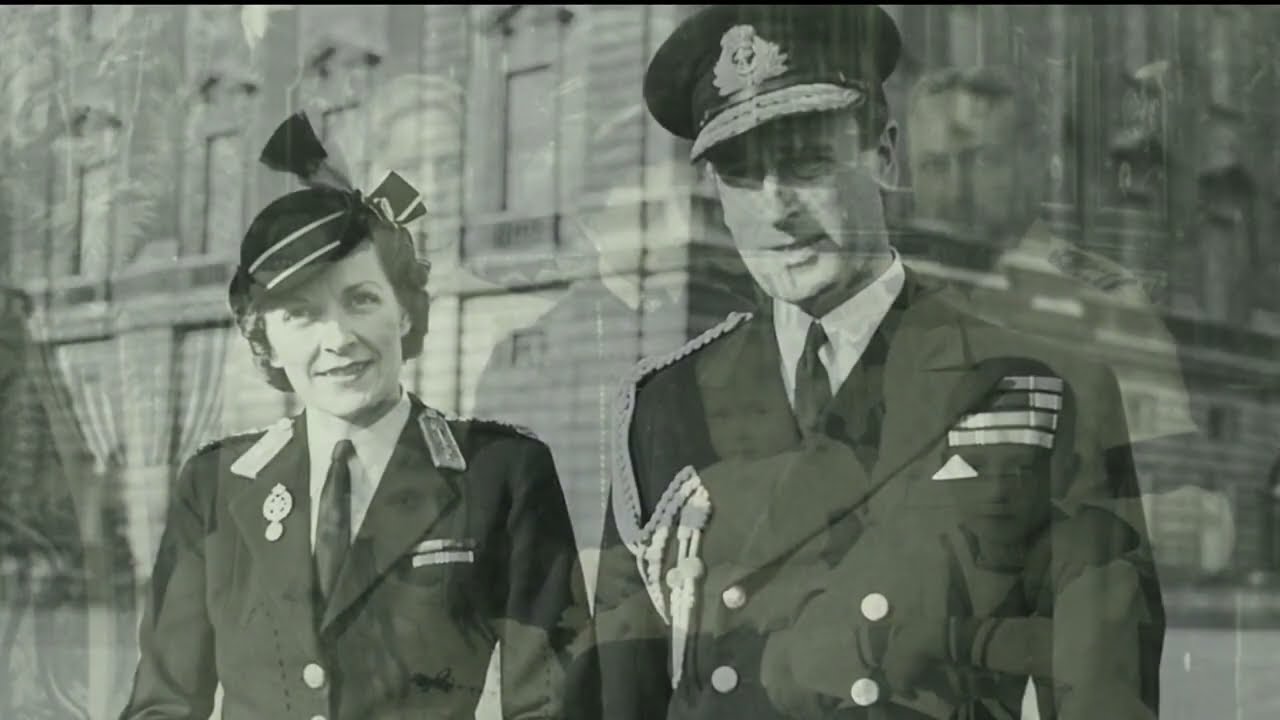
In February 1945, she came to England for the first time in six years. She had not seen her mother since 1939 either, and found Victoria aged into a woman with a clear mental outlook but no elasticity left in her thoughts, one who could no longer follow a contrary point. To Dicki, Alice wrote that she was ashamed at how sharp she had been in her first answers and was now trying to remember her mother’s great age and let her talk on as she liked. Alice was 60 on the 25th. She spent the birthday with the mother who had committed her to Kreuzlingen 15 years before and stayed on until March.
And there was the estate, the inventory of a man who had been disappearing for years. The will made no mention of the woman who had been with him at the end. Alice’s answer to that omission was her own. She gave the comtesse his car, which spared her the garage bills, and any personal things she wanted. The debts were very large indeed, and to pay them she sold the silver of Mon Repos, carried out of Greece in the killing season, kept safe in Sweden through the whole war, holding back one monogrammed service for her son. “I calculated the things as being just what would be needed in a modest household if you did not marry a rich wife,” she told him, “or for a captain’s mess.”
Monte Carlo a year later closed the account in person. At the Café de Paris, the comtesse Labignine handed Philip the last of his father: the books, the personal effects. And the son had the wearable suits adapted, used the ivory shaving brush, and from that day wore his father’s signet ring.
Two years on came the name. Philip renounced his rights to the Greek throne. And on the 28th of February 1947, he ceased to be His Royal Highness Prince Philip of Greece and became Lieutenant Philip Mountbatten RN. His mother’s name, in the English, his grandfather had made of it.
In the summer, he proposed and was accepted, and Alice, until then a deliberate bystander to the courtship, went to tea with the king and queen and the bride to be. Elizabeth, the king’s elder daughter, heir to the throne of England. The engagement ring for the king’s daughter came out of the vault of her own marriage. Her jewels, the last hard wealth she had in the world, had been deposited in the Paris branch of the Westminster Bank in Andrea’s name since May 1930, the month she went to Kreuzlingen, and the house at St. Cloud was closed down. Seventeen years in the dark. Signatures were needed from Philip and the three daughters before she could take possession, and Theodora and Sophie signed promptly. Margarita demurred, made a claim on the estate before she too signed.
In June, Alice took some of her diamonds to the jeweler Philip Antrobus at 6 Old Bond Street and had them broken out of their old settings and made into an engagement ring: a large diamond in the middle, surrounded by a cluster of five smaller stones. Handling the whole commission herself, as Philip dare not show his face at jewelers for fear of being recognized. “I think the ring is a great success.” The jeweler told the press later that he had never known whom it was for. It was for Elizabeth. The diamonds that had gone into the dark in the month the doctors came for her were coming back into the light on the hand of the next Queen of England.
Four years it had been coming. The pantomime Christmas. The painted castle. The letters that never stopped. A courtship carried on paper, followed from occupied Athens by slow post through Sweden. Through Ellen, I heard, she wrote to him in 1944, from the house with three people hidden upstairs, of lunch with a certain young lady and her parents. Elizabeth was 21 now, the king’s elder daughter, heir to the throne. For the deaf woman who had watched her family’s thrones go down—Hesse abolished, Russia murdered, Greece lost and lost again—the match needed no spelling out. “Poor boy,” his grandmother had once written of Philip. “A life without a fixed career or home country.” Now the boy who had been carried out of Greece in an orange box was marrying into the house that had not fallen.
That summer had a headquarters, her mother’s apartment at Kensington Palace, and into an upstairs room. From the Riviera came packing cases. Andrea’s books, Andrea’s clothes, Andrea’s papers, the remainder of a man two years dead. Twice, 24 hours at a stretch, mother and son shut themselves in and sorted them together. The last of the father passing through both their hands on the way to the son’s wedding.
The announcement was set for the 9th of July. On the eighth, Philip came round to collect his new clothes, and Alice and her maid packed his trunk, for he was so excited, he hardly knew what he was doing. On the day itself, she waited. “It amused me very much,” she wrote to Dicki, “to be waiting with the rest of the family, for Philip to come down grandly with Birdie, Elizabeth, and Lilibet. And down he came with the King of England.” To Queen Mary’s congratulations, she replied that the couple were very devoted and that Lilibet has a wonderful character and I think Philip is very lucky to have won her love.
Then the war sent in its bill. A decision came down. Palace advisers watching the press decided that none of Philip’s sisters would be invited to the wedding. Margarita, Theodora, Sophie, their husbands were German. The war two years finished and not finished at all. The brothers of Sophie’s dead husband were before the denazification courts, one still interned, and nobody wanted Princess Elizabeth’s groom tarnished by innuendo. The sisters longed to be there. They swallowed it as a sacrifice made for their brother, and then learned that invitations had gone out to Queen Helen of Romania and her sister, the Duchess of Aosta. Royalty of the two states that had been Hitler’s chief allies in the war, and Philip’s own first cousins besides. Romania could come, Italy could come. Germany was the unforgivable direction.
On the 20th of November, the pewter came off London for a day. People had camped all night along the Mall. The processions ran between walls of them, palace to abbey, through a city still on rationed bread and rationed coal. The BBC carried the service to 200 million listeners around the world, and Churchill called it a flash of color on the hard road we travel. Inside, the surviving royalty of Europe took their seats. Louise and Gustaf from Sweden. Dicki and Edwina back from India. Big George and Aunt Marie over from Paris. From Greece, Queen Frederica alone. Paul was king there now and too ill to come. Queen Helen of Romania with her son King Michael, who would lose his throne before the year turned. Less a gathering of Europe than of what was left of it.
On the north side, directly opposite George VI, his queen and old Queen Mary, the whole massed British royal house. They seated the bridegroom’s mother an aisle’s width from the family her son was joining, Victoria beside her. Her outfit had been sewn in Paris from two gray velvet trains out of Russia. Gray velvet that had outlived the country it was cut for. Elizabeth came in on her father’s arm, ivory silk moving behind her down the aisle. At the altar stood Lieutenant Philip Mountbatten RN. And at the center of the loudest day England had allowed itself since the war sat the one person it reached in silence. What the abbey was that morning—the organ, the choir, the spoken vows, 200 million ears—was a thing other people heard. Her share of the day was what she could see. And she wrote him what she had seen. How wonderfully everything went off. And I was so comforted to see the truly happy expression on your face and to feel your decision was right from every point of view.
What she was looking at from the north side was her own life run backwards. Born at Windsor Castle in the winter of 1885, christened with the old queen standing sponsor, she had been carried away through Darmstadt and Corfu, St. Cloud and Kreuzlingen and the Athens of the famine. And now a wedding was carrying her back. The Tsar of all the Russias who had hit her in the face with a full bag of rice at her own wedding had been dead in a cellar at Ekaterinburg for 29 years. She was the mother of the bridegroom.
Home she went to Athens, Populo prostrate with airsickness beside her, and there she did what the invitation list would not. She gave the wedding to her daughters. Twenty-two pages. The whole day set down for the three women who had been kept from it.
In the summer of 1948, Alice made her last public appearance in civilian clothes. By January, the story had gone round the world. Philip’s mother living as a nun, and the reporters traced her to the Greek island of Tenos, to four rooms of an old house beside the shrine where the sick came up from the harbor on their knees. Her own housekeeping and her own washing, no telephone, a little electricity at night, services in the church at 6:00 every morning, and over Christmas, devotions from 4. There she founded the Sisterhood of Martha and Mary. Nursing sisters meant to go out into the world. And the line ran straight back to Moscow and the convent Alice had stood and watched Aunt Ella begin, to Kreuzlingen 1930 where she had wished for it aloud from inside the walls, to the soup kitchens of the famine where she had rehearsed it in civilian clothes.
“Now that the last of my children is married and has a home,” she wrote Philip, “I feel the need of a full-time job to keep me occupied.” To fund it, she gave the church her Russian Order of St. Catherine, the star out of the vault, to the irritation of the family. And she went as a pilgrim to Jerusalem, to the crypt where Ella’s coffin lay 31 years after the mine shaft. She was not sentimental about the habit. Gray, austere, useful. In Greece, a nun could ask for money in ways a princess could not. And she was not, in fact, a nun at all. The habit was her overalls. Her son put it flat: her religion had no outward manifestation. It was something very private to her. But wearing the habit meant that she did not have to worry about clothes or getting her hair done. Her mother, drier: “What can you say of a nun who smokes and plays canasta?”
Then that mother began to die. A heart attack at Broadlands in August 1950. A reasonable recovery. Then back to Kensington Palace, where Alice moved in and the watch began. A sick room runs on the murmur, on the weak voice from the bed, on the whispered request, and none of it reached her. Victoria asked for nuns, Catholic ones, and the convent at Holland Park sent two Spanish sisters who could do what the founder of a nursing order could not. They could hear her.
On the night of the 23rd of September, the family sat up, Dicki on the sofa, Alice and Louise in armchairs, and at 20 to 8 in the morning, one of the nuns called them in. They knelt at the bed. What Alice sent Philip afterwards is a deaf woman’s account of a death, every word of it seen. Her mother was practically sitting up to ease the breathing. And so we had a good view of her with such a calm and peaceful expression as one who was having a good sleep, and the breast rising and falling so evenly and gently until it quietly stopped at 8:00 a.m. A beautiful end.
Of the estate, Alice kept nothing. Her share, some £2,000, went to Sophie, whose husband was a schoolmaster. Among her mother’s things was a file. Kreuzlingen, the papers of Alice’s illness, 20 years in her mother’s keeping. Victoria had intended to destroy it, she left it. Whatever she meant by leaving it—a record too heavy to burn, or the nearest thing to an apology her century allowed—the mother whose word had held the door shut took the answer with her.
In February 1952, the king died at Sandringham. The news found Alice in Chicago, deep in an American winter, begging funds in the gray habit, and the girl who had come down the aisle four years earlier was queen. Philip found the courtiers explaining his new world to him. “You will like Windsor Castle when you get to know it,” one of them offered. “Yes,” said Philip. “My mother was born there.”
On the 2nd of June 1953, for the coronation of Elizabeth II, Westminster Abbey filled with gold, the robes, the uniforms, the crown itself, and up the aisle slow came gray. Alice had ordered a new habit for the day. The nuns’ one extravagance, and Cecil Beaton singled her out: a contrast to the grandeur, in the ash gray draperies of a nun. They put her in the royal box behind the queen mother, her three daughters and their husbands with her. Six years after the wedding, they had been barred from. The Germans sat with the family in the front row of what was left of the empire. Alice watched her daughter-in-law crowned in the seat of Queen Victoria and her son sink to his knees and swear himself to his sovereign.
The order she founded did not live. By June 1959, the sisterhood had simply run down. Alice 74 and in indifferent health. The nuns dispersed, and the cats with them. Philip’s verdict was a son’s and fair: she could nurse, she could not administer. Alice’s verdict was her own. She kept the habit and wore gray for the rest of her life. Gray on a bench in Kolonaki Square alone reading a newspaper. That is the last of her Athens. An old nun the passersby half knew. The mother of the Duke of Edinburgh.
Then the century came for her generation. In February 1965, she flew to Stockholm on a sudden strong feeling and spent her 80th birthday with Louise. A sponge cake with one candle, presents on a table, two old sisters talking the mornings away. Both of them knew, neither said it. “Both she and I knew it was our last meeting,” Alice wrote afterwards. “But we were determined to ignore that. So we had such a peaceful and truly happy week together for which I thank God with all my heart.” Louise died in March.
A year on, her own body presented its account, the heart, the liver, and from a Munich clinic in 1966, she wrote her son the letter: “Mother’s right once. The end might come suddenly or slowly. Be brave and remember, I will never leave you, and you will always feel me when you need me most. All my devoted love, your old mama.” Philip asked her then to come and live at Buckingham Palace. She declined. “I have a great longing to live in a place which has been my home for 63 years. I would be out of place at Buckingham Palace.”
On the 21st of April 1967, the tanks came out in Athens and colonels seized Greece. Not the first time men in uniform had taken her country, nor the second. From inside it, she wrote Philip a letter that could have come from 1941. Shops shut, no buses, curfew, news through the concierge off the army radio. That day of the coup was like the occupation time. Then the old music. Revolutions and wars have never disturbed me, and this also did not. No officers came here, and I was left in peace. She was 82, and she stayed.
If the king had to run, his small aeroplane had seats for the king, his wife, his baby daughter, his mother, his sister. None for her. Within weeks, Sophie came with an invitation to Buckingham Palace. Not from Philip this time, from the queen herself. And the difference was the whole of her life. The last time the family decided where Alice should live, it was a needle and a locked clinic, and her mother’s word on the door. Philip was eight, and every home since she had found alone. Now the family was asking her back. Her eyes brightened. “Lilibet said that we go this afternoon.” After 46 years of rented rooms, sanatoriums, and soup kitchens, the mother was going home to her son.
They gave her two rooms on the palace’s first floor overlooking the Mall. Restless at first, full of complaints, then quite suddenly content. These were the years the family came to know her. Weekends at Windsor, the Queen particularly good to her. Charles and Anne looking in whenever they passed, the small princes brought up to her rooms to play, alarmed at first by the deep voice inside the gray habit. Charles, growing older, came to prize her sense of fun and lively mind. It pleased her that he played the cello, as Andrea had as a young man. The household learned her signals. A patter of small dogs meant the Queen. Clouds of cigarette smoke rolling down the corridor. A cough inside them meant Princess Andrew.
They had their differences. Mother and son. Philip off down the corridor muttering. Alice muttering in her room. Not one word of his reaching her, and the conversation ran on perfectly coherent. They had been reading each other since 1921. The ears were never the instrument.
In October 1967, a photographer caught her leaving hospital in the gray habit, the last photograph, and she went back to the palace for good. Two nurses, then a wheelchair, pushed by the queen’s page. In October 1969, Theodora died, the second daughter gone. Days later, Alice dictated a last letter to Philip. Small news in a steady voice. Charles and Anne paid me the most touching visits. The doctor does not find me any worse. My thoughts are always with you.
Growing ill, Alice did not want to outlive the year. Once revived by an injection, she was annoyed. She had been sure she was slipping away. She told her priest she would die soon and took the last rites. On the last evening of her life, Dicki called at a quarter to 6 and found her peaceful, happy, talking of the past. In her sleep, on the 5th of December 1969, Princess Alice died. All she left in the world were three dressing gowns which Sophie gave to her nurses, and a letter from her old friend Gerald Green with a reply begun on it in her hand.
Anne had missed her usual visit that day and asked to be let in. She looked very peaceful. All the lines in her face had gone, and for the first time Anne could see in her the young woman of the portraits.
At the funeral in St. George’s Chapel, the lesson was from St. Luke, Martha and Mary. She had left instructions given while she could still laugh. Bury her near Aunt Ella in Jerusalem. The family protested. So far away, so hard to visit her. Nonsense, she said. There is a perfectly good bus service.
It took 19 years. Church politics, state politics, a city in dispute. Nineteen years in the royal vault, a few hundred yards from the room where she was born. On the 3rd of August 1988, they carried her up to Ella’s church, and the Russian nuns began the liturgy for the dead. And when the Greek priests came in singing over them, the nuns stopped, stood, let the Greeks sing themselves out, and quietly took up their own again. In the crypt, they laid the niece near the aunt, the Greek royal standard over the coffin.
The last honor came on its own from the upstairs rooms. Freddy Cohen, the lawyer who had remembered a king’s promise in 1943, learned not long before his own death that the woman who had hidden his family lay on the Mount of Olives, and began the long application. His widow and brother Jacques carried it through. In 1993, Yad Vashem, the Holocaust memorial, named Alice Righteous Among the Nations. For that, she had risked her life to save persecuted Jews. And on the 31st of October 1994, her two surviving children, Philip and Sophie, went to Jerusalem to receive it for her. They laid a wreath. They planted a tree. They stood and listened while the story was told to them. The back door, the upstairs rooms, the year of knocks, because she had never told it.
“I suspect that she never thought of it as something special,” Philip said. She would have considered it to be a totally natural human action to fellow human beings in distress. Afterwards, they walked to the quiet place where their mother lies close to the aunt who had been her compass. On the wall above the coffin is a short inscription: her names, her dates, and underneath, in Greek, four words once prayed in the garden below: “Thy will be done.”