In the summer of 1968, Jacqueline Kennedy said something that explains everything that followed. She said that if they were killing Kennedys, her children were targets, and she wanted to leave the country.
Reports of that statement date to the period immediately after Robert Kennedy was shot in the kitchen of a Los Angeles hotel on June 5, 1968. The quote appears in every serious account of what happened next.
Four months later, she married Aristotle Onassis. America decided she had sold herself out.
The widow of the assassinated president had traded the memory of Camelot for Greek shipping wealth and a private island. The media coverage was relentless. A publication close to the Vatican reportedly called her a public sinner. Women’s magazines that had made her the most admired woman in the country turned on her within a week.
Here is what that interpretation gets wrong, and it gets it wrong at a level that becomes hard to believe once you look at the documents.
She was not running from grief. She was running from a specific set of threats.
There was a continuing federal effort to gather damaging material on the Kennedy family that began while her husband was alive and did not stop when he died. There was a book about the assassination she had authorized and then went to court to stop. In a lawsuit, she fought a man she had personally invited into her home. Losing control of that manuscript taught her something about her situation she never forgot.
There was a psychological evaluation and a firearm in a Los Angeles kitchen in June 1968. By 1969, there were credible concerns about her children that changed their lives completely.
And there was a prenuptial agreement, a real one, signed and negotiated by lawyers, that gives you the actual structure of the decision. It tells you exactly what she thought she was buying.
She was not buying luxury. She already had luxury. The Kennedy money was enormous and it was not going anywhere.
She was buying jurisdiction. Greek law. A Panamanian and Liberian fleet. A private island. A private airline. A man whose entire commercial existence was designed to be beyond the reach of any government, including the government of the United States.
Let me lay this out properly, because the real reason she left is far more disturbing than the story America settled on. And it begins more than a decade before Dallas.
Jacqueline Lee Bouvier was born in July 1929 in Southampton, New York. Her father, John Vernou Bouvier III, called Black Jack, was a Wall Street stockbroker, an alcoholic, a womanizer, and a man whose money evaporated repeatedly. Her mother Janet divorced him in 1940 and married Hugh D. Auchincloss in 1942.
That detail matters more than it usually gets credit for. Jackie Bouvier grew up in real wealth as a stepchild. She lived at Hammersmith Farm in Newport and at Merrywood in Virginia. Neither house belonged to her. The money in them was not her family’s money.
She grew up surrounded by enormous privilege but on the losing side of the financial equation. That produces a very specific kind of person. Someone who understands exactly how the machinery of wealth works and knows they exist inside it by the permission of others.
She was educated at Vassar, the Sorbonne, and George Washington University. She spoke fluent French, plus Spanish and adequate Italian. She won Vogue’s Prix de Paris in 1951, a contest reportedly entered by over a thousand people. The prize was a job at the magazine, which her mother talked her out of accepting.
Instead, she worked at the Washington Times-Herald as an inquiring photographer. She walked around the city with a camera, asked strangers questions, and published their answers. That was a real journalism job for real pay, and it lasted about two years.
Keep that in mind because it becomes important later. She knew how the press worked from the inside. She was the person who collected the quotes.
She married John Fitzgerald Kennedy in September 1953 at St. Mary’s Church in Newport. She was 24. He was 36, a senator, and a member of a family that operated as a professional political organization run by the patriarch.
The marriage was difficult from a very early stage in ways that are now fully documented. Kennedy’s infidelity is not disputed and has not been for decades. It was extensive and continuous. His staff knew. The reporters covering him knew. His wife knew.
She had a miscarriage in 1955. In August 1956, she gave birth to a stillborn daughter while her husband was on a yacht in the Mediterranean. He did not return immediately. Accounts from that period indicate he was persuaded to come back by a family member who explained the political cost of not doing so.
Then Caroline in 1957, John in 1960, and in August 1963 their son Patrick was born prematurely at Otis Air Force Base. He lived 39 hours and died of respiratory distress. That was three months before Dallas.
I want to say that clearly and let it land. Because every account of November 1963 tends to begin as if she entered that motorcade as a woman whose life was intact. She was not. She had buried an infant in August and was, by testimony of those around her, just beginning to recover.
Now Dallas. I will be brief about the part everyone knows and specific about the part that matters for this story.
November 22, 1963. Dealey Plaza. She was next to him. She was in the car. What happened to his head happened about two feet from her. She climbed onto the back of the vehicle. There is a large and gruesome body of evidence about what she was trying to reach.
Then she refused to change her clothes. That is the detail I want to build on because it is the first visible evidence of the thing that would govern the rest of her life.
She wore the pink suit for the rest of that day, through the flight back, through Lyndon Johnson’s swearing-in on Air Force One, and through her arrival at Andrews covered in blood. She was offered a change of clothes repeatedly. She refused. She reportedly said she wanted them to see what they had done.
That is not shock. Shock is passive. That is a deliberate decision made within hours about how an event would be recorded.
Over the next three days, she made a series of additional decisions of exactly the same kind. The funeral was explicitly modeled on Abraham Lincoln’s. She had the Library of Congress research the details. The riderless horse. The eternal flame at Arlington, which she requested herself. The walk from the White House to St. Matthew’s Cathedral on foot behind the caisson with heads of state, against the advice of the Secret Service, which was dealing with an unsolved assassination and an unsecured route.
She staged it. Over 72 hours, after watching her husband die in front of her, she designed and executed the most effective piece of political theater of the twentieth century.
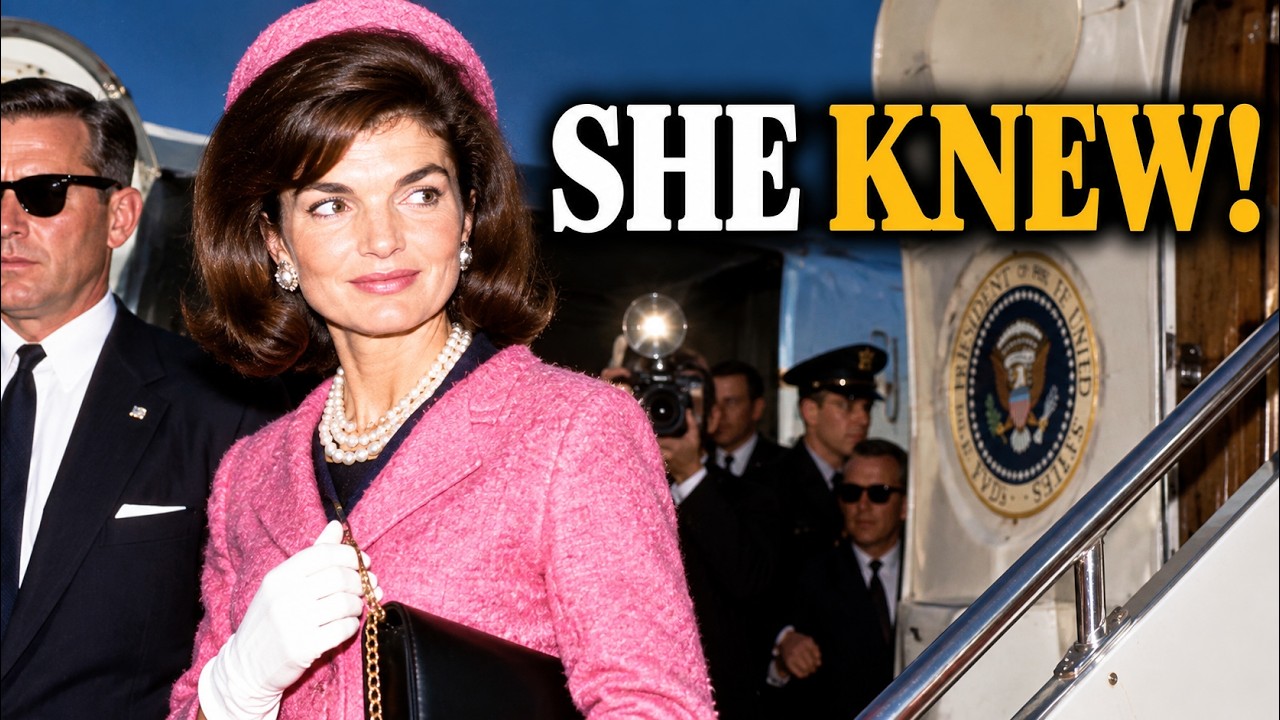
Then, one week after the funeral, she did the most important thing of all. She summoned journalist Theodore H. White to Hyannis Port in the rain and gave him an interview for Life magazine. In it, she told him her husband loved the musical Camelot and played the record at night. She directed his attention to a particular idea about a bright, fleeting moment.
White later admitted in his own writings that he had doubts about the framing. His editors questioned it. He published it anyway because she wanted it published.
She invented Camelot in one week. A 34-year-old woman, widowed eight days earlier, crafted the myth that governed American understanding of that presidency for sixty years. She did it by offering a metaphor to a journalist and standing over him while he used it.
Remember the inquiring photographer girl? She knew exactly how that quote would travel.
Now hold that capability in your mind, because everything that follows only makes sense if you concede that Jacqueline Kennedy was one of the most shrewd operators of that period. When she later appeared passive or materialistic, the odds are very good she was neither.
The five years between Dallas and Scorpios contain the real answer. It is a series of losses of control.
The first is surveillance. The FBI under J. Edgar Hoover had been collecting material on the Kennedy family for years before Dallas. This is not a conspiracy theory claim. The files were released in bulk under the Freedom of Information Act from the 1970s onward and have been examined extensively by historians.
The Bureau had material on John Kennedy dating to the 1940s, including his wartime relationship with Inga Arvad, a Danish journalist of interest to the Bureau due to her earlier connections in Germany. Kennedy and Arvad were monitored. That is documented.
Hoover’s practice of keeping damaging files on political figures is one of the established facts of mid-century American government. It was the secret of his survival across eight presidential administrations.
Now consider the position that put her in after 1963. Her husband was dead. But the material did not die with him. The man who possessed it remained director of the FBI until his death in 1972 under an administration whose relationship with the Kennedy family ranged from cool to openly hostile.
She was living in a country where a federal agency held an extensive private file on her late husband’s personal conduct. A leak of any part of it would destroy the memorial she spent her widowhood building. That is not paranoia. That is an accurate reading of documented institutional reality.
The second issue is the Manchester lawsuit. This is the turning point most people skip.
In 1964, the Kennedy family commissioned a writer named William Manchester to produce the official account of the assassination. He had previously written about John Kennedy sympathetically. He was chosen specifically because he was trusted.
Jacqueline Kennedy gave him approximately ten hours of recorded interviews across multiple sessions. In them, by all accounts of what those tapes contained, she spoke with extraordinary candor about the killing, about her marriage, and about the aftermath. The agreement gave the family a degree of approval over the final product.
Manchester delivered The Death of a President in 1966. The family wanted changes. Some objections concerned Lyndon Johnson, whose behavior in the hours after the shooting the book portrayed in ways the family found useful but Robert Kennedy found politically inconvenient.
The objections that mattered to her personally concerned intimate personal material. Things she had said on those tapes about her husband, her marriage, and the moments she spent in the car. She wanted them removed.
Manchester and his publisher refused to remove all of it. In December 1966, Jacqueline Kennedy filed a lawsuit.
It was a disaster for her. It was the first time since Dallas that the American press turned on her. She was portrayed as a censor, a woman trying to suppress the historical record of a national tragedy using money and lawyers against a writer she herself had chosen.
Look magazine had purchased the serialization rights for a very large sum and had a clear interest in publication. The case was settled in early 1967. Some passages were removed. The book was published. It sold enormously.
Here is why that episode is the hinge of this entire story. For three years, she had controlled the mainstream narrative absolutely. The suit. The funeral. The eternal flame. Camelot. All of it worked.
It worked because she was choosing who spoke and what they said. Then a writer she herself had chosen, operating entirely within American law and American journalism, took her recorded voice describing the worst moment of her life and published what he wanted from it. American courts did not stop him. Public opinion sided with him against her.
That is the moment she realized that in the United States she was a public figure with no protection at all. Not from the press. Not from the courts. Not from anyone. Her private speech had become national property.
She never gave another substantive interview about the assassination for the rest of her life. Thirty-one years. Not one interview.
The tapes she recorded with Arthur Schlesinger in 1964 remained sealed. They stayed sealed until her daughter released them in 2011, nearly fifty years later and seventeen years after her death.
The third factor is Robert Kennedy. This is the factor most accounts leave out, and it may be the biggest one of all.
Robert Kennedy was not just her brother-in-law. After Dallas, by testimony of everyone around them, he was her protector. The person who managed her affairs, defended her interests within the family, handled the practical aspects of her life, and was bound to her by a shared grief neither could explain to anyone else.
There has been speculation about the nature of that relationship for sixty years. I will not go into it because it does not matter for our purposes. What matters is the role he played. He was the wall between her and everything else.
On June 5, 1968, he was shot in the kitchen corridor of the Ambassador Hotel in Los Angeles, minutes after winning the California primary. He died the next day.
She flew to the funeral. She was present at the service at St. Patrick’s Cathedral. She rode the train from New York to Washington. Two million people lined the tracks.
Then she said what she said about her children.

Was that assessment reasonable? Let me put the facts in front of you and let you judge. Her husband had been assassinated in 1963. Her brother-in-law had been assassinated in 1968. Martin Luther King had been assassinated two months earlier. Malcolm X in 1965. There was an attempted assassination of George Wallace in the future. There was a great deal of political violence in that period.
Her children in 1968 were ten and seven years old. They were the most photographed children in the United States. Their movements were routinely broadcast.
The woman who concluded in June 1968 that American public life had become lethal for her family was not being hysterical. She was reading the newspapers.
The fourth factor gets almost no attention. It concerns money and control.
Jacqueline Kennedy was not independently wealthy. That surprises a lot of people. Let me be precise.
The Kennedy fortune was largely held in trusts created by Joseph P. Kennedy, a structure deliberately designed to provide income to family members while keeping capital under family management. Her husband’s estate supported her. The trusts provided her income. It was a very comfortable situation by any ordinary standard.
But she was a widow living on money managed by her late husband’s family, in a family famous for controlling its members, in a country where every expenditure she made was scrutinized.
By 1968, she was 39 years old. She had spent her entire adult life inside institutions run by other people. Her stepfather’s houses. The Kennedy organization. Then the presidency itself.
Now put all four of these things together and look at what Aristotle Onassis actually represented.
Not romance. I do not think any serious person ever argued that was the primary motive, and she never claimed it was.
He represented, in the most literal sense available in 1968, an exit from United States jurisdiction. He owned Scorpios, a private island in the Ionian Sea. That meant a piece of land where access could be physically controlled and no American photographer could legally set foot.
He owned Olympic Airways, a national airline. That meant travel without commercial schedules or passenger records. He had a private security apparatus. His fleet was registered in Panama and Liberia. He ran his business as a near-sovereign entity, negotiating directly with Saudi Arabia.
He had a genuine confrontation with the United States government over surplus wartime ships that ended with him paying a $7 million settlement in 1955. That last detail is not trivial. It is the qualification.
Aristotle Onassis was a man who had been prosecuted by the United States government and survived with his fortune intact. For a woman whose primary fear was the penetration of American institutions into her family’s life, that was not a red flag. That was his resume.
There is something else about him almost no one mentions, and I think it is the deepest reason of all. He was a refugee.
He was born in Smyrna in 1906. In September 1922, the Turkish army took the city. The Greek and Armenian quarters burned. Nearly one hundred thousand people died. Members of his family were killed. His father was imprisoned.
He left at sixteen and went to Argentina at twenty-one with almost nothing. He was a man who had watched a civilization kill his family and responded by building a life no state could reach.
She had watched a country kill her husband and her brother-in-law and reached exactly the same conclusion. They understood each other. That is not romance and it is not cynicism. It is two people with identical assessments of how dangerous the world is.
Now the agreement, because this is the document that proves the case.
They married on October 20, 1968, on the island of Scorpios, in a Greek Orthodox ceremony. He was 62. She was 39. She signed a prenuptial agreement drafted by his lawyers. Its existence and general structure have been consistently reported ever since.
The stated terms gave her an annual allowance in the low millions and set a specific amount upon his death, designed specifically to keep her away from the shipping assets. The existence of the prenuptial agreement is often cited as proof the marriage was a business deal.
It was a deal. Both of them knew it. Neither pretended otherwise.
But look at what the agreement tells you about her priorities, because it gets interesting here. She had legal representation. She negotiated. The thing she secured was not a share of one of the world’s great fortunes. She clearly did not get that, and the document was drafted to prevent it.
What she got was security for her children, material income, and most importantly, a change in her legal and practical status. She became the wife of a Greek citizen with Argentine nationality, living substantially outside the United States, with her children educated abroad for periods and time spent on a heavily guarded island.
She traded a claim on money for a change in jurisdiction.
I want to put something else on the table, because it is what Onassis was buying, and it explains why he agreed to any of this. He was buying legitimacy.
He had spent his entire life as an outsider. A refugee from Smyrna. A Greek amid Anglo-American oil institutions. A man prosecuted by American authorities. A man never accepted by the people he did business with.
Marriage to John Kennedy’s widow was an acquisition of status at market price, and he paid it. Both parties knew the terms. This is not a scandal. It is a contract, and it was, on the evidence, a reasonably well-negotiated one by both sides.
The American reaction deserves accurate description because it tells you more about the country than it tells you about her.
Within about a week, she went from the most admired woman in America to a figure of public contempt. The media coverage was ferocious. There was commentary about her abandoning something sacred. There were reports of Vatican-adjacent publications calling her a public sinner because Onassis was divorced. European papers were worse than American ones. Her popularity collapsed in a country that had never actually elected her to anything.
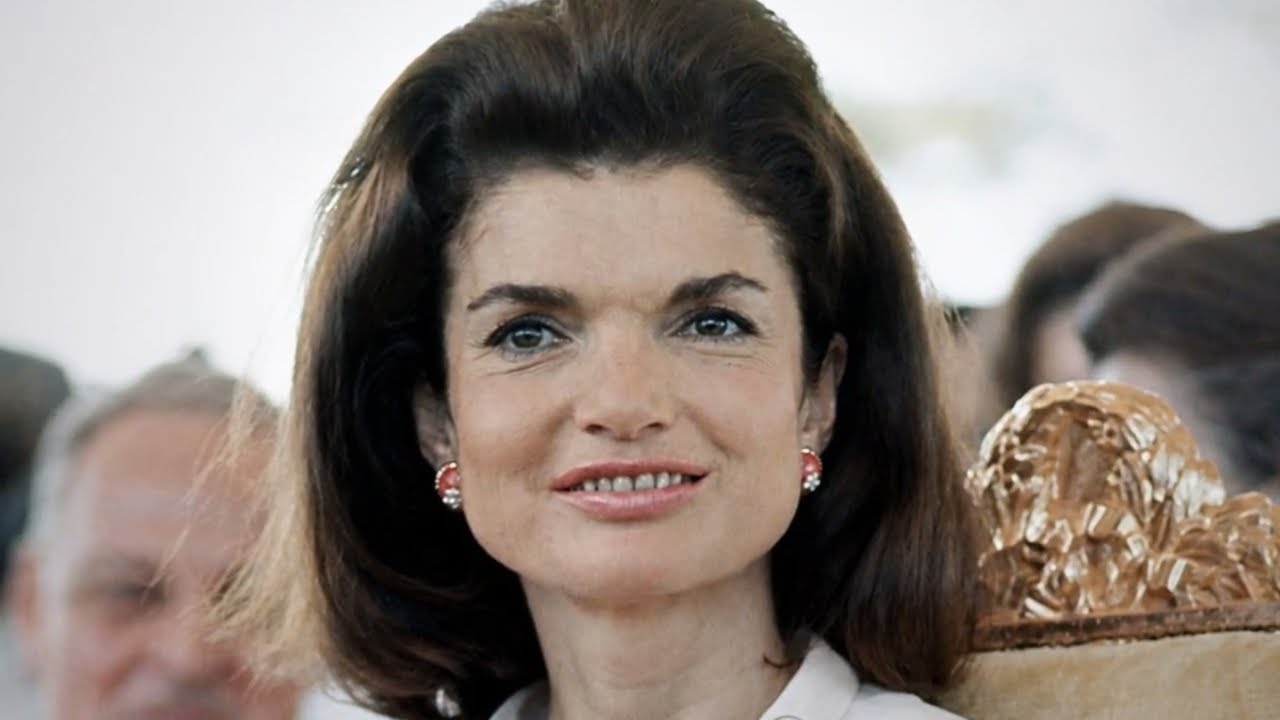
The specific content of the anger is what you need to notice. The primary objection was not that she married a foreigner, or a man 23 years older, or a man with a questionable business reputation. It was that she stopped performing the role of widow.
America assigned her a role in November 1963. The veiled figure at the grave. The mother holding the hands of her two small children. The woman who preserved the record. She performed it so brilliantly that the country began to believe the performance was her permanent identity and her permanent obligation.
When she declined to continue it, the reaction was that of an audience that believed it owned the performer.
I think that is the genuinely shocking part of this story. Not what she did. What was expected of her.
She was 39 years old. She had been a widow for five years. Her husband had been killed in front of her. Her second protector had been killed four years later. Her infant son had died three months before Dallas. Her own recorded testimony about the worst day of her life had been published over her legal objection. A federal agency held a file on her marriage.
The country’s position was that she owed it an indefinite period of public mourning.
Now, about the marriage itself, briefly. It did not go well, and honesty requires saying so.
They lived largely apart. He kept an apartment in Paris. She was based primarily in New York with her children. Which suggests, and this is the detail that undermines the superficial interpretation, that the island was a resource, not a residence. She used the exit when she needed it.
Her spending became a running story. Onassis complained about it to those around him, though most of those reports were indirect. He resumed his relationship with Maria Callas, publicly enough that they were photographed together in Paris while he was still married.
His son Alexander died in a plane crash in January 1973 at age 24. Onassis never recovered from it, physically or otherwise. He developed myasthenia gravis. By 1974, there were reports, confirmed but never documented in litigation, that he was consulting lawyers about divorce.
He died in Paris in March 1975. She was in New York. She flew to the funeral.
Then his daughter Christina, age 24 and sole heir, fought her over the estate because Greek forced inheritance law gives a surviving spouse a legal right that a private waiver cannot simply abolish. The settlement came in 1977 for approximately $26 million in exchange for a full release.
Here is the final chapter, and it proves everything I have argued.
Jacqueline Kennedy Onassis was 47 years old. Twice widowed. With the settlement money, for the first time in her life, she owned capital that was entirely hers. Not a family-managed trust. Not her stepfather’s houses. Not an allowance under an agreement.
She went and got a job.
In 1975, she became a consulting editor at Viking Press at a salary reportedly around $200 a week. She then moved to Doubleday, where she worked as an editor for the rest of her life, about 19 years. She acquired and edited more than one hundred books. She went to the office. She took manuscripts home. She worked with authors on their texts.
Her colleagues from that period consistently describe her as a serious professional who did the actual work herself.
In that same period, she became interested in historic preservation. She is substantially responsible for the survival of Grand Central Terminal. When it was threatened with demolition and development in the 1970s, she campaigned publicly, lent her name, took the train to Washington, and the case reached the Supreme Court in 1978. The station is still standing.
That is the woman who was supposed to be materialistic.
She never gave an interview about Dallas. She never wrote her memoirs, despite being offered sums that would have been among the largest in publishing history. She was an editor at a major publishing house. She knew exactly what that book was worth, and she worked in the business of acquiring exactly such manuscripts.
She died on May 19, 1994, at age 64, of non-Hodgkin lymphoma, in her apartment on Fifth Avenue. She was buried at Arlington National Cemetery beside John Kennedy, under the eternal flame she requested in 1963, under the name Kennedy.
Not on Scorpios. Not beside Onassis.
That is the final piece of evidence, because it settles the question of what that second marriage really was. She went to Greece as an exit. When the exit was no longer needed, when Hoover was dead, when the children were grown, when the violence of the 1960s had faded, she came back.
She made full use of the benefits of American citizenship. She built a career in Manhattan. She saved a train station. She raised two children into functional adulthood. She arranged to be buried next to the man she married in 1953.
The Onassis marriage lasted seven years and left no trace on her permanent record at all. She used it, and then she left.
So let us return to the summer of 1968. A 39-year-old woman, widowed five years, had just watched a second member of her family shot dead in a room full of people. She had learned, from a lawsuit she filed and effectively lost, that anything she said in private was not safe in her own country. She knew a federal agency held a file that could destroy the only thing she had built since her husband’s death. Her children were ten and seven, and everyone in America knew their faces.
She concluded that the United States was not a safe place to raise them. She found the only living man whose wealth was entirely structured to remain beyond the reach of governments. She signed an agreement with him.
America called that betrayal for 25 years.
It was an evacuation.
The shocking part of this story was never why she left. It is that a country watched her husband’s head come apart in an open car, then watched her brother-in-law’s head come apart, then spent three days broadcasting footage of her walking behind the coffin. That same country could not quite understand why she might want to get her children out of it.
She told them why, out loud, in plain English, in 1968. No one listened because they were too busy being disappointed that the widow had stopped standing at the grave.