Frances Ford Seymour died by suicide on April 14, 1950, her 42nd birthday, inside a private psychiatric sanatorium in Beacon, New York. The New York socialite and wife of actor Henry Fonda left six handwritten notes before her death—one for her doctor, one for a friend, one for her mother. None were addressed to her husband. The silence was deliberate.
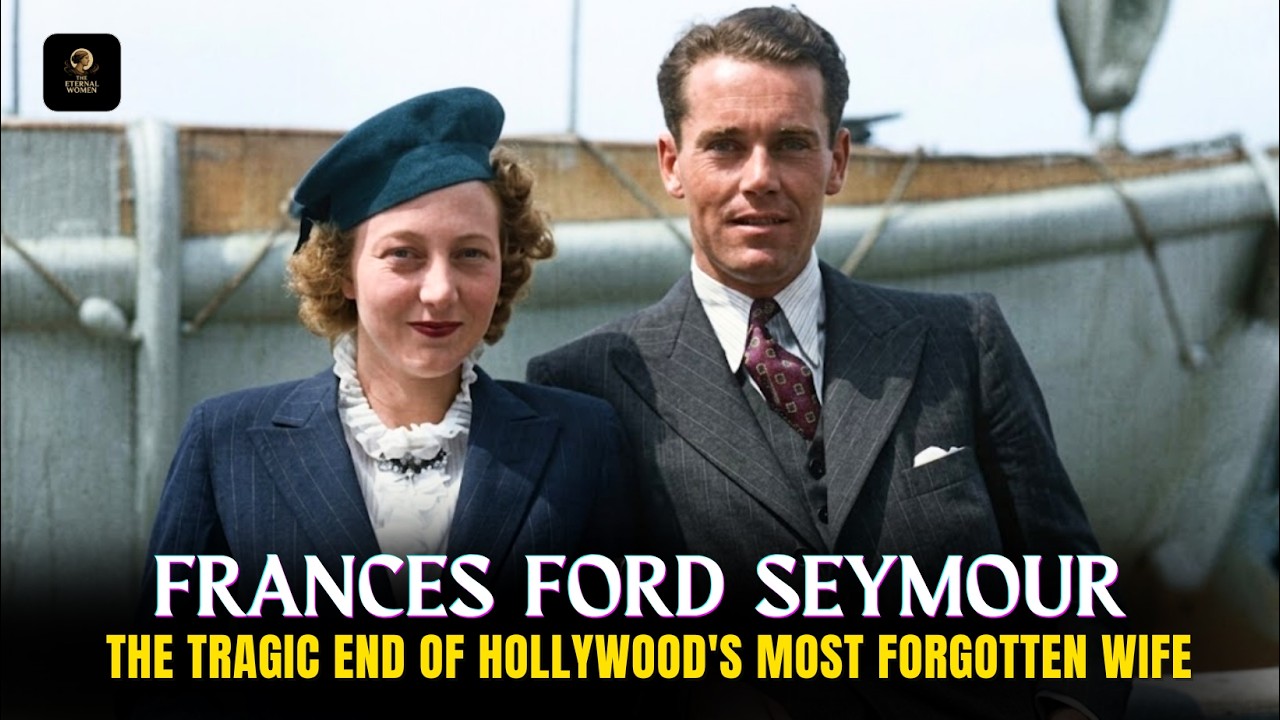
It capped a marriage that had collapsed the previous August, when Fonda told Frances he wanted a divorce because he had fallen in love with a 21-year-old woman. Frances was 41 at the time and had been battling deteriorating mental health for years. Frances was born on April 4, 1908, in Brockville, Ontario, to Eugene Ford Seymour, a lawyer, and Sophie Mildred Bower. The family relocated to Fairhaven, Massachusetts, when she was 14.
By all accounts bright and socially fluent, she carried a hidden burden that would only be documented decades after her death. Decades later, Jane Fonda obtained her mother’s psychiatric records with the help of lawyers. The records contained a devastating revelation: Frances had been the victim of recurrent incestuous abuse as a child growing up in Ontario. Jane has described physically trembling as she read the clinical reports, with the truth buried in handwritten marginal notes.
The records also showed Frances had undergone nine abortions by adulthood. In 1931, at age 22, Frances married George Tuttle Brokaw, a Manhattan millionaire lawyer nearly three decades her senior. Their daughter, Frances de Villers Brokaw, nicknamed Pan, was born in October 1931. Brokaw died suddenly of a massive heart attack in May 1935, leaving Frances a wealthy widow at 27 with an infant daughter.
Just over a year later, while visiting the set of the film Wings of the Morning at Denham Film Studios in England, Frances met Henry Fonda. They married on September 16, 1936, in New York City. Their daughter Jane was born December 21, 1937, followed by their son Peter on February 23, 1940. The marriage was troubled.
Henry was frequently absent, emotionally distant, and reserved to the point of coldness. Frances’s mental health deteriorated visibly over the years; what today would likely be diagnosed as bipolar disorder manifested in increasingly volatile and withdrawn behavior. In August 1949, Henry told Frances he wanted a divorce. He had been having an affair since approximately 1948 with Susan Blanchard, the stepdaughter of composer Oscar Hammerstein II.
Frances entered the Austen Riggs Center, a psychiatric hospital in Stockbridge, Massachusetts, in January 1950 for acute depression. While at Austen Riggs, Frances attempted suicide, throwing her wedding ring out a window and trying to follow it. She was stopped and transferred to Craig House, a higher-security sanatorium in Beacon, New York. During her hospitalization, she made a brief visit home accompanied by nurses.
Twelve-year-old Jane, angry and scared in the way children of mentally ill parents often are, refused to speak to her mother—a memory Jane has carried for her entire life. On the morning of April 14, 1950, Frances left a note on her bed warning staff not to enter. She went to the bathroom with a razor and slashed her throat, cutting her jugular vein. She was found dead.
The New York newspapers reported her death quickly, and the wire services carried the story across the country. Henry arranged a private funeral attended only by himself and Frances’s mother. The children were not present. Frances is buried in Ogdensburg Cemetery in Ogdensburg, New York.
Henry told his children their mother had died of a heart attack. Peter, then 10, learned the story that way. He wrote in his 1998 memoir that he walked into the living room to find his grandmother, sister, and father seated, and was told his mother had died in a hospital. He asked no questions.
Afterward, nobody said her name. As Peter wrote, it was as if she had never lived at all. That Christmas, Peter filled an empty chair with presents and wrote a letter addressed to his mother, unable to accept that no space had been made for her memory. Jane learned the truth from a movie magazine, reading her father’s tragedy laid out for public consumption in a way her father had refused to share privately.
Her governess eventually confirmed the details. Jane went quiet and blamed herself for years, believing her refusal to speak to her mother during that final home visit had contributed to what followed. Less than a year after Frances’s death, Henry married Susan Blanchard, the woman for whom he had left Frances. She moved into the family home, and Frances’s name disappeared from the household.
Pan Brokaw, the eldest child, had already endured extraordinary loss. Her father died when she was four, her half-sister Ann Claire Brokaw died in a car accident in 1944, and her mother died when she was 18. She had inherited significant wealth through her father’s estate and chose to live a private life away from the spotlight. She married Francesco Corrias, became a painter, and raised a daughter, Pilar, who went on to own a prestigious London gallery.
Pan died on March 10, 2008. Jane Fonda spent decades trying to understand her mother. In her 2005 memoir, she dedicated the book to Frances, explaining that the act of dedication forced her to truly grapple with who her mother was. Through therapy and research, and finally through accessing the psychiatric records, Jane reframed her grief.
Understanding her mother’s history, including the childhood abuse and untreated bipolar illness, helped Jane move from self-blame toward empathy and forgiveness. She has said, “When you go through that kind of research, if you can come to answers, which I was able to do, you end up being able to say, ‘It had nothing to do with me. It wasn’t that I wasn’t lovable. They had issues.
‘”
Jane has also connected the loss of her mother to struggles with bulimia later in life, describing how she came to treat her body as though her worth depended on being beautiful and lovable enough to prevent the people she loved from leaving. Peter Fonda’s adult life was marked by turbulence. He became famous as Captain America in the 1969 film Easy Rider, which he co-produced. He married three times and struggled with his father’s emotional legacy.
He eventually reconciled with Henry before the elder Fonda’s death on August 12, 1982. Peter died on August 16, 2019, at 79, of respiratory failure from lung cancer. Henry Fonda went on to marry three more times: Italian Countess Afdera Franchetti in 1957, and Shirley Mae Adams in 1965. In his will, he left his estate to Shirley and his adopted daughter Amy, a decision that reportedly stung Jane and Peter.
The timeline surrounding Frances’s death has been examined carefully by her children and biographers. Frances entered psychiatric care in January 1950, five months after Henry told her he wanted a divorce. She attempted suicide during hospitalization, was transferred to a higher-security facility, and died four months later. Henry remarried within the same calendar year.
Frances was a painter, a woman of wit and warmth, and a mother who was present and loving when her illness permitted. She was also a victim of childhood abuse who never received the help she needed. Bipolar disorder was poorly understood in 1950, treatment was primitive, and institutionalization was often the only option. The story of Frances Ford Seymour reveals the cost of withheld truth and managed grief.
Her three children each found their own way to honor her: Pan painted and lived privately, Jane worked for decades to reach forgiveness, and Peter filled that empty chair with presents and wrote his mother a letter.