On the afternoon of October 15, 1839, in a small private room at Windsor Castle, a 20-year-old woman did something no respectable woman of her century was permitted to do. She proposed marriage to a man.
She had sent for him. That detail matters. She summons, he comes. He was her first cousin, 23 months her junior, and had arrived from Germany less than two weeks earlier. She could not wait for him to ask because he was not allowed to ask her. Protocol forbade it because this woman was Queen Victoria, sovereign of the United Kingdom, on the throne for just over two years.
The man standing before her was Prince Albert of Saxe-Coburg and Gotha. We know exactly what happened next because she went straight to her journal and wrote it down the same day. She told him, in her own recorded words, that it would make her too happy if he would consent to marry her. He consented. They embraced repeatedly, by her own account, and she recorded the physical detail of it with an enthusiasm that would scandalize the very era that ended up carrying her name.
Somewhere in the wreckage of that afternoon's composure, a ring changed hands. A gold serpent coiled, set with an emerald, Albert's own design. Hold onto that ring. Twenty years from now, it will be sitting on the hand of a woman reading something that has just been slid under a locked door.
If you only know the "greatest love story ever told" version of Victoria and Albert, you have been sold about a third of their actual life. What the documents actually describe is stranger, sadder, and considerably more brutal. A marriage that was genuinely passionate and simultaneously a two-decade contest over who actually got to run the country, fought with pregnancies, palace keys, and memoranda.
How does a queen who wrote in her own journal before the wedding, "I never can or will give up my power to him," end up within 15 years describing her working day in six words that should stop you cold? What was actually written on the papers a husband slid under his wife's locked door? What really killed Prince Albert at 42, given that his death certificate and modern medical historians do not agree? And was 40 years of mourning dress really heartbreak, or the best political armor a queen ever wore?
Start with a coincidence so tidy it reads like a novelist's first draft. In 1819, in two different countries, two babies were delivered three months apart by the same midwife. Her name was Charlotte Heiden von Siebold. On May 24, she attended the Duchess of Kent at Kensington Palace, where a girl was born and christened Alexandrina Victoria. On August 26, she attended Princess Louise at Schloss Rosenau in Coburg, where a boy was born and christened Franz August Carl Albert Emanuel.
By 1821, when both children were toddlers, their grandmother was already referring to little Albert as "the pendant to the pretty cousin." The matching piece. These two were being fitted for each other before either could walk, chiefly by their uncle Leopold, later King of the Belgians, and his adviser, Baron Stockmar. Two men playing a dynastic long game that would take 20 years to pay out. Keep Stockmar's name in your pocket. He is not finished.
Albert's childhood was genuinely grim. When he was five years old, his mother was exiled from Coburg for adultery. She left and never saw her sons again. Biographers trace Albert's lifelong obsessions, strict moral order, public perfection, and an almost clinical horror of scandal and lost control, back to that expulsion. A boy who watched his mother erased for a lapse of self-control grows into a man for whom self-control is not a virtue. It is a survival mechanism.
Victoria's house was a different kind of prison. It was called the Kensington System, and it was exactly as sinister as it sounds. A regime devised around the widowed Duchess of Kent and her ambitious controller to isolate the young princess from the royal court and make her totally dependent on her mother. The Duchess kept a book logging Victoria's every movement. The child slept in her mother's bedroom. She was famously not permitted to walk downstairs without holding an adult's hand.
Rather than take her mother's hand, she would clutch the paw of her King Charles Spaniel, Dash. A dog she bathed herself. If you want the entire coming war for power in one image, it is a small girl on a staircase, refusing the offered hand, gripping a dog's paw instead.
On June 20, 1837, Victoria became queen at 18. On that very first night of her reign, she gave one of her first orders as sovereign. Her bed was to be moved out of her mother's room. She slept alone for the first time in her life. The Duchess of Kent was shunted to remote apartments. The great tragedy of Victoria's life wasn't just that she lost her husband. It's that she spent her entire youth fighting to be the sole ruler of England, only to invite the exact same usurpation into her own bed.
They had actually met once before in May 1836, when Uncle Leopold engineered a visit to England. The 17-year-old Victoria's journal pronounced Albert "extremely handsome," and then nothing. She became queen, discovered she rather enjoyed ruling alone, and cooled visibly on the whole Coburg project. When Albert and his brother were shipped back over in October 1839, it was against a backdrop of her open reluctance.
The arrangement was dynastic. Leopold and Stockmar built it brick by brick. But her response to the man was ferociously her own. The entries of October 1839 and after document intense personal and frankly physical attraction in the Queen's own hand. A cold contract this was not.
What it also was not, however, was uncomplicated. In the very same journal, in the weeks before the wedding, the bride wrote down a sentence that reads less like a love letter than a treaty position. "I never can or will give up my power to him."
She is 20. She is besotted, her own pages prove it. And she is already negotiating. She has fought her mother, the Kensington System, and the log book for the right to sleep alone and rule alone. She is walking into this marriage with the dispatch boxes clutched as tightly as she once clutched Dash's paw.
On November 23, 1839, she made it official at Buckingham Palace before a Privy Council of more than 80 assembled members. The young queen read out her formal declaration of intention to marry Albert of Saxe-Coburg and Gotha. A short prescribed text delivered by a 20-year-old woman to a room of men several times her age.
Parliament was about to give Prince Albert a welcome so cold, so publicly humiliating, that it set the terms of everything that followed. They cut his money by nearly half. The proposed figure was £50,000 a year, the customary annuity for a sovereign's consort. The House of Commons looked at the German princeling, looked at the economic distress of 1840, and slashed it to £30,000.
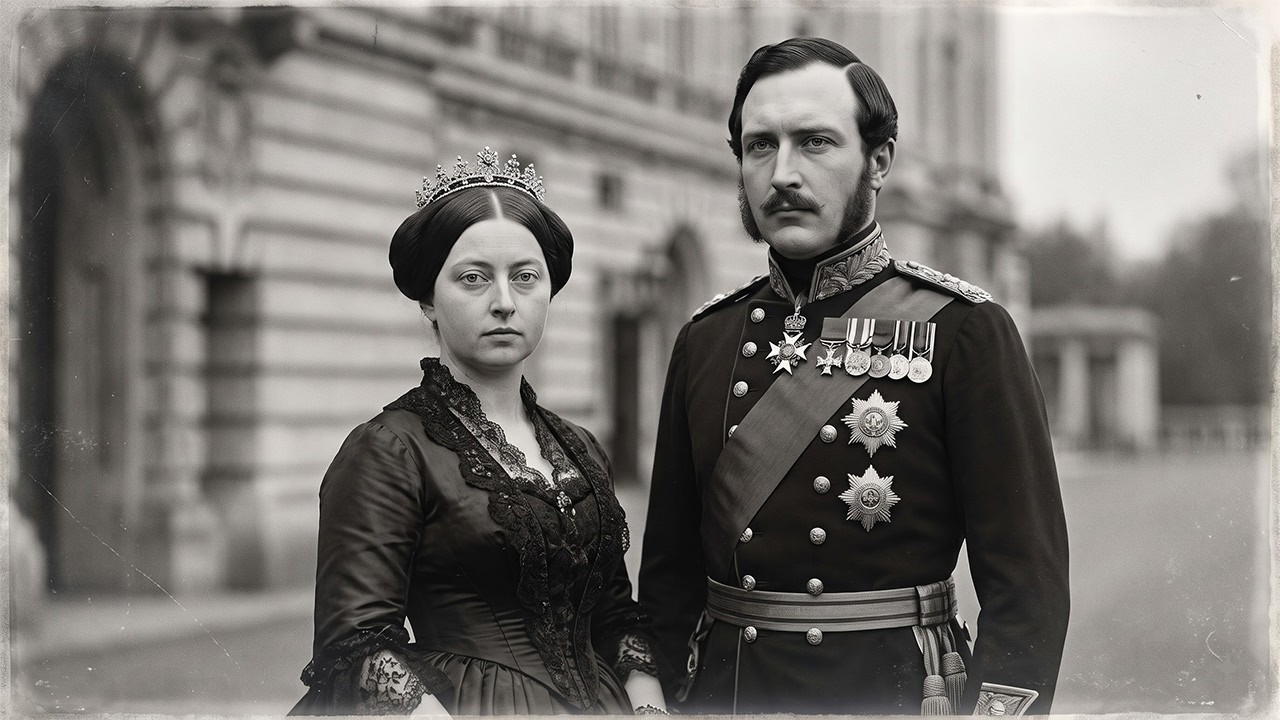
When the naturalization bill went through Parliament, receiving royal assent on February 7, 1840, three days before the wedding, a clause settling Albert's precedence was stripped out entirely during its passage. The act made him, once he had taken the oaths of allegiance and supremacy, a natural-born British subject. That is all it made him. Not a peer, not a royal highness of guaranteed rank. A subject on a reduced salary marrying his boss.
A consort is nothing. There is no office, no job description, no statutory power, no seat, no signature that counts. A queen regnant's husband holds exactly as much formal authority as her footmen. Whatever influence he acquires, he must acquire personally, informally, and by hand. Parliament in 1840 understood this perfectly, which is why they felt free to be cheap about it. Albert understood it too, which is precisely why what happens over the next decade happens the way it does. Not through law, but through a desk.
The wedding was on February 10, 1840, at the Chapel Royal, St. James's Palace. The bride wore white Spitalfields satin trimmed with a flounce of Honiton lace, a wreath of orange blossom on her head. Behind her, 12 named bridesmaids managed a train of 18 feet. The groom wore the uniform of a British field marshal, a rank in an army he had belonged to for a matter of days.
The honeymoon was a stay at Windsor lasting until the 14th. Four days. Victoria was back at her boxes almost immediately. The popular versions like to add whispered private vows and a long romantic seclusion. The records support neither. What the record supports is a bride who adored her new husband and had no intention of letting the adoration interfere with the day job.
The day job, however, was about to be interfered with by biology. Within weeks of the wedding, Victoria was pregnant. Her journal in 1840 records her reaction in five words that no one ever puts on the commemorative china. "I am so overcome, so terrified." Not glowing. Terrified. She was 20 years old. Childbirth in 1840 was one of the statistically deadliest things a woman could do, and she had been on the throne less than three years.
In June 1840, as the pregnant queen and her husband drove out in public, a young man named Edward Oxford fired at the carriage. Albert threw himself in front of his wife. It is on its face the most romantic documented act of the entire marriage. A husband putting his body between his pregnant queen and a gun.
The assassination attempt had a legislative consequence. Parliament passed the Regency Act 1840, designating Albert and Albert alone as regent should Victoria die leaving an heir under 18. It conferred no power whatsoever while Victoria lived. It was a contingency plan for a dead queen, nothing more. But notice what it signals. Months into the marriage, the impoverished foreign subject on the cut-price annuity is now on paper the man who would rule Britain if the worst happened.
On November 21, 1840, the worst did not happen. Victoria survived the delivery of her first child, a daughter, Victoria, the Princess Royal. And somewhere in these same months, a piece of furniture moved. In the sitting room the couple shared, two mahogany writing desks were placed side by side, his and hers, touching. The Royal Collection still holds them. It looks in every engraving and every retelling like the perfect emblem of partnership.
By early 1841, with his wife recovering from one pregnancy and soon carrying the next, Albert had begun systematically working through cabinet papers, reading state correspondence, drafting, organizing, making himself the most efficient private secretary a monarch never appointed. Baron Stockmar had given his pupil a piece of advice worth hearing in its full chill. Albert should never let Victoria read a state paper without him present. That is not marriage guidance. That is an access strategy.
On November 9, 1841, the second child arrived, Albert Edward, Bertie, Prince of Wales. The pattern was now set. Her body did the dynasty's work, and his hands at the twin desk increasingly did the sovereign's.
There was one person inside the palace who saw exactly what was happening and fought it. Baroness Louise Lehzen, Victoria's former governess, her ally through every year of the Kensington System, the closest thing to a loving parent the queen had ever had, and the keeper, quite literally, of the keys. Lehzen retained the physical keys to the Queen's privy purse, the private household money, and was furious that Albert wanted them.
The household became a cold war fought through nursery arrangements and account books. It broke in 1842 over a sick child. Early that year, the infant Princess Royal became seriously ill, and Albert blamed the nursery regime, Lehzen's domain. What followed was one of the ugliest quarrels of the marriage. A confrontation in which Albert told Victoria that if the child died, the responsibility would lie with her. The queen, her husband standing over their daughter's sick bed, handing her the hypothetical corpse.
The dramatized versions of this story love to stage a grand ultimatum scene. Albert delivering a formal "her or me" on a single decisive day. That scene does not exist in the sources. It is an invention. What the record actually shows is slower and frankly crueler. Months of pressure through 1842, at the end of which the outcome was never seriously in doubt.
On September 30, 1842, Baroness Lehzen left the palace for good. The woman who had stood between a small girl and the Kensington System for two decades did not get a farewell audience with her queen. She left a note. Victoria's own journal records the manner of the going. A note and a departed carriage. Lehzen retired to Hanover, where she lived another 28 years, dying in 1870, far from the woman she had raised.
Count what Albert now held, five years short of his 30th birthday. The nursery. The household. The keys to the privy purse. A seat at the twin desk with the cabinet papers passing across it. Every gatekeeper who predated him, the mother, the governess, banished to remote apartments or foreign retirement. The girl who once gripped a spaniel's paw rather than surrender her hand had surrendered nearly every room in the palace. Nearly. She still had the thing she'd sworn in her journal never to give up.
The 1840s were about the household. The 1850s would be about the power. And about a locked door, a handkerchief soaked in chemicals, and six of the most quietly devastating words a reigning monarch ever said about her own job.
It is April 7, 1853, in the Queen's bedroom at Buckingham Palace. A doctor is holding a handkerchief over the face of the most powerful woman on earth. His name is Dr. John Snow, the same John Snow who will shortly become famous for tracing cholera through the water pumps of Soho. Onto that handkerchief he has measured, with a scientist's exactness, 15 minims of liquid chloroform.
The queen, in labor with her eighth child, inhales. She does not lose consciousness. Snow's own case books are precise on this. She remains awake, present, and for the first time in eight deliveries, out of agony. Standing rigidly beside the bed, observing the intervention like a man auditing a scientific demonstration, is Prince Albert. The child born that day is Prince Leopold.

Understand what that scene actually is. It is the one documented moment of relief in what Victoria herself regarded as a 17-year sentence. Here is the arithmetic of this marriage. Nine live births in 17 years, seven of them in the first decade alone. And almost unheard of for the period, not one of those nine children died in infancy.
The fairy tale version presents this as the great royal family, the model of the age. Victoria's own letters present it rather differently. Writing to her eldest daughter, she had a specific repeated name for pregnancy and childbirth. "The shadow side of marriage." Not a shadow. The shadow side, as though the institution itself had a dark hemisphere, and she had been made to live in it.
To the same daughter, she wrote of childbirth, "What a hard task it is for us women." Her feelings about the products of all this labor were, to put it gently, unsoftened by the age that idolized her. Newborns in her letters to the Princess Royal are "frogs." In 1857 she wrote in her own hand, "I have no tender for them till they have become a little human."
The era named after this woman built its entire moral architecture on the sanctity of the mother at the hearth. Sermons, paintings, parlor songs, the angel in the house, and Victoria as its crowned original. And the crowned original called her babies frogs and her pregnancies the shadow side. The Victorian ideal of motherhood was modeled without her consent on a woman who recoiled from it.
The shadow side had a second cost, and this one was constitutional. Every confinement, and there were nine, took the sovereign away from the boxes for weeks or months. At the twin desk, the unofficial private secretary kept working through the 1840s and into the 1850s. Albert read, drafted, sorted, attended, advised.
To be fair to him, he was formidably good at it, and he worked himself gray. His one great public monument, the Great Exhibition of 1851, the glass cathedral of industry in Hyde Park, was his project from conception to triumph. Even his critics conceded the scale of the achievement. This was not a lazy man skimming power. This was a brilliant, driven, joyless machine of a man.
By the 1850s, the queen herself described what her reign had become. Her own summary of her administrative life in that decade, preserved in the record, runs to six words. "I read and sign and he does all the rest."
Victoria fought a decade-long childhood war against her mother's system for the sole possession of her crown. Won it at 18. And then, pregnancy by pregnancy, desk by desk, key by key, watched the substance of that crown migrate into the hands of the man she loved. Until the girl who wrote "I never can or will give up my power to him" was signing what he drafted. She never gave the power up. It was carried out of the room while she was in labor.
The marriage of the 1850s ran hot. One biographer reports that Victoria once screamed at Albert during a fight until she lost her voice. Albert did not scream back. Albert's weapon was paper. His preferred method in a domestic war was the memorandum. Sometimes written in the third person, the husband addressing his wife's failings as though drafting a state document about a difficult foreign power.
Picture the scene as the sources allow us to stage it. Sometime between 1855 and 1861, in the private apartments, a heavy oak door. Victoria on one side, shouting. The click of the lock from the inside, his side. Silence. And then a sheet of thick paper covered in precise slanting handwriting sliding quietly under the gap at the bottom of the door.
On the hand that picks that paper up, a gold serpent ring with an emerald. His design, given in the closet at Windsor 20 years before. The token of the afternoon a besotted girl proposed to the man now diagnosing her through a locked door. The same two hands, the ring and the memo, love and management, 20 years apart.
What did the notes say? These documents survive only as photographic copies in the Royal Archives. Princess Beatrice destroyed the originals, and they were only made publicly accessible when the Royal Collection digitized Albert's papers a few years ago. The copies show Albert after arguments criticizing his wife's temper in writing. One documented phrasing runs, "You have again lost your self-control quite unnecessarily." The boy whose mother was exiled for losing control, grown into a husband who prosecutes his wife's loss of it in writing, for the file.
The establishment version goes like this. Albert was the devoted, self-sacrificing partner of a temperamental queen. A man who shouldered a crushing burden his wife could not carry alone through nine confinements, and asked nothing for himself. He himself supplies its best evidence. "I am only the husband, not the master in the house," he wrote to Prince William of Prussia.
The revisionist version goes like this. Recent biographers, reading the same archive after the notes went public, describe something closer to a slow-motion coup. A man who used his wife's hated, incapacitating pregnancies to commandeer her sovereign function, removed her allies, and managed her like a difficult patient. Some have reached for the modern vocabulary of control outright.
Which version is correct? Probably some version of the second one with real shades of the first. The record shows genuine, documented mutual devotion and a genuine, documented transfer of function. The contemporary papers never speak the modern clinical language. That framing is a later reading laid over the documents. He loved her. She loved him. He also ended up doing her job. All three of those things are in the archive.
One thing, however, is not in the archive. The notion that Albert was made King Consort or handed sovereign powers of any kind is fabricated. The truth is almost the opposite. Victoria herself refused to have Parliament make him King Consort, insisting she was the sole monarch. The treaty position of 1839, still holding on paper even as the substance drained.
What Albert finally received on June 25, 1857, 17 years into the marriage, came not from Parliament but by letters patent. The title Prince Consort. Read the fine print, because it is magnificently empty. A title of precedence, nothing more. No peerage, no seat in the Lords, no alteration by a single comma of the constitutional position of a consort, which is nothing. She guarded the title with her life while quietly giving away the job.
He held both, the borrowed job and the hollow title, for four more years. He had exactly that long to live. The record of the late 1850s shows a man in visible deterioration. Years of intermittent illness, stomach trouble, exhaustion, documented complaint after documented complaint. A machine running past its tolerances. The fairy tale version needs Albert's death to arrive like a thunderbolt, sudden and senseless. The record shows something slower. A man who had been unwell on and off for years before the end.
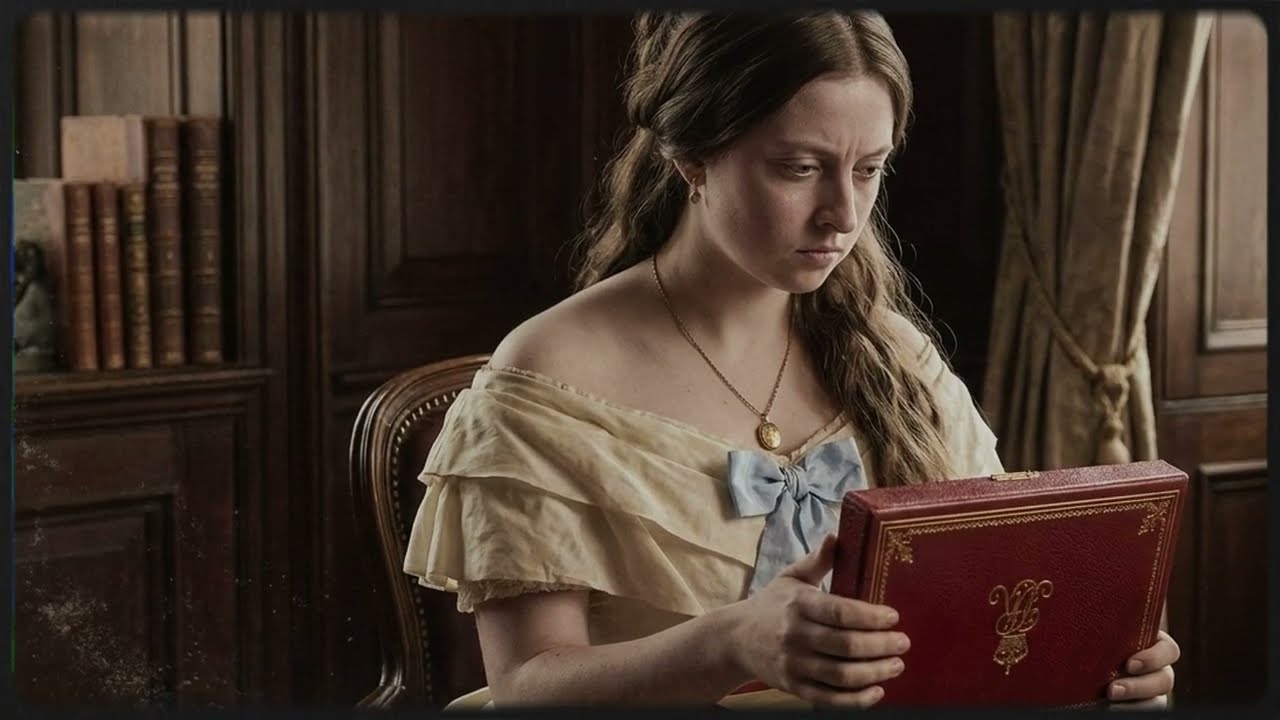
1861 opened by taking the queen's mother first. In March, the Duchess of Kent, the architect of the Kensington System, the woman whose room Victoria fled on her first night as queen, died, having reconciled with her daughter near the end. Victoria's grief was intense and documented. The woman she had spent her youth escaping, she mourned with a violence that unsettled her own household.
Then in November, Albert sickened. Through late November and into December, the illness deepened. Fever, exhaustion, the physicians circling. The official diagnosis, the one that will go on the certificate, was typhoid fever. Duration 21 days.
It is December 14, 1861, in the Blue Room at Windsor Castle. The clock is moving toward 10:50 at night. The sound in the room is breathing, heavy, ragged, congested. A 42-year-old man lies in the bed. Around him, five of his nine children. Kneeling beside the bed, holding his hand, a 42-year-old woman who has been his wife for 21 years and 10 months.
She asks him for one more kiss. He turns his head slightly toward her. At ten minutes to eleven, the breathing stops. The woman does not scream. She sat frozen at first, in silence. The loudest voice in the palace, the voice once shouted "Horse!" through a locked door, gone entirely still.
Two corrections before going on. First, there was no farewell speech. The versions in which Albert delivers a final message, a last blessing, a summing up, are invented. The contemporary medical notes are sparse. He turned his head for the kiss. That is the documented gesture, and it is enough.
Second, the certificate itself is now contested. The establishment version goes like this. Prince Albert died of typhoid fever. That is what his physicians diagnosed. That is what the death certificate records. For a century, no one seriously argued.
The revisionist version goes like this. Beginning with one biographer's 2011 work, medical historians looked at those years of prior gastrointestinal illness, which a three-week typhoid infection cannot explain, and proposed instead a chronic disease, most prominently Crohn's disease ending in perforation and sepsis, with abdominal cancer as another candidate.
Which version is correct? Honestly, no one can say, and no one ever will. There was no autopsy. The modern hypotheses remain scholarly reconstructions, forever unprovable. The certificate says typhoid. The pattern of the preceding years says the certificate may be incomplete. That is where the evidence stops.
What does not stop is Victoria. She is 42 years old, and she will reign for another 39 years. Watch the behavior. She placed a glass paperweight over Albert's final blotter, preserving his last ink stains, as though the paperwork itself had died mid-sentence. She kept a plaster cast of his dead hand near her bed. The Royal Collection holds it. She wore a gold bracelet containing a lock of his hair. For years she required her entire household to wear a mourning band or pin bearing Albert's image. Grief mandatory by order.
His funeral carriage was a gun carriage stripped of the state trappings she refused to allow. She herself went into black and never came out. Forty years of widow's weeds, from the Blue Room to her own grave.
The fairy tale reading of those 40 years is paralyzing heartbreak, and the heartbreak was real. The objects above are not the props of an indifferent widow. But historians add a colder layer. The mourning was also a shield. A grieving widow could never be pressed to remarry. And a queen who never remarries never again shares her power. Never again finds a second desk pulled up against her own.
The woman who had watched her sovereignty carried out of the room one pregnancy at a time made structurally certain for four decades that there would be no more pregnancies, no more private secretaries with rings, no more notes under doors. She mourned him genuinely, and she also weaponized him. A saintly ghost, unlike a living husband, tells a queen nothing.
One last piece of folklore to address. You may have heard that the widowed Victoria secretly married her Scottish servant John Brown or bore him a child. A rumor as old as the 1860s, lately revived in print. Here is the entire documentary situation in one line. No primary document of any marriage or any birth exists, and the claim rests on contested secondary interpretation. A queen was close to a servant, and the world did what the world does.
She died on January 22, 1901, aged 81, 63 years a queen, and was buried beside Albert at Frogmore. The treaty position held to the literal end. She never gave the crown to any man, and she gave her grave to only one.
The verdict on the marriage has to be double-edged or it is a lie. The case for a genuinely passionate, documented love. Her own journals prove the fire, and a husband of formidable gifts who worked himself into the ground in her service and never once held a power the law recognized.
The case against, and it is the gravest charge in this story, stated with its evidence attached. Across two decades, Albert absorbed the working substance of the British crown from a wife serially incapacitated by pregnancies she called the shadow side of her marriage. The proof is not inference. It is her own recorded sentence. "I read and sign, and he does all the rest." A reigning monarch describing her reign as a signature.
Both cases are true. That is what makes it a tragedy rather than a scandal. The war for the dispatch box was fought between two people who loved each other. And the only armistice either of them ever found was a death.
The ironies stand as plain fact. The woman who defined an era of sacred motherhood called her babies frogs in her own hand. The man who threw his body in front of Edward Oxford's pistol to save her presided over the nine confinements she feared more than any assassin. The husband who diagnosed her weak nerves through locked doors died worn out at 42, while the patient ruled on to 81.
The last word belongs to a jug of hot water. Every single morning after December 14, 1861, at Windsor, the Queen's servants carried steaming hot shaving water and a set of freshly pressed clothes into Prince Albert's dressing room, laid out precisely as they had been when he was alive. Every morning for 40 years, somewhere in Windsor, on any given dawn between 1861 and 1901, a servant is climbing a staircase with a hot jug for a man four decades dead. Because the queen commands it, and no one left alive can slide a note under her door about it. A grief this perfectly choreographed is also a form of absolute control.