In 2007, inside a notary’s office in Paris, the wealthiest woman in the world signed a will naming photographer François-Marie Banier as her sole heir. The same notary witnessed her asking, in front of the will documents, that he formally adopt her as his son. She was 85 years old and suffering from moderate Alzheimer’s disease, though her mind could no longer fully grasp it. Her husband had died just weeks earlier.
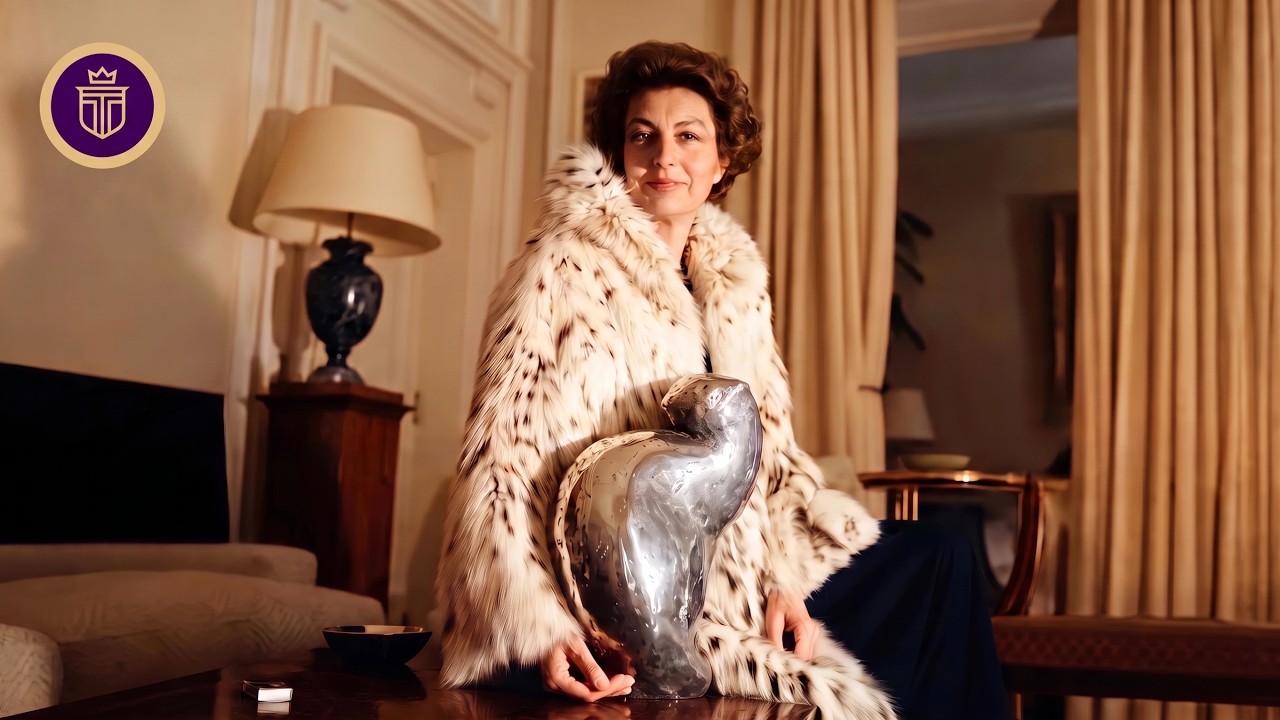
The will she had just signed would transfer assets worth approximately 1. 5 billion euros from her holding company alone to Banier, in addition to her stake in L’Oréal. She believed she was making the decision in complete freedom. This is the story of Liliane Bettencourt, the only daughter of the chemist who founded L’Oréal in a Paris apartment in 1907.
A daughter of a Nazi collaborator, partially absolved through the testimony of the man who became her husband. The wife of a man whose buried anti-Semitic journalistic writings surfaced in 1994. The heir to a cosmetics fortune estimated at $42 billion, and the elderly widow who donated nearly a billion euros in cash, paintings, and an island in the Indian Ocean to a photographer who treated her with humanity during the years she needed it most. Eugène Paul Louis Schueller was born on March 20, 1881, in Paris.
His parents ran a small Alsatian pastry shop in the city center. He woke each morning before school to help his parents prepare pastries, excelled in every class, and graduated first in his class from the Institut de Chimie Appliquée de Paris in 1904. The position he obtained after graduating was respectable but modest: an assistant laboratory worker under Professor Victor Auger at the Spon laboratory. It was a logical fate for the son of pastry shop owners with a degree in chemistry.
But Schueller refused that fate. The turning point came in the form of a hairdresser who visited Schueller and posed a seemingly simple challenge: could he create a synthetic hair dye that wouldn’t burn or poison the scalp? The hair dyes available to Parisian women at the time were mostly lead-based and corrosive, tolerated only reluctantly. Demand for a safer alternative was enormous, and Schueller saw the opportunity immediately.
He cut ties with the hairdresser and started his own project, renting a small workspace near the Tuileries Gardens in central Paris. In 1907, Schueller worked in a dark, cramped apartment on Rue du Louvre in central Paris, stirring mixtures on the stove and testing results on hair strands attached to his desk. He spent weeks working without success before producing what he later called his lucky break. The compound he settled on was synthetic, scalable, and patentable.
The formula used a synthetic compound called paraphenylenediamine, which produced a uniform color without irritating the scalp. He named his product “L’Oréal,” a play on the fashionable hairstyle “Auréole” made famous by actress Sarah Bernhardt. On July 30, 1909, he formally registered his company as a French firm specializing in harmless hair dyes. The name itself was a marketing idea wrapped in commercial documents.
Because the name was long, he quickly shortened it to “L’Oréal,” a name synonymous with the word “auréole” meaning halo. In its first year, the company was a one-man operation, with Schueller as manufacturer, salesman, and marketer. He visited beauty salons himself to demonstrate his product’s benefits and wrote technical articles in the trade magazine “La Coiffure de Paris” to educate hairdressers on proper use. The chemist who created the formula on a stove was a marketing pioneer, among the first industrialists in France to use radio advertising.
He launched a consumer women’s magazine called “Votre Beauté” in 1933, founded specifically to promote L’Oréal products. In 1935, his company released the sunscreen “Ambre Solaire,” which achieved huge sales for reasons unrelated to its formula. By the time his only daughter reached fifteen, the age at which she trained at the L’Oréal factory, mixing cosmetics and placing labels on shampoo bottles, the brand was available to consumers in about 17 countries. The girl who faithfully packaged shampoo under his roof could not have imagined how dark the inheritance would be.
And perhaps she could not have avoided knowing it entirely. Schueller did not merely build a company; he built an institution that would outlive him for generations, with factories throughout Europe, distribution agreements in the colonies, and a research department consuming an unusual share of company revenue. Yet what Schueller built in his boardrooms was matched by what he was building in secret. Schueller had immersed himself in socialist ideology in his youth, then briefly joined Freemasonry, before turning on both with the contempt of a convert.
He resented trade unions and despised what he considered the mediocrity of parliamentary democracy. He developed a growing hatred of Freemasonry, Judaism, and the Republic, the three pillars he considered the foundation of French decadence. By the mid-1930s, France was in acute turmoil. The leftist Popular Front, led by the Jewish socialist Léon Blum, won a parliamentary majority in 1936 and passed sweeping reforms: a five-day work week, gradual wage increases, nationalization of railways and the Bank of France, and, what infuriated Schueller most, two weeks of paid vacation for every French worker.
These vacations were excellent for L’Oréal’s business. Suddenly, crowds of French people flocked to Mediterranean beaches, and Ambre Solaire sales skyrocketed. This boom did not soften Schueller’s hatred of the government that inadvertently caused it. Amid this political upheaval emerged Eugène Deloncle, the charismatic founder of a secret organization that would become among the most dangerous far-right terrorist groups in modern French history.
The group was called La Cagoule, meaning “the hood. ” Deloncle was drawn to Schueller’s money and ideological ferocity. He recruited the industrialist as a financier and facilitator. Schueller provided financial support alongside his most valuable practical contribution: L’Oréal’s own offices, which were used for secret meetings.
Schueller’s name appeared publicly as a source of Cagoule revenue alongside other industrialists, including automobile tycoon Louis Renault. La Cagoule went far beyond rhetoric. The group assassinated the Rosselli brothers, prominent Italian anti-fascist intellectuals who had fled Mussolini’s Italy to France in 1937. They sabotaged aircraft the French government was supplying to the Spanish Republic.
They exploded bombs in buildings belonging to French employers’ unions, framing the attacks as communist acts. In November 1937, they planned a full coup against the French Republic. The arsenal they had assembled included two tons of high explosives, 500 machine guns, 65 submachine guns, and anti-tank cannons before French police, having infiltrated the organization, arrested about 70 members. By 1941, Schueller’s ideology had reached the pages of his book.
In “The Economic Revolution,” published in a collection that also included Hitler’s speeches, he wrote with troubling admiration that the French did not possess the talent the Germans had: faith in National Socialism, or the dynamism of Hitler who was pushing the world forward. The book was, in its own way, a statement of intent. On June 14, 1940, Wehrmacht armored divisions bypassed the Maginot Line, swept through Belgium, and entered Paris without resistance. France’s military collapse took six weeks, followed by political collapse within days of surrender.
Schueller did not see occupation as a catastrophe but as an opportunity. Under the Vichy government, La Cagoule operated openly with the blessing of both the Nazi occupiers and the collaborating regime. At the group’s conference in June 1941, Schueller made a statement that left no doubt about his position. He told assembled members that no peaceful revolution could occur without a preparatory revolution of purification and revival.
He added that this revolution would only be bloody, consisting simply of quickly executing 50 or 100 important figures. His collaboration extended beyond rhetoric to the strategic supply chain of the German war effort. Schueller became co-director of Valentine, a major paint and varnish manufacturing company. During the occupation, he established a wartime partnership between Valentine and the German chemical company I.
G. Farben. According to internal archival documents covering 1941 to 1944, cited by French historian Annie Lacroix-Riz, up to 95% of Valentine’s wartime production was delivered directly to the German navy. Valentine paints did not merely reach the German war effort; contracts were made directly with Valentine according to a schedule set by the Reich for strategic naval and submarine programs.
The Reich’s paint plan listed Valentine in the first category of approved suppliers from 1941. Paints, unlike cosmetics, are classified as direct strategic military products. No warship sails without camouflage paint, and no submarine operates without it. Gerhard Schmilinsky, Schueller’s German contact at Valentine, was a central figure in the Nazi program to strip Jewish business owners of their property.
Schmilinsky praised Schueller to his German superiors as an enthusiastic supporter of the Franco-German agreement. The most damning testimony after the war came from the SS itself. Helmut Knochen, the SS and security police commander in occupied France, was directly responsible for deporting French Jews to death camps and executing thousands of Resistance members. When French intelligence interrogated him after the war, Knochen voluntarily named Schueller among his agents.
In 1947, French investigators produced a list of 45 agents for Knochen, and the list clearly included the name E. Schueller, businessman. Schueller had also sought appointment as Minister of National Economy in the Vichy government. Internal lists from 1941 indicated he was a candidate for Minister of National Production and Empire in a French government fully collaborating with the Nazis.
L’Oréal’s sales nearly quadrupled between 1940 and 1944, while Schueller’s personal income increased almost tenfold during the same period. Lacroix-Riz concluded that Schueller significantly doubled his wealth during the war through his connections with the Germans. The fortune accumulated during the war was not incidental to normal business; it was the expected financial result of arrangements he personally negotiated with German companies and Nazi officials. When the Germans fled before the Allied advance in 1944, the épuration légale—a wave of reprisals in which suspected collaborators were tried summarily, humiliated, and in many cases executed—began.
Schueller fell victim to this campaign when a disgruntled former employee denounced him to an official body investigating corporate conduct during the war. On November 6, 1946, a committee imposed professional sanctions on Schueller for promoting enemy schemes through his public stance during the occupation and referred his case to the Justice Ministry’s Court of Justice. What followed was a precise use of money, connections, and staged witness testimony to escape punishment—a strategy available to a defendant with Schueller’s resources. On the charge of economic collaboration, examining magistrate Marcel Gérard found that L’Oréal’s direct sales in Germany were modest.
This finding deliberately ignored the operations of the Valentine paint company, which were far larger and more strategically important, hidden behind layers of corporate structure. On the charge of political collaboration, Schueller enlisted a wide range of character witnesses who claimed he sheltered Jewish employees, funded the Resistance, and was deceived by Deloncle. Two witnesses stood out. One was future French President François Mitterrand, then a young politician who briefly worked at L’Oréal after the war.
The other was André Bettencourt, Schueller’s future son-in-law, celebrated at the time as a Resistance hero. Both testified to Schueller’s good character at critical moments. The judge recommended dropping all charges, and Schueller was released. A conviction could have led to imprisonment, execution, or full nationalization of L’Oréal.
In the decades following his acquittal, numerous former Cagoule figures were appointed to prominent positions at postwar L’Oréal. Jacques Corrèze, a La Cagoule leader whom Nazi hunter Serge Klarsfeld accused of personally helping the Gestapo evict Jewish families from their Paris homes in 1941, was hired as a salesman by François Dalle, then L’Oréal’s CEO. Corrèze later oversaw the founding of Cosmair, L’Oréal’s American distribution arm, eventually becoming its CEO. He had served five years of a ten-year prison sentence for wartime collaboration before L’Oréal’s patronage gave him a second chance.
Jean Filliol, La Cagoule’s operations chief, fled to Spain after the liberation and worked at L’Oréal’s Spanish branch. Louis Deloncle, son of Eugène Deloncle, also joined L’Oréal’s Spanish branch. Decades later, a separate scandal emerged in Karlsruhe, where L’Oréal’s German headquarters occupied a property confiscated from the prominent Jewish Rosenfelder family during the war. The Rosenfelders sued for compensation in 2001, lost on appeal, and published a book titled “L’Oréal Took My House” to force public recognition of the injustice.
The empire that emerged from all this would pass in 1957 to one person who had no choice in the matter. Liliane Henriette Charlotte Schueller was born on October 21, 1922, in Paris, the only daughter of the chemist and his wife, Louise Doncieux. Schueller’s marriage produced no other children, and his commitment to his daughter, according to some accounts, was tinged with disappointment that she was not the son he had wanted. Louise died when Liliane was five.
Her childhood was wealthy but isolated. She was educated at home, rarely mixed with peers, and was accompanied by her father to factories and business lunches. Liliane grew up attuned to the rhythms of work and money, but not to those of ordinary intimate relationships. In 1950, at age 27, she married André Bettencourt.
André had been involved in his youth in the same political circles as her father. He had been a member of La Cagoule. Between 1940 and 1942, he wrote more than 60 articles for “La Terre Française,” a weekly newspaper that flourished with funding from Nazi Germany during the occupation of France. The articles were virulently anti-Semitic.
In a special Easter 1941 issue, André described Jews as hypocritical Pharisees whose race, in his telling, carried the curse of the good blood spilled at the crucifixion. In a Christmas issue the same year, he wrote in favor of punishing Jews for the crucifixion of Christ. He later joined the anti-German Resistance, a conversion that earned him the French Resistance Medal and the Legion of Honor. In the victorious postwar settlement, his Resistance achievements overshadowed his collaborationist journalism.
He held ministerial positions under Presidents Pierre Mendès France and Charles de Gaulle between 1954 and 1973, and served as vice-chairman of L’Oréal itself. His buried past surfaced abruptly in October 1994 when brothers Jean-Loup and David Friedman discovered the wartime articles in the French National Library in Paris and published them. Serge Klarsfeld urged the U. S.
Justice Department to bar André from entering American territory. André issued a carefully worded apology, asking forgiveness from the Jewish community, and resigned as vice-chairman of L’Oréal. The apology came more than half a century after the articles were written, and only after the Friedman brothers found and published the original documents. His son-in-law, Jean-Pierre Meyers, a Jew whose grandfather died at Auschwitz, whose appointment sent an unmistakable symbolic message to the board, immediately took André’s seat.
The transfer of power was almost perfectly symmetrical: the board seat held by a man who had described Jews as hypocritical Pharisees passed, in the closest way possible, to the Jewish husband of the founder’s only granddaughter. Eugène Schueller died on August 23, 1957, at age 76, leaving his entire empire to his only daughter, Liliane, then 34, making her the largest individual shareholder of L’Oréal. The company expanded aggressively over the following decades, acquiring Lancôme in 1964, then Biotherm, Helena Rubinstein, Garnier, Maybelline, Kiehl’s, and dozens of other brands. It became the largest cosmetics company in the world.
By the turn of the millennium, L’Oréal controlled more than 500 brands across cosmetics, skincare, haircare, and fragrance, with annual revenue of nearly 30 billion euros. The company went public in 1963. The Bettencourt family maintained effective control through its dominant stake, reinforced after 1974 by a share swap agreement with Swiss food giant Nestlé, whereby Nestlé acquired nearly 26% of L’Oréal in exchange for Liliane receiving a stake in Nestlé itself. In 1987, Liliane and André together founded the Bettencourt Schueller Foundation, one of France’s most important private charitable institutions.
The foundation became a major donor to medical research, humanitarian initiatives, and artistic heritage, with budgets reaching tens of millions of euros annually. To many in France, the foundation had a secondary purpose beyond its charitable work: rehabilitating a brand with questionable origins. By the late 1990s, the Bettencourts represented, on the surface, the pinnacle of discreet old-aristocratic wealth. They lived in a lavish mansion in Neuilly-sur-Seine, Paris’s wealthiest suburb, surrounded by servants and staff.
Life at home ran on the assumption that Liliane was the woman she had always appeared to be: calm, in control, fully aware of her affairs and decisions. This assumption was held firmly by her staff, her wealth managers, her notaries, her doctors, and the social circle she had moved in for half a century. It continued even after it ceased to be accurate. Behind the public image was a different story entirely.
A story that would arrive at her doorstep with a camera, a body of literary work, and a studied refusal to be impressed by anyone. François-Marie Banier was born on June 27, 1947, the son of a Hungarian Jewish immigrant named Étienne Banier. His father changed the family name after arriving in France to hide his origins and integrate into Parisian society. Banier grew up immersed in images; his father worked in advertising and publicity, and the family home was filled daily with newspapers, magazines, and photographs.
At sixteen, he arranged a meeting with Salvador Dalí, who was impressed by the teenager’s confidence and generous in sharing his connections. Through Dalí, Banier met Man Ray, the great Surrealist photographer. Early in his career, he worked briefly as a press officer for Pierre Cardin, learning in the corridors of that fashion house something essential about the art of glamour and image management. He then pursued his twin passions: writing and photography.
His literary output was real; he published novels and plays, including “Le Compose” and “Le Second Étage,” which received genuine critical attention. As a photographer, he worked for Vogue, Harper’s Bazaar, Paris Match, Life, and Stern. What distinguished Banier from other talented Parisian photographers was his singular genius for social penetration. He possessed, as those who knew him described, a near-supernatural ability to make the most reserved, famous, or distinguished person in the room feel like he was the only person worth talking to.
He cultivated a network of intimate friendships that included Princess Caroline of Monaco, Andy Warhol, Johnny Depp, Yves Saint Laurent, and a who’s who of European aristocrats, politicians, and industrialists. The hallmark of his personal style was his categorical refusal, sometimes shockingly so, to be impressed. In a world of constant flattery and social pretense, Banier offered the exact opposite: frankness, boldness, and visible disregard for social status. This made him extraordinarily appealing to wealthy elderly people who had spent decades surrounded by deference and were hungry for honesty.
Amid the political fallout, a final twist emerged. The Bettencourt investigation, through wiretapping of Sarkozy’s associates’ phones, had inadvertently uncovered evidence against him in a completely different scheme. Investigators discovered that Sarkozy had conducted sensitive conversations on a secret prepaid mobile phone registered under the alias “Paul Bismuth. ” Those conversations between Sarkozy and his personal lawyer, Thierry Herzog, revealed the two men attempting to extract confidential information from a judge named Gilbert Azibert about the status of the Bettencourt investigation and other cases.
In exchange, Sarkozy allegedly offered to use his influence to secure Azibert a prestigious position as a senior judge in Monaco. The trial for the “Paul Bismuth” case began in 2020, and on March 1, 2021, Sarkozy was convicted of corruption and influence peddling, sentenced to three years in prison with two years suspended. On appeal, the conviction was upheld in full in 2023. Sarkozy became the second French president convicted of criminal charges since World War II, and the first convicted of a crime related to his conduct in office.
On October 16, 2011, a judge in Nanterre ruled that Liliane Bettencourt was mentally unfit to manage her own affairs and placed her under family guardianship. Her financial interests, including her roughly 30% stake in L’Oréal valued at the time at about 17 billion euros, came under the control of her daughter and grandchildren. The flow of money toward Banier and the political class stopped at its source. The tax issue was settled the same year; French authorities ordered Liliane to pay nearly 18 million euros in back taxes and fines in 2011 after the Swiss accounts were discovered.
The family sold the island of D’Arros in July 2012 for $60 million to the Blue Peace Foundation, a marine conservation organization. The criminal trial of Banier and nine other defendants began in Bordeaux on January 25, 2015. The proceedings lasted several weeks. The prosecution presented excerpts from Bonnaventure’s recordings, allowing the court to hear Liliane’s voice asking questions that had just been answered.
Medical experts testified about the clinical course of her Alzheimer’s diagnosis. On May 28, 2015, presiding judge Denis Rocco delivered his verdict in scathing terms: “She found herself at the mercy of men in whom she had placed her trust. ” The prosecutor had gone further in closing arguments, describing Banier as a predator who imposed his control over her as a spider spins its web. Banier was convicted and sentenced to three years in prison with six months suspended.
He was fined 350,000 euros and ordered to pay nearly 158 million euros in compensation to the Bettencourt family. He appealed almost immediately. On August 24, 2016, the Bordeaux Court of Appeal upheld his conviction for abuse of weakness. It increased his sentence to four years, fully suspended, meaning he would never spend a single day in prison.
The fine was raised to 375,000 euros, and the French state seized a residential building and life insurance policies worth a total of roughly 140 million euros. Compensation to the Bettencourt family was excluded from the ruling. François-Marie Banier never spent a single night in prison. The man convicted by two French courts of exploiting the world’s wealthiest and most vulnerable woman walked out of the appeals court with a sentence designed not to impede him.
Liliane Bettencourt died at her home in Neuilly-sur-Seine on the night of September 20, 2017, eleven days before her 95th birthday. The Alzheimer’s disease confirmed by the courts in 2011 had progressed steadily until her death—a quiet, almost unrecorded end to a public life that had dominated French headlines for a decade. Her fortune was estimated at roughly $42 billion at her death, making her, according to Bloomberg’s calculations, the wealthiest woman in the world at the time of her passing. Françoise Bettencourt Meyers inherited the entire family fortune.
In December 2023, six years after her mother’s death, Françoise crossed a threshold no woman in recorded financial history had ever crossed. Her wealth reached $100 billion, making her the first woman to reach the centi-billionaire mark on the Bloomberg Billionaires Index. The fortune Eugène Schueller built on a stove in a Paris apartment in 1907, which André Bettencourt helped save from nationalization after the war in 1946, which Liliane nearly lost to a photographer skilled at capturing loneliness, passed finally to the daughter who refused to look away.
The girl who packaged shampoo at her father’s L’Oréal factory at fifteen was finally protected, by her daughter’s determination and a servant’s small black recorder, from the consequences of her decline.