Federal records show that before Joseph Bonanno allegedly conspired to have Tommy Lucchese and Carlo Gambino killed, the New York mob boss had already been accused of plotting to murder another crime family leader—Los Angeles boss Frank DeSimone. According to FBI files, in 1961 Bonanno allegedly formulated a plan to take over the Los Angeles family. The files state that he approached mobsters Johnny Roselli and Joey Giambra and invited them to participate, and both agreed. However, Roselli discussed the matter with DeSimone, then traveled to New York and reportedly spoke with someone there—likely Carlo Gambino, according to an informant.
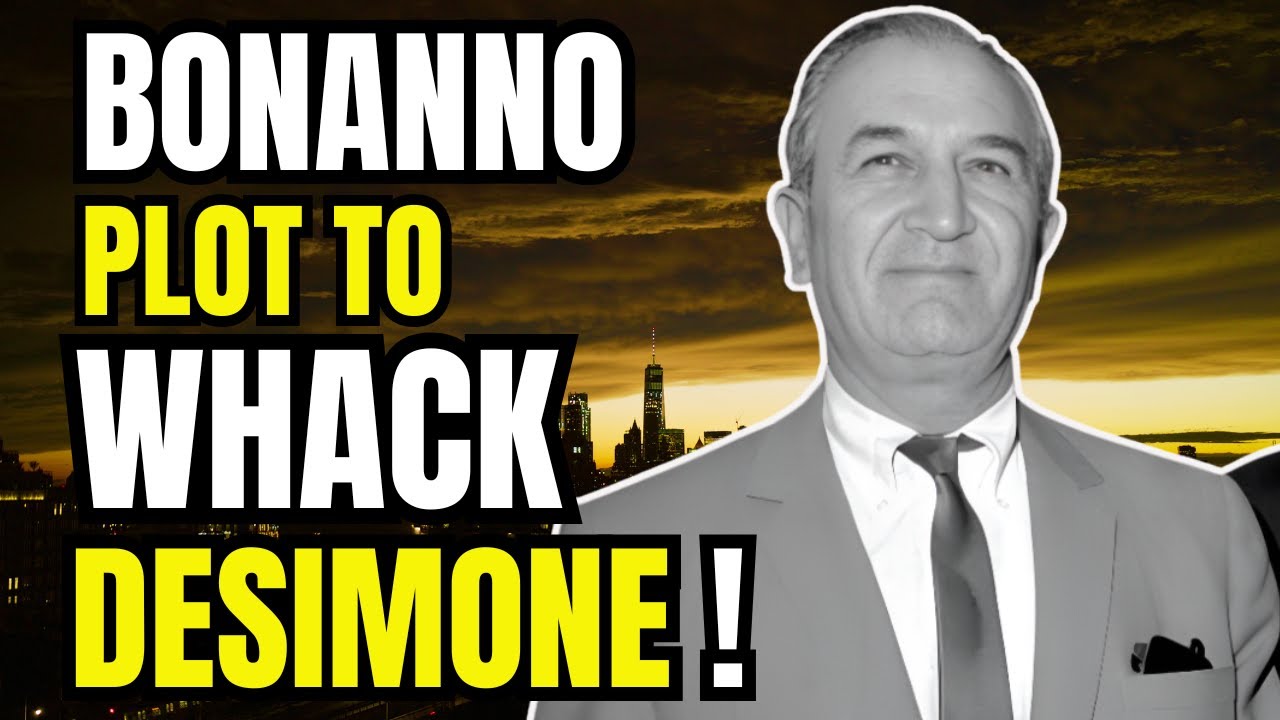
After that, Bonanno was reportedly ordered to abandon his takeover plan. Frank Bompensiero, a West Coast mobster whose criminal career dated back to the 1920s, served under former LA boss Jack Dragna. Around 1956, DeSimone became boss of the LA crime family following Dragna’s natural death. At that time, Bompensiero was in prison, and upon his release he fell out of favor with DeSimone, who allegedly demoted him from captain to soldier.
In 1961, Bonanno contacted Bompensiero through an intermediary—Antonio Bello, a San Diego cafe owner and member of the Bonanno family. According to Bompensiero’s later statements to the FBI, Bonanno instructed Bello to tell him that he had received reliable information that DeSimone was planning to have him killed. Bello also told Bompensiero that his car was going to be rigged with dynamite. Bompensiero later became an active FBI informant, and he claimed the threat infuriated him because his car was being used by his daughter to drive his grandchildren to school.
He spent several days surveilling DeSimone, his underboss, and capos in the Los Angeles area, but could not confirm any conspiracy against him. He then returned to San Diego, rented an apartment, and brought Bello there at gunpoint. Under pressure, Bello claimed his informant was San Diego LCN member Joe LaRasso. With the help of a deceased LCN member, Bompensiero brought LaRasso to the apartment at gunpoint and confronted Bello.
Bello then admitted Bonanno had instructed him to plant the story, hoping Bompensiero would “run berserk” and kill DeSimone, his underboss, and his capos—making it easier for Bonanno to take over the Southern California LCN. After being released, Bello reportedly fled San Diego and returned to New York, where he later died of a heart attack. Bompensiero brought the matter to the attention of the commission, where New York boss Tommy Lucchese and Joe Zerilli, who knew him well, backed his account. This became an early source of serious friction between Bonanno and the commission.
Another FBI file from 1964 records New Jersey boss Sam DeCavalcante discussing the matter with Gambino. DeCavalcante stated that Gambino told him Bonanno had wanted to kill DeSimone so that Bonanno’s son, Bill, could take over California. DeCavalcante reportedly said that when one mobster wants to kill another “just so that he can get in position then he’s very treacherous and very dangerous. ” He also noted that Bonanno “didn’t even deny it when Frank DeSimone accused him of it in front of the commission.
”
DeCavalcante also described the power structure on the commission at the time, saying that Lucchese, Gambino, and Stefano Magaddino were the only three spokesmen. He added that Chicago boss Sam Giancana’s solution to problems was simple: “every other word was kill. ”
Despite the accusation, Bonanno—a commission member for roughly 30 years—was not punished for his alleged 1961 plot against DeSimone. The same FBI file notes that DeSimone made his accusation directly to Bonanno in front of the commission, and Bonanno did not deny it.
The plot against DeSimone foreshadowed the larger crisis that erupted in 1964, when Bonanno refused to appear before the commission after being accused of conspiring with Profaci family boss Joe Magliocco to kill Lucchese and Gambino. That refusal led to a period of turmoil within the Bonanno family and across New York’s organized crime landscape. Bonanno was not alone in his ambitions. His contemporaries, including Gambino, Lucchese, and even Charlie Luciano, had all betrayed superiors at some point in their criminal careers.
The world of Cosa Nostra at that time rewarded treachery and ambition, and Bonanno, by the account of FBI informants, displayed both in his efforts to expand west.