Buffalo Bill Cody was famously embalmed six times, kept in cold storage for half a year, and fought over for months after his death. Annie Oakley did not go out in a blaze of glory, but faded quietly, with her husband following her just 18 days later. And Belle Starr was not brought down by the law or in a formal duel, but was struck from behind by an unknown assailant. These endings were not cinematic.
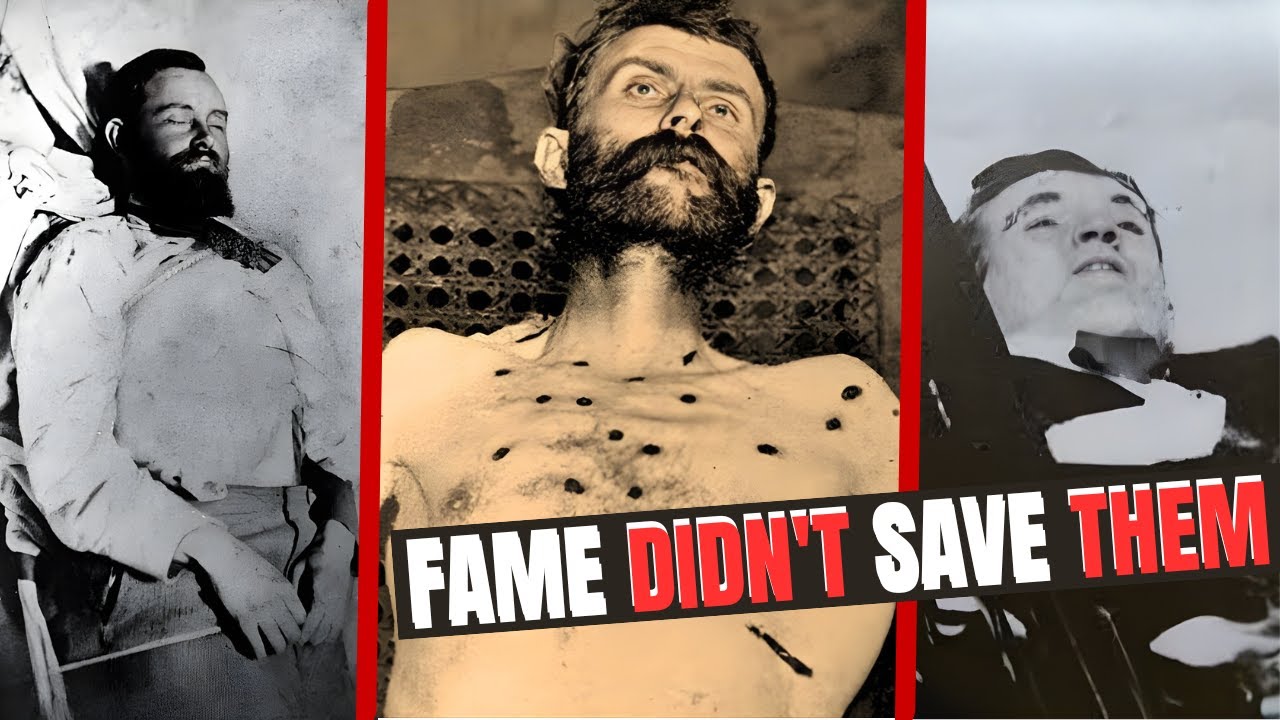
They were unsettling, unresolved, and deeply human. Once you understand how these figures truly reached the end of their lives, it becomes clear the Wild West was not about glory. It was about survival, betrayal, and what happens when legends outlive the truth. Mary Katherine Haroney, famously known as Big Nose Kate, was no ordinary woman of the Wild West.
Intelligent, fearless, and fiercely independent, she carved out her place among men in a lawless frontier. Fluent in several languages and unafraid of danger, Kate worked as a nurse, gambler, and saloonkeeper, living life on her own terms. Her fiery spirit drew her to Doc Holliday, becoming his companion, partner, and at times his rival. Through dangerous encounters, narrow escapes, and the turmoil of Tombstone, she stood by him, often helping him stay one step ahead of the authorities.
After Holliday’s death, Kate lived a quiet, wandering life across the Southwest, surviving the very chaos that overtook so many others. She passed away in 1940 at the age of 90, leaving behind the legacy of a woman as untamed as the West itself. Annie Oakley, the woman whose aim could split a playing card in midair, was not born into fame. She earned it through skill and discipline.
Long before the world knew her name, she was Annie Mosey, a 16-year-old girl with remarkable marksmanship. One fateful day, while visiting her sister, destiny crossed her path. A local innkeeper arranged a trap shooting contest between Annie and a confident professional marksman named Frank Butler. The challenge was simple: hit as many targets as possible out of 25.
Frank struck an impressive 24, but Annie, with calm focus and flawless precision, hit every single one. Frank was stunned, then smitten. What began as a contest of skill became a lifelong partnership. The two soon married and spent nearly 50 years together, performing across the country with Buffalo Bill’s Wild West Show.
Annie inspired countless young girls, proving that talent and courage could shine as brightly as any frontier legend. In her later years, illness weakened her, and she eventually passed away from anemia. Just 18 days later, Frank followed her, as though his heart could not endure life without her. Today, the couple rests together in the Oakley family plot, eternally side by side.
John Henry “Doc” Holliday was not born an outlaw. He began life as a southern gentleman and trained dentist. After contracting tuberculosis, he moved west in search of drier air. What he found instead was a world of uncertainty, card tables, and frontier danger.
Sharp-witted and highly skilled, Holliday gained fame as a gambler and frontier fighter, often riding alongside Wyatt Earp. His calm resolve made him a central figure during the events surrounding the O. K. Corral in Tombstone, where his reputation as both admired and feared was firmly established.
Yet behind the confident smile was a man slowly losing his health. The illness that brought him west eventually claimed him. In 1887, at just 36 years old, Doc Holliday passed away quietly in a Colorado boarding house, far from the dusty streets that made him famous. Jesse James, the notorious outlaw and skilled thief, had become both a legend and a serious concern for the state of Missouri.
His daring, growing notoriety soon caught the attention of Governor Thomas T. Crittenden, who made it his personal mission to bring Jesse to justice. After a failed bank robbery scattered his gang, Jesse and his brother Frank went into hiding. While Frank began longing for a lawful life and distanced himself from violence, Jesse refused to abandon his path.
He recruited new members whose loyalty was uncertain, including Bob Ford. When word spread that the governor was offering a $10,000 reward for Jesse’s capture, Bob Ford saw an opportunity. The Ford brothers secretly reached an agreement with Crittenden, promising to end Jesse’s reign in exchange for money and a pardon. Months later, while staying with the Fords, Jesse removed his coat and set aside his weapons to straighten a picture on the wall.
In that quiet moment, Bob Ford raised his revolver and fired, ending the life of one of the most wanted men in America. Belle Starr was more closely associated with outlaws than an outlaw herself. Convicted once of horse theft and sentenced to nine months in jail, she faced no further convictions. Still, she chose to live among bad and suspicious figures.
Married twice, both of her husbands later lost their lives in violent confrontations. Her long association with dangerous individuals eventually caught up with her. One afternoon while riding home along a remote trail, Belle was ambushed and fatally wounded. No one was ever identified as responsible, and her death became surrounded by rumors and speculation.
Some accounts even suggest her son Ed may have been involved, but the truth remains buried in legend. Billy the Kid was the name history gave him. Barely 18 years old, with numerous deaths attributed to him, he became one of the most feared and talked-about figures of the West. In his short, reckless life, he built a reputation few could rival.
After years of evading capture, Sheriff Pat Garrett finally apprehended him and brought him to trial. Found guilty, Billy was sentenced to hang. Days before his execution in 1881, he made a daring escape, overpowering two guards and disappearing into the night. Garrett refused to stop searching.
For three relentless months, he pursued the fugitive until a tip led him to the Maxwell Ranch in New Mexico. Late one night, as Billy stepped into a dimly lit room, Garrett fired a single shot that brought the pursuit to an end. Even so, doubt lingered. Some believed Billy escaped and lived under another identity.
Years later, two men claimed to be the real Billy the Kid, but neither could ever prove it. Butch Cassidy and the Sundance Kid may bring to mind Hollywood charm, but the real men lived lives just as bold. Known for careful planning and precision, they led the infamous Wild Bunch, carrying out train and bank robberies that netted an average of $35,000 per job, a fortune at the time. Their ability to vanish into the wilderness made them nearly impossible to catch.
Eventually, the two left North America in hopes of starting fresh in South America. For a time, they stayed out of the spotlight until reports emerged of a payroll robbery in Bolivia. Surrounded by Bolivian cavalry, they refused to surrender, exchanging gunfire through the night. When silence fell, two bodies were found.
Sundance had been struck, and Cassidy was believed to have taken his own life. Still, rumors persisted for decades that Butch survived, resurfacing under new names and leaving behind one of the West’s most enduring mysteries. Calamity Jane’s name reflected the turbulent life she led. To survive, she often disguised herself as a man, taking on demanding frontier jobs.
She was rumored to have ridden for the Pony Express and lived by any means necessary. Later, she joined Buffalo Bill’s Wild West Show, where her sharpshooting and fearless riding made her a crowd favorite. But fame came with hardship. Jane was known for her grit, her recklessness, and her heavy drinking.
Over time, her struggles took a toll on her health. By the age of 51, her body gave out. According to legend, she was buried beside Wild Bill Hickok, despite claims that he showed little interest in her during life. Her burial felt like one final twist of fate.
Buffalo Bill Cody rose to fame in the late 1800s, captivating audiences worldwide with Buffalo Bill’s Wild West. The show brought the frontier to life, featuring cowboys, sharpshooters, and Native American performers. On January 10, 1917, while visiting his sister in Denver, Cody passed away from kidney failure, marking the end of an era. His final resting place became the subject of intense debate.
In his will, Cody requested burial atop Lookout Mountain in Colorado, but heavy snow delayed the journey. His body was preserved for six months while arguments raged over whether he should be buried in Cody, Wyoming. Eventually, Lookout Mountain became his accepted resting place, though rumors persist that his remains were later moved. Adding an eerie footnote, the mortuary where his body was kept is now a restaurant named Linger.
A fitting symbol for a legend whose story refuses to fade. Bat Masterson began life under the blazing sun of the frontier, living by skill and survival. A respected gunfighter with a steady hand, his life changed when Wyatt Earp recognized his ability to bring order to Dodge City.
As sheriff, Masterson earned a reputation as firm but fair.