The German officer corps that entered World War II was the product of nearly two centuries of Prussian military tradition. Reformed after the catastrophe of 1806, rebuilt through the crucible of World War I, and secretly maintained through the restrictions of the Versailles Treaty, these were professional military thinkers who had spent their entire careers studying the art of war. They developed doctrines of flexible command, breakthrough operations, and rapid movement—concepts that would later be called blitzkrieg, though the Germans themselves rarely used that term.
The 1940 campaign in France was the high watermark of their capabilities. France, the dominant continental military power of its era, collapsed in 46 days. But something shifted after that victory. Hitler, intoxicated by success and increasingly convinced that his own instincts were responsible for German triumphs, began inserting himself aggressively into operational decisions. He overruled his generals on where to attack, when to halt, whether to retreat, and which cities to hold. The list of interventions is staggering in both breadth and consequence.
The first name to consider is Walther von Brauchitsch, commander-in-chief of the German army from 1938 to 1941. Born into a military family with deep roots in Prussian tradition, Brauchitsch oversaw the key operations in Poland, France, and the Low Countries. He understood something Hitler never truly grasped: that logistics, supply lines, and the conservation of fighting strength were just as important as tactical boldness.
The invasion of the Soviet Union in June 1941 brought these tensions to a head. Brauchitsch, along with most of his senior commanders, believed the primary objective of Operation Barbarossa should be Moscow. The Soviet capital was not merely a symbolic target. It was the hub of the Soviet road and rail network, the center of political control, and a place Stalin could not afford to lose. Hitler overruled this assessment.
In August 1941, with the German advance in the central theater making spectacular progress, Hitler issued Directive 34, diverting the bulk of German armor from Army Group Center toward the south for the Kiev encirclement and toward the north for Leningrad. The professional military consensus—expressed by Brauchitsch, Halder, Guderian, and Bock—was that this diversion was a catastrophic error. They argued correctly that it would cost Germany the window to strike Moscow before winter.
Guderian flew to Hitler’s headquarters personally to argue against the diversion. He was overruled. The Kiev operation was a brilliant tactical success, capturing more than 660,000 Soviet soldiers in one of the largest encirclements in military history. But by the time German forces regrouped and reoriented toward Moscow, it was late September. Operation Typhoon began on October 2, weeks later than the generals had wanted. The autumn rains turned roads to mud, and when the ground finally froze in November, German troops fought without adequate winter equipment in temperatures reaching 40 degrees below zero.
The attack faltered just kilometers from Moscow. Brauchitsch, his health deteriorating after a heart attack in November 1941, was dismissed by Hitler in December. He was arrested by British forces in August 1945 and charged with war crimes. On October 18, 1948, just as he was set to face prosecution, he died of pneumonia.
Erich von Manstein is perhaps the single most gifted operational commander Germany produced in the entire war. As chief of staff to Gerd von Rundstedt during the invasion of Poland, he had already demonstrated an ability to think boldly. But it was his plan for the invasion of France that cemented his reputation. He proposed sending the main armored thrust through the Ardennes Forest, which the French considered impassable for armor, to strike across the Meuse River and drive directly to the English Channel, cutting off Allied forces in Belgium.
The German high command initially rejected the plan as too risky. Manstein was removed from his staff position and given command of a corps. But fate intervened when a plane crash delivered German operational plans into Allied hands, forcing a complete rethinking. Hitler, who had independently arrived at some of the same ideas, championed the revised plan. The result was the most successful military campaign in modern history.
Manstein’s wartime career illustrates the tension between military professionalism and Hitler’s interference with extraordinary clarity. After commanding the 56th Panzer Corps in the invasion of the Soviet Union and capturing Sevastopol in July 1942, he earned promotion to field marshal. But it was during the winter crisis of 1942–43, as the encirclement at Stalingrad tightened around the German Sixth Army, that his operational genius revealed itself—and where Hitler’s interference proved most devastating.
Manstein believed the Sixth Army could be saved, but only if Hitler authorized a breakout. His plan was for a relief force to drive toward Stalingrad while the Sixth Army fought its way out to meet them. Hitler refused. He insisted the Sixth Army would hold and be supplied by air—a fantasy Göring had recklessly promised could be achieved and that proved utterly impossible in the Russian winter. The Sixth Army died at Stalingrad, with over 90,000 survivors surrendering in February 1943.
After the war, Manstein was captured by the British and stood trial for war crimes. While acquitted of the most serious charges, he remained imprisoned until 1953. He later served as an adviser to the West German government on army organization. His memoirs, titled *Lost Victories*, were published to widespread acclaim. The title captures something essential about the entire question: these were victories lost not because Germany lacked military talent, but because that talent was systematically overruled.
Heinz Guderian essentially invented modern armored warfare. He had written the book on it, literally, in his 1937 work *Achtung Panzer*. During the Polish campaign of 1939, his XIX Panzer Corps advanced with a speed that left even his own high command struggling to process what was happening. In France in 1940, he drove his corps through the supposedly impassable Ardennes, crossed the Meuse at Sedan in a day when conventional estimates said it would take at least nine days, and then drove for the Channel with audacity that bordered on recklessness.
Guderian later admitted to being impressed by American General George Patton, saying, “I hear much about General Patton, and he conducted a good campaign. From the standpoint of a tank specialist, I must congratulate him on his victory since he acted as I would have done had I been in his place.”
His relationship with Hitler was characteristically troubled. In August 1941, Guderian flew personally to Hitler’s headquarters to argue against the diversion of armor away from the Moscow axis. He was overruled. During the winter crisis of 1941–42, he authorized withdrawals to shorten the German line and preserve his forces—judgments any competent professional would recognize as necessary, but that Hitler viewed as unacceptable. He was relieved of command in December 1941.
He was recalled as inspector general of armored troops in February 1943, then appointed chief of the army general staff in July 1944 after the July 20 assassination attempt. He spent the last year of the war in increasingly futile attempts to persuade Hitler to adopt rational strategies.
Gerd von Rundstedt was one of the most senior and respected commanders in the Wehrmacht. He had commanded Army Group South during the Polish invasion and led Army Group A with distinction in the French campaign. His first major clash with Hitler came in December 1941 during the Soviet winter counteroffensive. Rundstedt, commanding Army Group South, made the professional judgment that his forces must retreat to a defensible line. Hitler refused. Rundstedt told him bluntly that if the order to hold was not withdrawn, he must be relieved. Hitler accepted the resignation—then within weeks ordered the very retreat Rundstedt had requested.
It was a pattern that would repeat throughout the war. A commander would recognize the necessity of a withdrawal. Hitler would refuse. The situation would deteriorate. Hitler would eventually authorize the withdrawal anyway, but weeks or months too late, and the result would be losses a timely decision would have prevented.
Rundstedt was recalled in 1942 to command in the West. As the Allies prepared to invade Normandy in June 1944, there was a fundamental strategic disagreement between Rundstedt and Erwin Rommel about how to meet the invasion. Rommel wanted to concentrate the Panzer reserves near the beaches and destroy the Allied landings in the first critical days. Rundstedt wanted to hold the armored reserves further back, maintaining flexibility to respond to the actual direction of the main Allied thrust.
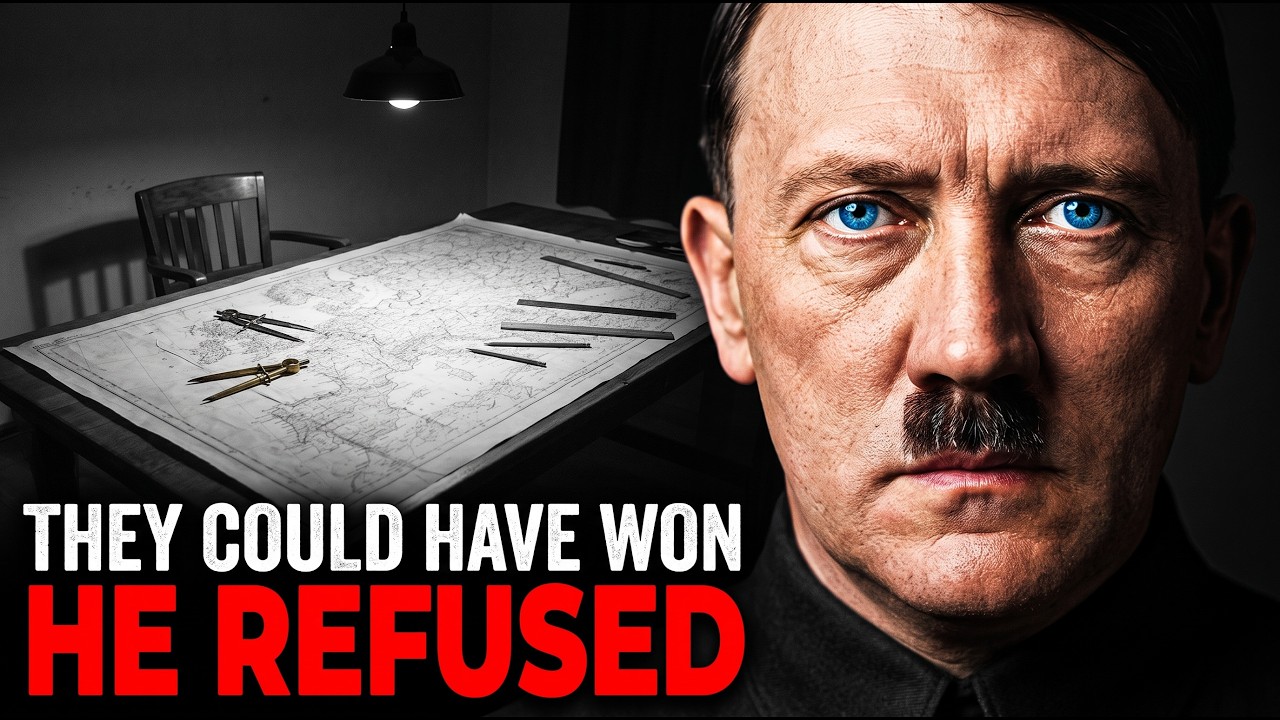
What actually happened was that Hitler refused to commit the Panzer reserves to either plan, insisting on personal control and then delaying their commitment fatally on D-Day itself. When Rundstedt finally recognized the impossibility of the situation and was asked by Wilhelm Keitel what Germany should do, he reportedly responded, “Make peace, you fools. What else can you do?” He was immediately dismissed.
Georg von Küchler commanded the 18th Army and later Army Group North. Army Group North’s primary objective in Operation Barbarossa was the capture of Leningrad. In the autumn of 1941, German forces came remarkably close. The city was cut off from land resupply, its population facing starvation. Serious historians argue Leningrad could have been taken in late 1941 if forces directed there had been given consistent priority and if Hitler had not repeatedly diverted units away.
Küchler was promoted to field marshal in 1942 and continued commanding through the terrible siege that would eventually last 900 days. By early 1944, with the Red Army advancing and the siege line becoming untenable, Küchler recognized the necessity of a strategic withdrawal. Hitler refused. When Küchler persisted, Hitler relieved him.
Küchler was arrested by the American army and tried in the High Command Trial. He was found guilty and sentenced to 20 years in prison, later reduced to 12 years. He was released in February 1953.
Wilhelm Ritter von Leeb presents one of the most morally complex cases among the senior commanders. He was a Catholic conservative who had expressed private reservations about aspects of National Socialist policy. But like most senior officers, he ultimately served the regime he had private doubts about. On March 30, 1941, he was among over 200 senior officers who attended a speech in which Hitler detailed his vision for an ideological war of annihilation against the Soviet Union. Whatever private reservations Leeb may have had, he heard those orders and then carried them out.
During Operation Barbarossa, Leeb led Army Group North. His forces were implicated in war crimes against civilians, cooperating closely with SS Einsatzgruppen responsible for mass executions. Leeb was also involved in transmitting the Barbarossa Decree, which authorized the killing of Soviet political commissars and the harsh treatment of prisoners of war.
In January 1942, Leeb requested that Hitler either grant him autonomy or relieve him. Hitler chose to relieve him. At the High Command Trial, his defense portrayed him as a humane soldier who had not seen or transmitted criminal orders. The court convicted him of transmitting the Barbarossa Decree but sentenced him to only three years, effectively time served.
Franz Halder, chief of the army general staff from 1938 to 1942, was in many ways the intellectual backbone of German army planning. His famous war diary, kept in private shorthand, has become one of the most important primary sources for understanding German military planning. It reveals with devastating clarity the growing chasm between professional military assessment and Hitler’s operational directives.
Halder had been peripherally involved in early planning for a coup against Hitler in 1938 during the Czechoslovakia crisis. The Munich Agreement ended those discussions. His diary entry for August 11, 1941, during the great strategic debate over Moscow versus the south, is remarkable in its controlled professional anguish. He documented Hitler’s decision to divert forces and noted the professional consensus that this was a catastrophic error. He could record it. He could not stop it.
Halder’s relationship with Hitler deteriorated throughout 1941 and 1942 as the general staff’s predictions of Soviet resilience proved accurate and Hitler’s predictions of Soviet collapse proved wrong. By September 1942, with the Stalingrad campaign developing into exactly the kind of overextended disaster the general staff had warned about, Halder was dismissed. He was arrested after the July 20 plot and imprisoned in Dachau concentration camp for the remainder of the war.
Erwin Rommel’s story provides some of the most compelling evidence for what might have been achieved with consistent operational freedom. He commanded the Afrika Korps from 1941 to 1943, and his campaigns there display both the extraordinary capabilities of the German professional military and the fatal constraints Hitler’s strategic decisions imposed.
By mid-1942, Rommel had driven to within 60 miles of Alexandria and seemed on the verge of breaking through into Egypt. But Rommel consistently argued that the Afrika Korps was being strategically starved. He needed more tanks, more fuel, more ammunition, more infantry. The resources being committed to North Africa were never sufficient to convert tactical successes into strategic decision.
What might have happened if Rommel had been given what he asked for? A successful breakthrough into Egypt in the summer of 1942 would have placed German forces in control of the Suez Canal and potentially the entire Middle Eastern oil supply. Instead, Rommel ran out of fuel and was eventually driven back by Montgomery’s better-supplied Eighth Army at El Alamein in October and November 1942. The resources that might have won North Africa were being consumed in the Stalingrad disaster.
Rommel was implicated in the July 20, 1944 assassination plot. The extent of his actual involvement remains debated, but what is not debated is that he was considered by the conspirators to be someone who might cooperate with a post-Hitler regime. The fact that one of Germany’s most celebrated commanders had by 1944 concluded that Hitler needed to be removed tells us something profound about how thoroughly Hitler had alienated even his most admired military servants. Rommel was given the choice between a public trial and suicide in October 1944. He chose suicide and was buried with full military honors.
Karl Dönitz occupies a unique position because he commanded Germany’s submarine fleet and prosecuted what was arguably the most strategically important campaign Germany fought: the Battle of the Atlantic. Between 1940 and 1943, German U-boats sank millions of tons of Allied shipping. Dönitz had argued since before the war that submarine warfare offered Germany its best strategic lever against Britain. He had written analyses demonstrating that with 300 operational U-boats he could strangle British trade.
He never got 300 boats. The German naval building program prioritized surface ships, particularly the great battleships Hitler personally found more glamorous. When war broke out in September 1939, Dönitz had only 57 U-boats, and only 22 suitable for Atlantic operations. If Dönitz had been given his 300 boats from the beginning, would the Atlantic battle have been won before Allied anti-submarine technology turned the tide? Many naval historians believe a sustained campaign with the forces Dönitz requested might well have produced losses Britain could not sustain.
Albert Kesselring’s defensive campaign in Italy from 1943 to 1945 is considered one of the masterpieces of defensive operational art in modern military history. The Allied landings in Sicily in July 1943 and the invasion of the Italian mainland in September were supposed to knock Italy out of the war quickly. What actually happened was that Kesselring’s skillful use of Italy’s mountainous terrain allowed a relatively small German force to hold a much larger Allied army at bay for nearly two years.
The Gothic Line, the Winter Line, the Gustav Line, the battles for Monte Cassino that dragged on for months despite enormous Allied firepower advantages—all represent Kesselring’s professional ability to extract maximum defensive value from minimum resources. A German military machine directed by professional competence would not necessarily have won the war, but it would almost certainly have prolonged it significantly on the defensive.
Wilhelm Keitel, as chief of Hitler’s personal military staff, represents the most damning case against the proposition that the generals could have run the war better. His fellow officers called him “Lakeitel,” a pun on the German word for lackey. He was seen by serious professional soldiers as someone who had traded military professionalism for personal proximity to power.
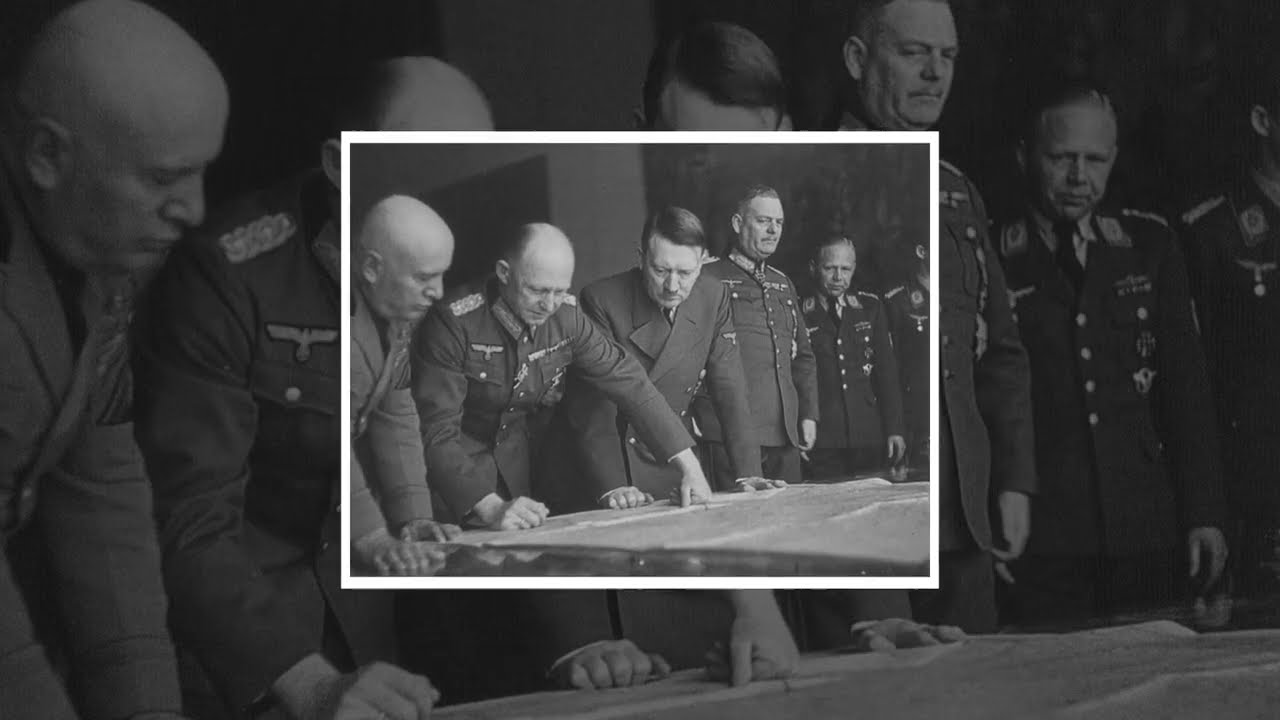
Keitel simply obeyed. His role was to transmit Hitler’s decisions and provide them with whatever institutional legitimacy his signature could lend. Unlike Brauchitsch, Manstein, Guderian, Halder, and Rundstedt, who at various points pushed back or requested to be relieved, Keitel transmitted orders without recorded professional objection. At Nuremberg, he accepted responsibility for his actions. He was found guilty and hanged on October 16, 1946.
Alfred Jodl, chief of the operations staff within the OKW, was intellectually formidable, personally loyal to Hitler, and capable of both professional military analysis and political accommodation. He was not simply a Keitel-style yes-man. He had genuine strategic insights. But he was also willing to transmit and justify orders that his professional judgment must have recognized as indefensible.
The primary accusations tied to Jodl’s name were his endorsement of the Commando Order and the Commissar Order. The Commissar Order mandated the immediate execution of Soviet political officers upon capture. The Commando Order mandated the summary execution of Allied special operations forces regardless of whether they were in uniform. Jodl pleaded not guilty but was found guilty on all four counts and hanged in Nuremberg prison on October 16, 1946.
Ewald von Kleist commanded the First Panzer Group during the invasion of France and led some of the largest tank battles in history during Operation Barbarossa, including the encirclement of Soviet forces at Uman and Kiev. His view of the Soviet military evolved dramatically. He later stated, “From the very beginning, the Russians proved themselves first class warriors. Our successes in the first months of the war can be explained by better training. Having gained combat experience, the Russians became first class soldiers, and they fought with exceptional perseverance.”
In 1942, Kleist was appointed commander of Army Group A during the German offensive into the Caucasus. The campaign faltered due to overextension and fierce Soviet resistance. By early 1943, the Germans were forced to retreat. Kleist was dismissed by Hitler on March 30, 1944. After the war, he was captured by Allied forces, handed over to Yugoslavia, then extradited to the Soviet Union. He died of heart failure at Vladimir Central Prison on November 13, 1954.
The German concept of *Auftragstaktik*, or mission-type tactics, deserves particular attention. The concept held that commanders at every level should be given clear objectives and then trusted to find the best way to achieve them using their own judgment and initiative. Orders should specify what needed to be accomplished, not how to accomplish it. This was explicitly contrasted with the French and British systems, which tended toward more prescriptive orders.
General Günther Blumentritt described George Patton as “the most aggressive Panzer general of the Allies” and noted that his operations impressed them enormously, “probably because he came closest to our own concept of the classical military commander.” The Germans recognized and respected the Auftragstaktik approach wherever they encountered it because it matched their own professional philosophy.
Now imagine this system operating in reverse. Imagine the German military being directed by commanders trained in Auftragstaktik who trusted subordinates to execute broad strategic directives—rather than being directed by a man who issued enormously detailed operational orders from a headquarters hundreds of kilometers from the front and fired commanders who adapted those orders to battlefield realities.
Fedor von Bock commanded Army Group Center during the opening of Barbarossa. In the autumn of 1941, his army group was executing Operation Typhoon. The operation began promisingly with two massive encirclements that captured over 650,000 Soviet soldiers. But the autumn rains turned roads to impassable mud, halting the advance for crucial weeks. When the ground froze in November, German troops were fighting without adequate winter clothing against a Soviet defense stiffening by the day.
Bock pressed the attack far beyond what his professional judgment told him was sustainable, partly because he genuinely believed Moscow might fall and partly because he understood that halting would result in his dismissal. His divisions reached points where they could see Moscow’s suburbs through binoculars. Then the Soviet counteroffensive struck.
Hitler’s practice of dismissing commanders who told him unwelcome truths did not produce commanders willing to be honest. It produced commanders who told him what he wanted to hear or pressed attacks they privately believed futile in order to keep their jobs. The command system was systematically deprived of accurate information at precisely the moments when accurate information was most critical.
The Stalingrad disaster deserves extended consideration because it represents the single most avoidable strategic catastrophe in German military history. The fundamental problem began with planning for Case Blue, the German summer offensive of 1942. The offensive was given two simultaneous objectives: the capture of Stalingrad and the capture of the Caucasus oil fields. German professional planners recognized the army did not have sufficient forces to prosecute both objectives simultaneously. They argued for concentrating on one, completing it, then redirecting forces. Hitler refused.
As German forces approached Stalingrad and became embroiled in intense urban fighting, Sixth Army commander Friedrich Paulus requested permission to adjust positions and conserve forces. Professional judgment indicated Stalingrad itself was of limited strategic value compared to the oil fields. Hitler refused. When the Soviet counteroffensive struck in November 1942, cutting off the Sixth Army, Manstein argued for a breakout. Paulus requested permission to break out before the encirclement solidified. Hitler refused both.
The airlift required to sustain the Sixth Army would have needed roughly 750 tons of supplies per day. The maximum the Luftwaffe ever delivered was 530 tons in a single day, and the average was far lower, often under 100 tons. The Sixth Army starved, froze, and was ground down. Manstein’s relief operation drove to within 50 kilometers of the Sixth Army’s perimeter before stalling due to insufficient forces. By the time Hitler accepted it was hopeless in February 1943, over 90,000 survivors were surrendering. Most would die in Soviet captivity.
The Stalingrad catastrophe had consequences beyond immediate military losses. It was the first major German defeat publicly acknowledged within Germany, and it shattered the myth of German invincibility. The experienced officers, NCOs, and soldiers lost could not be replaced with equivalent quality.
The July 20, 1944 conspiracy provides the clearest direct evidence of what at least some German officers thought should have been done. The conspirators included former chief of staff Ludwig Beck, Klaus von Stauffenberg, who planted the bomb, Henning von Tresckow, and many others. Their plan was not simply to kill Hitler but to replace the Nazi regime with a conservative government that would negotiate peace with the Western Allies before the Soviet Union could overrun Germany.
The bomb placed by Stauffenberg at the Wolf’s Lair on July 20, 1944 did not kill Hitler. The subsequent repression was swift and devastating. More than 7,000 people were arrested, and close to 5,000 were executed. The executions were carried out with deliberate brutality, with some victims hanged from meat hooks.
The conspiracy tells us that by 1944, a significant number of German officers had concluded that Hitler’s direction of the war was so catastrophic that his removal was necessary to save Germany from complete destruction. These were not men who had opposed the war or who had moral objections to the conquest of Poland or France. Most had served loyally through the years of German victories. What drove them to resistance was the accumulating evidence that Hitler’s military judgment was leading Germany to annihilation, combined in many cases with a growing recognition that the crimes being committed in Germany’s name were morally intolerable.
The window in which a professional military takeover might have redirected the war had probably closed well before July 1944.
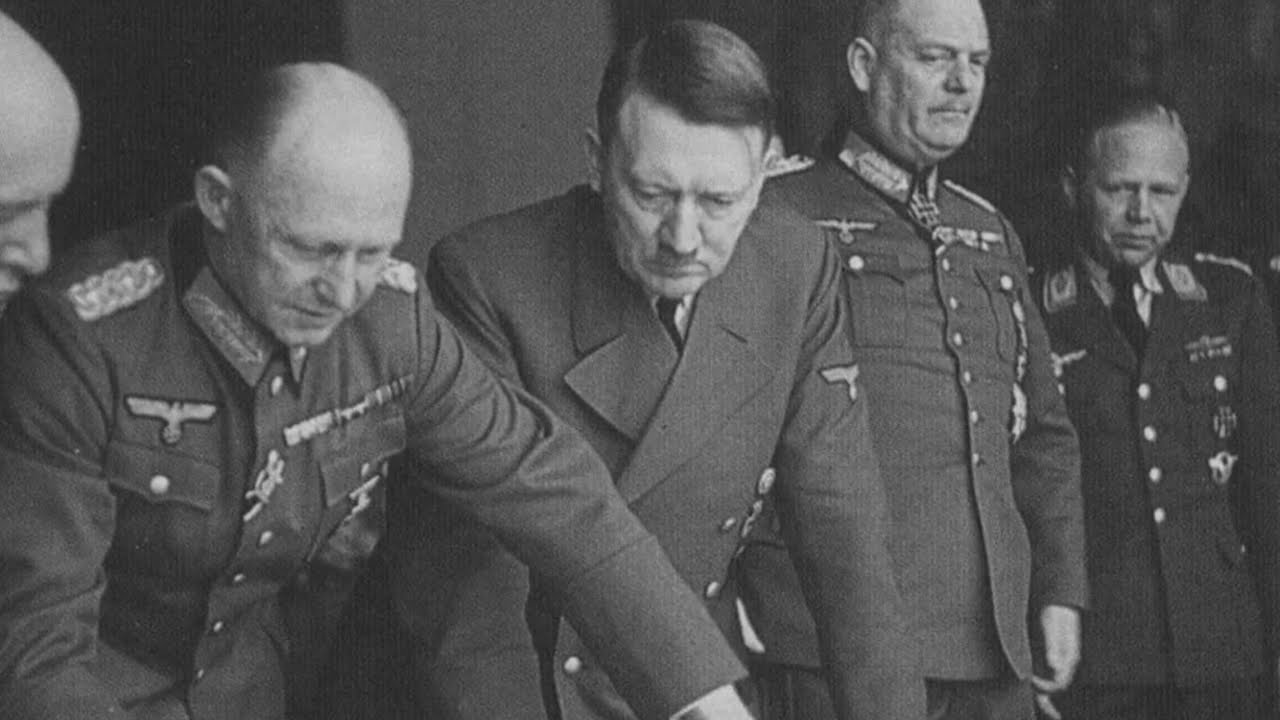
Ferdinand Schörner is in many ways the dark mirror image of the generals celebrated for professional integrity. Where Manstein was respected by opponents as a military genius, Schörner was feared by his own troops as a man who enforced discipline through terror. Where Guderian argued with Hitler on professional grounds, Schörner provided Hitler with exactly the kind of fanatical political reliability the Führer prized above professional judgment.
Schörner was personally responsible for the execution of numerous German soldiers for offenses ranging from desertion to defeatism. He drove through his area of command in a staff car, personally checking that every soldier was at his post, and had men shot on the spot if he found them absent without acceptable explanation. His troops feared him more than they feared the enemy.
Hitler ultimately chose political reliability over professional quality in his senior commanders, and the military results were precisely what his better professional advisers had warned would follow. By 1944 and 1945, the German army was being commanded at the senior level by a combination of exhausted professionals operating under impossible constraints and ideological loyalists whose main qualification was their willingness to follow any order.
Guderian’s return as chief of the army general staff in July 1944 represented the last moment at which genuinely professional military advice was being regularly inserted into the highest levels of German strategic decision-making. His situation was essentially impossible. He was trying to insert professional military judgment into a decision-making process designed to exclude it, in circumstances so desperate that no amount of professional skill could reverse the fundamental balance of forces.
Guderian consistently argued for strategic withdrawals that would shorten the front and free reserves for counterattacks. He argued against Hitler’s “fortress” policy, which designated cities as fortresses to be held to the last man regardless of military consequence. He argued with increasing desperation in January 1945 that the situation was militarily catastrophic. Hitler overruled him consistently on every major point. Guderian was finally dismissed in March 1945.
We must be careful not to romanticize the generals’ professional competence in a way that separates it from the causes they were serving. A Germany that fought more effectively under professional military direction would have extended the war. Extended war meant extended occupation of conquered territories. Extended occupation meant extended implementation of the Holocaust and the other Nazi policies of mass murder being carried out as the Wehrmacht fought.
A professionally superior German military was not a morally superior German military. The crimes of the Third Reich were not side effects of Hitler’s military incompetence. They were the purpose of the war as Hitler conceived it. The same professional military competence that might have produced better operational outcomes for Germany was the instrument through which those outcomes served the purposes of one of history’s most monstrous regimes.
When we admire Manstein’s operational art or Guderian’s armored doctrine, we must simultaneously remember that the battles they were fighting were intended to conquer territory in which millions of people were being murdered, enslaved, and starved. The supply lines that Guderian’s Panzer armies needed to maintain mobility were sharing road and rail capacity with the transports carrying Jews to the death camps in the east.
Several of the generals discussed were aware of these realities to varying degrees. Manstein in his post-war memoirs maintained he had not known about the Holocaust. Historians have disputed this claim extensively, pointing to orders that passed through his headquarters and testimony suggesting awareness was more widespread than the generals admitted. The Wehrmacht and the SS were operating in the same theater, sharing the same administrative infrastructure, and the crimes of the SS were not invisible to the army operating alongside them.
The honest answer to whether professional military management would have produced a German victory is almost certainly no—at least if victory is defined as the complete conquest of the Soviet Union and the establishment of German hegemony over the Eurasian continent. The resources required were simply beyond Germany’s reach regardless of the quality of its military management.
But a different kind of victory—a negotiated peace that preserved Germany’s 1939 or even 1940 borders, a forced stalemate that left Germany in control of its conquests—was at various points a realistic possibility that Hitler’s interference foreclosed. The critical window was almost certainly the autumn of 1941. If German forces had driven to Moscow with the concentrated effort professional judgment recommended and taken the city before winter, the political shock to the Soviet system might have been sufficient to force Stalin to the negotiating table or trigger internal political collapse.
We will never know if Stalin would have collapsed, negotiated, or simply moved the capital and continued the war. What we do know is that Hitler’s decision to divert forces in August 1941 foreclosed the possibility of finding out.
The second critical window was the period from spring through summer 1943 following the Stalingrad disaster. The debate over the Kursk salient is a perfect microcosm. Manstein wanted to attack immediately in the spring before the Soviets fully consolidated. Hitler delayed until July, insisting on waiting for new Tiger and Panther tanks. By July, the Soviets had built one of the deepest defensive systems in military history. The German attack failed with enormous losses. After Kursk, the initiative on the Eastern Front passed permanently to the Soviets.
The post-war careers of the surviving generals vary enormously. Some, like Manstein, maintained until the end that they had been soldiers doing their professional duty, unaware of or unable to prevent the crimes committed in the name of the regime they served. The historical verdict on most of them is that they knew more than they admitted, that their capacity to resist or obstruct criminal orders was greater than they acknowledged, and that their post-war claims of ignorance served their own interest in avoiding accountability.
Klaus von Stauffenberg represents the answer that military professionalism in its highest form demanded but that most of his colleagues could not provide. He had been severely wounded in North Africa in 1943, losing his right hand, two fingers of his left hand, and his left eye. He came through that experience with a hardened conviction that Hitler had to be removed. He placed the bomb under the map table on July 20, 1944, flew back to Berlin believing Hitler was dead, and began implementing Operation Valkyrie before learning Hitler had survived. He was shot in the Bendlerblock courtyard with three co-conspirators in the early hours of July 21, 1944.
The legacy of the July 20 conspiracy for the post-war German military is profound. The officers who formed the conspiracy became the moral foundation on which the post-war West German military chose to build its institutional identity. The Bundeswehr’s founding documents explicitly invoke the tradition of July 20 as its moral inheritance, deliberately choosing to identify with the resistors rather than the loyalists.
The answer that emerges from this examination is not that the German generals were the good guys constrained by a bad leader. It is that professional military competence and political and moral recklessness are a particularly dangerous combination because the competence enables the recklessness to achieve results it could not achieve on its own. Germany’s astonishing military victories of 1939 and 1940 were genuine achievements of professional military art. They were also the enablement of everything that followed: the Holocaust, the murderous occupation of Eastern Europe, the starvation of millions of Soviet prisoners of war.
The tragedy of the German officer corps in World War II is not simply that they were constrained by a bad leader from doing their professional jobs. It is that doing their professional jobs well in the service of the regime they served was itself a moral catastrophe, and that the highest expression of their professional identity, the July 20 conspiracy, came too late and failed.
The answer to the question of what would have happened if the generals had run the war after 1940 is that it would have been a better war from Germany’s military perspective and a worse one from humanity’s moral perspective. Germany would have fought more effectively. The regime fighting that war more effectively would have continued in parallel to implement one of history’s worst crimes. Professional military competence in this case was not a moral good. It was a moral complication.