In the 1980s, American horror became the genre’s most profitable product, but also its most heavily censored. Ratings boards demanded cuts to avoid the X rating that closed theaters and newspaper ad pages, while British prosecutors pursued distributors of films dubbed “video nasties. ” One distributor served real prison time for releasing a single uncut film. Audiences rarely saw what they thought they were watching.
Much of the violence had already been removed before the projector rolled. The decade’s loudest controversy arrived at Christmas in 1984. Tristar opened “Silent Night, Deadly Night” on November 9th. The premise—a man traumatized as a boy returns in a Santa suit to punish the naughty with an axe—outraged before most had seen a frame.
The reaction spread within a week. In Milwaukee, Kathleen Eberhart founded “Citizens Against Movie Madness. ” By November 12th, nearly 200 protesters gathered outside a Brooklyn theater, including a priest holding signs like “Santa’s not a hitman. ” The use of a children’s symbol gave the outrage unusual moral clarity.
Television critic Jean Cisco read the producers’ names on air and called the film sick. Mickey Rooney condemned it publicly. Tristar pulled its ad spots by November 15th and removed the film from theaters entirely nine days later. The cuts made before release to avoid an X rating had bought the studio nothing.
The following May, Aquarius Films re-released the picture, marketing the scandal itself. The film that lasted two weeks in studio hands found a longer second life as “the movie that shocked America. ” The protesters had unintentionally written its advertising. The British Board of Film Classification took a stranger route with “The New York Ripper.
” Its director, James Ferman, refused to give the Italian giallo a cinema certificate and instructed the distributor to send the print back to Italy rather than negotiate cuts. An obscenity prosecution was a real risk, and exporting the film sidestepped it. Legend later claimed the reels were escorted out of Heathrow under police guard. The film followed a killer who taunted police in a duck-like voice while murdering women in Manhattan.
One murder sequence became the reason most cited for keeping it off British screens for nearly two decades. When Vipco finally guided the film past the board in 2002, 22 seconds of that sequence were still removed. American prints lost around four minutes, mainly targeting racial slurs while leaving violence largely intact. Australia, Norway, and West Germany also kept the film effectively unavailable for years.
The director’s original version was never fully reassembled for the public. In the early 1980s, a cheap Utah slasher called “Unhinged” appeared on pre-certificate video shelves in Britain. By October 1983, the Director of Public Prosecutions placed it on a list of films pursued as obscene. The Video Recordings Act of 1984 made renting or selling it legally impossible, and it vanished for 24 years.
The film had no major studio behind it and no way to appeal. It resurfaced legally in Britain in 2007, issued complete by the label Film 2000. The certificate it received was a 15, the mildest adult rating available. Reviewers agreed its violence was genuinely mild, far from the atrocity its reputation promised.
Its outlaw status had been manufactured entirely by the alarm around it. “The Driller Killer” sat on the DPP’s list in a position that made little sense. The board had passed it for British cinemas without cuts in 1983. The prosecution attached only to the video release.
Police seized tapes in raids alongside far more notorious titles, including one in Wigan in 1984. The DPP quietly dropped the film from its list in May 1985, but officers confiscated copies again that October as though the correction had never been made. A legal complete release did not arrive in Britain until 2004, more than 20 years after the cinema version had played without objection. Most of the killings in the film happen offscreen or in shadow.
For a picture hauled into police raids for years, it spends much of its running time declining to show the violence it was prosecuted for. “Maniac” drew condemnation from critics Jean Cisco and Roger Ebert, who called it contemptible. Director William Lustig had engineered that reaction in advance. He knew the film’s signature violence—a killer who takes trophies from his victims—would draw an automatic X rating.
So he never submitted it to the ratings board, releasing it with no rating and the line “For adults only. ”
Feminist groups picketed screenings, anger fixed on the poster showing Joe Spinell holding a knife and a woman’s head. Britain’s board refused a cinema certificate in 1981 and refused again in 1998. Australia banned the film outright for 11 months before an edited version earned an R in 1982.
Britain did not get a legal uncut version until 2002. “Maniac” never actually appeared on the DPP’s list of prosecuted nasties. Police rounded up copies during the panic anyway, acting on its reputation rather than any court ruling. In Britain in those years, a strong rumor about a film was reason enough to come through the door.
“Pieces” opened in American theaters in October 1983 with no rating. The Spanish production was assembled with more enthusiasm than competence. In Britain, it landed on the DPP’s Section 3 supplementary list, a legal limbo where police could seize and destroy copies without any prosecution or conviction. Nobody went to court, and there was no verdict to appeal.
The film was simply unsafe to stock. Arrow released it on British DVD in September 2011, completely unedited with an 18 certificate. The American campaign leaned into spectacle with one of the most honest pieces of marketing in horror history: “You don’t have to go to Texas for a chainsaw massacre. ”
Somewhere in West Germany in the early 1980s, a version of “The Prowler” existed with virtually no slashing left in it.
The local release removed the sequence revealing the killer’s identity and replaced long passages of the score with field recordings of birds and crickets. The film was carved up in nearly every market it entered. In the States, the MPAA forced cuts for an R, but the trimmed American version only appeared commercially on Canadian VHS. Every domestic home video edition reverted to the longer unrated cut.
American and Canadian renters were quietly watching different films. The British release was heavily cut and renamed “Rosemary’s Killer,” losing a pitchfork murder and several graphic moments. The board did not wave those cuts until Optimum’s DVD in 2007. In a London video shop window sat a glass jar with a real human brain floating in preserving fluid.
Passersby were invited to guess its weight. The promotion existed to move copies of a grimy spree-killer film released in Britain as “Nightmares in a Damaged Brain. ” Among the people who stopped to look were the police. The MPAA had branded it with an X in the United States.
The British board asked for about 48 seconds of cuts. David Hamilton Grant’s label, World of Video 2000, put out the original print regardless. Officers seized more than 200 tapes in raids across London and Leeds. The case moved to a full prosecution under the Obscene Publications Act of 1959.
In February 1984, David Hamilton Grant was sentenced to six months in prison. He remains the only video distributor in British history ever jailed over one of these films. A separate controversy involved Tom Savini, who publicly denounced a false credit in the film’s American marketing. The film is remembered for something heavier.
It put a man behind bars, a fate no other title on this list achieved. “The Burning” got into trouble entirely by accident. Thorne EMI handled the British video release and had two versions in its warehouse: the one the board approved with cuts and the original untouched. Through a straightforward mixup, the company shipped the wrong one.
The original print went out onto shop shelves across Britain by mistake. The timing could hardly have been worse. It was Harvey Weinstein’s first production, and the effects were genuinely Tom Savini’s own work. Thorne EMI recalled the tapes and rushed the cut version back into circulation, but the original copies were already loose.
The company was prosecuted in October 1983, and the film was added to the DPP’s list. The board did not pass “The Burning” fully uncut until 2002. The biggest target of all was “Friday the 13th. ” The MPAA forced roughly 11 seconds of cuts to grant Sean Cunningham’s picture its R rating, trimming the killing of the character Annie and the arrow driven through Kevin Bacon’s neck.
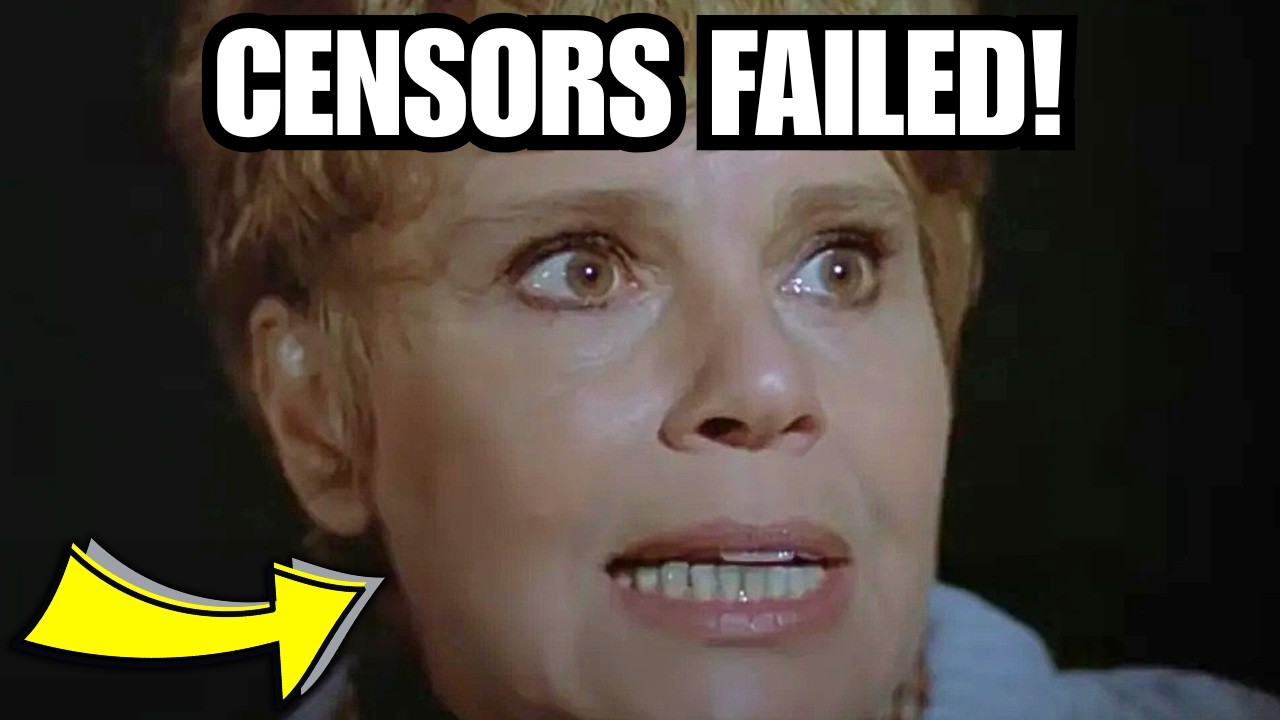
The fight it touched off was anything but small. Critic Gene Siskel awarded the film zero stars in the Chicago Tribune and gave away its ending in print on purpose. He called Cunningham “one of the most despicable creatures ever to infest the movie business” and printed the mailing address of Paramount’s parent company with an open instruction to readers to register their disgust. He also published what he believed to be the home address of Betsy Palmer, the actress who played the killer.
On “Sneak Previews,” Siskel and Roger Ebert argued the film should have carried an X outright and accused the ratings board of leniency. The effort to shame the film out of existence produced the exact reverse. “Friday the 13th” took $39. 8 million at the domestic box office and $59.
8 million worldwide against a budget of just $550,000. The protests, the zero-star reviews, and the printed addresses all poured fuel on the same fire. The surest way to keep a horror film alive, it turned out, was to try your hardest to bury it.