In 1854, the Ottoman Empire signed its first foreign loan agreement with British and French bankers. It was presented as a lifeline during the Crimean War, but it became the first link in a chain of financial dependency that would ultimately destroy the empire without a single invading army conquering its capital. For centuries, the Ottomans had resisted borrowing from Western powers. There was a deep cultural and religious aversion to usury, and a political fear of becoming dependent on Christian Europe.
But when Russia invaded Ottoman territories in 1853, triggering the Crimean War, Sultan Abdulmejid I faced a desperate choice. His treasury was empty, his army needed pay, and his advisors told him there was no other option. The loan terms were predatory. The bonds were issued at a rate of 80, meaning the empire received only 80 pounds in cash for every 100 pounds of debt it assumed.
The bankers kept the difference as commission and risk premium. But the empire had to pay interest on the full 100 pounds. The Ottomans were borrowing money at an extremely high effective interest rate while receiving far less cash than they owed. The war ended in 1856, but the borrowing did not.
The Sultan and the Ottoman elite had tasted easy credit and became addicted. Instead of investing in factories, irrigation, or education, they spent the borrowed money on prestige. The most notorious example was the Dolmabahce Palace, built on the shores of the Bosphorus to rival Versailles. It contained 14 tons of gold leaf, the world’s largest crystal chandelier, Baccarat crystal staircases, and Italian marble walls.
It cost 5 million Ottoman gold lira—a quarter of the empire’s total annual tax revenue—and was financed entirely with borrowed money. By the 1860s, the empire’s finances had become a classic Ponzi scheme. It could not generate enough tax revenue to pay the interest on old loans, so it borrowed new loans to pay the interest on the previous ones. Debt payments consumed 15 percent of the budget in 1860, but by 1870 that figure had risen to over 50 percent.
Half of every dollar collected from a fisherman in Greece or a farmer in Syria immediately left the country to pay bondholders in London. There was no money left for the army, the navy, schools, or infrastructure. The breaking point came in 1873. A financial panic in Vienna spread worldwide, drying up global capital.
European banks stopped lending. At the same time, a catastrophic drought hit Anatolia. Crops failed, livestock died, and the farmers who formed the tax base faced famine. Tax collectors found nothing but dust and corpses.
Revenue collapsed, but debt payments remained fixed. In the summer of 1875, Grand Vizier Mahmud Nedim Pasha looked at the books and realized the game was over. A massive payment to European bondholders was due in October, and there was no cash to pay it. A new loan was attempted, but the markets were closed.
No one would lend a single cent to the “sick man” of Europe. On October 6, 1875, the Ottoman government issued the Ramadan Decree, announcing it would halve its debt payments. Half would be paid in cash, the other half in promissory notes promising 5 percent returns. In diplomatic language, this was a moratorium.
In financial language, it was a default. The Ottoman Empire was bankrupt. The reaction in Europe was furious. Millions of middle-class investors in Britain and France had bought Ottoman bonds for their high yields.
Vickers in England and shopkeepers in Paris watched their savings evaporate overnight. Newspapers screamed that the Turks were thieves and swindlers. The diplomatic support Britain and France had given the Ottomans against Russia evaporated. This financial weakness invited immediate aggression.
Seeing the Sultan broke and friendless, Russia declared war in 1877. The Russian-Turkish War was a disaster for the Ottomans. Their army fought bravely but was unpaid, undersupplied, and demoralized. The Russians marched to the outskirts of Istanbul.
The empire was forced to sign a humiliating peace treaty ceding vast territories on the Balkans and the Caucasus. But the most devastating clause was financial. The Russians imposed an enormous war indemnity, demanding over 800 million francs as punishment. The empire now owed hundreds of millions of pounds to British and French bankers, on which it had already defaulted, plus a massive war debt to the Russian Tsar.
Its total debt was far greater than the entire value of its economy. The empire was insolvent, defenseless, and had lost its credit, territory, and dignity. Sultan Abdul Hamid II waited for the European powers to divide his land. But the British and the French had a different idea.
They did not want to conquer the Ottoman Empire territorially. That would be messy and expensive, requiring armies and administration. Instead, they would conquer it financially. By annexing the Ottoman economy, they could extract wealth indefinitely without the hassle of governing the population.
In 1881, representatives of the European bondholders arrived in Istanbul. They were not generals, they were bankers. They carried briefcases, not swords. They dictated the terms of surrender, and they did not ask for land—they asked for cash flow.
The resulting Decree of Muharram, issued in December 1881, created an organization unique in the history of imperialism: the Ottoman Public Debt Administration, or OPDA. The OPDA was not a government agency. It was a corporation managed by a board representing the banks of Britain, France, Germany, Italy, and Austria. Its headquarters was a massive, fortress-like building in Istanbul that towered over the city—a physical symbol of who was truly in charge.
The decree transferred the empire’s most valuable revenue streams directly to this foreign enterprise. Taxes on silk, salt, fisheries, alcohol, tobacco, and stamp duties were all handed over to European bankers. The OPDA built its own bureaucracy, employing more than 5,000 tax collectors who wore uniforms, carried weapons, and answered not to the Sultan but to the board of directors. They spread across the empire, from the mountains of Macedonia to the coast of Syria, collecting the wealth of the Ottoman people.
When a fisherman caught a fish in the Bosphorus, part of his profit went to a bondholder in London. When a farmer harvested silkworm cocoons in Bursa, the profit went to a banker in Paris. It was a state within a state. The OPDA was remarkably efficient, far more than the corrupt Ottoman bureaucracy.
They built warehouses, improved salt mines, and distributed disease-free silkworm eggs. They actually grew the economy—but for the benefit of creditors, not citizens. Between 1881 and 1914, the OPDA collected about one-third of the Ottoman Empire’s total revenues. One out of every three coins generated by the economy was funneled abroad to repay debt.
The Ottoman government was left with scraps to run a vast empire. The debt trap drained money, but it also drained sovereignty. It became the instrument through which European powers manipulated Ottoman foreign policy. And it opened the door for a new player that would lead the empire to its final destruction: Germany.
Kaiser Wilhelm II visited Istanbul and embraced the Sultan, telling the Ottomans that the British and French were parasites who only wanted to bleed them dry. Germany, he claimed, wanted to be a friend and build them up. The Germans proposed the Berlin-Baghdad Railway, a dream of steel connecting the heart of Europe to the oil fields of the Middle East and the Persian Gulf, bypassing the British-controlled Suez Canal. For the Sultan, it seemed like a lifeline.
But who would pay for it? Deutsche Bank became the primary financier. The railway contracts were extortion. They included kilometer guarantees, requiring the Ottoman government to pay German companies a guaranteed profit for every mile of track regardless of traffic.
Crucially, they gave German companies the rights to all oil and minerals found within 20 kilometers of the line. The Sultan had traded the golden handcuffs of the British for the steel chains of the Germans. By around 1910, the Ottoman Empire was in effect a German economic colony. German officers trained the army, German engineers ran the trains, and German banks held the new debt.
Britain and France watched furiously as German influence grew in the strategic Middle East. The debt of the sick man was no longer just a financial problem—it was a source of friction pushing Europe toward the First World War. By 1914, the Ottoman leadership, dominated by the Young Turks movement, realized they were trapped. They knew that as long as the debt existed and the OPDA controlled their finances, they were not a free nation.
When war broke out in Europe, they made a fatal calculation. They joined Germany, believing that if Germany won, they could cancel the debts to Britain and France, abolish the OPDA, and regain financial independence. It was an all-or-nothing gamble. On the day they declared war, one of the first things the Ottoman government did was march to the OPDA headquarters in Istanbul, expel the British and French directors, and stop payments.
For a brief moment, they felt the intoxication of freedom. But the gamble failed catastrophically, and the empire was destroyed. The debt, however, survived. When the Turkish Republic was founded by Mustafa Kemal Atatürk in 1923 after a brutal independence war, the European powers returned with their ledgers.
At the Treaty of Lausanne, Britain and France demanded that the new Turkey repay the debts of the dead empire. They argued that as the successor state, Turkey inherited the land, and so it inherited the mortgage. Atatürk fought hard but knew that Turkey needed to be part of the world economy. He could not start a new nation as a defaulter.
He agreed to pay. The debt was restructured and payments reduced, but the obligation remained. The new Turkish Republic, poor and devastated by war, spent its first 30 years sending millions of dollars abroad to pay off the reckless spending of the sultans of the 1850s. The final payment on the Ottoman debt was made on May 25, 1954—exactly 100 years after the first loan was signed.
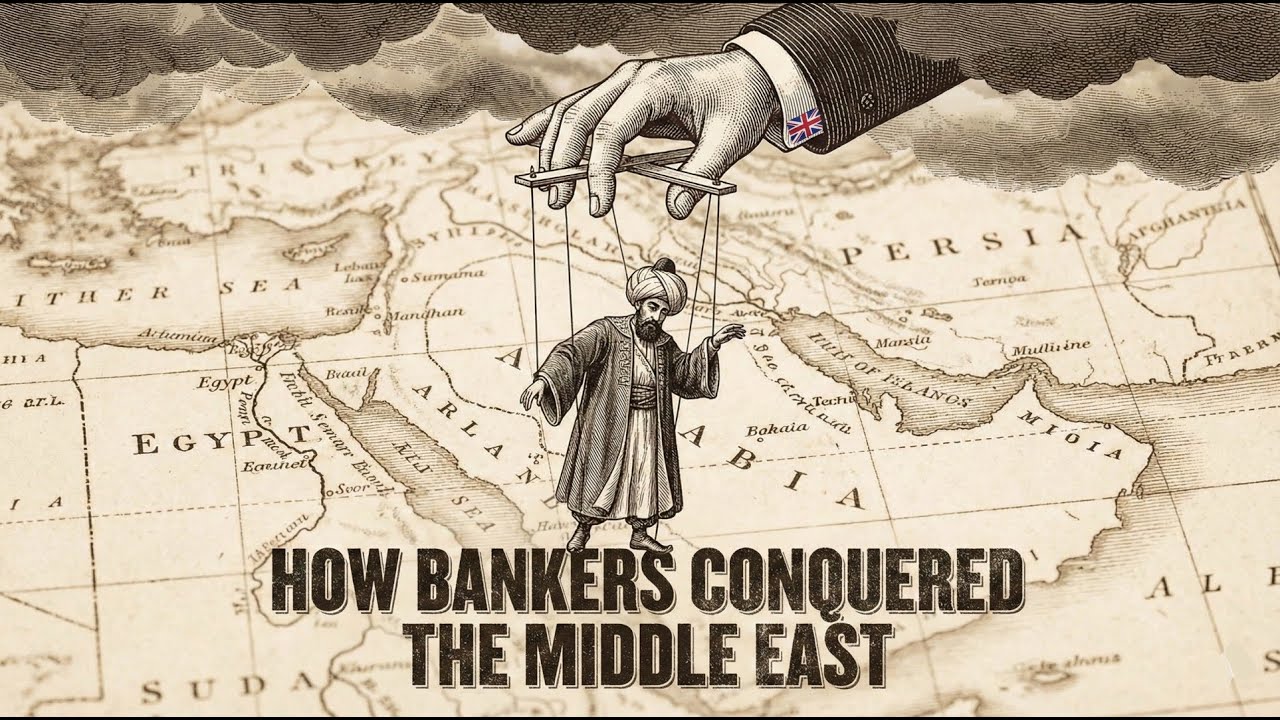
The story of the Ottoman debt trap is a warning about the danger of financial dependency. The Ottomans thought they could import modernity and buy the appearance of a great power with other people’s money. They did not realize that money is never neutral. Every loan is a rope.
Every bond is a chain. Britain and France never needed to conquer Istanbul with soldiers. They simply waited for compound interest to do the work. The sick man of Europe did not die of old age—he was foreclosed upon.
Sovereignty is not just about flags and borders. Sovereignty is about solvency.