The defeat of George Armstrong Custer at the Battle of the Little Bighorn in 1876 is often remembered as a sudden, chaotic collapse. But the outcome was not decided in those final moments. It was set in motion years earlier by a series of decisions, misjudgments, and the survival of one man who history barely acknowledges. A decade before the battle, a Sioux war leader named Gall lay wounded on the northern plains after a confrontation with US troops.
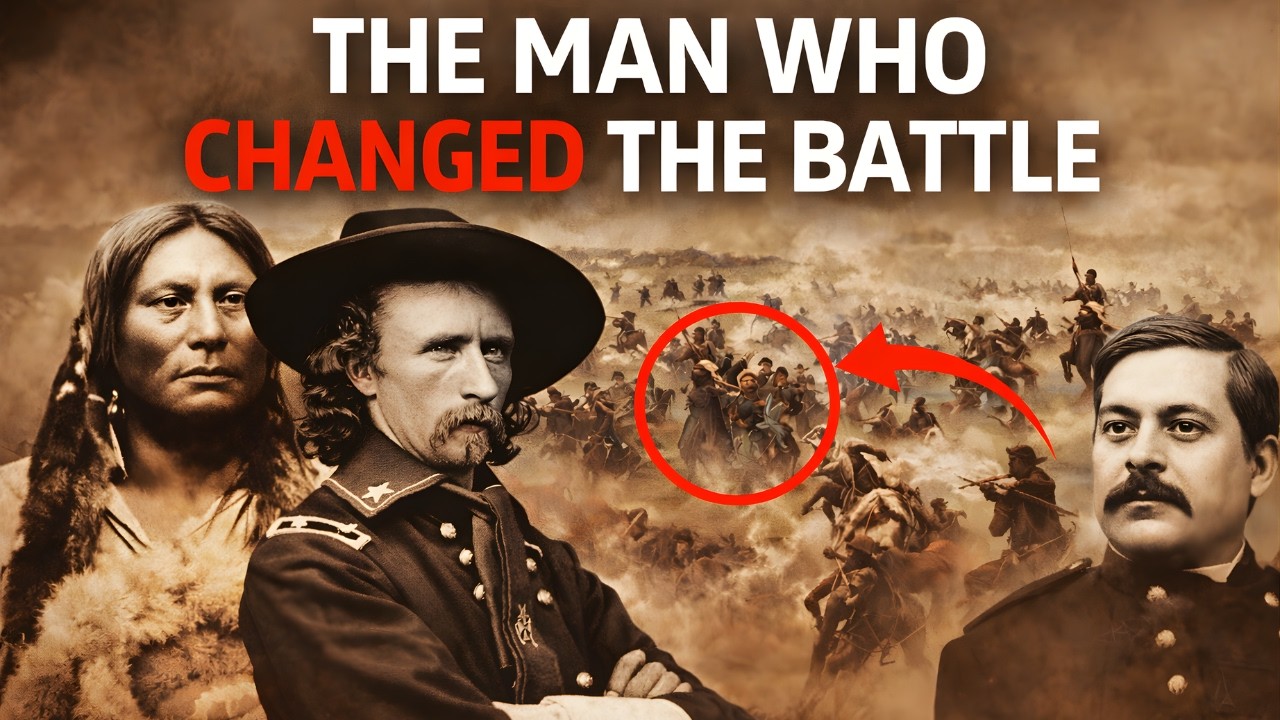
Multiple injuries left him motionless, and soldiers believed the threat was neutralized. One final action could have ended his life. Instead, an officer intervened and ordered restraint. That single decision allowed Gall to recover and eventually become one of the most decisive battlefield leaders at Little Bighorn.
Gall’s survival did not merely preserve another warrior. It preserved a commander who would coordinate large-scale resistance and direct concentrated force at critical moments. Without him, the engagement in 1876 would likely have unfolded very differently. By the mid-1870s, the northern plains were a zone of escalating tension.
Expansion, broken treaties, and resource competition pushed multiple Lakota and Cheyenne bands into defensive alignment. Leadership within these groups was not a centralized military hierarchy. Influence depended on reputation, proven skill, and the ability to mobilize warriors quickly. Gall had earned that authority through decades of sustained conflict.
The village Custer encountered was not a static encampment. It was a dynamic population center composed of multiple tribes, including Hunkpapa, Oglala, Miniconjou, and Cheyenne. Estimates suggest between 7,000 and 10,000 individuals were present, with a fighting force far larger than Custer anticipated. This was not a scattered group but a concentrated community capable of rapid collective response.
Gall’s personal motivation added another layer of intensity. During the initial stages of the engagement, his family was lost in the chaos triggered by the attack led by Marcus Reno. That moment transformed his role from commander to relentless tactician. He shifted from a defensive posture to aggressive coordination, directing fighters toward the most vulnerable elements of the US force.
A key misconception about the battle involves Sitting Bull. Popular narratives often portray him as the central battlefield commander. In reality, his role was primarily spiritual. He conducted ceremonies and provided symbolic leadership but did not direct tactical movements during the fight.
That responsibility fell to figures like Gall and Crow King. When Custer divided his regiment, he made a decision that fundamentally shaped the outcome. His assumption was based on prior encounters with smaller, less coordinated groups. He expected to surprise and scatter the village.
Instead, his forces encountered a numerically superior and highly responsive opponent. Gall later described how both Reno and Custer were observed long before the attack began. This detail challenges the belief that the element of surprise belonged to the US Cavalry. Indigenous scouts had already identified troop movements and adjusted accordingly.
Early detection allowed for rapid concentration of forces once Reno’s attack began. Reno’s advance was repelled and forced into a defensive retreat. That moment triggered a critical shift. With Reno contained, the full weight of the village’s fighting force turned toward Custer’s isolated battalion.
Contrary to popular imagery, Custer’s command did not reach the river in a decisive charge. It was engaged along the ridges and coulees leading into the valley. Terrain played a decisive role. The broken landscape disrupted formation, limited visibility, and exposed units to envelopment.
Gall’s account emphasizes coordination rather than chaos. Warriors used mobility, terrain familiarity, and cover to apply pressure from multiple directions. Horses were used not only for movement but also as mobile shields. Ammunition constraints forced both sides to adapt, with close-range fighting becoming increasingly common as the engagement progressed.
US troops carried limited rounds, and resupply was disrupted when pack trains lagged behind. Once ammunition ran low, defensive capability weakened rapidly. Indigenous fighters adapted by shifting between firearms, bows, and close-combat weapons. This flexibility created a sustained offensive advantage.
Another overlooked factor is the role of non-combatants. Women and younger members of the village contributed by managing captured horses, redistributing weapons, and maintaining movement across the battlefield. This level of participation indicates a total community response rather than a strictly defined military engagement. Gall estimated that the decisive phase of the battle lasted less than an hour.
While exact timing remains debated, the implication is clear. Once Custer’s force was fully engaged, the outcome was determined quickly. The breakdown was not gradual. It was rapid and irreversible.
A lesser-discussed detail concerns unit cohesion. Evidence suggests that only a portion of Custer’s command maintained organized resistance. Other elements fragmented under pressure, creating isolated pockets that were overwhelmed individually. This breakdown highlights the importance of communication and formation integrity under extreme conditions.
Consider a counterfactual scenario. If Custer had not divided his command, the combined force might have delivered a concentrated attack. Gall himself suggested that the numerical advantage of the village was so overwhelming that even a unified assault would likely have resulted in defeat. However, the scale and duration of the engagement might have differed significantly.
Strategic miscalculation extended beyond the field. US command underestimated both the size and cohesion of the opposing force. Intelligence failures contributed directly to the decision-making process. This was not simply a tactical error.
It was a systemic misreading of the situation. The consequences extended beyond the battlefield. The defeat shocked the United States and intensified efforts to assert control over the plains tribes. Within a year, coordinated military campaigns forced many groups into reservation systems.
In this sense, the battle represents both a peak of indigenous resistance and the beginning of its rapid decline. There is also a professional military lesson that continues to resonate. The integration of reconnaissance, logistics, and command structure determines battlefield outcomes more reliably than individual bravery. Custer’s leadership style emphasized bold action but lacked the support systems to sustain that approach against a prepared opponent.
Gall’s later reflections provide rare insight into the opposing perspective. He described not only the mechanics of the battle but also the emotional and cultural dimensions that drove participation. His testimony challenges simplified narratives and forces a more complex interpretation of the event. In the end, the defeat of Custer’s command was not an isolated incident.
It was the result of accumulated decisions, overlooked intelligence, and underestimated adversaries. It was shaped by individuals like Gall, whose survival years earlier altered the course of history.