By 1996, the spy genre was searching for a new direction. The Cold War was over, the old certainties had vanished, and the heroes who defined the previous era no longer fit the moment. Paramount believed an old television property could fill the gap if someone could pull it forward into a colder, sharper form of suspense. The film that emerged was Mission: Impossible, directed by Brian De Palma and produced by a brand-new company built around its lead actor, engineered around betrayal rather than spectacle.
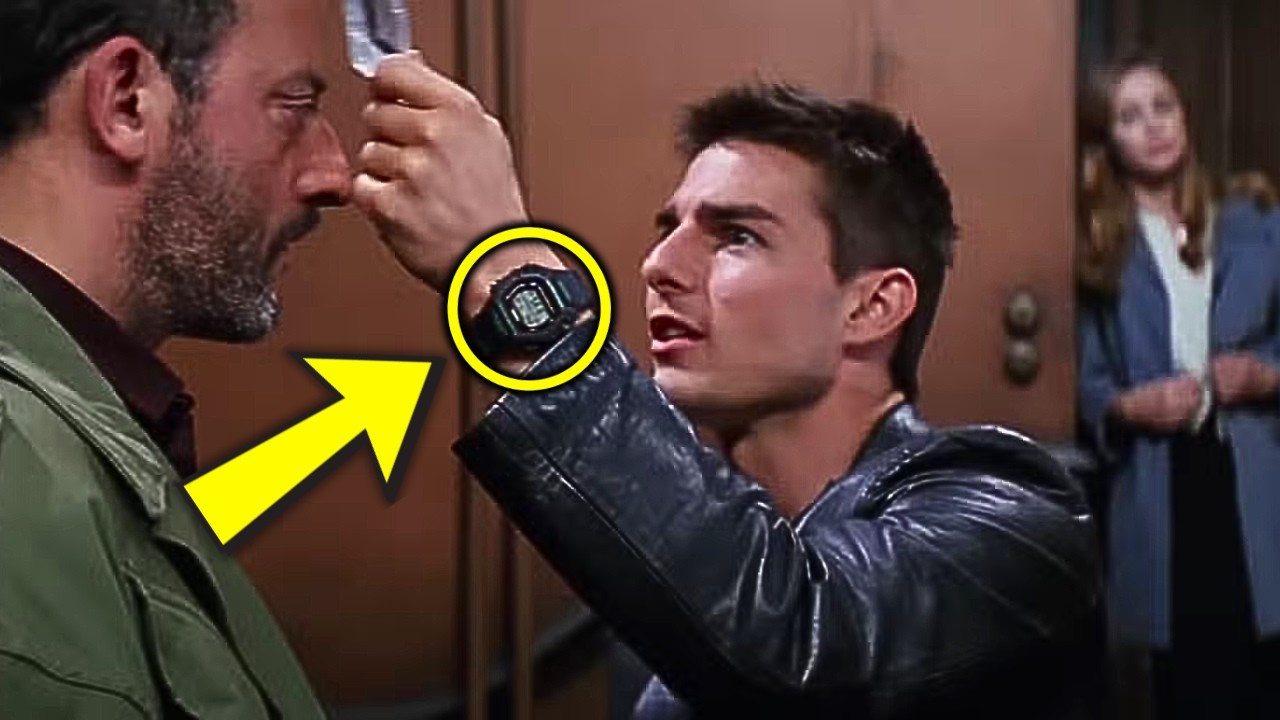
Tom Cruise took the first gamble. On paper, the safer move would have been to continue doing what already worked. Cruise was coming off a decade of star vehicles that had largely chosen themselves, and the easiest path forward was more of the same. Instead, the project he chose to anchor his new production company was a feature adaptation of a 30-year-old television series his audience knew only by its theme music.
Cruise/Wagner Productions, formed with longtime collaborator Paula Wagner, took on the film as its first project. The arrangement was unusual for the era: Cruise was not simply attached as a leading man, but helped shape the concept, the set pieces, and the audience experience from inside the production. The wager was that a movie star could run a blockbuster rather than only front one. Paramount had owned the rights to the original series for more than a decade before cameras rolled, but had nothing to show for them.
Television deals came and went, a few names circled the property over the years, and the recognizable title kept its place in studio inventories, but the gap between owning a brand and actually making it work remained. The studio needed a story that justified the leap from television rhythms to cinematic scale, a tone that did not feel like easy nostalgia, a director willing to take the property somewhere unfamiliar, and a star powerful enough to make a skeptical 1990s audience consider buying tickets for something their parents had watched at home. The post-Cold War era had quietly eroded the scaffolding of the espionage genre. The Berlin Wall was gone, the Soviet Union had dissolved, and the old engine of two blocks facing each other no longer turned.
The answer the film arrived at was new doubts rather than new enemies. Loyalty inside the institution itself became the source of fear. The Impossible Mission Force was no longer a clean machine doing clean work; it was an organization that could turn on its own people, contain moles at the highest level, and disavow agents the moment a mission went wrong. The threat had moved inside the building.
Three of the most respected screenwriters in Hollywood took passes on the script. David Koepp arrived first, brought in to give the project a workable shape. Steven Zaillian followed, fresh off the Academy Award for Schindler’s List, hired to deepen character and clarify the deception at the center of the plot. Robert Towne came in last to polish and restructure while production was already in motion.
Despite the talent involved, pre-production began with significant story problems still unresolved. De Palma was designing the major set pieces—the embassy operation, the Langley vault, the train climax—while the writers tried to work out how the plot connected them. Pages arrived on set with the ink still wet, and scenes were rewritten between takes. The puzzle-box plot, with its triple crosses and slowly tightening trap, reads as the work of a single careful mind when in fact it was an emergency held together by people good enough to make the emergency invisible.
Prague did most of the atmospheric work the script could not. Old stone, narrow streets, and the particular hush of a city still emerging from 40 years of communist rule gave the opening act a personality the writers could not have built from dialogue alone. The crew set up shots on the Charles Bridge before sunrise, framed Old Town Square and Wenceslas Square against winter light, and used the National Museum’s facade for the fictional embassy. Audiences expecting the glossy European tourism of earlier spy films found something colder instead.
The capital of a country that had only just stopped watching its own citizens turned out to be the perfect place to film a story about being watched. George Lucas reportedly told De Palma a structural note about the opening act. As the account goes, the original cut moved too quickly into the embassy mission, and Lucas suggested the audience needed a beat with the team before the team was destroyed. How much weight the note carried in the final shape of the film has never been fully confirmed by the people who would know.
For the first 20 minutes, the picture behaves almost exactly the way longtime audiences expected. A team is briefed, identities are assigned, disguises are checked, and surveillance is set up in a busy public space. Then the entire structure collapses. The team is wiped out in a single sequence, the operation is exposed as a setup, and Ethan Hunt walks out of the embassy alone, disavowed and framed for the deaths of the colleagues he just watched die.
What had looked like a team adventure became a paranoid solo survival thriller without any warning that the genre underneath the audience was about to change. For 30 years on television, Jim Phelps had been the steady center of the franchise—the man who opened the message at the start of each episode, quietly recruited the team, and served as the moral spine of the show. The feature adaptation made him the traitor. The decision was a deliberate symbolic act.
The film was using the most familiar face in the franchise to argue that the old certainties no longer held, and that loyalty inside the institution had become the very thing the audience could not trust. Making Phelps the inside man required reversing the most stable character in the original property and ending the picture with him exposed and killed in the final reel. The Aquarium restaurant scene is one of the quietest in the picture and one of the most dangerous. Across a table, an IMF director played by Henry Czerny calls Ethan Hunt a murderer.
There is no chase, no gunfire, no countdown clock. The threat is built almost entirely out of dialogue and camera angles. The scene gives Ethan information he urgently needs—the team has been wiped out, he is the suspect, he is the only survivor—but it gives it to him in the form of accusation. De Palma frames the exchange in tight, off-balance shots that keep the audience aware of how many people are watching from how many directions.
By the time Ethan triggers the explosive gum to escape, the picture has already made its argument: the most threatening scene in a spy thriller no longer needs to involve a weapon. The restaurant aquarium sequence asked the crew to manage roughly 16 tons of water when the tanks went up in the middle of a controlled set. The shot was Cruise’s idea, pushed forward despite concern about exploding glass and the force of the wave. By the standards of mid-1990s practical effects, it was an unusually ambitious moment for a sequence whose primary job was to get one character out of a chair.
The argument for it was atmospheric: a practical wall of water and shattering glass would tell audiences something about the kind of picture they were watching in a way a digital approximation could not. The willingness to put the lead actor inside the physical danger of his own set piece would harden into a defining principle of the franchise. The self-destructing message, the latex masks, the false identities, and the precision-engineered gadgets were all kept almost unchanged from the original series. The recognizable furniture of the franchise is everywhere.
What changed was the temperature around it. The masks now hide betrayal as often as they hide identity, and the gadget-wielding team can no longer assume the people who sent them are on their side. The most famous scene in the picture is almost completely silent. No music plays during the most demanding minutes of the Langley vault sequence.
The soundtrack reduces itself to small ambient noises—a fan, a breath, the faint creak of a rope under load. In 1996, that was a deeply unusual choice for a summer release. With the music gone, every small sound becomes a potential failure point. A drop of sweat could trigger the floor sensor, a movement against the harness could pull the wire off pitch, and the rat in the duct becomes a near miss.
The audience stops being told how to feel and starts listening for clues the way the character on screen is listening for clues. Cinematographer Stephen Burum gave the picture three different visual personalities. Prague in the opening act is shadowy, ornamented, and old-world. The Langley material breaks that texture entirely: the vault interior is bright, white, and sterile.
The train climax occupies a different register, with sleek metallic surfaces and the increasingly oppressive geometry of a high-speed enclosed space. Each act has its own visual logic, and each visual logic does some of the narrative work that the script leaves implicit. The vault sequence loads roughly five distinct ways to fail onto Ethan Hunt before he touches the floor: temperature triggers, sound triggers, pressure triggers, a technician 10 feet away with line of sight, and a rat moving through the duct. The scene works because the audience understands every constraint before the sequence begins.
Even after Ethan is in position, the room keeps adding rules—a bead of sweat appears, the rat shifts, the technician reaches for a glass. The accumulation of small beats is what generates the breath-holding effect audiences still describe decades later. The most reproduced image in the franchise—Ethan suspended an inch above the white floor of the Langley vault—almost never came together as cleanly as the final cut suggests. Cruise had a stubborn physical problem with the rig: his head kept dipping below the level his face needed to hold, breaking the perfect parallel line between his body and the floor.
The fix when it arrived was small enough to sound apocryphal. The solution placed British pound coins in his shoes, distributed in small numbers to shift the weight balance backward and bring the body line level again. A handful of coins sliding around inside a pair of shoes was the difference between the picture’s signature image and a missing shot. The Langley heist is constructed almost entirely from objects in motion.
There is barely any dialogue and almost no music. A body, a wire, a few tools, and an empty space. Every cut earns its place: the cable, the floor, the knife, the laptop, the technician’s coffee cup. Suspense is generated by what can give you away, not by what can hurt you.
A drop of sweat in this scene is more dangerous than a bullet would be in another picture. The wind across Cruise’s face in the final reel looks like high-speed exposure to genuine moving air, but most of it is not. The bulk of the train climax was photographed at Pinewood Studios on rigs designed to simulate motion while the train itself remained stationary. The apparent speed is a layered composite of practical staging, large fan wind effects, bluescreen photography, and post-production work done by Industrial Light & Magic.
The choices were practical rather than secretive: filming on a genuinely high-speed train would have introduced safety, scheduling, and continuity problems the production could not solve. Alan Silvestri, originally hired to score the film, completed work that was set aside during post-production. The decision was made late in the schedule that the music was not landing as the director and producers wanted, and Danny Elfman was brought in to start again. Elfman built his replacement score against a compressed deadline while honoring Lalo Schifrin’s original television theme.
The Silvestri material has remained largely unreleased and untouched for decades—a complete score that exists somewhere in studio archives without ever having been the music of the film it was written for. Emilio Estevez in 1996 was still recognizable from a decade of leading roles. The choice to use him as Jack Harmon and then kill him in the first major sequence was casting that worked precisely because of the contradiction. Estevez’s name appears nowhere in the opening titles, and his face arrives uncredited.
For viewers who recognized him, the shock was doubled: a famous face was supposed to be a safety signal in a studio picture. Putting Estevez in the team and then erasing him within minutes was the film’s quiet way of warning the audience that no familiar visual signal would be honored. Roger Ebert, writing in the Chicago Sun-Times, said in plain terms that he could not follow the plot. He was not alone.
A significant portion of the contemporary press described the film’s story as over-complicated and deliberately murky. What is interesting looking back is how little that complaint hurt the film’s reputation. The same critics who flagged the confusion also pointed at De Palma’s direction, the Langley sequence, and the suspense craftsmanship as legitimately exceptional. The two judgments coexisted in the same reviews: the plot was hard to follow, and the picture was extremely well made.
Audiences sided with the second observation more than the first. The picture’s eventual theatrical total was $457. 7 million worldwide on a budget that had looked in 1995 like a serious bet rather than an obvious win. The film finished among the top earners of the year, outperformed virtually every projection the studio had made, and demonstrated that a 30-year-old television property retooled around a producer-star could function as a modern theatrical engine.
The numbers also rewrote the long-term map of the participants: Paramount got the franchise foundation it had been waiting more than a decade to secure, and Cruise/Wagner Productions got the validation it needed to keep producing at scale. Martin Landau, who had played Rollin Hand on the original television series, made his disappointment publicly known, criticizing the shift from the show’s deliberate, methodical style toward what he characterized as set piece spectacle. Greg Morris, who had played Barney Collier across the original run, reportedly walked out of a theatrical screening once he realized what the film had done with the team and with Jim Phelps. Peter Graves, who had been the face of Phelps for seven seasons, declined to participate.
Each landed on a version of the same complaint: the picture had not adapted the original series so much as overwritten it. In the spring of 1996, ahead of the film’s release, a new version of Schifrin’s original theme was recorded by Adam Clayton and Larry Mullen Jr. of U2 and pushed out as a marketing single. The track charted internationally and turned a 30-year-old piece of television music into a 1996 pop event.
Audiences who would not have noticed an adaptation of an old show were hearing its central musical identity on the radio before they ever saw a trailer. Three decades on, the first picture remains the strangest entry in the franchise it started. The films that followed grew bigger, louder, faster, and more openly built around spectacle. De Palma’s contribution is a film built around paranoia, silence, suspicion, and the careful interrogation of objects in rooms.
The center is the long conversation in the restaurant, the wordless minute on the cable, the slow revelation that the figure the audience trusted is the one who arranged the trap. It is asking a colder, quieter question about who can be trusted, and it allows the audience to feel the answer landing rather than telling it where to look. Mission: Impossible rebuilt an old television property into a working modern thriller and laid down the architecture for a franchise that has now stretched across most of a lifetime in cinemas.
From the masks and the disavowal to the impossible plans, Cruise’s producer-star control of the project and Schifrin’s theme as the franchise’s permanent musical signature, almost everything the later pictures inherited from this one is still recognizable in the original.