When Harry Truman dismissed Douglas MacArthur, he did more than remove a single general. He forced everyone around the general to decide which career path mattered more: the one they had built under MacArthur, or the one they could continue without him. On April 11, 1951, Truman relieved MacArthur of all his commands in the Far East. The president’s official statement said MacArthur had been unable to give full support to U.
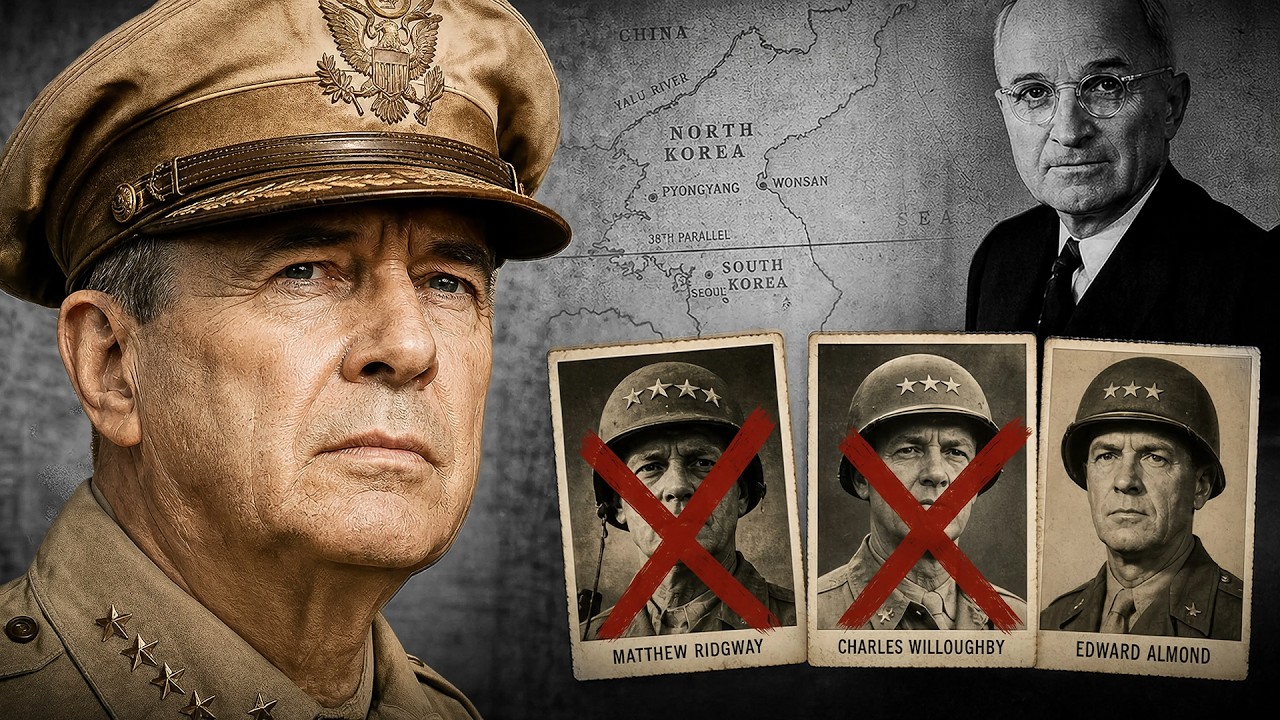
S. and United Nations policy and that military leaders must remain subordinate to civilian authority under the Constitution. The firing followed months of public disagreement between the two men. MacArthur favored a broader war against China, including strikes beyond the Korean Peninsula.
Truman wanted to limit the conflict and avoid escalation that could draw in the Soviet Union and possibly lead to a third world war fought with nuclear weapons. MacArthur had openly criticized administration policy on several occasions in the months before his removal. A letter he sent to House Republican leader Joseph Martin, expressing opposition to the administration’s limited-war strategy, was read aloud on the House floor. Truman considered that an unforgivable act of public insubordination after a long pattern of statements undermining official policy.
MacArthur’s replacement, Lieutenant General Matthew Ridgway, took command immediately and accepted Truman’s policy of limited war without public objection. The immediate public reaction overwhelmingly favored MacArthur. Parades were held in his honor, he delivered a televised address to a joint session of Congress, and the press speculated about a possible presidential run. But Senate hearings held in the weeks that followed weakened his case considerably.
Top military leaders rejected the strategy of expanding the war on the terms MacArthur proposed. MacArthur was not alone when Truman dismissed him. Four generals had built their careers inside his command structure. Within weeks, one resigned.
Another retired. Two others lost their upward momentum. All four inherited the question no one could answer publicly: Had they served the army, or had they served MacArthur? Courtney Whitney did not try to save his army career.
He left it. The man who had served as MacArthur’s principal assistant and confidant for years then became the person who helped write the public version of MacArthur’s life. Whitney served as MacArthur’s chief aide during the occupation of Japan and later within the Far East Command during the early phase of the Korean War. Responsibilities assigned to him went well beyond the normal scope of a staff officer.
National Archives records confirm both his position as MacArthur’s closest staff adviser and his resignation from the army in May 1951, only weeks after the dismissal. Instead of trying to continue his military career independently, which would have meant serving under officers and policies he had opposed for years, Whitney left. He became one of MacArthur’s closest civilian advisers and defenders in the years that followed. He later wrote “MacArthur: His Rendezvous with History,” a long and admiring biography that shaped how generations of readers understood MacArthur’s career.
Charles Willoughby, MacArthur’s head of intelligence from the Pacific War through 1951, followed a similar path on a slightly longer timeline. National Archives records confirm he served as MacArthur’s intelligence chief in the Pacific from 1941 to 1951. He retired from the army in August 1951, several months after Whitney resigned. Willoughby, long considered one of MacArthur’s most loyal staff officers, remained strongly anti-communist in his later life and continued to defend MacArthur’s view of the Korean War publicly through speeches, writings, and political associations.
Over time, his career became inseparable from MacArthur’s legacy. Edward Almond and George Stratemeyer stayed in military service. But remaining inside the institution did not necessarily mean inheriting its future. Almond, a MacArthur loyalist who commanded the X Corps in Korea and supported the aggressive northern advance favored by MacArthur during the most controversial phase of the campaign, stayed in the army after the dismissal.
Archives confirm he commanded the X Corps from August 1950 until July 1951, placing him at the center of the war’s most significant and later scrutinized decisions. He became commander of the Army War College later that year, a respectable post that seemed more like a ceiling than continued advancement. He retired in January 1953. Stratemeyer, who commanded the Far East Air Forces during the first year of the Korean War and supported broader use of air power with greater operational freedom, also remained in the army briefly before retiring in 1952.
Neither man advanced further under any protection MacArthur might once have provided. Neither reached the top command ranks that once seemed genuinely possible for officers so closely tied to the theater’s most famous commander. Their loyalty did not directly end their careers, but it appeared to limit how high those careers could rise once the general who had elevated them was removed from command entirely. The Senate hearings changed the story.
MacArthur returned to parades and applause, but behind closed doors, the men responsible for the war ahead explained why his strategy could not become American policy. The joint Senate Armed Services and Foreign Relations Committee hearings began on May 3, 1951. MacArthur gave lengthy testimony defending his strategic vision for Korea and the broader conflict with communist China, repeating the same positions that had led to his dismissal weeks earlier. Senior military leaders, including Army Chief of Staff George Marshall and Joint Chiefs chairman Omar Bradley, testified against expanding the war along the lines MacArthur proposed.
They presented a unified institutional argument that his approach risked a much larger and more dangerous conflict than the one already underway in Korea. According to historical Senate records, MacArthur weakened his own case with vague and exaggerated testimony that failed to hold up under sustained questioning from senators of both parties. The hearings gradually cooled the public uproar that had greeted his return. Matthew Ridgway’s post-command career illustrates the clearest institutional contrast in the entire story.
After taking command, he continued to hold senior positions in the years that followed and eventually became Army Chief of Staff himself. None of MacArthur’s four loyalists came close to matching that trajectory after 1951. The outcomes were not uniform. The archives do not support any claim that the four men were punished identically or that loyalty to MacArthur triggered a coordinated purge from above.
Their post-dismissal careers varied in distinct ways. Some resigned immediately. Others retired within the following year. Still others remained in service briefly before their retirements came on a shortened timetable.
What united the four was not shared punishment but a shared result. Their professional identities became increasingly and permanently tied to MacArthur’s side of the Korean War, regardless of how their individual careers ended. Whitney became a historian and defender of the MacArthur legend. Willoughby remained involved in anti-communist networks that continued to assert the general’s viewpoint.
Almond and Stratemeyer retired with their professional identities permanently linked to the Far East conflict and the commander who once elevated them. Truman dismissed one general, but the decision reshaped the life of every officer who had built his career around him. A decade of professional relationships was sorted into resignations, retirements, and stalled paths, with one notable exception. Ridgway’s willingness to serve policy rather than a man became, in the end, the clearest career path available within an institution that had just demonstrated without ambiguity where its ultimate loyalty must lie.
CONTENT:
When Harry Truman dismissed Douglas MacArthur in April 1951, it was more than the removal of a single general. It forced every officer who had built his career within MacArthur’s command structure to decide which path mattered more: the one built under MacArthur, or the one that could continue without him. Truman announced the relief of MacArthur from all Far East commands on April 11, 1951. The president stated that MacArthur had been unable to give full support to U.
S. and United Nations policy, and that military leaders must remain subject to civilian control and constitutional authority. Truman regarded this principle as essential to American civil-military relations. The dismissal followed months of public conflict between the two men.
MacArthur favored a broader war against China, including strikes beyond the Korean Peninsula. Truman sought to limit the conflict and avoid escalation that could draw in the Soviet Union and possibly trigger World War III fought with nuclear weapons. MacArthur had publicly criticized administration policy on several occasions. A letter he sent to House Republican leader Joseph Martin, expressing opposition to the limited-war strategy, was read aloud on the House floor.
Truman considered this act of public insubordination the final straw after a long pattern of statements that undermined official policy. Lieutenant General Matthew Ridgway immediately replaced MacArthur and accepted Truman’s policy of limited war without public objection. The initial public reaction overwhelmingly favored MacArthur, with parades, a televised address to a joint session of Congress, and press speculation about a possible presidential run. However, Senate hearings held in the following weeks significantly weakened his case.
Top military leaders testified against the strategy of expanding the war on the terms MacArthur proposed. MacArthur was not alone when Truman dismissed him. Four generals had built their careers inside his command structure. Within weeks, one resigned, another retired, and two lost their upward momentum.
All four faced the question no one could answer publicly: had they served the army, or had they served MacArthur? Courtney Whitney did not try to save his army career. He left it. Whitney served as MacArthur’s principal assistant and confidant for years, including throughout the occupation of Japan and the early phase of the Korean War.
National Archives records confirm both his position as MacArthur’s closest staff adviser and his resignation from the army in May 1951, only weeks after the dismissal. Rather than continue his military career independently, which would have meant serving under officers and policies he had opposed for years, Whitney left. He became one of MacArthur’s closest civilian advisers and defenders, helping manage the general’s public legacy. He later wrote “MacArthur: His Rendezvous with History,” an admiring biography that shaped how generations of readers understood MacArthur’s career.
Charles Willoughby, MacArthur’s head of intelligence from the Pacific War through 1951, followed a similar path on a longer timeline. Records confirm he served as MacArthur’s intelligence chief in the Pacific from 1941 to 1951. He retired in August 1951, months after Whitney resigned. Willoughby remained strongly anti-communist and continued to defend MacArthur’s views on the Korean War through speeches, writings, and political associations.
He eventually became a controversial figure within anti-communist political circles. Edward Almond and George Stratemeyer stayed in military service. But remaining meant something different for them. Almond, a MacArthur loyalist who commanded the X Corps in Korea and supported the aggressive northern advance favored by MacArthur, remained in the army after the dismissal.
It was a long and stable relationship that spanned World War II, the occupation of Japan, and the first year of the Korean War. Almond led the X Corps from August 1950 until July 1951, placing him at the center of the war’s most controversial decisions. He later became commander of the Army War College, a respectable post that seemed like a ceiling rather than continued advancement. He retired in January 1953.
Stratemeyer, who commanded the Far East Air Forces during the first year of the Korean War and supported broader use of air power, also remained in the army briefly before retiring in 1952. Neither man rose further under any protection MacArthur might once have provided. Their loyalty did not directly end their careers, but it appeared to limit how high those careers could rise once the general who elevated them was removed. The Senate hearings changed the story.
MacArthur returned to parades and applause, but behind closed doors, the men responsible for the war ahead explained why his strategy could not become American policy. The joint Senate Armed Services and Foreign Relations Committee hearings began on May 3, 1951. MacArthur gave lengthy testimony defending his vision for Korea and the broader conflict with China. Senior military leaders, including Army Chief of Staff George Marshall and Joint Chiefs chairman Omar Bradley, testified against expanding the war along the lines MacArthur proposed.
They argued his approach risked a much larger and more dangerous conflict than the one already underway. According to historical Senate records, MacArthur weakened his own case with vague and exaggerated testimony that failed to hold up under sustained questioning. Ridgway’s post-command career illustrates the clearest institutional contrast. He continued to hold senior positions and eventually became Army Chief of Staff himself, a path none of MacArthur’s four loyalists came close to matching after 1951.
The archives do not support any claim that the four men were punished identically or that loyalty to MacArthur triggered a coordinated purge. Their post-dismissal careers varied in distinct ways. Some resigned immediately, others retired within the following year, and still others remained in service briefly before their retirements came on a shortened timetable. What united them was not shared punishment but a shared result.
Their professional identities became increasingly and permanently tied to MacArthur’s side of the Korean War conflict. Whitney became a historian and defender of the MacArthur legend. Willoughby remained involved in anti-communist networks. Almond and Stratemeyer retired with their careers permanently linked to the Far East conflict and the commander who once elevated them.
Truman dismissed one general, but the decision reshaped the life of every officer who had built his career around him. A decade of professional relationships was sorted into resignations, retirements, and stalled paths, with one notable exception. Ridgway’s willingness to serve policy rather than a man became the clearest career path available within an institution that had just demonstrated without ambiguity where its ultimate loyalty must lie.