On April 17, 1873, dawn broke over the lava beds of northern California with 53 Modoc warriors braced for an assault by more than 400 US soldiers supported by artillery. The scene was not a single isolated battle but the climax of a conflict involving decades of broken promises and a tribe’s desperate attempt to hold onto its homeland. The confrontation had escalated the previous day, when gunfire erupted along the Syskiu Trail from southern Oregon. The violence there was viewed by federal authorities as open rebellion, setting the stage for the mass assault that followed.
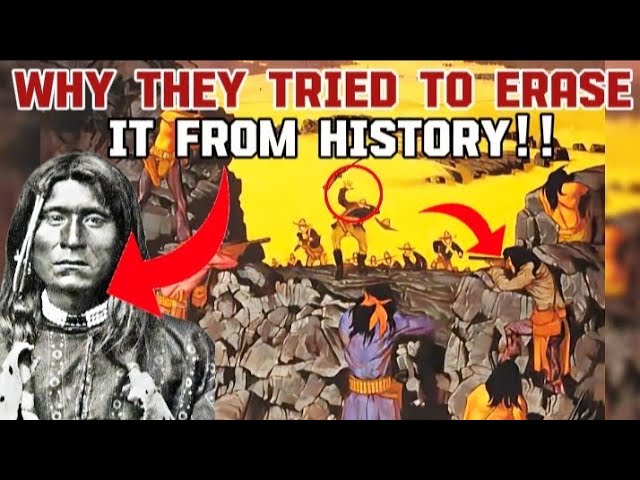
In the fighting, the vastly outnumbered Modoc used the region’s rugged, volcanic terrain to their advantage, firing from concealed positions that made them nearly impossible to locate. The roots of the struggle stretched back more than two decades. The Modoc had long lived near Tule Lake, hunting, fishing, and foraging across land they considered their own. In March 1851, a mule train worker named Abraham Thompson discovered gold near Waraka, and the Modoc initially coexisted with the miners who arrived.
But the influx of newcomers changed the balance. Settlers flooded into the upper Klamath Basin, fencing off land for cattle and pushing the Modoc off their traditional grounds. By 1864, the US government forced the Modoc into a treaty alongside the Klamath and Yahuskin tribes, relocating all three groups to Oregon’s Klamath Reservation. The arrangement was untenable from the start: the reservation sat on Klamath territory, and the Modoc faced open hostility from their new neighbors.
Years later, the Modoc chief Kintpuash, known to American settlers as Captain Jack, led his band off the reservation and returned to Tule Lake. The government viewed the move as defiance, and in 1872 the US Army was ordered to force the Modoc back onto the reservation. Tensions exploded that November in a skirmish at Lost River, where the Modoc claimed a victory against the soldiers sent to round them up. After that clash, the Modoc retreated into a natural fortress in the lava beds, stockpiling supplies and cattle to withstand a prolonged siege.
Colonel Wheaton, tasked with crushing the resistance, called in reinforcements from Forts Harney, Bidwell, and Vancouver. He assembled roughly 300 regular soldiers and 100 volunteers to move against a Modoc force that numbered around 160, with only 53 of them being warriors. Misreading scout reports, Wheaton estimated the Modoc strength at 150 fighters and believed he held a comfortable numerical advantage. The true ratio was far larger, nearly 7.
5 to 1, yet the battle plan assumed the soldiers had all the advantages. Wheaton devised a pincer movement to encircle the Modoc in the lava beds. Major Green commanded one attack force from the west while Wheaton led the main strike group with infantry and cavalry. Artillery under Lieutenant W.
Miller was assigned to support the push. Oregon volunteers and California militia were positioned on the southern escape routes to block any retreat. The plan, however, assumed the Modoc would wait passively inside their stronghold. On December 21, the Modoc struck first.
Their scouts spotted a lightly guarded supply wagon escorted by just five cavalrymen and ambushed it. Two troopers were wounded and later died from their injuries, though the escort managed to hold off the attackers until reinforcements arrived. The army’s assault finally got underway, but the conditions were brutal from the start. On January 17, dense fog reduced visibility to just 50 yards.
Captain Bernard, a veteran of campaigns against Apache Chief Koshis in the 1850s, moved his men forward at dawn in staggered intervals of 25 yards. The Modoc immediately unleashed a barrage that was fiercer than the previous day’s skirmish. A lieutenant fell wounded, and Bernard’s troops struggled to cross the fractured lava beds under relentless fire. Realizing the advance was stalling, Bernard ordered a fighting retreat, with each company withdrawing in turn while covering the next.
Major Green’s larger force pressed in from the west, with Captain David Perry leading cavalry in an attempt to flank the Modoc stronghold from the southwest. The terrain stalled Perry’s charge at a deep ravine, forcing his men to dismount while exposed to enemy fire. Bernard, fearing his men would be surrounded, personally led a charge to drive back the Modoc. Yet the counterattack shifted the Modoc line, and with one soldier dead and five wounded evacuated to Hospital Rock, Bernard called a full withdrawal.
The Modoc did not pursue, instead returning to their defenses to tend to their own wounded. The failed assault left Wheaton’s strategy in ruins. Soldiers became immobilized, unable to advance or pull back, while Green commanded his infantry forward to extract the pinned cavalry. The Modoc stayed securely entrenched after their astonishing victory against overwhelming odds: 53 warriors defeating a force of 400 troops.
The army’s total losses reached 42 dead and 53 wounded, including nine officers, most of them from Green’s infantry. The surviving regulars faced demoralizing conditions in exposed winter camps, while California riflemen and Oregon volunteers abandoned the campaign altogether. Throughout the fighting, the Modoc maintained perfect concealment. Not a single warrior was spotted by federal troops.
Their defensive positions created a deadly kill zone where soldiers became easy targets. Artillery shells fired blindly through the fog often overshot their targets completely, while some units that managed to reach Bernard’s position were mercilessly pinned down by Modoc fire. The battle of the stronghold was more than a military reverse for the US Army. It exposed the limits of conventional tactics and superior numbers against a force fighting on familiar ground with everything at stake.
For the soldiers, the aftermath was bleak, with snow-covered camps serving as a reminder of their failed campaign. The Modoc, though vastly outnumbered, stood firm in their volcanic fortress, holding the lava beds as an impenetrable stronghold. The war would drag on long after that January clash, but the lesson of the battle was already written on the battlefield. Determination and knowledge of the land could defy even the full might of the United States military.
The Modoc won the day, yet the larger struggle for their land and freedom was far from over.