In the fall of 1757, the English colonies of North America were reeling from a series of brutal defeats at the hands of the French and their Indian allies. The capture of Fort William Henry in August had been followed by a shocking violation of the terms of surrender, with many English prisoners seized as they tried to flee to safety. As winter closed in, the fate of those prisoners grew even darker. The French commander, the Marquis de Montcalm, had taken the fort, but the victory was immediately tarnished.
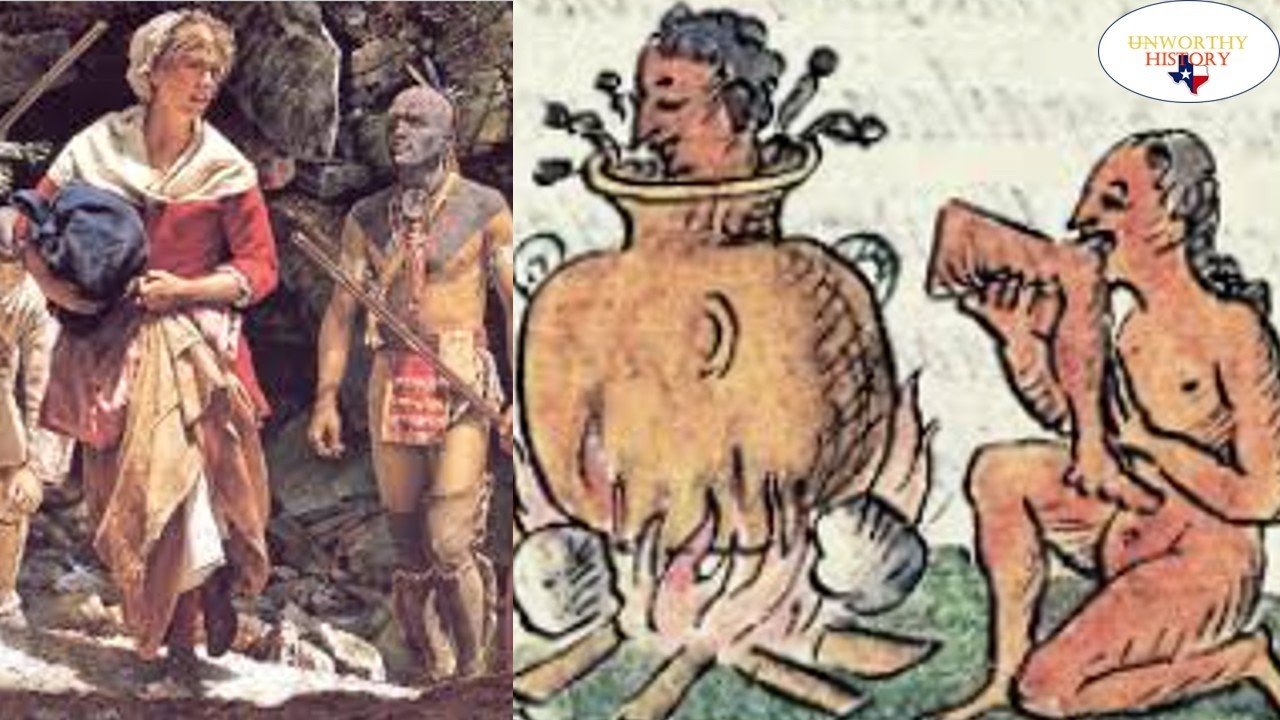
The Indians who fought alongside the French ignored the capitulation agreement and took many captives. Reports from the time describe horrific scenes at Montreal, where some prisoners were killed and, according to contemporary French accounts, forced cannibalism took place. The Intendant Bigot confirmed one such incident, and another French writer claimed that mothers were compelled to eat the flesh of their own children. The governor of New France, the Marquis de Vaudreuil, was criticized by his contemporaries for his handling of the situation.
Rather than punishing the Indians for their brutality, he reportedly bought some prisoners from them with brandy, a decision that French observers said led to further killings. He was also accused of letting the Indians roam through Montreal with knives, threatening settlers, while he loaded them with gifts in a misguided attempt to buy their restraint. The Indians paid a heavy price for their cruelty. They had dug up and scalped the corpses in the graveyard of Fort William Henry, not knowing that many of those buried there had died of smallpox.
The disease spread among them, and it was said to have caused great devastation in their ranks. By midwinter, public distress in Montreal had reached a breaking point. Food ran so short that no flour was available, and soldiers and citizens were ordered to accept a reduced ration that included horseflesh. A mob gathered before the governor’s house, and a deputation of women begged him to reconsider, saying that religion forbade them from eating an animal that was a friend to man.
Vaudreuil threatened them with prison and hanging, but the crowd only dispersed to stir up the soldiers quartered in the town. The colony’s regular troops mutinied and tried to bring the Béarn battalion into the rebellion. With Montcalm away in Quebec, it fell to the Chevalier de Lévis to restore order, which he did by threatening death to any soldier who refused the horseflesh while assuring them that he ate it himself every day. Meanwhile, on the frontier, the settlement of German Flats came under attack.
Home to German peasants from the Palatinates who had tried to remain neutral, the village was destroyed on the morning of November 12 by a force of 300 French troops, Canadians, and Indians under an officer named Belletre. The small picket forts were taken one by one and set on fire. Sixty dwellings, along with their barns and outhouses, were burned to the ground. Around 40 or 50 inhabitants were killed, and about three times that number, mostly women and children, were taken prisoner.
The attack was carried out with such haste that the raiders could not carry off their plunder, so they slaughtered great numbers of hogs, sheep, cattle, and horses before retreating. When Lord Howe arrived from Schenectady with troops, he found only an abandoned slaughter field. Vaudreuil reported the affair to the court in Paris with characteristic self-congratulation, claiming that he had ruined the plans of the English and carried terror into all those parts. For Montcalm himself, the winter was a time of personal frustration.
He had retreated to Quebec, which he preferred to Montreal, but found little comfort there. In letters to friends and family, he complained of boredom, poor health, and financial strain. He wrote to his wife that prices were rising, that he was ruining himself, and that he owed the treasurer 12,000 francs. Despite the public distress, he noted that the ruling class continued to hold balls and gamble furiously.
His relationship with Vaudreuil was a constant source of annoyance. While the two men maintained a mask of civility, Vaudreuil had written to the court in high praise of Lévis, hinting that he, not Montcalm, ought to hold the chief command. Montcalm, for his part, wrote to his mother that he lived on good terms with everybody and did his best to serve the King, but hinted that he expected little gratitude in return. The military confrontation continued through the winter.
Captain Pouchot wrote from Niagara that 3,000 savages were waiting to be let loose against the English borders. Bougainville, a French officer, expressed horror at the situation, writing that humanity groans at being forced to use such monsters. At Ticonderoga, the French garrison under Captain Hebecourt was plagued by English rangers, who sometimes even got into the fort’s ditch itself. Toward midwinter, a band of these intruders captured two French soldiers and butchered about 15 cattle close to the fort.
They left a note tied to the horns of one of the animals, addressed to the commandant: “I am obliged to you, sir, for the rest you have allowed me to take, and the fresh meats you have sent me. I shall take good care of my prisoners. My compliments to the Marquis of Montcalm. Signed, Rogers.
”
A few weeks later, Hebecourt had his revenge. About the middle of March, a large party of rangers was ambushed a few miles from Ticonderoga. Rogers himself was reported among the slain, though that proved false. The rangers, 180 men and officers under Rogers’ command, had been sent from Fort Edward on a scouting party.
They had passed down Lake George on the ice under cover of night, then moved by land through the mountains on the western shore. On the day before the attack, Hebecourt had received a reinforcement of 200 mission Indians and a body of Canadians. The Indians consulted their spirits, who told them that the English were coming. Scouts then confirmed the warning, finding a great number of snowshoe tracks.
The whole body of Indians, joined by Canadians and volunteers, set out to meet the approaching enemy, taking their way up the valley of Trout Brook. The battle began around 3:00 in the afternoon. Rogers’ men halted and faced the oncoming Indians, exchanging fire. Believing the enemy was only a small advance force, about half the rangers dashed in pursuit and were soon met by the entire body of the enemy.
The woods rang with yells and musketry. Within minutes, some 50 of the pursuers were shot down and the rest driven back in disorder. Rogers formed his survivors on the slope of a hill, where they fought until sunset with stubborn desperation, twice repulsing the overwhelming numbers of the assailants. The combatants were often not 20 yards apart, and sometimes they were mixed together.
At length, a large body of Indians succeeded in turning the right flank of the rangers. Lieutenant Philips and a few men were sent to oppose the movement, but they were quickly surrounded and, after a brave defense, surrendered on a pledge of good treatment. Rogers advised the volunteers, Captain Pringle and Lieutenant Roche, to escape while there was still time, offering them a sergeant as a guide, but they gallantly resolved to stand by him. Eight officers and more than a hundred rangers lay dead and wounded in the snow.
As evening darkened the forest, the few survivors broke and fled. Rogers and about 20 followers escaped up the mountain, making a running fight against the Indian pursuers. After two days of misery, they regained Fort Edward with the remnants of their band. The enemy suffered heavily as well, the chief losses falling on the Indians.
To revenge themselves, they murdered all the wounded and nearly all the prisoners. Lieutenant Philips and his men were tied to trees and hacked to pieces. Captain Pringle and Lieutenant Roche had become separated from the other fugitives. Ignorant of woodcraft, they wandered through the desolation of rocks and snow until they met a man they knew as a servant of Rogers, who said he could guide them back to Fort Edward.
One of them had lost his snowshoes in the fight, and they worked through the night to make a substitute from forked branches, twigs, and leather strings. They had no hatchets, no blankets, no overcoats, and almost no food—only part of a Bologna sausage and a little ginger. Their greatest calamity was the helplessness of their guide. His mind wandered, and although he insisted he knew the country well, he led them for four days in circles through a labyrinth of nameless mountains.
On the fifth day, they saw with despair that they had returned to their own starting point. On the next morning, as they crossed the ice of Lake George, a blinding storm of sleet and snow drove in their faces. They fought their way forward until the storm ceased, and they found themselves on the bank of an unknown stream. It was the outlet of the lake—they had wandered into the valley of Ticonderoga, not three miles from the French fort.
In crossing the torrent, Pringle lost his gun and nearly lost his life. All three were drenched to the skin and, realizing where they were, resolved to surrender as prisoners to save their lives. Night found them again in the forest. Their guide became delirious, raving about visions of Indians, then wandered off, seated himself in the snow, and was soon dead.
The two officers walked all night around a tree to keep their blood in motion. In the morning, they saw the fort across the intervening snowfields and approached it waving a white handkerchief. French officers dashed toward them and reached them in time to save them from the Indians, whose camps were nearby. They were kindly treated, recovered from their ordeal, and were afterwards exchanged.
Pringle lived to old age and died in 1800 as a senior major general of the British Army.