Michael Paradiso did something in the mob world that was supposed to be impossible: he punched John Gotti in the face and lived to talk about it. The unwritten rules of organized crime dictate that no one touches the boss of a family. Raising a hand against the Gambino crime family boss is supposed to be a death sentence. But Paradiso, known as Mickey Boy, didn’t just survive the punch.
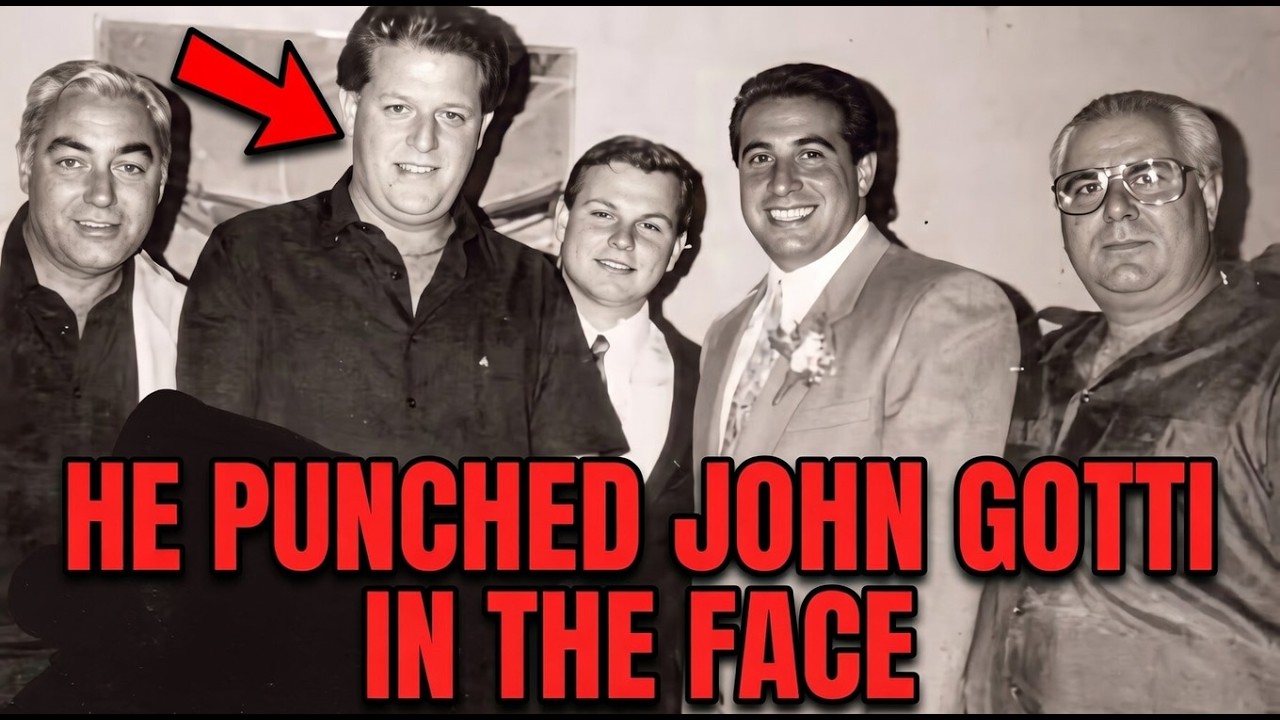
He went on to become a captain in Gotti’s organization, order a hit on a rival family’s underboss, and eventually be promoted to consigliere of the Gambino family in 2019 at age 79. The story of how he got away with it begins decades earlier, when both men were young criminals learning the trade from the same mentor: Carmine Fatico, a Gambino capo who ran a crew out of the Bergin Hunt and Fish Club in Ozone Park, Queens. Under Fatico’s tutelage, both Gotti and Paradiso developed their skills in the same crew. They weren’t just associates; they were friends from the same operational world, men who knew each other personally before either held significant rank.
That friendship predating rank is the key to understanding why Gotti let the punch pass. In the mob, you don’t kill your oldest friends over a fistfight. The specific circumstances of the punch—what argument provoked it or what happened immediately afterward—aren’t documented in detail. Gangland News reporter Jerry Capeci, the most respected mob journalist in America, confirmed the incident occurred and that Paradiso got away with it.
The exact sequence remains part of mob legend, but in that world, the legend itself carries operational weight. Paradiso’s reputation for genuine physical ferocity and a near-reckless willingness to act on impulse followed him through his career. Law enforcement would later record him saying, “If I use my hands, I might kill somebody because I’ll kill him. I’ll stab him.
I’ll cut his throat. When I get mad, I’m just a different person. ”
According to his own accounting, in a 1986 conversation with his brother Philip—who was simultaneously wearing a wire for federal investigators—Paradiso claimed to have committed 10 murders across his career. None appear on his official conviction record; all exist only in his own account, transmitted to investigators by his own brother.
By the mid-1980s, Paradiso had been in the Gambino organization for over two decades, with convictions for hijacking and heroin trafficking across New York’s state and federal courts. Then came the events that would nearly end his life. December 16, 1985: Gotti orchestrated the murder of boss Paul Castellano and Thomas Bilotti outside Sparks Steak House in Midtown Manhattan. It was the most audacious unsanctioned hit in New York organized crime history, and it made Gotti boss of the Gambino family.
The other families on the commission were furious. Anthony Casso, the Lucchese underboss known as Gaspipe, was particularly hostile. Then, in April 1986, a car bomb killed Frank DeCicco, Gotti’s underboss—a Genovese family operation made with Casso’s cooperation. It was a direct attack on the stability of Gotti’s new regime.
Paradiso decided to send a message back. He organized a hit on Casso. In September 1986, Gambino associates Nicholas Guido and James Hydell pulled up to Casso’s parked car in Brooklyn and opened fire with a 12-gauge shotgun at close range. They hit Casso twice but didn’t kill him.
He stumbled to a nearby restaurant and survived. Casso began investigating who ordered the attempt. His sources were extraordinary: two active-duty NYPD detectives on his payroll, Louis Eppolito and Stephen Caracappa, known as the Mafia Cops. For $4,000 a month, they fed Casso law enforcement intelligence and even carried out murders for him.
They identified Paradiso and Angelo Ruggiero as the men behind the hit. Casso went to Gotti and demanded Paradiso be dealt with. Gotti faced an impossible choice. Paradiso was his old friend.
But Casso’s demand carried the weight of the Lucchese family and commission pressure behind it. Gotti’s position was still fragile—he’d survived one assassination attempt that killed his underboss instead. He eventually gave the order. Mickey Boy Paradiso, the man who punched Gotti in the face and lived, became a marked man.
His own boss had put a contract on his life. What happened next is the most extraordinary twist in an already extraordinary story. Paradiso was facing federal drug charges at the time, out on bail awaiting trial. The FBI became aware of the contract.
Knowing that walking free while the Gambino family hunted him was a death sentence, they revoked his bail and put him in federal custody—specifically to keep him alive. The jail cell was protection. Prison was the only place in New York where the Gambino hit squad couldn’t reach him. He was convicted on the drug charges and went to prison, sitting in federal custody while the world outside changed.
The Gotti era ended. In December 1990, FBI agents arrested Gotti at the Ravenite Social Club. Sammy Gravano flipped in November 1991. Gotti was convicted in June 1992 and sentenced to life, dying in prison in 2002.
Paradiso walked out of federal prison in the late 1990s. His boss was locked away for life. The contract was dead. He had survived by spending the years of the threat in a federal prison cell.
Prison had saved his life. One might expect that to be the end. But Paradiso kept operating. He was convicted again on racketeering charges and served additional time.
In 2006, he was indicted along with associates from four of New York’s five crime families in a two-year waterfront commission investigation involving drug trafficking, illegal online gambling, and tax fraud. As the only made mafia member among the defendants, he was the senior figure. He served his time and came out again. Despite 25 years behind bars across a career stretching back to the 1960s, Paradiso remained one of the most genuinely respected old-school figures left in the Gambino family.
Then came March 2019. Frank Cali was murdered outside his Staten Island home, shot six times after a truck rammed his car. Cali was the Gambino family’s senior figure, and his death created an immediate leadership vacuum. The Gambino family moved quickly.
Jerry Capeci broke the story: the family had elevated 79-year-old Michael “Mickey Boy” Paradiso to serve as consigliere, the number three man in the hierarchy, alongside boss Domenico Cefalu and powerful capo Lorenzo Mannino. The man who had punched John Gotti in the face and survived. The man who had ordered a hit on a rival underboss. The man who had survived Gotti’s own murder contract against him.
That man was now the consigliere of the Gambino crime family.