On April 9, 1865, in the small Virginia village of Appomattox Courthouse, two opposing generals met to discuss the fate of an army that had fought for four long years. Confederate Commander Robert E. Lee had requested the meeting with Union General Ulysses S. Grant after realizing his army could no longer continue the fight. For generations, this moment has been remembered as the event that ended the American Civil War. Yet, the events surrounding that meeting reveal a far more complicated story about how the war actually reached its final stage.
In early April of 1865, Lee's army was already under enormous pressure. Union forces had finally broken through Confederate defenses during the Siege of Petersburg. That campaign had lasted for many months and had placed tremendous strain on Confederate resources. When those defensive lines finally collapsed, the Confederate capital of Richmond could no longer be protected.
Government officials quickly evacuated the city, and Lee ordered his army to withdraw westward across Virginia. The goal of this movement was simple. Lee hoped to reach supply depots farther inland and possibly unite with other Confederate forces still operating in the Southern states. If those armies could combine, the Confederacy might still continue the war despite the growing pressure from Union forces.
But the situation was already changing faster than Lee had anticipated. Union Commander Grant understood that Lee's army represented the most powerful Confederate force still operating in the Eastern United States. If that army could be trapped and forced to surrender, the Confederacy would lose its ability to conduct large-scale operations in that region.
Grant ordered several Union armies to pursue Lee and block every possible route of escape. Cavalry units rode ahead to intercept supply wagons, while infantry forces moved along parallel roads to cut off Lee's expected path. As the retreat continued, Confederate soldiers began to feel the effects of these maneuvers.
Supplies became increasingly difficult to obtain. Food was scarce, ammunition was limited, and long days of marching began to exhaust the army. What had started as a strategic withdrawal slowly turned into a race against an enemy that seemed to be appearing on every road ahead.
By the time Lee's army approached the area surrounding Appomattox Courthouse, Union forces had already begun positioning themselves along the road leading west. Lee still believed there might be one final opportunity to escape. If his troops could break through the Union cavalry guarding that road, the army might continue its retreat toward the south, where additional Confederate forces were still operating.
On the morning of April 9th, Confederate troops launched an attack intended to clear the path forward. At first, the plan appeared to succeed. Confederate soldiers advanced and pushed back the Union cavalry defending the road. For a brief moment, it seemed that Lee's army might finally open a route of escape.
But the situation changed quickly. Behind the cavalry lines stood thousands of Union infantry soldiers who had arrived during the night. These troops belonged to larger Union formations that had quietly moved into position while Lee's army prepared for its attack. As Confederate officers observed the battlefield, it became clear that they were not facing a small defensive force. Instead, a fully organized Union army now stood directly in their path.
When Lee received these reports, the reality of the situation became impossible to ignore. His army was surrounded. Fresh Union troops blocked the road ahead, while additional Union forces were approaching from other directions. Continuing the battle would almost certainly result in heavy casualties without offering any real chance of success.
Lee had spent four years commanding his army through some of the most intense battles of the war. Now, he faced one of the most difficult decisions of his military career. Rather than allow further losses among soldiers who had already endured years of conflict, Lee chose another path. He sent a message requesting a meeting with Grant to discuss surrender.
Grant had expected this possibility. For days, Union forces had been closing in during what became known as the Appomattox Campaign. Now, the moment Grant had been working toward had finally arrived.
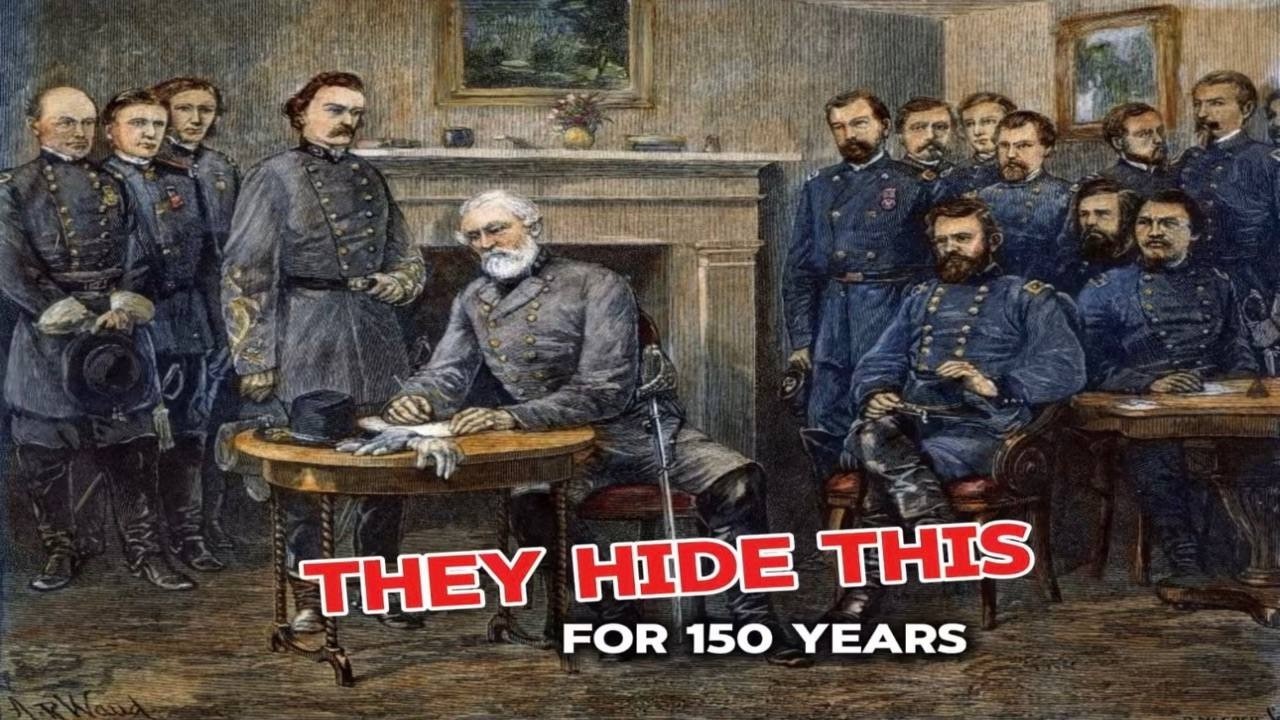
Later that day, the two generals met inside a private home in the village of Appomattox Courthouse. The house belonged to a local resident named Wilmer McLean. During their conversation, the two commanders discussed the terms that would allow Lee's army to lay down its weapons and bring the campaign to an end.
Grant offered relatively generous conditions. Confederate soldiers would surrender their military equipment, but they would be allowed to return home after giving their word not to take up arms again. Many soldiers were also permitted to keep their horses, which were essential for farming once they returned to civilian life. These terms helped ensure that the surrender would take place peacefully and without further conflict between the two armies.
Lee's surrender marked the collapse of the most important Confederate army operating in the Eastern United States. News of the event spread quickly across the country, and many Americans immediately saw it as the beginning of the war's final chapter.
Yet, the Civil War did not end immediately after that meeting. Other Confederate armies were still active in different parts of the South, and several commanders would surrender their forces over the following weeks. Even so, the meeting at Appomattox quickly became the defining symbol of the war's conclusion.
What began as a desperate retreat across Virginia ended with a conversation that changed the course of American history. The surrender of Lee's army marked the moment when the Confederacy's ability to continue the war began to collapse. And while the story is often simplified, the events at Appomattox remain one of the most significant turning points in the history of the United States.