In early 1939, a family in a remote Peruvian village noticed something alarming about their five-year-old daughter. Her abdomen was swelling, and she complained of sharp, frequent pain.
Doctors initially suspected illness or parasites, conditions common to rural poverty. But as her condition worsened, the child was taken to a hospital in the nearby town of Pisco, where examinations revealed something that defied belief.
X-rays showed a fully formed fetus. The child, barely old enough to form complete sentences, was pregnant.
The girl was Lina Medina. She would become the youngest confirmed mother in medical history.
Medical professionals repeated their examinations, not because the evidence was unclear, but because it was too clear to accept. The room reportedly fell silent, not with awe, but with dread. A child’s body was carrying life, a reality that fractured both medical certainty and moral understanding.
The case immediately raised questions that no one could answer. There were no visible injuries, no witnesses, and no confessions. The body told one truth while the world around it insisted on silence.
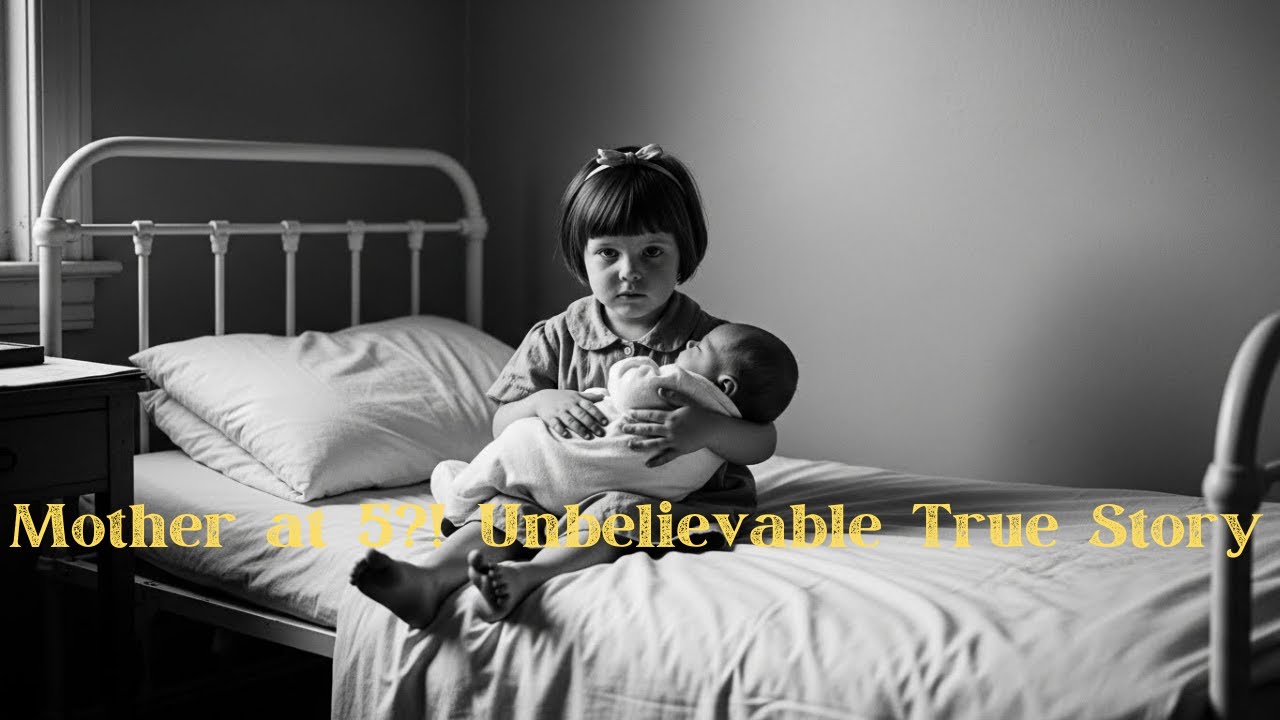
Once admitted to the hospital, the child’s parents accompanied her silently. Their faces were carefully neutral, but fear and shame lingered in their eyes. Medical charts could capture measurements and dates, but they could not record the heavy silence that pervaded the room.
The hospital staff soon realized they were dealing with a case that demanded extraordinary caution. There was no playbook for a five-year-old mother. Officials were contacted, and ethical debates began quietly among medical professionals about how to proceed.
The pregnancy was far advanced, and the risk to the child’s life was catastrophic. Doctors convened in hushed tones, weighing the ethical ramifications of operating on someone who could not possibly comprehend what was happening to her own body.
On May 14, 1939, Lina Medina gave birth to a baby boy via cesarean section. The child, named Gerardo, weighed 2.7 kilograms and was reportedly healthy.
Medical staff were astonished, not just by the survival of both mother and child, but by the sheer biological reality that a five-year-old had carried and delivered life. The delivery was both miraculous and horrifying, a moment where the impossible became undeniable.
The birth confirmed what medicine had whispered in disbelief. Now, the implications rippled through every sphere, scientific, social, and moral. Researchers and doctors arrived with notebooks and cameras, eager to document what they described clinically as a unique case.
Journalists and locals filled the streets with questions they could barely articulate. The family, unprepared for such scrutiny, oscillated between defensiveness and despair. Privacy had vanished, leaving the child exposed to forces far larger than her own comprehension.
The child’s daily life became unrecognizable. Simple routines of play were replaced by examinations, interviews, and constant observation. Medical professionals checked her physical recovery meticulously, while social authorities scrutinized the family’s behavior, looking for hints of neglect or complicity.
The outside world wrestled with disbelief. Newspapers and radio broadcasts carried fragments of the story, often exaggerated or distorted. Experts debated whether it was a medical anomaly, a social tragedy, or a moral horror. Yet none could fully explain the how or why.
Questions about culpability emerged, unspoken but heavy in the air. Who had allowed this to happen? Who was responsible? The child herself remained incapable of articulating her experience, and the adults around her were forced into roles they neither sought nor understood.
The medical community wrestled with the implications. Pediatricians and scientists debated whether the case represented a rare biological anomaly or a failure of societal protection. The phenomenon challenged existing knowledge, forcing experts to reconcile the empirical with the impossible.
Lina’s condition was later attributed to a rare hormonal disorder that caused precocious puberty. She had begun menstruating at just eight months old, and by age four, she had fully developed breasts and pubic hair.
Despite the medical explanation for how her body could carry a child, the question of who fathered the baby was never definitively answered. Lina’s father was briefly arrested on suspicion of sexual abuse, but he was released due to lack of evidence. No one was ever convicted.
The child, too young to understand the enormity of what had been taken from her, became the center of one of the most unsettling mysteries ever recorded. Her existence had become both a personal reality and a public spectacle.
Gerardo, the baby boy, was raised believing Lina was his sister. He was not told the truth about his parentage until he was a teenager. He died in 1979 at the age of 40, from a bone marrow disease.
Lina Medina survived her extraordinary ordeal. She later married a man named Raúl Jurado, and in 1972, at the age of 38, she gave birth to a second son. The family lived quietly in Lima, Peru.
Lina has largely avoided the public eye throughout her life. She has declined interview requests and has spoken only briefly about her experience, once telling a reporter that she felt the events were not entirely real to her.
The case remains one of the most documented and least understood in medical history. While science could confirm what had happened, it could not fully explain how, and it never identified who.
The woods kept their silence. The adults kept theirs, too. And the child, too young to understand the enormity of what had been taken from her, became the center of one of the most unsettling mysteries ever recorded.
This was not just a medical miracle. It was a human failure. And the truth buried deep in that quiet place has never fully come to light.