In the spring of 2023, a woman in her sixties packed her belongings in a small house on the Windsor estate and prepared to head north. Her work phone had already been disconnected. The number that had connected her at any hour to the most famous woman in the world was out of service.
For nearly 30 years, she had dressed that woman, guarded her jewels, worn her shoes to break them in, and even danced with her to a song on the radio. She was closer to the Queen than most of her own close family. Now, seven months after the Queen’s death, the new King wanted the cottage vacated.
Her name was Angela Kelly. This is how the woman who knew every secret was quietly moved aside.
### A Dock Worker’s Daughter Answers an Ad
Angela Kelly was born in Liverpool in 1957. Her father worked on the docks. Her mother was a nurse. She was one of six children raised in a northern city that lived and breathed through its shipping and warehouses.
It was a world of terraced streets, tight budgets, and neighbors who knew the details of each other’s lives. There was no title in the family, no private school, no long history of service in England’s great houses. There was only work and the expectation that a girl from Walton would find her way.
She married young to a man named Frank O’Leary and had three children. That marriage ended in divorce. She married again, and again, and both of those marriages also ended. By the time the royal chapter of her life began, she was a mature woman who had already lived several ordinary, difficult chapters of her own.
In 1994, she walked into Windsor Castle for an interview. She had no connections and no lineage. What she carried was a set of very ordinary strengths: an eye for what looked right, a memory for detail, and a deep desire to work harder than anyone around her.
### The Apprenticeship No Title Could Buy
Kelly entered the royal household as an assistant dresser. The work was practical, physical, and never-ending. It meant caring for the clothes and preparing the person, ironing, mending, fetching, early mornings and late nights.
She had two things that could not be taught. The first was a sharp eye. She understood how clothes settled on a body and how color appeared across a room. The second was endurance. She could simply work harder than those around her, year after year, without waiting for thanks.
By around 2002, she had risen to become the Queen’s senior dresser and personal assistant. She made herself useful, then necessary, then trusted, in that order. What she was really building was familiarity. A dresser sees the monarch at times no one else does. First thing in the morning, last thing at night, tired, unguarded, away from the public eye.
The Queen came to rely on her. Not on the position, but on the woman herself.
### The Woman Who Walked in the Queen’s Shoes
To spare the Queen any blisters, Angela Kelly wore the Queen’s new shoes first because the two had exactly the same foot size. The Queen could not be seen limping or in pain. She stood for hours at public duties. New shoes are stiff, and the Queen had no time to break them in.
So Kelly did it for her. She wore each new pair until the leather softened and became comfortable. It was a rare kind of intimacy. A woman quietly walking part of the way so another would not feel the pain of walking in them.
At the height of her career, Kelly was responsible for the Queen’s jewelry, insignia, and wardrobe. She had sole practical control over how the Head of State appeared before the world. She researched the places the Queen would visit and the meanings of colors in different countries. She chose strong, block colors so the small woman could be instantly spotted in a crowd.
When the original christening robe was retired in 2004, Kelly created the replacement. Royal babies have worn her version since 2008. When Prince William married in 2011, Kelly designed the Queen’s coat and dress. When Princess Beatrice married in 2020, Kelly altered an old dress from the Queen’s own wardrobe for the bride.
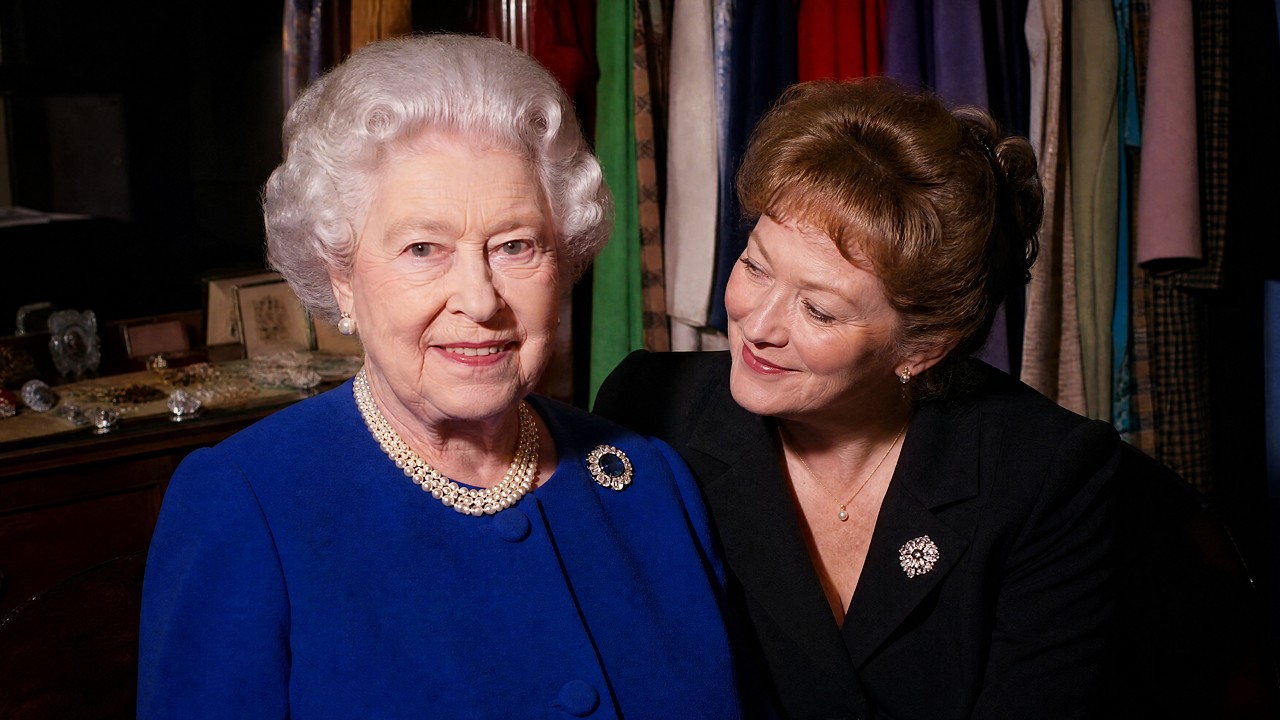
None of this carried her name publicly. That was the point. The world saw the result, never the woman.
### The Friendship the Palace Never Announced
The relationship between Elizabeth II and Angela Kelly quietly crossed the line into true friendship. Royal writers who watched the palace closely described Kelly as the Queen’s closest confidante outside her family. Kelly herself described the bond in the simplest terms. She said they were two ordinary women who talked about clothes, makeup, and jewelry. She called the Queen a really wonderful grandmother. That is not the language of a court employee. It is the language of a friend.
The gap in status between them was as wide as any in England. A queen on the throne on one side, a servant on the other. But inside the private rooms where they worked, that gap faded to almost nothing.
Both women were practical, direct, and unsentimental about hard work. In Kelly, the Queen found someone who was by her side every day, wanting nothing but to do her job perfectly, and who could be trusted completely.
### Dancing to the Radio and Washing Dishes at Balmoral
When a certain song came on the radio in the morning, the most powerful woman in Britain would get up and dance with her dresser. The song was Dancing Queen by ABBA. The Queen loved it. The two women would dance.
Kelly told the story with delight. She admitted she got into it as if she were in a nightclub. The Queen laughed and told her to move away because Kelly could not sing.
At Balmoral, the private castle in the Scottish Highlands, Kelly described the Queen rolling up her sleeves and washing dishes after a barbecue. If the Duke of Edinburgh burned the food, the Queen would just laugh. This was not the Queen in formal occasions, with gloves and tiara and stillness. This was a woman at home among people she trusted.
Balmoral was owned by the Queen personally, not by the Crown. It was the place she felt most herself. It was also, in the end, where she died. Kelly witnessed both sides. She saw the woman in her most relaxed private life and was by her side in the final moments.
### The Book the Queen Allowed Her to Write
In 2019, Angela Kelly did something no serving royal servant had ever done before, and the Queen gave her permission. She wrote a book about her life with the Queen. It was called The Other Side of the Coin.
It was published while she was still in post, with the Queen’s own approval. It was not even her first book. In 2012, for the Diamond Jubilee, she had published a more formal account of jubilee clothing called Dressing the Queen.
The 2019 book delved into the friendship itself, the jokes, the small human moments. On one hand, it was the ultimate proof of trust. On the other, it made Kelly visible in a way servants are never supposed to be.
Not everyone in the palace was comfortable with her prominence. Kelly was direct in a world that valued discretion. Her closeness to the Queen brought her enemies as well as friends. In her later years, she said she was too old to worry about who liked her and who hated her.
In his memoir Spare, published in 2023, Prince Harry claimed Kelly obstructed the borrowing of a tiara for Meghan Markle before their wedding. That is Harry’s account alone. It should be taken as a claim, not confirmed fact. What it illustrates is that Kelly, as guardian of the Queen’s jewels, held real power over who wore what.
### September 8th, and the Machinery Stops
On September 8, 2022, the relationship that had supported Angela Kelly’s entire life ended at Balmoral. Queen Elizabeth II died at the age of 96. She had reigned for 70 years.

In her final days, Kelly was among those closest to her. Two years later, in September 2024, Kelly shared what she did in the final moments. She told the Queen on her deathbed that she loved her. She kissed her goodbye. She later wrote that every anniversary would break her heart.
Kelly had built her entire world around this one woman. She dressed her, guarded her jewels, danced with her, protected her. Now that woman was gone. And with her went every source of Kelly’s security.
Kelly held no constitutional office. She had no permanent position that outlasted the reign. Her closeness, her status, her home, her freedom to speak, all of it rested on the favor of one mortal woman. While that woman lived, it was the safest place in the kingdom. The moment she died, it became the most exposed.
### A Phone That No Longer Rang
Within days of the Queen’s death, the letters began to arrive and the phones began to go silent. Reports at the time described redundancy letters reaching staff within days. A great institution was being reorganized around its new head, and the old reign’s people were being counted, sorted, and in many cases let go.
Kelly’s home was tied to the Queen. She lived in a grace-and-favour house on the Windsor estate, a modest property in the royal park that she occupied by the Queen’s favour, not by right. A grace-and-favour home is exactly what it sounds like. It is a borrowed house, not an owned one, granted by the sovereign as a favour to those who serve the Crown.
Then came the small, telling detail. Her work mobile phone was disconnected. For years, that line connected her at any hour to the most famous woman in the world. Now it was cut off. The link that defined her career was switched off simply, quietly, as a routine administrative matter.
Kelly herself noted the disconnection. She mentioned in a message that her work phone had been cut off, but she hoped people could still reach her on another number. It is a simple image of an older woman worrying that her friends might lose her number.
### Not Everyone’s Favourite
A palace source said that Angela was not everyone’s favourite, and that the new King did not want to live next door to her. This chapter should be read as reported. Kelly is still alive, and the palace’s private affairs are not public record. What follows relies on royal correspondents and anonymous sources.
In the months after the Queen’s death, Kelly left her grace-and-favour home on the Windsor estate. She left in April 2023, about seven months after the funeral.
Reports offer two reasons. The practical one is that King Charles had indicated for years that he wanted a smaller, less expensive monarchy. The old custom of housing retired staff for life in cottages on royal estates was exactly the kind of expense a more frugal court might question.
The personal reason is colder. Charles reportedly considered Kelly’s authorized books too gossipy for someone in the inner royal circle, even though his mother had approved them. A palace source said: Angela was not everyone’s favourite, but the King had no desire to see her homeless. The same source added that the King simply did not want to live next door to her.
That single quoted sentence contains a firm hand, cold feelings, and a measure of mercy all at once. It acknowledges she was not universally liked. It admits the King preferred distance. And it insists, almost in the same breath, that he would not leave her without a roof.
The word evicted, which headlines this story, deserves an honest look. Reports confirm Kelly left the grace-and-favour home after the Queen’s death, that this followed the end of her role, and that the King reportedly arranged an alternative home for her rather than leaving her homeless.
### 180 Miles from the Castle
Angela Kelly drove about 180 miles north from the oldest inhabited castle in the world to an ordinary town near Sheffield. She came, decades earlier, from the north of England to the heart of the monarchy. Now she made the journey in the other direction.
According to reports, the new home was not a punishment but a response to her needs. After negotiations, King Charles reportedly arranged and paid for a home for Kelly in that part of the north, so she could be near her grandchildren and not be left homeless.
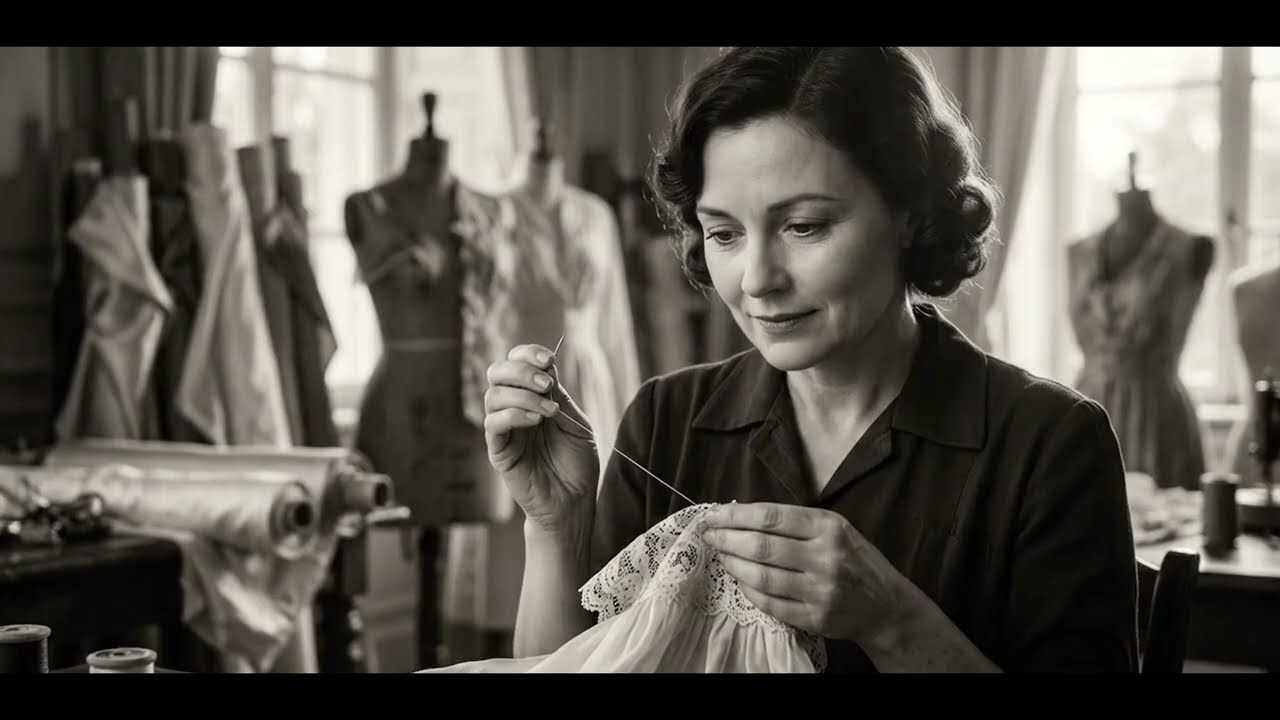
Kelly had three sons from her first marriage and grandchildren in the north. The new home placed her among them. After a life spent serving another family, at the heart of the most famous family in the world, she returned in her sixties to her own family.
She faced the change without visible bitterness. She wrote that she was preparing to say goodbye and finally move to her new home. The word finally is striking. It carries no anger. If it carries anything, it is a tired relief. It is the tone of a woman ready to stop, ready to let go of a role that demanded everything for most of her life.
### The Goodbye She Finally Spoke
Two years after the funeral, Angela Kelly told the world the last words she said to the Queen. In September 2024, she spoke publicly about the end. She revealed she told the Queen on her deathbed that she loved her, and kissed her goodbye. She wrote that every anniversary of her death would break her heart.
After decades of discretion, this was Angela Kelly speaking about herself and her own grief in her own voice. There is no scandal in that farewell. There is only love, loss, and the private sorrow of someone who lost not just an employer but the centre of her life.
She has kept her Royal Victorian Order, which no change of reign can erase. She remains the author of the only two wardrobe books written with the late Queen’s blessing. She has moved toward new work, lending her name to a fashion project with a collaborator.
Her legacy has two edges. She is the clearest example of rising by merit inside an institution built on birth. A dock worker’s daughter from Walton, with no name and no fortune, became the confidante of the Queen of England. That is a story of talent and determination overcoming the hardest obstacles a class society can impose.
But her story is also a lesson in how conditional that kind of closeness is. Everything she achieved depended on one relationship. When that relationship ended in death, her place in the royal world ended with a speed that revealed the truth plainly.
Royal correspondent Valentine Low, who watched the palace closely, described Kelly as the person who cared for the Queen more than anyone else, and as her closest confidante outside the immediate family. Compare that description with the speed of her removal after the death. The two facts together tell you what ceremony never will. The closer one gets to the private heart of the monarchy, the more intimate it is, and the harder the fall when the one who protected it is gone.
### What the Crown Keeps and What It Lets Go
The shoe was the truth of the whole matter all along. A woman quietly walking a little ahead so another would not feel the pain. For years, Angela Kelly broke in the Queen’s shoes because they shared a size and the Queen had no time to do it herself. It is the perfect image of everything she was. She took the discomfort so the Queen would not feel it.
It is also the perfect image of how that devotion was repaid by an institution that must outlive everyone inside it. Kelly achieved something almost no one achieves. She became truly close, heart to heart and day to day, to the most famous woman in the world, without rank, wealth, or high birth. For a time, that closeness looked like the ultimate reward for loyalty.
But the story shows how false that belonging was. The Queen could give Kelly a home, a role, and permission to speak. The Queen could not give her any of that beyond her own life. The moment she died, Kelly no longer possessed anything that could not be taken back. And much of it was taken back within months.
This is not a story of villains. According to reports, King Charles provided housing for the woman he moved aside. The palace did what palaces do when a reign changes. The Crown acted as it must, protecting the institution first, because the institution is the thing that remains.
That endurance is its greatest strength. It is also its cruelty as an employer. It is bigger than any friendship formed within it. Bigger than a 70-year reign. Bigger than the love between a Queen and the woman who dressed her. It has to be. Otherwise it would not have survived the death of anyone.
Kelly said she had become too old to care who liked her and who hated her. They are fitting closing words for a woman who spent her life caring more than anyone about the comfort and approval of one person. She earned the Queen’s love the hard way, from the outside, by merit alone. She has the memories, two books, and the honours to prove it.
What she does not have now is the cottage, or the number that connected her to the Queen, or the world that vanished the day her friend died. She traded 30 years for a closeness that was real as long as it lasted, and disappeared the moment it could no longer be granted.
Somewhere in a home near Sheffield, 180 miles from the castle, the woman who once tested the Queen’s shoes now walks her own quiet path, wearing her own shoes at last.