Siegfried Graetschus was born on June 9, 1916, in Tilsit, then part of the German Empire. After completing elementary school, he worked as a farmer before joining the SS in 1935 and the Nazi Party the following year.
His early SS career included service at the Sachsenhausen concentration camp north of Berlin. That camp held Jews, homosexuals, Jehovah’s Witnesses, Roma and Sinti people, and later Soviet civilians.
After the outbreak of World War II in September 1939, Graetschus became involved in the Nazi euthanasia program known as Aktion T4. This program systematically murdered institutionalized patients with disabilities in Germany.
Graetschus worked at the Grafeneck, Brandenburg, and Bernburg killing centers. His duties included moving murdered victims from the gas chambers to the crematoria.
The T4 program predated the Holocaust by roughly two years. Historians estimate that it claimed the lives of 250,000 men, women, and children.
In the fall of 1941, Nazi Germany implemented a plan to systematically murder the two million Jews living in German-occupied Poland. This plan was code named Operation Reinhard, and it led to the establishment of three killing centers: Belzec, Sobibor, and Treblinka.
Graetschus was involved in the early stages of Belzec’s operation. During the camp’s experimental phase, he and Lorenz Hackenholt transformed a confiscated post office vehicle into a mobile gas chamber.
The killing process often failed to complete quickly, causing horrific suffering as victims suffocated. Ultimately, commandant Christian Wirth decided to use stationary gas chambers instead.
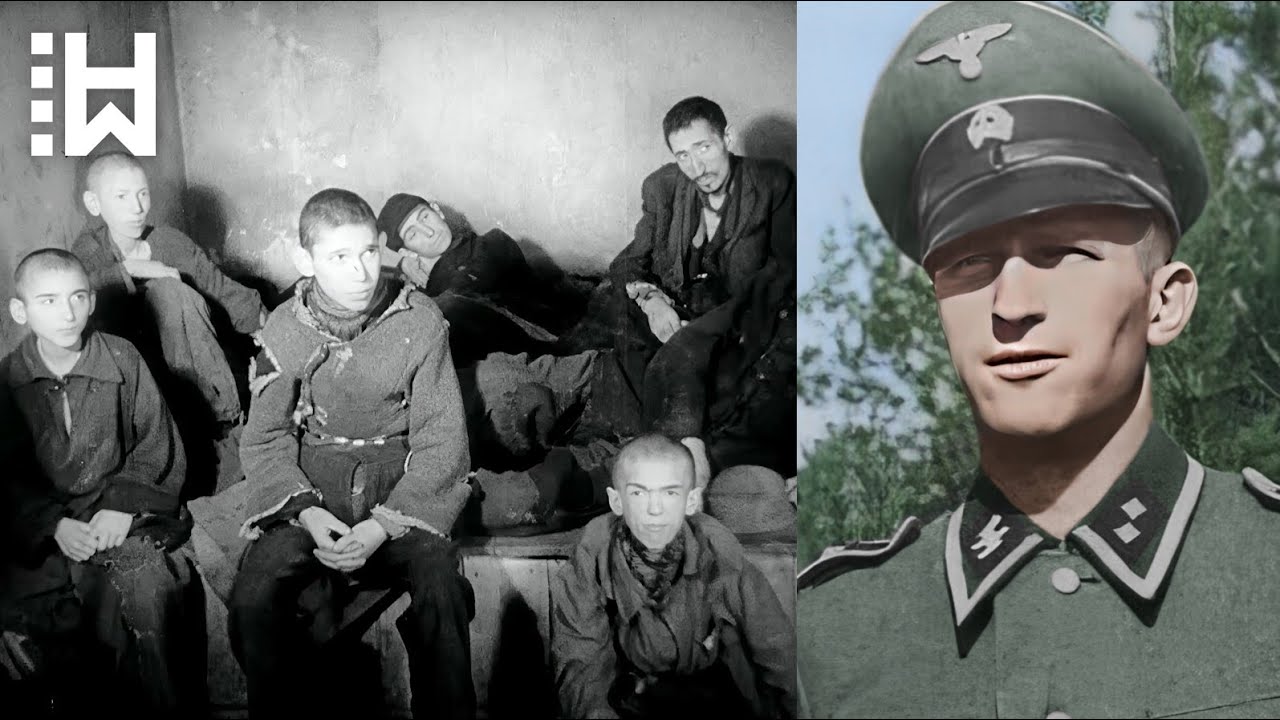
Between March and December 1942, approximately 434,500 Jews and an undetermined number of Poles and Roma people were deported to Belzec and killed. Only seven Jewish slave laborers survived the war.
After Belzec was dismantled, the Germans plowed over the site and disguised it as a farm. Graetschus then briefly served at the Treblinka extermination camp.
Treblinka was constructed in the summer of 1942. By the time it was dismantled in the fall of 1943, camp personnel had murdered an estimated 925,000 Jews, as well as an unknown number of Poles, Roma people, and Soviet prisoners of war.
In August 1942, Graetschus was deployed to the Sobibor extermination camp. There he was promoted to SS Obersturmführer and given command of the 90 to 120 Trawniki men who guarded the camp.
These guards were Eastern European collaborators trained at the SS camp in Trawniki. They were considered difficult to manage and unreliable.
Sobibor operated between May 1942 and the fall of 1943. Most Jews brought to the camp were immediately gassed with carbon monoxide piped in from an engine.
About 250,000 victims were murdered at Sobibor. Approximately 50 German and Austrian personnel served at the site.
The camp was built as a rectangle surrounded by a double barbed wire fence woven with tree branches. This design was intended to hide the view of what was inside.

When transports arrived, victims were told they had reached a transit camp on their way to labor camps. They were ordered to undress and hand over their valuables before being marched on the run to the gas chambers.
About 450 to 550 Jews were forced into the chambers at a time. Within 20 to 30 minutes, all those inside were dead.
Those too ill, weak, or elderly to make the walk were shot in an open pit. The SS personnel at Sobibor enjoyed higher pay, regular visits home, and stole possessions from the victims.
Camp commandant Franz Reichleitner tolerated plunder by his SS men but not by camp inmates or Trawniki men. In one case, he investigated a theft and had three Jews and two Trawniki men shot.
The man who shot them was Siegfried Graetschus.
In the summer of 1943, rumors began to circulate that Sobibor would soon cease operations. The prisoners understood this would mean certain death for all of them.
They had learned what happened to the Belzec prisoners who had done the same work. Those prisoners had sewn messages into their clothing before being killed by Sobibor guards.
One note found in a pocket read: “We worked at Belzec for 1 year and did not know where we would be sent next. They said it would be Germany. Now we are in Sobibor and know what to expect. Be aware that you will be killed also. Avenge us.”

In September 1943, 20 Jewish Red Army prisoners of war arrived at Sobibor on a transport from the Minsk ghetto. One of them, Alexander Pechersky, became a leader of the revolt.
The uprising began late in the afternoon on October 14, 1943. The first person assassinated was deputy commander Johann Niemann, the highest ranking SS officer on duty that day.
Another target was Siegfried Graetschus, commander of the Trawniki guards. The conspirators lured him to the tailor’s workshop.
When Graetschus entered, he stopped at the door and tried on a coat the tailors had made for him. Arkady Weispapier, a former sergeant in the Red Army, stepped out from behind a curtain and hit him on the head with the sharp edge of an axe.
Graetschus screamed but did not fall. Then Paul Yehuda Lerner came at him and buried the axe into his skull, splitting it open. Graetschus was dead before he hit the floor.
Weispapier took the gun from his holster and pocketed his papers. The tailors dragged the body away and covered it with clothes.
At that moment, a Ukrainian guard entered the workshop. He bumped into the pile of clothes, bent down, and asked what it was. Lerner and Weispapier killed him with their axes as well.
In total, 11 SS officers were killed by the rebels. Chaos then took over.
Approximately 300 prisoners were able to escape, but most were chased down and killed. Some stepped on mines. Some gave up and did not run at all.
Those prisoners who had not joined the escape were killed as well. Some 50 of the escapees survived the war.
After the revolt, SS chief Heinrich Himmler ordered that Sobibor camp be closed. There were no tears shed for Siegfried Graetschus.