In November 1975, Babe Paley was already gravely ill. The lung cancer diagnosis had come that same year, a bitter coincidence that history has never treated as mere chance. She had smoked her entire adult life; the cigarette was as much a part of her image as a Hermès scarf or a Balenciaga gown. The cancer forced a kind of clarity that was cruel in its timing. Choices that once looked like freedom revealed themselves as compulsion. Habits that seemed merely elegant revealed themselves as self-destruction. Babe was too intelligent to ignore this, and too disciplined to say it aloud.
Then the magazine arrived.
*Esquire* published "La Côte Basque 1965" in November 1975, presented as a chapter from Truman Capote's long-promised novel, *Answered Prayers*. Capote insisted until his death that it was fiction, but everyone in the society he had inhabited for twenty years knew otherwise. The characters were thin masks over real people, easily recognizable and deeply furious. Every detail was too precise to be invented. Every conversation was too specific to be imagined. Capote had spent two decades collecting the secrets of these women the way other men collected art. Now he had displayed his collection in a magazine read by millions of Americans who had never lunched at La Côte Basque.
For Babe specifically, the most destructive element was not what Capote wrote about her directly. It was what he wrote about Bill. The story of the governor's wife and the stained sheets was understood immediately and unanimously to be about William S. Paley, his infidelity, his neglect, and his complete disregard for the woman he had married. Capote had taken Babe's private pain, the secret she had confided in him over twenty years of friendship, the wound she never showed publicly, and published it in a national magazine with enough transparency that everyone who mattered knew exactly whose wound it was. He had not hidden it. He had renamed the principals and changed some professional details, called it literature, and sent it to press.
Babe did not call him. She did not write. She did not send a message through mutual friends demanding an explanation or an apology. She had spent her life perfecting the performance of composure, and she now executed it with absolute discipline. The silence was not passivity. It was the most precise and powerful response she could offer, and she maintained it until the day she died.
To understand that silence, you have to go back to Boston, to a family driven by ambition, and to the machinery that made Barbara Cushing. Babe Paley's life was not the story of a woman who had everything. It was the story of a woman raised from childhood to understand that having everything required giving up everything else, and who spent her life discovering how much she had surrendered. The price was paid in silence, in thirty years of composure while watching her husband humiliate her, confiding in only one man, the only person she trusted. His exploitation of that trust became a story of betrayal in its most intimate, precise, and artfully packaged form.
Harvey Cushing was one of the most famous doctors in American history, which meant he was also one of the most absent fathers in Boston's social register. Born in 1869, he became a pioneer of modern neurosurgery, performing brain operations no one had previously thought survivable. The hormonal disorder he described still bears his name. He was a man of extraordinary discipline, focus, and ambition, and he brought to fatherhood the same warmth he brought to surgery: technically precise, visibly authoritative, emotionally cold. His wife, Katherine Stone Crain, compensated with a project of her own: their daughters.
Barbara, nicknamed Babe from childhood, was born on July 5, 1915. She was the youngest and, by most accounts, the most beautiful. Katherine Cushing did not raise her daughters to think of beauty as vanity. She raised them to understand beauty the way a chess player understands a powerful piece: as a strategic asset, extremely valuable when used correctly, extremely dangerous when used carelessly. Social position in the Cushing household was not accidental. It was practiced, like a musician practicing scales daily without complaint. The Cushings were well-off and respectable, but they were not aristocracy in the way of the Boston families just above them in the social hierarchy. Katherine was determined to close that gap with the only currency she had in confidence: her daughters' beauty, charm, and trained social intelligence.
The older sisters' marriages proved what this upbringing could produce. Betsy Cushing married James Roosevelt II, eldest son of Franklin Delano Roosevelt, in 1930. When that marriage ended, she married Jock Whitney, a man whose net worth eventually exceeded $200 million. Minnie Cushing followed a similarly strategic path. Her first marriage was to Vincent Astor, heir to one of America's greatest fortunes. The sisters shared a particular kind of training, visible to anyone watching closely. They moved through rooms with practiced ease, dressed with precision, spoke to servants and presidents with equal confidence. They all understood, at some level below consciousness, that maintaining a certain image was not vanity. It was survival.
For Babe, the youngest, the training came with additional pressure. Watching her sisters execute strategic marriages with visible success was both a model and a competition. She grew up knowing her beauty was the family's most valuable asset, and she was expected to use it well. Falling short of her sisters' achievements would not be merely a personal failure. It would be a failure of the entire family project.
The formation of Babe Paley began in Boston and continued without interruption for the next six decades. There was no graduation ceremony in the Cushing curriculum. The training became the structure of her personality, the supporting framework of her identity. She maintained it not because she decided to maintain it, but because she could no longer find the self that existed before the structure was built.
Barbara Cushing began her career at *Glamour* magazine in 1935 at age twenty. By 1939 she had moved to *Vogue*, where she worked as a fashion editor in an era that required far more than good taste: a real understanding of the relationship between clothing and social meaning, between fabric and power. She was more than competent. She brought to the position a language of beauty precise enough to be professionally useful and authentic enough to be genuinely influential.
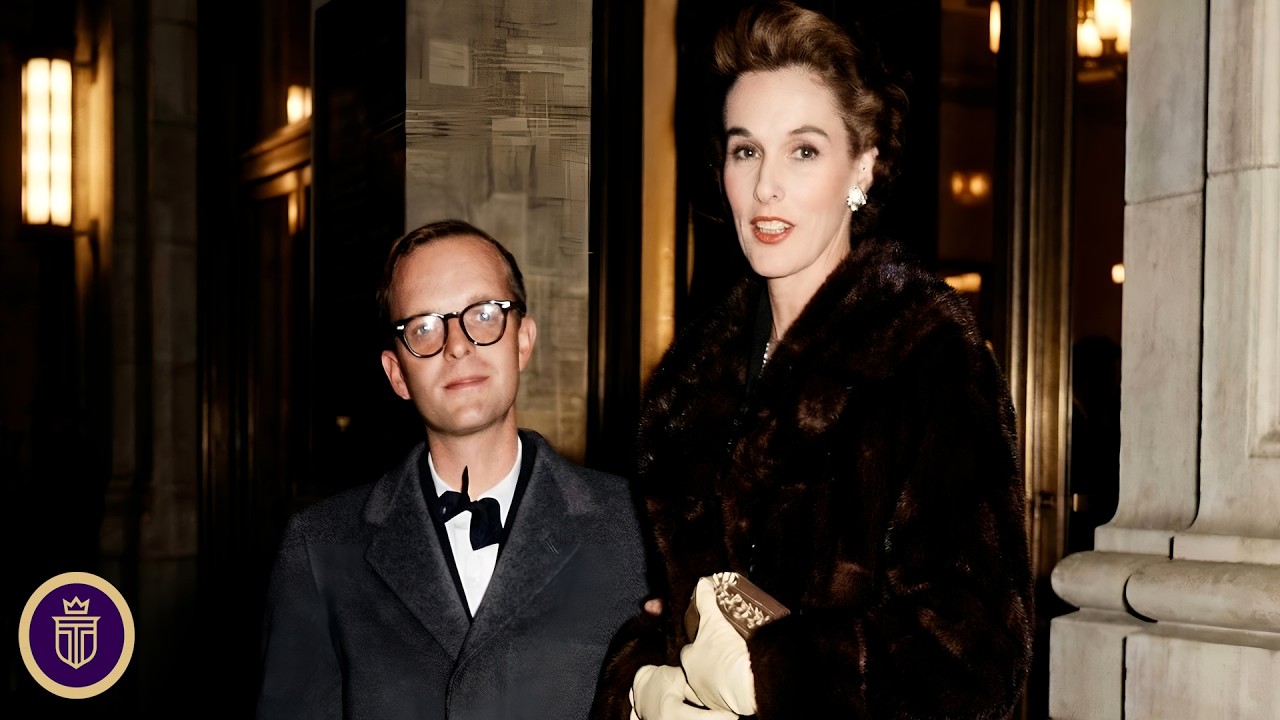
In 1937, at twenty-two, she was in a car accident. Her jaw was shattered, her front teeth knocked out, and she required extensive reconstructive surgery. In an era when reconstructive surgery was far less refined than it would later become, the recovery was long and painful, and the outcome uncertain for months. She emerged from the experience, by everyone's account, more beautiful than the woman who had entered it. At the beginning of her life, the accident taught her a lesson she would apply for the rest of it: transform personal pain into public composure. You simply come back looking better than before and move on. Moving on was the first essential skill in the Cushing curriculum, and Babe learned it early.
Her first marriage came in 1940. Stanley Mortimer Jr. represented everything the Cushing matrix had defined: handsome, wealthy, well-connected, from an oil family with immense fortune. They married on October 15, 1940, in a ceremony the society pages described with the gravity reserved for occasions that affirm the natural order of things. The natural order was about to be severely disrupted. Stanley went to war as men of his generation did, and the man who returned was not the man who left. He returned an alcoholic, with what would later be understood as manic depression accompanying the drinking. Babe spent two years trying to manage this particular difficulty before concluding it was intractable. The couple had two children: Stanley III in 1942 and Amanda in 1944. She filed for divorce in 1946.
By 1946, she was one of the most photographed women in America. Her name appeared in *Vogue* and *Harper's Bazaar* with regularity. Designers understood that Babe Mortimer's endorsement was worth more than any advertisement they could buy. Something was being built, though its final form was not yet clear.
Its final form appeared in 1947, wearing a cigar and carrying the weight of an empire built before he turned thirty. William S. Paley was not supposed to be the man Babe Cushing married. He was Jewish, which in the social geography of 1940s America meant certain doors were not automatically open to him. He was already divorced, with two adopted children from his first marriage. He had built CBS from sixteen struggling radio stations into the dominant communications empire in America, but he lacked the old Protestant credentials that Babe's training had prepared her to navigate. She gave him access to a social world his money alone could not buy. He gave her the platform to practice, on an unprecedented scale, the discipline she had been raised to embody.
The apartment at 965 Fifth Avenue had fourteen rooms in the most desirable residential building in New York, overlooking Central Park. Babe decorated it with meticulous attention to detail that reflected not just wealth but refined aesthetic judgment. Then came Kiluna Farm in Manhasset, Long Island, a working farm with formal gardens that became one of the great private entertaining venues of mid-century America. A house in Jamaica. A yacht. A property in the Bahamas. They had two children together, William Cushing Paley and Kate Cushing Paley, joining Bill's adopted children from his first marriage.
What Babe got from the marriage was what she needed and what she had been trained to acquire. Whether it gave her what she truly wanted was a question she ultimately confined to one trusted confidant: a small, brilliant, controversial man she met in the 1950s who understood her completely and loved her greatly, right up until the moment he destroyed her.
Calling Babe Paley a fashion icon is using contemporary language to describe something that was, in the mid-twentieth century, more serious and stranger. Elegance for Babe was not self-expression in the modern sense. It was control. Specifically, control over the only domain she could control completely and reliably in a life where so much was determined by others: her husband's demands, society's expectations, the upbringing her mother had instilled so deeply that Babe could no longer always distinguish between what she wanted and what she had been taught to want. Her presence on the International Best-Dressed List for eleven consecutive years was not an accident of genetics or social position. What distinguished Babe was not access. It was judgment. A quality of eye so precise, so anticipatory of fashion trends, that designers and editors treated her choices as data worthy of analysis.
The Hermès scarf story became legend because it captures something essential about Babe's aesthetic intelligence. She took a silk scarf, a piece known for its proper use as a neck accessory, and tied it around the handle of her handbag. That was all. A simple, spontaneous, improvised gesture. Within weeks, women across New York were doing the same. Fashion correspondents in multiple countries wrote about it within months. Within years, it had become so embedded in the visual language of accessories that most women who do it today have no idea they are imitating a solution improvised by a woman in New York on an ordinary morning, probably in the early 1950s. That is real influence, as opposed to mere fame. Fame is recognized and credited. Influence is absorbed until it becomes invisible.
For a woman who suffered as much private pain as Babe Paley, the perfection of her external appearance was not vanity or luxury. It was the only domain where she held absolute power. Bill Paley could conduct his affairs with whomever he chose, and he did so repeatedly and with visible carelessness. Society could demand she maintain the image of a happy, elegant, successful marriage, and she did so at enormous cost. But the clothes, the rooms, the flowers, the table settings, the meticulous precision of every visual element under her control, these were hers alone. No one could take them from her, touch them, or misuse them on her behalf. In a life where she was expected to subordinate her needs and feelings to the comfort of others, style was the one domain where she answered only to her own taste.
Everyone knew about Bill Paley's women. It was not a secret in any meaningful sense. It was the kind of open secret that New York society in the 1950s and 1960s maintained through a collective agreement not to discuss it in front of the person most affected by it, combined with a complete willingness to discuss it everywhere else. The infidelities were chronic, entrenched, as much a part of Bill Paley's character as the network he built and the cigars he smoked. He was a man who wanted things. The pursuit followed desire with the same relentlessness he showed in business acquisitions: without pause, with the assumption that what he wanted was available to him, because most things he wanted were. His very public, very prominent marriage to the most admired woman in New York did not appear to be a sufficient deterrent.
The rules of Babe's world were clear about how a wife in her position was expected to respond. Above all, she was expected to show no reaction, neither publicly nor in any visible way. She was not permitted any response that would force others to take sides, acknowledge what was happening, or choose between loyalty to Babe and the social status that came with access to the Paley family. Maintaining the marriage as a social unit was more important than maintaining it as an emotional reality. Babe understood this condition with complete clarity, thanks to her training by Katherine Cushing, specifically for such situations.
Babe never complained publicly, not once, in thirty years of marriage to a man who humiliated her constantly. She never showed any grievance in interviews, at dinner parties, or in the subtle social signals that would have allowed practiced observers to read her unhappiness without her stating it directly. She maintained the facade with such complete discipline that some people in her social circle genuinely believed the marriage was happy, or convinced themselves it was, which amounts to the same thing for social purposes. What Babe did with her pain was architectural, just as her style was. She placed it where it could not be seen. She poured her attention into managing the houses and social events. Kiluna Farm became one of the most impressive private properties in America precisely because Babe treated its management as a serious creative project rather than a domestic duty. The gardens were spectacular. Each guest room was individually designed to suit the tastes and preferences of the person who would stay in it. The flowers sent from the farm to friends in the city expressed genuine warmth and careful attention to those friends, so much so that the gesture stayed in recipients' memories for decades.

She also expressed her pain to Truman Capote. Or rather, she expressed it in their friendship, in the conversations held in his apartment or hers, over drinks or lunch or long afternoons, where she could stop performing for an hour and be a real person for a brief period instead of a presentation. His company was the pressure valve for thirty years of accumulated tension, the only place where the performance could stop.
Truman Capote entered Babe Paley's life in the early 1950s, at the moment when his talent was at its peak and his self-destructive tendencies had not yet fully manifested. *Other Voices, Other Rooms* was published in 1948 to critical acclaim and social scandal. Then came the novella that would become *Breakfast at Tiffany's*. Then the journalism and short stories that would eventually produce, in 1966, *In Cold Blood*, the work that effectively invented the nonfiction novel. In those years, he was also the most entertaining person at any New York party, capable of holding a room with stories that blended gossip, literary craft, and social analysis. He was also, in some obvious ways, non-threatening. He was short, slight, with a high voice and a manner that combined childlike innocence with deep worldly understanding. He was openly gay in an era when that required either great courage or great recklessness, and Capote combined both. He was not in competition with Bill Paley for anything. He was not looking at Babe as a prize or a social conquest. His attention was on her as she was, with genuine curiosity and admiration, free of desire or ambition, a kind of attention she had rarely received from anyone. It was devastating.
He called the group of women he cultivated his "swans," a term that was flattering and, at the same time, revealing of the relationship's nature from his perspective. A swan is a beautiful creature, graceful, admired from a distance. Capote's swans were the most famous women in America: Babe, along with Slim Keith, C.Z. Guest, Gloria Guinness, Marella Agnelli, and others. Each had a public image polished to the point of mystery, each trained in the same discipline Babe had trained in, each maintaining the same glittering facade despite the same personal complications. Capote was the only person who got beneath the surface of all of them. With Babe specifically, the friendship became the closest female relationship of his life, as those who knew them both described it.
The conversations between them were reconstructed from Capote's letters, from the memories of mutual friends, and most precisely and damningly, from the text of *Answered Prayers* itself. Bill was the main subject. The affairs, the women specifically, the humiliation of maintaining the appearance of a happy marriage while your husband cheated on you so blatantly that it was the subject of private conversation at every dinner party in Manhattan. All of it was discussed. What it meant to be Babe Paley was another subject: the constraints, the loneliness, the peculiar isolation of a life lived so publicly that genuine privacy was nearly impossible. These were things Babe could not tell anyone else, had never told anyone else, and had kept silent about for thirty years.
Capote listened with complete attention and total recall. This was his gift as a writer: absorbing the story, storing it in memory with documentary precision, then reproducing it with flawless accuracy. He had trained himself, during *In Cold Blood*, to conduct six-hour interviews and then reconstruct them from memory alone, because taking notes in the presence of traumatized or guarded people changed what they said and how they said it. He applied the same ability to his conversations with Babe, though he never told her he was doing so. She thought she was speaking to a friend. She was also speaking to a journalist, at least in part. Whether Capote saw a meaningful difference between these two things is one of the central questions of his biography, and the likely answer is that he did not, at least not in the way Babe needed him to.
She trusted him with things she had trusted no one else with, because he made himself the safest refuge she had ever found. Discretion seemed to be his defining quality. Loyalty seemed to be his defining trait. Above all, he seemed to understand the difference between the material of her life and the life itself, between the secrets she shared with him and the woman who shared them. Her friend, not her biographer, is how it seemed. In the end, he never grasped that difference at all. Or perhaps he grasped it and could not restrain himself. Whether Capote was capable of understanding the damage he was about to inflict, or whether his hunger for literary material overwhelmed his capacity for empathy, remains a question for biographers and critics. Perhaps both were true simultaneously. The coexistence of genuine love and genuine harm is not the paradox it appears to be. It is simply the most specific kind of betrayal: not the betrayal of an enemy or a rival or a stranger, but the betrayal of someone who loved you and whom you loved, and who used that love as the door through which to take what was never offered.
The November 1975 issue of *Esquire* presented "La Côte Basque 1965" as a chapter from the novel Capote had been promising for years. The novel that would become his masterpiece, his social chronicle of twentieth-century America, the work that would cement everything *In Cold Blood* had proven about his ability to turn real events into literature. *Answered Prayers* was the project he had been announcing since the late 1960s. By November 1975, the announcement had gone on so long that some people in his social circle had begun to wonder if the book existed at all. What the chapter actually was, stripped of its literary framing, was a text of twenty years of secrets of the most powerful women in New York, written transparently enough that their identities were obvious to anyone who had ever attended a dinner party near them, and published in a magazine with national distribution that carried the conversations of those dinner parties to millions of readers who had never been near them.
The story is set at La Côte Basque on East 55th Street, which in the 1960s and 1970s was the preferred lunch destination of Manhattan's social elite. A narrator named P.B. Jones sits with a character named Lady Ina Coolbirth and observes the other diners, commenting on them with the unique blend of affection and cruelty that Capote had always brought to his social observations. Lady Ina Coolbirth is Lee Radziwill, Jackie Kennedy's sister, and the description was so precise that Lee needed no explanation. But the most destructive element was not Lady Ina Coolbirth or any of the other thinly disguised characters filling the restaurant's tables. The chapter included a story about a prominent man and his wife, about sheets in a hotel room bearing the evidence of a sexual encounter between the man and another man's wife. The details were precise, the humiliation clear, the placement of the story in the chapter and the weight Capote gave it made it immediately comprehensible to everyone who read it with any knowledge of the social world it described. The man was William S. Paley. The wife was Babe.
The betrayal operated on multiple levels simultaneously, making it far worse than any single element. On the most direct level, Capote had taken information Babe had shared with him in confidence over twenty years of friendship, shared with him precisely because she trusted him, and published it. But publishing it in a way she could not publicly address made it worse. Acknowledging the story would be confirming the identity, and confirming the identity would be confirming everything the story implied about her marriage, her husband, and the private reality behind the public performance she had maintained for thirty years. On a deeper level, Capote had taken the deepest wound in Babe Paley's life and made it visible to strangers. Her most private pain had been converted into entertainment. What she had entrusted to him was published for money and for the literary reputation he believed the novel would secure. He had decided that his art was worth more than her privacy, and he had made that decision without consulting her, without warning her, without giving her the opportunity to refuse.
The other women responded with the force of women who understood immediately and precisely what had happened. Slim Keith was furious. Gloria Guinness was furious. C.Z. Guest was furious. Marella Agnelli was furious. Every woman in Capote's close social circle understood that what had happened to Babe could have happened to her, because she had told him things because he was her friend too. Because the chapter made clear that the distinction between friend and source material was one Capote had unilaterally decided did not apply to him, the social doors he had spent twenty years passing through as a favored guest closed with remarkable speed. It was a collective social enforcement so swift and complete that it demonstrated, among other things, how much power these women actually wielded when they chose to exercise it in the same direction at the same time. Overnight, he went from being the most entertaining guest in America's finest salons to a man whose invitations simply stopped coming. He had not adequately anticipated this outcome. Perhaps he had convinced himself that the work would be so obviously brilliant, so clearly a work of genius that only a writer with his unique access to this private world could have produced, that the people he had used as raw material would eventually forgive him, as figures in great literature are historically expected to subordinate their personal objections to the general cultural good. But this turned out to be wrong in every particular. The people he had used as raw material were not interested in the general cultural good. Their secrets had been published in a national magazine while they were still alive to suffer the consequences. That was all that mattered.
Babe's response, as noted, was silence. Complete, absolute, unbroken silence. It was the most appropriate response, and the one that hurt him most. The other women could rage, giving him at least something to respond to, some drama in which he could play a role and seek resolution. Babe simply withdrew from the relationship entirely and permanently, thereby demonstrating something essential about her character. The discipline was not superficial. It was embedded in every layer she had built over sixty years of relentless self-construction.
The year 1975 was cruel to Babe Paley in a way that felt almost orchestrated to those who knew her. The lung cancer diagnosis came in the same year as the *Esquire* issue. Two catastrophes arriving together, as if the universe had decided to dismantle the structure she had spent sixty years building. She had smoked her entire adult life, which was common for her generation and social class. The cigarette was present in every photograph from the 1940s through the 1960s: in her hand at parties, in the slender images of her enjoying herself by the pool, at the dinner table in her apartment, on the deck of the yacht. It was as much a part of the visual language of mid-century elegance as a cocktail glass or a linen suit. No one in her circles spoke in those years about the effects of cigarettes on the body, or if they knew, they managed to ignore the information as people ignore knowledge that does not fit their lifestyle. The cancer, when diagnosed, was advanced enough that it left little room for optimism.

Babe handled the illness the way she handled everything else: with quiet discipline, with determination not to become a public spectacle of suffering. She continued to appear at events when her health allowed. She continued to dress with care. She continued to maintain her apartment and the social routines that had structured her life for thirty years. Stopping the performance would have forced her to become a completely different person than the one she had been for six decades, and she did not know how to do that. By this point, the performance was not separate from the person. It was the person.
What was harder to maintain, and what required those around her to maintain a careful silence, was the pretense that Bill was managing her decline with appropriate devotion. He was not. Bill Paley continued to travel and socialize throughout Babe's illness with a regularity noticed by nearly everyone in their social circle, and commented upon in the way Manhattan social circles comment on things: quietly, persistently, and always in the third person when anyone connected to the Paley family was nearby. He was away when she needed him at home. He was at parties when she was confined to the apartment. He pursued his own comfort and social pleasures with the same dedication he had always shown. His wife's terminal cancer was not sufficient reason for Bill to radically reprioritize his life.
Her health declined rapidly and without mercy, transforming her from a woman who had been on the International Best-Dressed List for eleven consecutive years, photographed by every major photographer, studied by designers and envied by women on two continents, into a woman weighing approximately eighty pounds in the final months of her life. Eighty pounds is the weight of a child. It is the weight of a body that has exhausted everything it had and is now consuming itself. Cancer does that when it is rampant, when it has drained the person standing in its way of all their strength to resist.
She never saw Truman Capote. She never sent him a message. She never gave him the opportunity for a final conversation, a final argument, or even a final explanation of why she had chosen silence over everything else. Her silence from November 1975 continued through her illness with complete consistency, through the weeks when she was well enough to go out and the months when she was not. It was, by any measure, extraordinary discipline. Most people facing death reach out to their significant relationships, including the complicated ones. Babe found no path to resolution with Capote. She made her decision in November 1975 and maintained it to the end.
A question hangs over this period that cannot be definitively answered but also cannot be ignored: did the shock of the betrayal contribute to the speed of her decline? The cancer was real, its causes real, and a lifetime of smoking was the primary cause. But the psychological state of a cancer patient cannot be dismissed in the progression of the disease. A person who has lost their primary emotional support at the moment they need it most, who is carrying the wound of the worst betrayal of their life, who knows they are dying, and who watches their husband continue his social life while she fades away, may not have the same resources as someone with more reason to hold on.
Bill Paley remarried in the same year Babe died. The woman was Jean Hitchcock, and the marriage took place in 1978 with a speed that revealed everything needed to know about Bill's relationship to the institution of marriage and to the woman who had performed that role for him for thirty years with such consummate skill. Barbara Cushing Mortimer died on July 6, 1978. She was born on July 5, 1915, and died one day after her sixty-third birthday, a detail that may mean nothing or may mean everything, depending on what you believe about the relationship between the facts of a life and the shape we see in them afterward. She died in New York. Her apartment at 965 Fifth Avenue, with its fourteen rooms and carefully chosen objects and meticulous maintenance, was the stage for the final act of her life, the place she had made more her own than any other she had inhabited.
Truman Capote was informed of her death. He wept as one weeps for something one has destroyed, genuine weeping compounded by the awareness that the destruction had been his own work. In the days and weeks that followed her death, he attempted to reach out to her family to offer condolences, wanting to share in the grief of those who had surrounded her in her final years. His request was refused. Neither the family nor those closest to Babe in her final days were interested in Capote's grief. His exclusion from the mourning was understood by everyone as what Babe herself would have wanted, the logical conclusion of her three years of silence.
On August 25, 1984, at the age of fifty-nine, Capote died at the home of Joanne Carson in Los Angeles. The cause of death was liver disease complicated by his multiple addictions to drugs and alcohol during the last decade of his life. The final ten years had been a slow, public decline. Appearances on talk shows where he was visibly impaired. Social events where those who had once admired him looked at him with a mixture of pity and contempt. His inability to work, his failure to produce the pages that would justify the sacrifices he had made. *Answered Prayers* was never completed. The chapters that were published, of which "La Côte Basque 1965" was the most famous and most destructive, represented the entirety of what existed in any form that could be presented to readers. The remaining chapters Capote claimed to have written and stored in a safe deposit box were never published. The manuscript, if it ever existed, did not survive his death.
He had destroyed his deepest friendships in his most productive years for material he never used. The novel that was supposed to justify the betrayals, the work of genius that was supposed to make the destruction of Slim Keith's trust and C.Z. Guest's friendship and Gloria Guinness's loyalty and Babe Paley's silence not merely justified but necessary, does not exist. What exists is a magazine chapter, enormous suffering, and six years of Capote's decline before his death. Slim Keith, one of his closest friends, never forgave him. C.Z. Guest, who had welcomed him into her family's life for two decades, never forgave him. Marella Agnelli cut him off, and Marella Agnelli is not a woman who makes such decisions lightly. Gloria Guinness, one of the most elegant women in Europe, wanted nothing more to do with the man who had used her as material. The elegant women who had allowed him into their private lives, who had confided their secrets to him on the reasonable assumption that he was their friend and not merely their chronicler, had those secrets published in *Esquire* while they were alive and well and moving through the very social circles those secrets exposed. His masterpiece was the bet he made, and he lost everything on both sides of the wager.
Babe took her silence with her to the grave, and then her silence became permanent. What Babe Paley built over sixty-three years deserves to be understood on its own terms, not merely as a backdrop to a betrayal. She built an image of a woman, refined and elevated over four decades, that was genuinely influential and lasting. The Hermès scarf on the handbag is still seen today on the streets of Milan, Paris, New York, and Tokyo, executed by women who have no idea they are imitating a gesture performed by a woman in New York, perhaps on an ordinary morning, solving a practical problem with distinctive elegance. Her understanding of proportion, of occasion, of the relationship between individual elements within an overall composition, was of the highest order. These are not trivial contributions to the visual culture of the twentieth century. The International Best-Dressed List Hall of Fame induction was not a consolation prize for sustained effort. It was recognition of a genuine and coherent aesthetic intelligence that operated at the highest level of its field for more than a decade.
She built a domestic world of exceptional quality and taste at Kiluna Farm, at 965 Fifth Avenue, at the houses in Jamaica and the Bahamas. Her hospitality was not merely lavish, though it was that. It was carefully considered, full of thought for the people involved and what would please each of them. Guest rooms designed specifically for each visitor. Flowers sent from the farm to friends in the city. Dinner parties organized according to the conversational harmony of the people at each table. Genuine intelligence and genuine care produced these things, and they remained in the memories of those who enjoyed them with genuine warmth and nostalgia. Babe Paley entertained the way great editors edit: with complete, invisible presence, making the event seem as though it organized itself while she in fact organized every detail of it.
The question that remains without a satisfactory answer is whether any of it was worth what it cost. A husband's chronic infidelities, treating his marriage as a social asset and his wife as part of that asset, endured in public silence for thirty years. The crushing loneliness of a woman whose perfection made genuine intimacy impossible, a woman who could be truly honest with only one person in the world, and chose for that person a man who was secretly recording everything she said. The cancer consuming a body that weighed eighty pounds at the end. The absence of the one friend who might have helped her face it, the friend she had cut off entirely and justifiably, the husband who went to parties while she was dying and then remarried in the year of her death. The honest answer is probably no. No external achievement, however real, compensates for a private life subjected to this kind of suffering.
The Cushing training produced exactly what it was designed to produce: a woman of exceptional public achievement who learned early and with complete precision how to diminish herself in the ways the important men in her life required. Harvey Cushing's stern, brilliant, emotionally absent example set the template. Bill Paley's infidelities were covered for three decades. Capote's betrayal was covered for three years. Her training in silence began early and deepened over time. What she did not do in the end is instructive. She showed no public anger. She gave no interviews to settle scores or explain her position or demand recognition for what she had suffered. No memoir was written. No authorized biography was published to correct the record on her own terms. She simply continued to be Babe Paley at full capacity until she could no longer do so. At eighty pounds, one day after her sixty-third birthday, in the finest apartment in New York, she died.
Her friend had already destroyed his career trying to write the novel that would justify what he had done to her. Bill would remarry before the year was out. Babe's children would carry the legacy of watching both parents navigate a marriage that cost at least one of them dearly. No complaint was recorded. No public word was spoken about Truman Capote or the magazine or the three years of silence that followed. History has reconstructed her feelings from the silence itself, which is entirely fitting for Babe Paley's character. Even her deepest wounds were expressed in the language of perfect composure, without exaggeration, without visible effort, without any apparent crack in the surface she had maintained since before most of the people in the room were born.
In the end, the image that lingers is this: a woman setting down a magazine in November 1975 in a room she had designed with meticulous precision, in a life that had cost her everything she had, and making a final, irrevocable decision. Not to rage. Not to justify. Not to seek resolution or closure or any of the other things people in pain are told they need. Only to close the door quietly, the way a well-bred woman closes a door without slamming it, without drama, without any scene that might require explanation afterward. The door closed. Babe Paley walked away from it. She was not in the habit of looking back. In a life dominated by performance, this choice was the most authentic thing she ever did. And perhaps it was also the only thing in her life that was entirely her own, without any question at all.