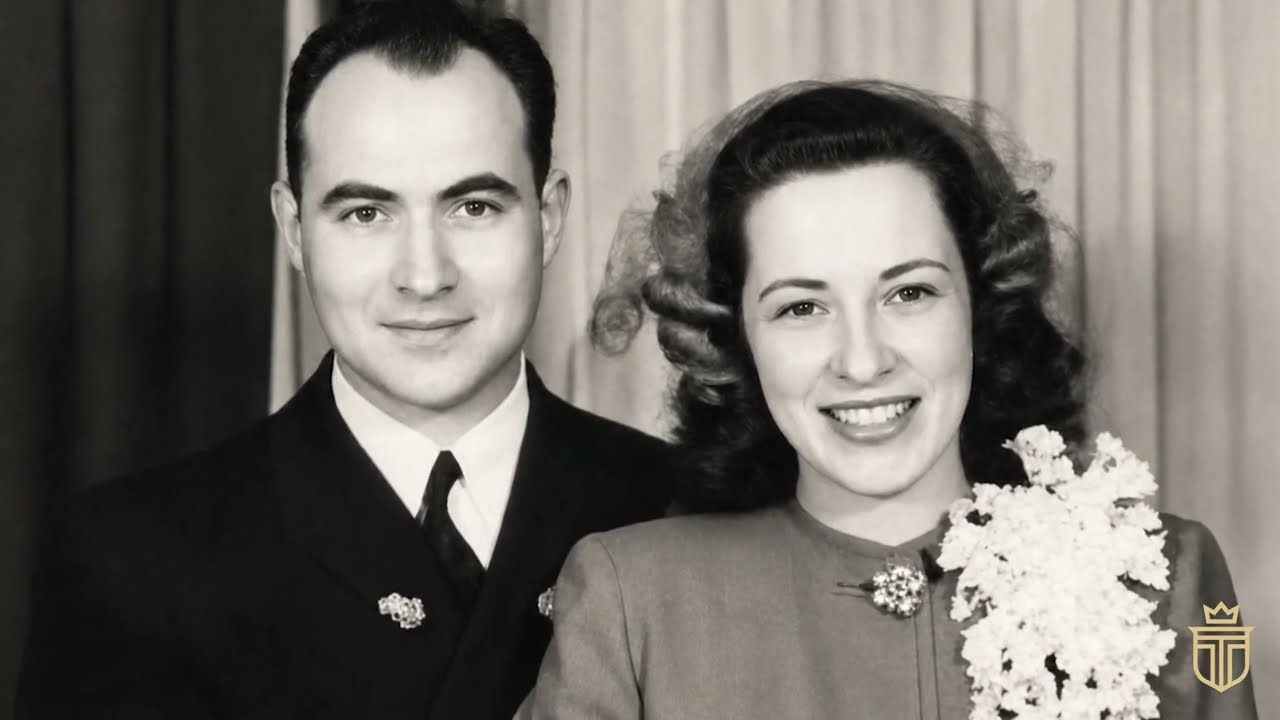
In the summer of 1945, a 29-year-old Navy veteran walked into the milk house at his in-laws’ dairy farm in Ridgefield, Washington, and started welding a trailer. His name was Leonard Samuel Shoen. He had a medical discharge, about $5,000 to his name, a wife, and an infant son.
He had been expelled from medical school in his fourth year for answering roll call for an absent classmate. He had served as a hospital apprentice until rheumatic fever sent him home. He was a man with a habit of looking at inconvenient problems and seeing a national distribution model.
In 1945, there were no one-way trailer rentals in America. By the end of that summer, there would be. The very first U-Haul rental dealer in America was a mobile station on Interstate Street in Portland, Oregon.
The arrangement was based on little more than a wink and a nod. The operator kept 40 percent, and the Shoens kept 60 percent. By 1946, L.S. had launched a one-way service between Seattle and Portland at $5 a rental.
He drove the route himself, slept in his car, and ran the dealer network out of a notebook. By 1955, more than 10,000 U-Haul trailers were on American roads. By the end of 1959, the figure was 42,600.
This is a documentary about that fortune. It is also a documentary about what happened to the family that built it. It is about the loss of a daughter-in-law in a Colorado mountain town in 1990, a courtroom in Phoenix in 1994, and a single vehicle accident on a Nevada highway in 1999.
The fortune came from movement. The family, in the end, could not stop moving away from each other.
The founder of U-Haul was, by every account written before the family war, a man who could not be still. He worked 16-hour days through the late 1940s and reinvested every dollar he earned. He reorganized the company in 1951 under the name AMERCO.
In 1952, he launched a fleet owner program that allowed outside investors to buy fleets of trailers and contract them back to the company for a share of revenue. It was the financing mechanism that turned a regional novelty into a national network. It was also the first occasion on which L.S. handed equity to people other than himself.
Anna Mary Carty Shoen was, on any honest accounting, a co-founder. She had put up the savings. She had given the company its base of operations on her parents’ ranch. She managed dealer correspondence, kept the books, and raised six children on a working farm.
She had been told as a young woman that a congenital heart condition made pregnancy dangerous. She ignored the doctors on Catholic principle. On May 4th, 1957, at the age of 34, with her youngest barely a year old, Anna Mary’s heart failed. She died in Portland.
L.S. Shoen was now a 41-year-old widower running a national business with six children, the oldest not yet 12. He was incapable, by his own much later admission, of running a household. Within roughly a year, he saw a photograph of a 23-year-old graduate student named Suzanne Gilbeau, and he married her.
The two oldest boys, Sam and Michael, were sent to boarding school the day after the wedding. The two next oldest, Joe and Mark, stayed in the house. They came to despise their stepmother.
Suzanne bore five more children. By 1962, there were 11 Shoen children in the house. A 12th, Scott, would arrive in 1974 from a brief later marriage.
The corporate empire grew in parallel and at speed. In 1967, the headquarters moved from Portland to Phoenix, Arizona. In 1974, U-Haul entered the self-storage business. By 1985, the company operated more than 114,000 storage rooms at 630 locations.
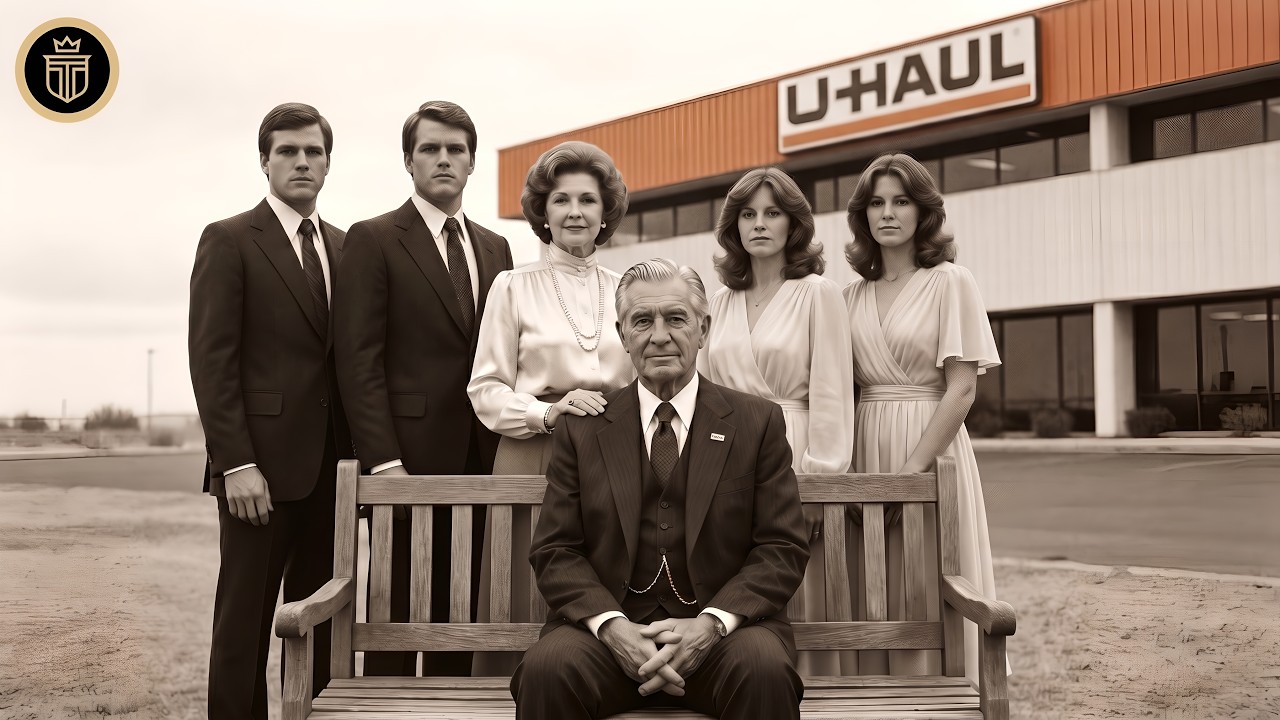
In the late 1970s, L.S. began to do something for which there was no obvious commercial reason. He began to give the company away. By 1979, he had transferred most of his AMERCO common stock to all 12 children in roughly equal portions.
In the same period, he hired a Tucson psychologist named Jerry Day to assess the dynamic among his sons. Day delivered an evaluation that read like a warning siren ignored. Two of the brothers had matured into adults whose desire for control was absolute and insatiable.
In the margin of the report, in shaky block capitals, L.S. had written, “I did not do.” He had given his children the company before he had taught them how to be a family.
The household that Suzanne inherited was the household of a man who had loved his first wife and had not yet stopped grieving her. The first family had memories of their mother. The second family would know Anna Mary only as a photograph on the wall. The line of demarcation drawn in those early Portland years would never be erased.
The 1989 Phoenix New Times reporting described that early period as one of total chaos. There were episodes of physical confrontation between the older boys and their stepmother. Joe, by the time he was a young teenager, was reported to have called Sam and announced that he was going to shoot Suzanne when she came home.
Mark, in 1967, was involved in a confrontation severe enough that L.S. moved him out of the family home at the age of 16. In 1967, the family relocated to Phoenix to follow U-Haul’s headquarters. The chosen residence was a Frank Lloyd Wright designed property in Paradise Valley.
The First Family boys boarded at high schools and colleges. Sam went to medical school at the University of Arizona, finished first in his class, and was persuaded by his father to give business a try. Joe earned an MBA from Harvard Business School and later added a JD from Arizona State.
The corporate empire kept growing through the chaos. By the late 1970s, U-Haul revenues exceeded $500 million. The family fortune was conservatively estimated at $1 billion.
The marriage to Suzanne did not survive the empire. They divorced in 1977 after 19 years. L.S. was hospitalized in 1978, the year of the divorce settlement.
In 1979, L.S. signed a lifetime employment contract with AMERCO at a salary of $300,000 a year. In 1980, he self-published a memoir of the early U-Haul years and the marriage to Anna Mary. The book ended before the war.
By the middle of 1986, AMERCO had become a less profitable company. The diversification strategy championed by L.S. and Sam had pushed U-Haul centers into rentals of jet skis, party goods, motor homes, and video cassettes. The core moving business had begun to lose money. The company carried debt of more than $500 million.
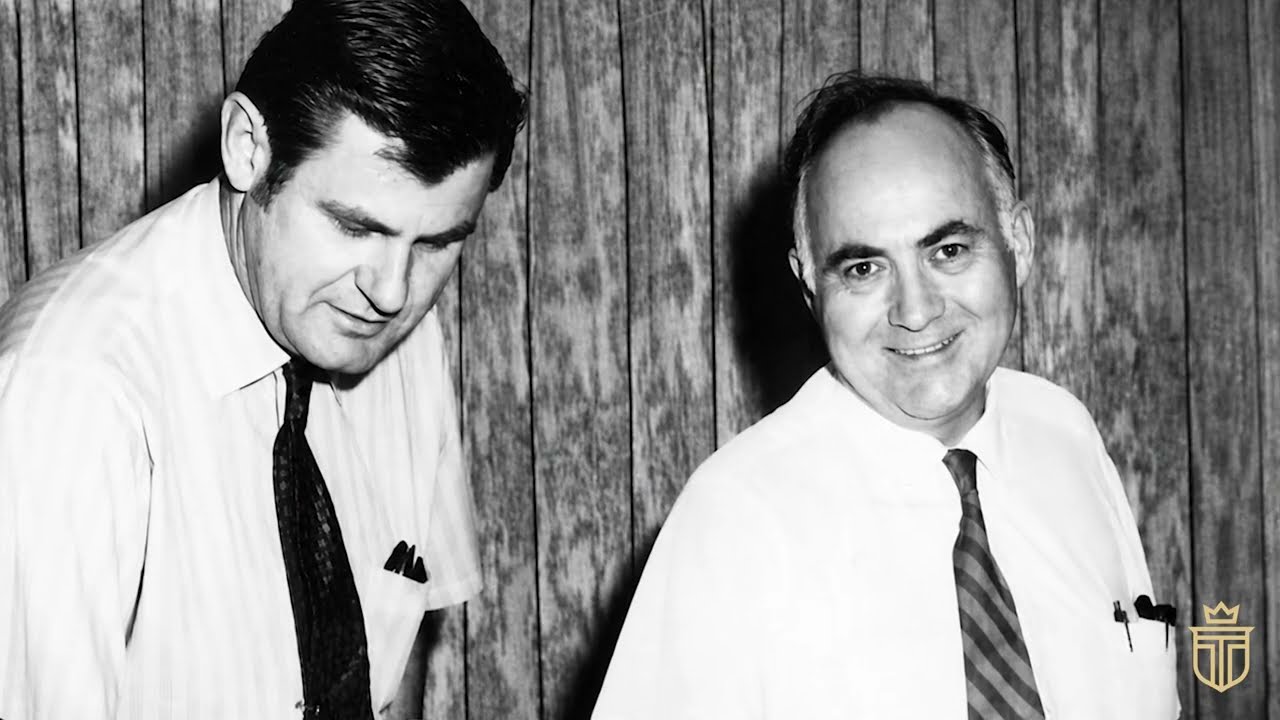
Joe Shoen, by then 37 years old, had seen this coming. By the autumn of 1986, Joe had quietly assembled a majority of the 12 siblings around a single proposition. L.S.’s diversification was destroying the company, and a return to the core business required a return to a different chairman.
L.S. learned of the planned coup days before the shareholders meeting. A hurried mediation produced a face-saving compromise. L.S. would retire as chairman. Joe would take the chair. Sam would remain as president and CEO.
On November 8th, 1986, a majority of L.S.’s own children voted him out of the company he had founded 41 years earlier. He was 70 years old. In private, he compared what had happened to the betrayal of Julius Caesar.
The compromise survived approximately 3 months. Sam Shoen resigned as president on February 7th, 1987. He stayed on the board until September 1987, when he was removed entirely.
The faction lines crystallized in their final form. Joe and Mark and Jim were on the inside of the company. L.S., Sam, Michael, Mary Anna, Cecilia, Teresa, and Katrina were on the outside.
Joe canceled L.S.’s lifetime employment contract on grounds the family attorneys would later describe as insubordination. The $300,000 salary stopped. L.S. sold his larger Las Vegas house.
The pivotal moment of the next round arrived in July 1988. Sam, L.S., and the outsider siblings retained Bear Stearns to explore a buyout or sale. The bank trustee managing 14-year-old Scott Shoen’s stock agreed to vote those shares with L.S.’s faction, giving the outsiders enough to execute a written consent action.
Joe got word of the plan. On July 24th and 25th, 1988, the AMERCO board voted to issue 8,099 new shares of treasury stock to five non-family executives loyal to him. Joe personally borrowed more than $750,000 from his children’s trust funds to provide the down payments.
The five executives became known internally as the golden five. The new shares restored Joe’s voting majority at 50.1 percent. The transaction was, in his own subsequent admission, designed to change the math.
That fall, Sam and the outsiders filed suit in Maricopa County Superior Court. The case would wind through the Arizona courts for six years.
Sam Shoen and his Norwegian-born wife Eva Berg Shoen had moved their family to Telluride, Colorado, roughly two years before the night that defined the rest of the Shoen story. The move was deliberate and protective. Sam had been physically threatened at U-Haul Towers in Phoenix in 1987.
Telluride was a small mountain town built around a ski mountain. The family bought a two-story log home in the ski ranches development on Skunk Creek Road, 4 miles outside of town. The mailbox carried no name and no number.
Eva was 44 years old in the summer of 1990. She was athletic, friendly, devoted to her family, and quiet. She raised three children and trained a kennel of show dogs.
She had no role in AMERCO, no shares of stock, and no connection of any kind to the family war. On the evening of August 5th, 1990, Sam Shoen was called away to Phoenix on an unanticipated business trip. He took Eva’s car. His own car remained parked in the driveway.
Eva confined the dogs to a basement mudroom before she went to bed because the neighbors had complained about their barking. The dogs, which would have raised the alarm at any approach, were removed from the equation by her own hand that evening.
Sometime after midnight, an intruder entered the house. There was no forced entry. There was no robbery. There was no sexual assault. Eva was fatally injured by a single round from a small handgun.
She made it from her bedroom to the top of the main staircase before she came to rest. The children heard nothing. By the time the household woke, several hours had passed.
Shortly after 7:00 a.m., Bente Shoen, aged 10, walked upstairs to show her mother a trick she had taught one of the dogs. She found Eva at the top of the staircase. She ran outside and flagged down a passing neighbor’s car.
A few minutes later, the San Miguel County Sheriff’s Office took a call from the property. The transcript of that call would be remembered as one of the most painful sentences in the recorded history of the case. “Excuse me,” the child said. “My mom, I woke up, she’s dead on the staircase.”
San Miguel County had not seen a homicide in 11 years. Sheriff Bill Masters arrived within an hour of the call. He described what he found as baffling, unlikely, outrageous.
There was no obvious motive. There was no discernible point of entry. There was no evidence that the killer had taken anything from the house. The weapon was a small handgun later linked through ballistics to a model with a known manufacturing defect.
Sam Shoen received the call at his Phoenix residence. He flew back to Telluride that morning. He had been a husband 12 hours earlier. He was now a widower with three children.
The investigation fell almost immediately into the gravitational field of the Shoen family war. Sheriff Masters made multiple trips to Phoenix to interview U-Haul executives. He told reporters publicly that family members had mentioned the feud as a possible motive.
L.S. Shoen made up his mind quickly and publicly. Six weeks after the loss, he sent a letter to the AMERCO Board of Directors. “Gentlemen,” he wrote, “you cannot but realize that Sam was to be the target, that Eva was not to be the victim.”
He told reporters that he believed Joe was probably psychotic, that both Joe and Mark exhibited what he called personality disorders, and that one or both of them were directly or indirectly responsible. He went on national television and made the same accusation.
Sam Shoen offered a $250,000 reward for information leading to arrest and conviction. Joe and Mark responded as one would expect. Mark issued a statement calling the accusations preposterous.
Mark hired a Phoenix private investigator to pursue an alternative theory of the case. The Colorado Court of Appeals would later make a finding of fact about that period. Mark Shoen’s investigators, the court wrote in 2012, passed inaccurate or unsubstantiated information about Sam to the Sheriff’s Department.
Joe and Mark also went to court. They filed a defamation suit against L.S. and Michael Shoen for the public statements about the family’s possible involvement.
The break in the case came not from a detective, but from a television program. In December 1992, the Sheriff’s Office agreed to feature the case on Unsolved Mysteries. The episode aired on December 2nd, 1992.
Within minutes of a repeat broadcast in early 1993, a viewer in New Mexico picked up the telephone and dialed the tip line. His name was Kelly Lemons. He was the brother-in-law of an auto body repairman named Frank Ema Marquis.
Lemons told the dispatcher that Marquis had been in Telluride on the night in question, that Marquis had bragged to him about an entry into a vacation home, and that Marquis had told him in a recorded conversation that he was not worried about the broadcast because he had covered up all the evidence.
The corroboration arrived in pieces over the following months. Marquis’s time cards at the Santa Fe body shop showed that he had missed work on August 5th and 6th, 1990. His employer remembered that he and a co-worker had driven to Telluride for a music festival.
Marquis had borrowed a small handgun from another co-worker before the trip. When he returned the weapon, he had told the lender that he had fired it to shoot a dog. The internal barrel of the weapon had been damaged after the fact in a way that prevented a definitive ballistics match.
In February 1994, detectives re-interviewed the co-worker about the drive back from Telluride. He remembered that Marquis had thrown clothing out the car window onto the shoulder of the road in northern New Mexico. A search of that stretch of highway produced a weathered piece of cloth on which laboratory analysis identified a single blond hair. The hair belonged to Eva Shoen.
Marquis was arrested in Santa Fe on July 20th, 1993 without incident. He was charged in connection with the events of August 6th and with burglary. He had a prior criminal record, multiple sexual assault convictions in New Mexico, and a parole status active at the date of the events.
In November 1994, Frank Marquis pleaded guilty in San Miguel County District Court to manslaughter and second-degree burglary. He was sentenced to 24 years in prison.
The plea agreement was deliberately structured. The prosecution required Marquis to provide evidence that he had not been hired by anyone, that he had acted alone, and that no third party had financed or directed the events. The plea agreement also explicitly documented the prosecution’s belief that unanswered questions about the case remained.
Sheriff Masters maintained that there was no doubt in his mind that Marquis had acted alone. Sam Shoen has expressed a different view then and since. He told Forbes in 2016 that he did not believe Marquis acted alone.
In November 2011, after 17 years of state custody, Frank Marquis was released on parole. He walked out of custody 21 years and 3 months after the night that had broken a family.
The 8,099 share lawsuit that the outsiders had filed in Maricopa County Superior Court went to trial in the autumn of 1994. The trial ran for 7 weeks.
The plaintiffs argued that the July 1988 issuance of new shares to the Golden Five had been a self-dealing transaction designed to dilute the outsiders’ voting control. On Friday, October 7th, 1994, the jury returned a verdict.
The compensatory damages came to $1.47 billion. The punitive damages against Edward J. Shoen personally came to $70 million. The jury found that he had acted with hatred and ill will toward his father and his siblings.
The combined judgment of approximately $1.54 billion exceeded, on the defendant’s own valuation, the entire enterprise value of AMERCO at the relevant time. The Phoenix New Times described it as the largest jury award in Arizona history. The Los Angeles Times described it as one of the largest jury awards in US history.
The trial court judge granted motions for remittitur. On February 14th, 1995, plaintiffs accepted the reduced amount. The compensatory award was reduced to $461,838. Joe Shoen’s punitive award was reduced to $7 million.
Plaintiffs received the buyout in exchange for transferring all of their AMERCO shares to the Edward Shoen interests. It was in effect a judicially ordered sale of stock that ended the insider-outsider war by buying out the dissidents.
In 1998, Joe Shoen lost his appeal even on the reduced $7 million in punitive damages. The 1994 verdict and the 1995 buyout did not end the litigation. They restructured it.
In 2002, Paul Shoen, the sixth child, filed a derivative lawsuit on behalf of AMERCO shareholders. He alleged that AMERCO had been harmed by Mark Shoen’s SAC Holdings entities, a constellation of more than 30 separate companies through which Mark had been acquiring U-Haul self-storage properties since 1993.
The SAC properties had been financed with more than $600 million in AMERCO-backed non-recourse loans. In December 2001, just weeks after the Enron disclosures, PWC’s own consultants concluded internally that the SAC entities would have to be consolidated onto AMERCO’s balance sheet.
AMERCO terminated PWC on July 17th, 2002. On April 21st, 2003, AMERCO filed a $2.5 billion lawsuit against PWC. In June 2003, the company filed for Chapter 11 bankruptcy protection.
It emerged on March 15th, 2004 with creditors paid in full, with no dilution to existing equity holders, and with its operating model intact.
Paul Shoen’s SAC lawsuit would proceed for 9 more years. On August 22nd, 2012, on the eve of live testimony, Paul dismissed the case with prejudice. He received nothing.
As part of the settlement, he was required to sell all of his AMERCO shares and was barred from owning AMERCO stock for 20 years. Joe Shoen issued a press release describing the action as 9 years and 10 months of baseless harassing litigation.
In the years between the 1995 buyout and the 1999 events outside Las Vegas, L.S. Shoen lived in a small house on the desert edge of the Las Vegas Valley. He owned a small stake in a Las Vegas hotel. He drove a 1994 Acura.
He kept his copy of the Watkins book on the back seat of the car. He kept copies of his own 1980 memoir on the floor. He had been described in a 1994 profile as a lonely 78-year-old man.
By 1999, he was 83. He had buried his oldest son’s wife. He had been bought out of the company he had founded. He had been since 1986 estranged from a majority of the 12 children he had raised.
On the morning of Monday, October 4th, 1999 at approximately 11:25 a.m., L.S. Shoen drove south on US Route 95 north of Las Vegas. His 1994 Acura left the road at high speed. It struck a wooden utility pole. He died of blunt force trauma at the scene.
He was 83 years old. The Clark County, Nevada coroner’s office reached a finding shortly after. Las Vegas Metropolitan Police Detective Rick Hart told reporters that there was no apparent reason for the accident.
The coroner’s finding has been a matter of family disagreement in the years since. He was survived by his fifth wife, Carol, and by all 12 of his children.
The 1991 LA Times had quoted him on the central question of his late life. He had told Anna Mary one day in 1957 that he could not believe how well things were going, and that she had died that same night. When Anna Mary died, he had said, “I thought maybe we had paid the price, but we hadn’t.”
The obituaries that ran in the days that followed all returned in different ways to the same sentence. The Phoenix New Times called him a brilliant but tortured soul. The Los Angeles Times obituary described him as the innovative founder of U-Haul.
The funeral was held in Las Vegas. The factions of the family that he had spent the last decade accusing did not attend.
The U-Haul that Joe Shoen has run since November 8th, 1986 is, by every conventional financial measure, one of the most successful family-controlled corporations in American history. The diversification strategy was systematically dismantled. The workforce was cut. The fleet was overhauled at a cost of $1.2 billion in the late 1980s alone.
AMERCO weathered the 1994 verdict, paid the 1995 judgment, weathered the 2003 Chapter 11, and emerged with its operating model intact. In October 2022, AMERCO announced a corporate name change to U-Haul Holding Company.
For the fiscal year ending March 31st, 2024, U-Haul Holding Company operated approximately 188,700 trucks, 139,400 trailers, and 43,700 towing devices. It maintained more than 23,000 locations across the United States and Canada. It controlled approximately 1,004,000 rentable storage units.
It was, on those numbers, the largest do-it-yourself moving operator in North America and one of the three largest self-storage operators in the country.
Joe Shoen is 76 years old. He remains chairman and CEO. He has brought three of his own children into the corporate operation. He communicates, by the most reliable accounting, with two of his 11 surviving siblings.
As of August 2023, his net worth was estimated at approximately $4.1 billion.
Mark V. Shoen has not given a known interview in years. He owns approximately 437 self-storage properties through his SAC Holdings entities. His net worth has been estimated at approximately $4.8 billion. He has been described as the wealthiest individual resident of the state of Arizona.
Sam Shoen is in Telluride. He gave his most recent extended interview to Forbes in 2016. He told the magazine that he did not believe Frank Marquis had acted alone.
Mary Anna Shoen Eaton, Cecilia Shoen Hanlon, Teresa Shoen Romero, Katrina Shoen Carlson, and Michael Shoen have largely withdrawn from public view. Paul Shoen has been similarly silent.
The dynasty endures. The orange and white trailer is on every American highway, anonymous, ubiquitous. The fortune that came from movement is intact and still growing.
The family that was given the fortune by a 29-year-old Navy veteran in a milk house at the Carty Ranch in the summer of 1945 has not, by any public account in the years since, reunited.
L.S. Shoen had built one trailer that summer with his wife and her brother by hand on a working dairy farm. He had built it because there was no national one-way rental network in America, and he believed there should be.
He had built the rest of his life around the proposition that a family that owned the company together would stay together. By every public measure of the company, he had been right about the first part. By every public measure of the family, he had been wrong about the second.