When Adolf Hitler was celebrated by Germans in the summer of 1940, he was seen as an infallible genius who worked day and night for his people. The reality was very different. Hitler was a man who avoided sustained intellectual effort, could not read documents longer than 20 pages, and preferred to retreat like an artist above reality.
A small number of collaborators worked in his place. Their names were Joseph Goebbels, Heinrich Himmler, and Albert Speer. It took Hitler more than 15 years to recruit them. Around the Führer, a vast network of associates formed, with a first circle of loyal followers who had direct access to him.
The first of these was Hermann Göring, a man obsessed with wealth and luxury. A drug addict and opportunist, he was described as a glutton who thought only of enriching himself. The second was Joseph Goebbels, a failed writer with a leg disability who lived through his idealization of Hitler. The third was Heinrich Himmler, a cold, narrow-minded bourgeois who would become the organizer of what the Nazis called the Final Solution.
A second circle consisted of younger, more ambitious men who joined Hitler in the 1930s when he took power and distributed ministries. Among them, Albert Speer rose to the top. Presented as a distinguished architect, he was in fact a skilled manipulator who shared Hitler’s obsessive dreams of grandeur.
At the bottom of the scale were the field executors, the officials who committed crimes and atrocities. Rudolf Höss, commander of Auschwitz-Birkenau, was one of them. He settled with his wife and five children in a house on the edge of the camp and organized the extermination of 1.1 million people. Beside him was Dr. Joseph Mengele, responsible for medical experiments and the embodiment of Nazi brutality.
Without these men, the worst crimes would not have happened. To please Hitler, they competed with each other. Around Hitler, they all hated one another, a working method encouraged by Hitler himself, who fostered rivalry and competition.
Hitler recruited his partners in the early 1920s in a Germany in turmoil. Defeated in World War I, the country had only a reduced army of 100,000 men. Former soldiers formed mercenary groups everywhere, and the nation feared civil war. In this procession, a small group from southern Germany chose the swastika as its symbol. The National Socialist German Workers’ Party was born in Munich, attracting workers and the unemployed.
In the front row of spectators was Hitler, 30 years old, a minor army employee and only the 55th member of the party. A World War I veteran who had served as a simple corporal, he thought only of revenge for Germany. He quickly established himself as the leader of the small party by speaking in Munich beer halls.
In the fall of 1922, a prominent figure came to listen to him. Hitler was delighted, believing he had found the ideal candidate. Hermann Göring, 27, was a fighter pilot during World War I who had shot down 21 planes and received the highest military honor. He was practically the only hero German propaganda had promoted. After the war, he was unemployed, but he had high-level connections.
Göring brought Hitler prestige and a vast social network. He had married a wealthy woman from Swedish nobility. Hitler needed donors to finance his small movement. Göring was immediately placed at the head of the armed militia known as the SA. Less than a year later, in November 1923, the Nazi party attempted a coup in Munich. Gunfire broke out between Nazis and police, leaving 16 dead.
It was a disastrous failure. Hitler was imprisoned for eight months, where he wrote Mein Kampf. Göring, seriously wounded, fled and became addicted to morphine. He took refuge in Stockholm, his wife’s country, and suffered violent outbursts. His wife had him placed in a psychiatric hospital several times due to morphine poisoning. He was described as suicidal and selfish.
The following year, a general amnesty allowed him to return to Germany. Without his leader, Göring had no value. He hoped to regain his position, but relations with Hitler had collapsed. Göring reminded Hitler of his services, saying he had lost everything and remained his most loyal collaborator. Hitler found him a new place: he would no longer fight in the streets but would conquer the salons of high society.
He only succeeded in 1928 when he entered the Reichstag, elected among the first 12 Nazi deputies. In 1932, he became president of this assembly.
The second partner Hitler recruited began his Nazi career at age 29. Hitler sent Joseph Goebbels on a highly sensitive mission to Berlin, then the largest city in Europe with four million inhabitants. It was called Red Berlin because communists had made it their stronghold. Hitler challenged this small, lame man to make the Nazis the leading political force in Berlin.
The Führer knew he could ask anything of Goebbels. The man desperately sought recognition and found it in Hitler, developing an almost romantic relationship with him. Goebbels owed everything to Hitler because his life had been a series of failures. Suffering from a childhood illness that left him with a leg disability, he lied about its cause, claiming he had been wounded in the war. A doctor of literature, he was an unsuccessful writer who could not find work matching his ambitions.
Once in Berlin, Goebbels created a newspaper and chose a radical strategy to provoke hatred. His thugs challenged communists in their own territory, leading to violent clashes and mass arrests. The police banned the Nazi party in the capital, but the movement thrived on scandal. In 1930, a young activist named Horst Wessel was stabbed to death by a communist. His funeral became a show of Nazi strength. Goebbels continued to fuel the fire, and Hitler rewarded him by making him head of party propaganda.
The third man in Hitler’s inner circle did not fit the usual stereotype of workers and unemployed joining the Nazis. Heinrich Himmler was a young bourgeois obsessed with the superiority of the Germanic race. In 1929, he appeared as a young secretary with glasses, obedient to his leader. Others did not perceive his ambitions. He was the son of a respected teacher, fully integrated into society, but he joined the most extreme racist groups.
His ideology was close to a sense of superiority, believing the German people were superior to others. This racist discourse also called for a return to the land. Himmler became an agricultural engineer and bought a small farm with his wife, wanting to live self-sufficiently, protected from a world they considered corrupt. Beside Hitler, Himmler seemed submissive but had real influence. He often obtained Hitler’s approval for his own ideas.
Himmler did not like mixing with the popular activists who formed the core of the party. In response, he created an elite club within the party. These disciplined men in black would form an elite under his authority. The abbreviation for this unit was SS. They had to be of pure Germanic origin and would be the most fanatical of fanatics.
In 1933, Adolf Hitler was appointed Chancellor of Germany. Again, he did not want to work as his role required. He insisted that work was not his function. Once in power, the division of roles among his partners created winners and losers. Goebbels did not become a minister immediately, but Göring triumphed. Hitler brought him into his first government in 1933. No one would receive as many titles as him over 12 years in power.
This abundance of decorations aroused the jealousy of his rival Joseph Goebbels. Goebbels described Göring as an unbearable inflated balloon, swollen with vanity and arrogance, a vulgar man thirsting for pleasure. But Göring was also a man of strong will. He established the dictatorship in 1933. When the Reichstag burned down under mysterious circumstances, Göring attributed the fire to communists and launched a wave of repression. More than 3,000 opponents of Nazism were arrested without trial. Göring created a new political police force, the Gestapo, and the first concentration camp opened at Dachau.
Göring gained points in Hitler’s esteem. Joseph Goebbels also finally obtained a position designed specifically for him: a large ministry of propaganda. The frustrated writer could now choose which books were allowed and which were banned. Books by Jewish or so-called degenerate authors were burned in large public ceremonies. Goebbels was also a fanatical anti-Semite. When the Nazis came to power, Jews represented only 0.8 percent of Germany’s population, but Goebbels imagined ways to persecute them.
He wanted to impose his messages through the airwaves, making propaganda enter every home. He even created a cheap radio specifically for this purpose. The climate he created in Germany was particularly oppressive. One Jewish child in Berlin remembered always hearing that Jews were our misfortune, without understanding what the word meant.
Goebbels controlled everything: theater, cinema, and news through a censorship committee with absolute power. He also staged massive displays of the regime, caring for every detail. During the 1930s, Hitler was presented to the people as a messiah. Goebbels’ career reached its peak, but his tormented nature would resurface.
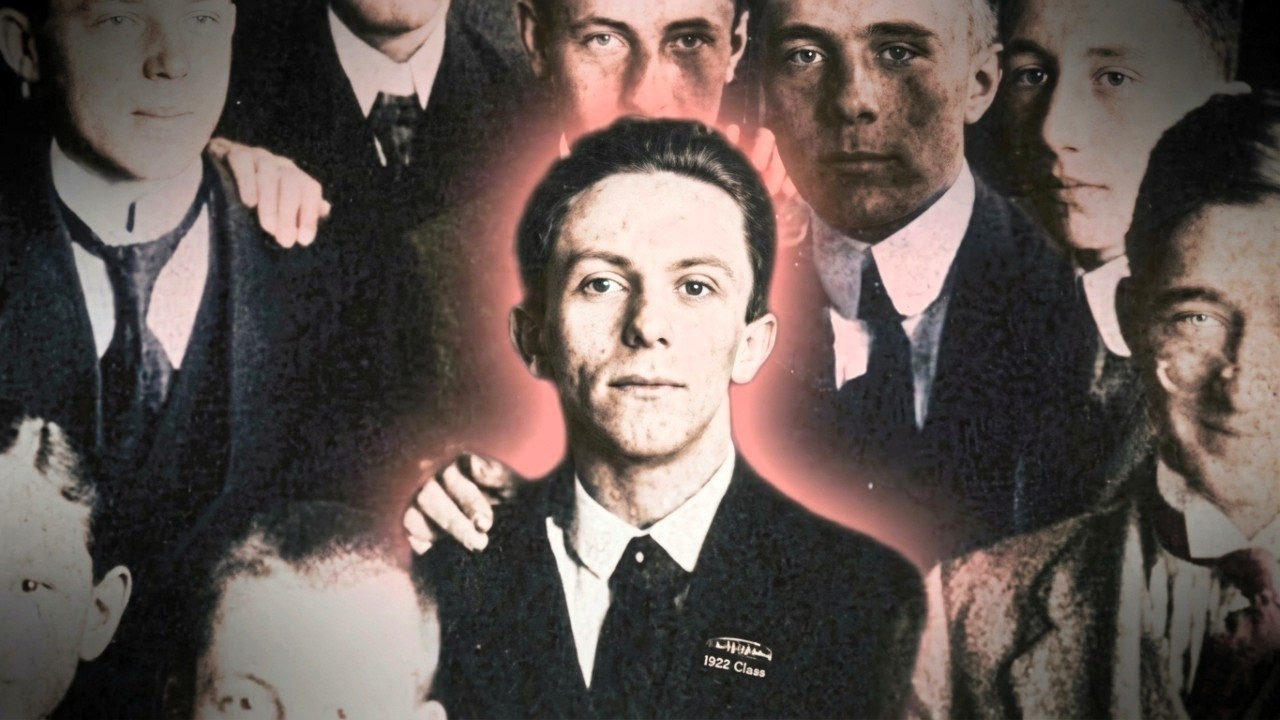
The storm that confronted Goebbels came from his private life. He married Magda in 1931, with Hitler as witness. Their children were exploited over time through propaganda, forming the model family of the regime. All six children’s first names began with H, in honor of Hitler. Magda Goebbels embodied the ideal Nazi mother.
But the reality had nothing to do with this perfect image. Goebbels was known for his numerous love affairs. In 1936, he began a relationship with a young star, Lida Baarova. This mistake had consequences for his career. His wife Magda, in despair, threatened divorce and confided in the couple’s closest friend, Adolf Hitler. Hitler was not pleased that this model family was collapsing. He forced Goebbels to end the relationship and stop humiliating Magda.
Within Hitler’s network of collaborators, a newcomer would exploit this disgrace and achieve an exceptional rise. But Albert Speer had a long road ahead. In photos from 1935, his complicity with Hitler was already visible. Hitler drew beside him, and Speer, 27, stood nearby. He was a young architect who had built nothing yet. Hitler had always dreamed of seeing his own sketches of pharaonic buildings rise from the ground.
Hitler saw in Speer the life he had dreamed of. Their projects were always colossal and insane. Hitler noticed Speer on May 1, 1933, during a May Day celebration that gathered more than a million people. The organization was signed by Albert Speer, who had just joined the Nazi party. It was Goebbels who introduced Speer to Hitler, but rivalry naturally developed over time.
Speer quickly occupied a privileged place with Hitler. Unlike Goebbels, he was a regular guest at Hitler’s mountain retreat. Speer became the architect of the massive Nuremberg military square, copied from a temple dedicated to Zeus. It could hold more than 340,000 people. Then he built the German pavilion at the 1937 Paris exhibition. The same year, Hitler awarded him the Order of the Century.
Germania, the future capital of Hitler’s empire, was a colossal construction project expected to last until 1950. The goal was to rebuild Berlin along a five-kilometer avenue called the Victory Boulevard. At the end would be a dome reserved for the great People’s Hall, 16 times larger than St. Peter’s Basilica in Rome. For Berlin residents, this would be an earthquake: 50,000 apartments were to be demolished and 200,000 people relocated.
To test his architect’s speed, Hitler challenged Speer to build the first building of Germania in just one year. Eight thousand workers labored day and night. Speer delivered the building two days early. Hitler took possession of his building, designed to impress ambassadors from around the world. The chancellery featured a marble hall, a huge study for Hitler, and galleries twice as large as those at Versailles.
Albert Speer had caught up with all his rivals in Hitler’s estimation. He was not yet 30 and had already become one of Hitler’s most influential advisors.
Meanwhile, in Munich, Himmler had not obtained a ministerial position. He was appointed head of the Bavarian police. Ready to do anything, he led a bloody purge within the party known as the Night of the Long Knives. Hitler feared the power of another leader, Ernst Röhm, who was popular and led the powerful SA militia. Himmler oversaw the assassination of Röhm and his entire general staff. Even if it cost blood, if a comrade stood in his way, Himmler saw no problem in eliminating him.
Himmler emerged as the clear winner of this massacre. His organization, the SS, now had no rival. For Himmler, the SS was a real political project. He worshipped the Germanic race and presented Hitler as the successor of a medieval king. He wanted to build a new, highly racist society where pure Germans would be the only masters for centuries. To multiply the blood of the superior race, he created specialized maternity hospitals where SS members could leave newborns.
To prove racial superiority, the Nazis also wanted to eliminate what they called worthless lives. From 1935, propaganda films depicted disabled people in a frightening way, focusing on the costs they represented to society. The Nazis wanted to justify the crimes they were planning. From 1939, real killing programs began, including people with physical and mental disabilities.
Himmler never stopped wanting to reshape everything. He wanted his SS members to have their own beliefs. Strange rituals took place in the castles of Wewelsburg, the Nazi SS training center, with a black sun as a hidden symbol. Himmler himself celebrated weddings according to SS rites. The Nazis wanted to eliminate all existing religious beliefs. If they had won, there would have been a new calendar, new festivals, new religious rites, new baptisms, and new celebrations. Christmas would not have been celebrated.
Secretly, in the mid-1930s, Hitler made a strategic decision. He said Germany needed to be ready for war within four years. To implement this program, he created a new administration with a four-year plan, headed by Hermann Göring. Overnight, Göring was pushed to the head of German industry. His orders mobilized more than 228 factories, creating unique firepower in the world at that time.
These new functions also allowed Göring to enrich himself. Industrialists showered him with gifts. He had a taste for masterpieces and precious stones. His office sent lists, like wedding gift lists, to company representatives, telling them what the marshal would like as a gift. Göring played the Roman emperor, enjoying extravagance like posing with a lion cub. Hitler appointed Göring as his successor.
After the death of his first wife, Göring’s second marriage in Berlin was worthy of royalty. Thirty thousand soldiers lined the route. Hitler attended. This lavish wedding helped hide his private life. Göring developed his vast estate on the outskirts of Berlin, with hundreds of artworks covering the walls of his palace.
If Göring occupied the front of the stage, he had great difficulty restraining Hitler. The Führer was now ready to start a war. Despite massive training exercises, Göring struggled to contain his impatience because he knew preparations to equip Germany for war were behind schedule. He explained to Hitler that Germany was not yet ready. But Hitler ordered the attack to begin, a year ahead of schedule.
For Hitler and his partners, entering the war in 1939 was disturbingly easy. The German army seemed invincible. After just one year of fighting, Poland, Denmark, Norway, Belgium, the Netherlands, and France were invaded. Half of Europe collapsed. The rivalry between Hitler’s partners became bloody. There was overlap in skills regarding invasion policies, colonization, predation, and looting, creating friction and tension.
The great looting began. Göring made Paris his hunting ground. He arrived in an open limousine, wandered the streets, and stayed at the Ritz hotel. He helped himself to French museums, seizing hundreds of paintings by Matisse, Monet, and Cézanne to complete his collection. Hitler also arrived in Paris with Albert Speer beside him. Speer planned to copy the most beautiful monuments of the French capital for future Germania.
Back in Berlin, Göring triumphed in the front row. He was responsible for managing military operations, but he hid the truth from Hitler. From a public perspective, his rise was meteoric. From the perspective of the head of the economy, it was a disaster. After a few weeks of fighting, Germany had no more bombs, ammunition, or many planes. Fearing to anger Hitler, Göring said nothing and instead promised to crush England in three weeks.
Himmler established an empire for himself in Eastern Europe, overseeing a repulsive policy of extermination with complete coldness. When Hitler visited him in Poland, his SS soldiers were already waging their great racial war. Himmler spent his time motivating his soldiers to justify systematic killings. He told his SS officers that their task was difficult, like an ordeal, but that they had enough moral strength. He said he was sacrificing his own psychological health so their children could live.
From 1939 in Poland, then from 1941 in the Soviet Union, the Nazis experimented with assassination policies and mass deportations. On Himmler’s orders, they built their empire, a colonial empire inhabited by slaves and rid of its Jews. This project would lead to the deaths of tens of millions of people from starvation.
In Ukraine and the Baltic states, small mobile groups of SS killers called Einsatzgruppen operated at a frantic pace. More than a million people were exterminated by shooting. In August 1941, Himmler traveled to Minsk, Belarus, to assess this killing strategy personally. He witnessed the execution of 100 Jews. Himmler fainted at the sight. Not out of pity for the Jewish victims, but because the spectacle was psychologically traumatic for the killers. As head of the SS, Himmler cared only about the psychological trauma of his men.
After the massacre in Minsk, Himmler asked his men in Berlin to find a way to spare the killers. In 1941, different methods of mass killing coexisted, but at the end of the year, an order from Hitler himself unified the procedures. He demanded the extermination of all Jews in Europe. The entry of the United States into the war in December 1941 motivated his decision. The Final Solution was decided by Hitler.
That year, nearly 4 million Jews were exterminated. For Himmler, killing millions through mass shootings was inconceivable. Gas was seen as an effective method to protect the killers. Poison gas was not introduced to kill more people, but gas chambers had one main advantage: they absolved the killers. There was no more contact with victims, no more witnessing death. The bodies were collected at the end.

Himmler then decided to concentrate all these new extermination policies on one site, a huge place that would become the largest concentration and killing center. First, it had to be centrally located within the Nazi empire. Second, it had to be well connected to all of Europe. Third, it had to be equipped with a killing facility that was fast and efficient. The place chosen was Auschwitz.
Himmler entrusted Auschwitz to a field official, one of the worst camp specialists, named Rudolf Höss. At age 40, he became director of one of the Third Reich’s largest projects. Himmler had several officials to choose from, but he selected Höss, a man with a murder record. In 1923, Höss killed a communist and was imprisoned for five years. After his release, Himmler took him under his wing and found him a new career.
Höss first served at Dachau, then became head of detention at Sachsenhausen, and in 1940, thanks to Himmler, he was appointed commander of Auschwitz. When he arrived, he found a small town of 15,000 people with former Polish army barracks. He established the first detention center, Auschwitz 1. He also noticed a villa adjacent to the camp. Höss took over this house, and the family settled in with their five children.
The family only thought about improving their social status. Their new living environment guaranteed them unexpected comfort. Seventy meters from the crematorium ovens, the garden surrounded by a high wall became the children’s favorite playground. The family lived a comfortable life with slave labor. A prisoner worked as a gardener, prisoners worked as servants inside the house. Höss wrote in his memoirs that it was paradise.
From 1941, Himmler ordered Höss to expand Auschwitz on an industrial scale to receive more and more convoys. The old red brick barracks were no longer sufficient. Three kilometers from the first site, Birkenau was built, a huge concentration camp and killing center where deportees were sent directly to the gas chambers upon arrival. Höss also used prisoners to provide labor for an entire industrial complex. A huge chemical factory was built, making rubber for tires.
The Auschwitz complex was a permanent construction site from 1940 to nearly 1945. Höss also developed a huge agricultural project with Himmler, who shared his passion for agriculture. From 1943, Birkenau became enormous. During the war, Auschwitz became a model city for the Nazis, its population quadrupling.
Inside the camp, alongside Rudolf Höss, another major Nazi criminal exploited the convoys arriving at Auschwitz. Dr. Joseph Mengele, son of wealthy industrialists, conducted medical experiments. He led the medical services like a butcher shop. Nazi doctors performed horrific mutilations, especially on the bodies of Jewish and Roma deportees. Doctors were given absolute power over individuals who were no longer considered human but as human material for research.
Mengele’s experiments required children. Two young twin sisters, Jewish Hungarians named Miriam and Eva, were 11 years old when they arrived at Auschwitz-Birkenau in 1944 with five family members. Upon getting off the train, they had to undergo selection by the SS. A Nazi ran and screamed in German, twins, twins. He noticed the sisters were dressed alike and asked their mother if they were twins. Another Nazi pushed the mother in one direction and the girls in another. Four family members were sent to the gas chamber.
Eva and her sister survived and were used for Mengele’s experiments. Every day, they were taken to the medical section. He drew blood from Eva’s left arm and gave her at least five injections daily in the right arm. The injections made Eva seriously ill with high fever. Mengele looked at her temperature chart and laughed sarcastically, saying she was too small and had only two weeks to live.
These experiments on twins played a strategic role for the Nazis. At the heart of Nazi ideology was the idea that Aryan blood was rare and everything must be done to promote reproduction and allow the Aryan population to grow. They tried to find a way to allow the birth of twins or triplets. They even tried marrying twins to each other to see if a girl would give birth to twins, wanting to increase the number of the Aryan race.
Eva and her sister survived but were permanently disabled. 1.1 million people died at Auschwitz.
Since the end of 1941, Hitler and his partners had suffered their first setbacks. Göring thought waging war simultaneously in Western and Eastern Europe was madness, but again he did not confront Hitler. He realized Hitler had made his decision, and for Göring, that was the law. If Hitler made a decision, he had to obey orders.
Göring was right to be worried. Facing the Soviet Union, the German army did not fully realize the harshness of winter. The troops became exhausted. Before Stalingrad, losses were enormous. One young soldier who fought in Göring’s division said everyone knew among themselves that the war was lost, but they could not say it publicly. Anyone who said the war was lost would reportedly be shot.
Hitler refused to listen. He sought a partner in his inner circle who could promise him a miracle. Göring, who had previously headed the arms industry, put himself forward. Hitler preferred a more enthusiastic collaborator and chose his architect, Albert Speer. Hitler told Speer he should become Minister of Armaments. Speer said he had no training in this field, but Hitler insisted.
Without Speer, the war would not have lasted as long. Hitler asked him to double production rates. Men were sent to the front, and women replaced them in arms factories. Propaganda even encouraged them to give up their previous jobs. This was still not enough to reach the extravagant goals dictated by Hitler. Speer also oversaw the development of secret weapons, including V1 and V2 rockets, the first ballistic missiles in history.
Against all odds, Speer achieved the miracle. While the country was bombed in 1943, he managed to double arms production. Cannons and tanks were assembled on assembly lines in huge factories where workers labored more than 70 hours a week. But his miracle also had a hidden side. Due to Allied bombing, production was moved underground. In central Germany, a vast project was buried under a hill. The Nazis conceived a network of tunnels extending more than 12 kilometers through the entire mountain range.
The old mine became an endless series of tunnels, a labyrinth of 45 bays. It was the largest underground factory in the world, where workers assembled the famous V2 rockets. Thousands of deportees from concentration camps were locked there day and night to work as slaves. Of the 60,000 prisoners in the tunnel, 20,000 lost their lives, including more than 2,000 French citizens. Speer always claimed he knew nothing about these brutal living conditions.
Hitler considered Speer an organizational genius and decorated him. Speer’s ambition irritated his rivals. He succeeded in using the camp system as a tool for the arms industry. Apart from Hitler, Himmler particularly feared Speer as a competitor because he always managed to win Hitler’s favor.
Speer’s miracle was not enough. News from the Russian front became increasingly catastrophic for the Germans. 200,000 soldiers were captured. Göring now bore the weight of defeat physically. His drug use increased significantly. With a swollen chest and glassy eyes, he weighed more than 120 kilograms. He felt useless. He tried to calm his personal crisis with medication, becoming dependent on morphine. People began to mock him more and more, not only the German public but also Hitler, who became increasingly critical.
To limit this demoralization, Hitler needed a collaborator capable of rallying Germans behind him. It was time for his most fanatical partner to return to the full light. At the Berlin Sports Palace on February 18, 1943, Goebbels ran a public relations campaign. He gathered a crowd of enthusiastic Nazis and wounded soldiers returning from the front. He had carefully chosen his audience of 14,000 spectators.
Goebbels created an atmosphere of hysteria in Germany. He asked if they wanted total war, more total and radical than can be imagined. He asked if they were determined to follow the Führer through thick and thin to victory. That evening, Goebbels was in a trance. He achieved what he considered the most successful performance of his career. Germany must sacrifice itself to the last man. Germany will never surrender.
Goebbels was intelligent enough to realize the situation was difficult, perhaps desperate. If victory was possible, it would be through energy, will, and sacrifice. If defeat was inevitable, the Nazis would disappear with a great crash, a resounding end. At least they would immortalize themselves through their sacrifice.
His eternal rival Göring had finally fallen into disgrace. Goebbels returned to the spotlight. He showed extraordinary energy, visiting victims of bombed cities, listening to complaints, awarding medals, and visiting soup kitchens. He returned to the forefront with full force, like a second Hitler. He raised the mobilization age for all Germans. Men could now be conscripted up to age 60, and the minimum age was lowered to 16. Goebbels named the operation People’s Storm.
In destroyed Berlin, where residents had to search through garbage for food, the news of the Allied landing in Normandy shook Nazi morale. Day by day, the specter of the Reich’s collapse became clearer. One young girl living hidden in Berlin regained hope in July 1944 when she heard on the radio that an assassination attempt on Hitler had failed. Hitler’s voice said divine providence had saved him.

In his completely destroyed headquarters, Hitler miraculously survived a bomb attack. Four people around him were dead and nine seriously injured. The attack was organized by high-ranking officers who wanted to negotiate Germany’s surrender with the Allies. This conspiracy against Hitler led to the arrest, torture, and assassination of thousands. Speer, Himmler, Göring, and Goebbels now all knew what they risked if they betrayed him. But they would make very different choices.
All his partners were supposed to follow their leader, even to the point of sacrificing their lives. They were now in the grip of Hitler, who had lost his mind. In March 1945, propaganda images showed him sitting before a map, facing paralyzed generals who dared not speak of defeat. He controlled them, silenced them, scolded them, and screamed at them. But in the spring of 1945, he moved small flags and pawns that no longer existed.
On April 20, 1945, Hitler’s 56th birthday, Göring and Himmler appeared to smile together. But this was now just an illusion. A few hours later, they abandoned Hitler hastily. Göring learned that Hitler had decided not to leave Berlin. Göring left for southern Germany. He fled. At that point, staying in Berlin meant death. Soviet soldiers were bombing the city.
In a bunker beneath the huge chancellery building, among the three main accomplices, only Goebbels remained hidden with Hitler. If it led to suicide, death, and defeat, it was not a joke. Goebbels, the chief propagandist, would have worked to stage this death so that for centuries, the legend of this death and sacrifice would leave a lasting impression.
With the empire collapsing, Goebbels, the fanatic, addressed the Germans on April 21 in a final radio message. He said the moment of truth was approaching. He was in Berlin with all his staff. His wife and children were also there and would remain in Berlin. On April 30, 1945, at 3 p.m., Hitler committed suicide. According to his last will, he appointed Goebbels as his official successor. But Goebbels was chancellor for only a few hours.
When the Soviets reached the chancellery gardens, they discovered the charred bodies of Joseph and Magda Goebbels, along with the bodies of their six children. They had poisoned them before committing suicide. With Magda, Goebbels agreed there was no future, no possible world without Nazism. So they killed their children, eliminating the next generation. It was over.
Throughout Germany, the Allies discovered the same scene: thousands of unknown Nazis who refused to surrender and committed suicide as families. Unlike Goebbels, Himmler and Göring were ready to negotiate. They remained politicians to the end, people who kept all options open, who calculated and wanted to survive.
Göring took refuge at his residence on the border between Germany and Austria. Before his death, Hitler had dismissed him. The Führer had appointed him as his successor, but on April 23, 1945, Göring sent him a secret telegram offering to take over. If negotiations proved necessary, he would be in a better position than Hitler in Berlin. Hitler considered this telegram an act of high treason. Göring was stripped of all his positions.
Finally, in May 1945, Göring surrendered to the Americans. His wife and daughter were under close guard. Göring still believed he could negotiate an honorable surrender. He was a marshal, the highest military rank. But he was told he would be treated as a criminal. He understood from one minute to the next that he had no chance to negotiate anything because the Allies demanded unconditional surrender.
Hitler was also betrayed by his loyal ally Heinrich Himmler. The head of the SS was on the run. Since February 1945, to save himself, Himmler had made secret contacts with the Allies to negotiate surrender. He even allowed white Red Cross buses to save more than 13,000 prisoners. Himmler played a double game at the end of the war, negotiating with the Allies behind Hitler’s back. He was detached from reality, truly believing the Allies were ready to accept him in a position of power.
When he realized he was not trustworthy, Himmler hid among captured German soldiers, disguised under a false identity. He was finally recognized near Hamburg. At the moment of his search, he bit a cyanide capsule hidden in his mouth and died instantly. The killer of the century would never be held accountable. He wanted to evade his responsibilities not only by fleeing but also by suicide to avoid appearing before a judge.
The same day, in Flensburg, northern Germany, the last Nazi leaders were arrested. Among them was Hitler’s ally Albert Speer, the architect and armaments minister. In the summer of 1945, among Hitler’s inner circle, only Göring and Speer remained alive. At the bottom of the ladder, Höss also survived. They would be held accountable for their crimes before judges, still believing they would survive.
In Nuremberg, on November 20, 1945, the trial of the century began. American, British, Russian, and French judges had to judge the 24 greatest surviving Nazi criminals. They all faced the death penalty. For the first time in history, they were charged with a new crime: crimes against humanity.
The first defendant was Hermann Göring. Thinner and recovered from his drug addiction, he felt a particular taste for confrontation. He was in his best form and treated the trial seriously as a battle. From the beginning, Göring wanted to assert himself. Under American procedure, defendants only had to plead guilty or not guilty. But he had prepared a long speech. The president rebuked him, saying defendants were not allowed to make statements. Göring pleaded not guilty. All the other defendants followed suit.
During the trial, Göring was the center of attention. He still believed he could escape the death penalty through his strategy. He wanted to defend Hitler’s plan for Germany. The judges planned a shock treatment. The Nazi criminals had to be confronted in open court with unbearable images filmed during the liberation of the camps. During the screening, Göring looked away. He realized his defense was collapsing.
The terrible testimony of Rudolf Höss, commander of Auschwitz, increased the condemnation of the defendants. Until the end, they defended the Nazi system, but in Nuremberg, only one renounced his convictions and claimed to know nothing about the Holocaust, despite being one of Hitler’s closest associates. Albert Speer, the architect, blamed Hitler for the suffering of the German people and claimed he had always kept his distance from Hitler, even thinking of assassinating him.
On October 1, 1946, after ten months of trials in Nuremberg, the verdict was pronounced. Göring was condemned to death by hanging. Twelve defendants were sentenced to death. Speer’s strategy had worked; he was sentenced to only 20 years in prison.
Göring did not want to be hanged like a common criminal but wanted to die as a soldier, shot by a firing squad. The court refused his request. As a final provocation, hours before the execution, with the complicity of one of his American guards, Göring obtained a cyanide capsule and committed suicide in his cell. He was still convinced he would leave his mark on history. He said he would be condemned, but in about fifty years, statues of Hermann Göring would be placed in all German apartments.
The officials responsible for Auschwitz were handed over to Polish justice because the atrocities occurred on Polish soil. Among them was Rudolf Höss, the camp director. He was tried in Warsaw and sentenced to be hanged at the camp, at the site of his crimes. His coldness was frightening. He showed no real remorse for these killings. For him, he was only following orders.
Years passed. In Hitler’s inner circle, only one survived. He would become an expert in lying. When he was released from Spandau prison on the outskirts of Berlin in 1966, Albert Speer was only 61. Hitler’s architect and minister attracted media from around the world. After twenty years of detention, he was the only one who could tell the story from the inside of Hitler’s power mechanisms.
When Speer was released, he had already signed a very lucrative contract to write his memoirs. His memoirs, written in prison, were translated into 14 languages and sold more than a million copies. He was a star, interviewed on television programs around the world. He continued to present himself as an architect who was unaware of the worst crimes of the regime. According to his statements, he knew nothing about the extermination of Jews.
In the 1970s, Speer gradually caught up by revealing his involvement in the Holocaust. We know this thanks to a photo from 1943 showing him visiting the Mauthausen concentration camp, where more than 200,000 people died. He also heard Himmler speak about the extermination of Jews. If we had known everything we know today, he would reportedly have been sentenced to death in Nuremberg. He was a very dangerous person. Under a bourgeois mask, he hid his true nature as a ruthless politician.
Albert Speer avoided the truth until the end. The last of Hitler’s inner circle died in his bed of a heart attack in 1981. Joseph Mengele, the Auschwitz doctor nicknamed the Angel of Death, died in 1979 in Brazil without ever being caught by the law.
None of these great criminals who worked hard under Hitler’s reign have graves today. Their ashes were scattered or their remains buried anonymously to avoid any gathering of enthusiasts of the past. Their traces gradually fade. At the end of this path, lost in the forest without any sign, these ruins were left to decay. That was Adolf Hitler’s favorite house, where all his partners met.