Dorothy Dandridge made history in 1954 as the first Black actress nominated for the Academy Award for Best Actress. Her starring role in Carmen Jones placed her in the front row of the Pantages Theater alongside Grace Kelly and Judy Garland. The public saw a revolution, believing Hollywood had finally broken the color barrier. It was an illusion.
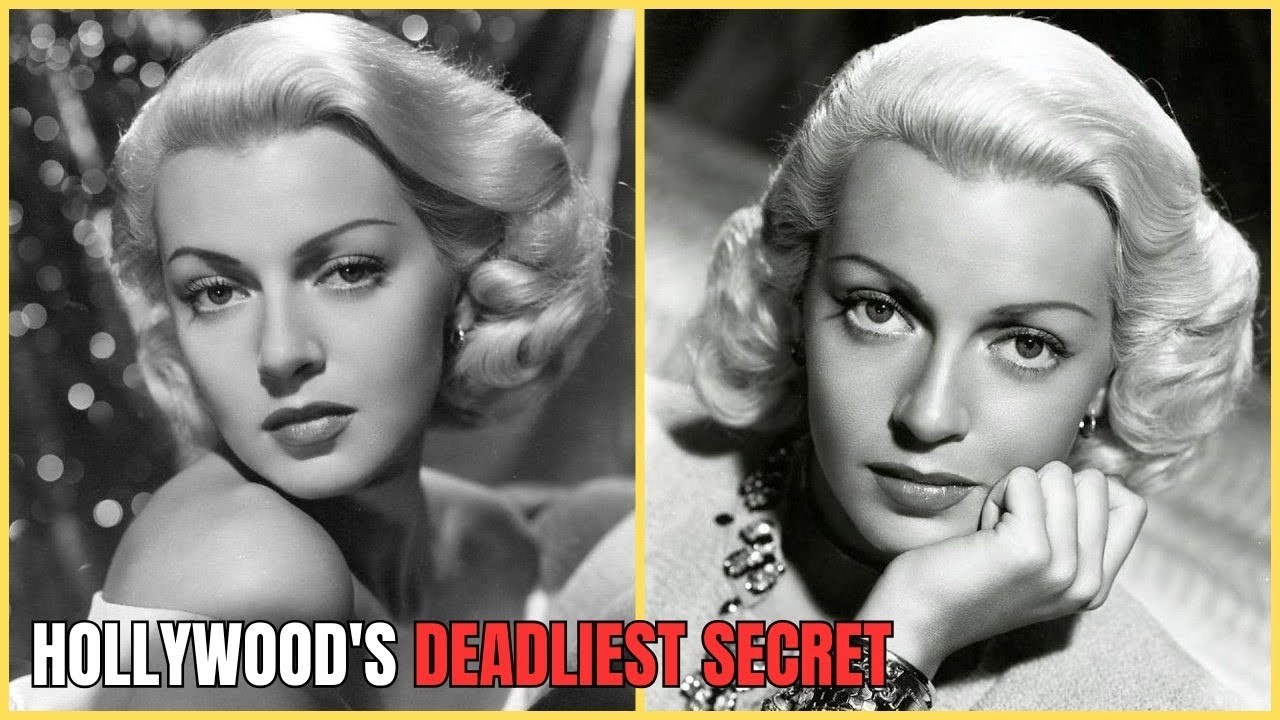
Studio executives allowed her into the theater, but had no intention of allowing her into the industry. After the nomination, scripts stopped coming. They offered her roles as slaves and domestic servants. She refused them all.
Hollywood locked the front door. To survive, she turned east toward the desert, toward Las Vegas. In the 1950s, Las Vegas was a cash machine controlled entirely by organized crime. The Chicago Outfit, the New York families, and the Cleveland Syndicate owned the casinos.
Moe Dalitz, a polished, soft-spoken architect of corporate crime who ran the Desert Inn, saw Dandridge as the ultimate shiny object to distract federal regulators from millions being illegally skimmed from casino count rooms. She was booked to headline the biggest rooms, her name burning bright on neon marquees. She brought in millions in revenue. But Las Vegas was strictly segregated, often called the Mississippi of the West.
She could sing for the guests, but she could not be a guest. She was barred from walking through the front doors of the hotel she was keeping in business. She could not use the main passenger elevators, dine in the restaurants, or drink at the bar. Every night after performing, she had to exit the stage and walk down a dark concrete corridor, using service elevators and smuggling through hotel kitchens just to reach her room.
The humiliation reached a peak at the Last Frontier Hotel. On a sweltering summer day, Dandridge walked to the pool deck, sat on the edge, and dipped her toe into the water. Hotel management panicked. The manager ordered the entire swimming pool drained.
Staff scrubbed the exact spot where her toe had touched the water, pouring bleach over the concrete as if she had contaminated it with a deadly plague. The mob bosses watched these daily humiliations. They knew a woman subjected to severe public degradation would crave a safe harbor. They stepped in to offer a twisted form of salvation.
Men like Dalitz approached her with respect, bypassing hotel rules, giving her private luxury suites, special meals, and private transportation. They created a gilded cage. Inside, she was treated like a queen. But every favor was a debt.
By accepting their protection, she belonged to the bosses. They used her as their most valuable lure, parading her in front of powerful white men at private parties with politicians and federal judges, using her as a glittering distraction while real business was conducted in backrooms. She was acutely aware she was being used as bait. But the alternative was the service elevator, the drained pool, the unemployment line in Hollywood.
She thought she could navigate the shark tank. She underestimated the machine. The mob needed to break her autonomy, to tether her entirely to the syndicate. The most effective way was not with a weapon.
It was with a wedding ring. Enter Jack Denison, a maître d’ at a high-end restaurant with predatory charm. He operated on the fringes of the Las Vegas underworld, owing money to violent loan sharks connected to the Chicago outfit. The syndicate watched his financial desperation and saw a perfectly timed opportunity.
By 1959, Dandridge was exhausted, psychologically crushed by her dual existence, and carrying the burden of a severely brain-damaged daughter requiring expensive, round-the-clock institutional care. Denison moved in with calculated precision, offering her a vision of a stable, legitimate life. She fell for it. In 1959, she married him.
The marriage quickly became a devastating financial drain. His supper club, sold to her as a thriving enterprise, was a financial black hole. He demanded capital, playing on her insecurities and her fear of returning to poverty. Dandridge had amassed a personal fortune of roughly $150,000, an astronomical sum in the late 1950s.
Denison bled it dry. He drained her bank accounts, liquidated her investments, and used her famous name to secure massive credit lines he never intended to repay. He forced her to perform at his failing restaurant every night for free. The woman who commanded the stage at the Pantages Theater now sang to empty tables.
When she questioned the disappearing funds, he became verbally abusive, belittling her career, telling her Hollywood was done with her, and isolating her from trusted friends and advisers. The money completely ran out. The restaurant went bankrupt. Denison packed his bags and vanished, leaving her with nothing but his debts.
In the legitimate world, a divorced woman is not responsible for her ex-husband’s criminal debts. But the syndicate did not care about divorce papers. Denison owed massive sums and had fled. The debt was unilaterally transferred to her.
Dandridge woke up completely broke, owing an insurmountable sum to organized crime figures who did not negotiate, plus staggering amounts to the IRS because Denison had failed to pay taxes on the income he stole. On top of it all were the astronomical medical bills for her daughter. The mob presented a brutally direct ultimatum: work on their exact terms or face the violent consequences. She was no longer a celebrated artist.
She was a hostage working off a ransom she never agreed to pay. They sent her on the road, performing in second-rate, run-down nightclubs in obscure towns. She sang in cramped, smoke-filled rooms for rowdy, disrespectful crowds. Every paycheck was intercepted.
The club owners took the vast majority to service the syndicate debt, paying her just enough cash to stay alive and travel to the next mandated gig. She tried to return to acting, swallowing her pride and begging for auditions, willing to take minor supporting roles. Hollywood remained entirely, aggressively closed. Casting directors said she was too old, despite her being only in her early 40s.
The studios read the tabloids and knew she was broke, tied up in messy divorces, and surrounded by dangerous rumors of mob debts. They viewed her as a corporate liability and collectively decided to let her drown. To cope with the relentless pain and psychological despair, she turned to medication. Doctors prescribed barbiturates to force her mind to sleep and stimulants to force her body to perform.
The mob did not care if she was heavily medicated. A numb asset is a compliant asset. By the spring of 1965, Dandridge was a ghost haunting her own life. She was living in a small, sterile apartment at 8495 Fountain Avenue in West Hollywood.
The IRS had seized whatever assets the mob had missed. Her bank account held exactly $2. 14. The most devastating blow was maternal.
Her daughter Harlean, born with severe anoxic brain damage, had been in private institutional care for years. When the money evaporated and the IRS emptied the reserves, the institution discharged her. The state committed Harlean to a public mental asylum, a bleak, underfunded facility where patients were warehoused rather than treated. For Dandridge, this was the ultimate soul-crushing failure.
The men who drained her accounts did not just steal her money. They effectively stole her child. Pushed to absolute ruin, she transformed from a compliant victim into a liability. She had one weapon left: the truth.
She sat in her Fountain Avenue apartment and began writing. She started compiling detailed notes and audio tapes for a comprehensive autobiography, intending to name the studio executives who locked her out of leading roles and expose the systemic financial exploitation she endured in Las Vegas. On the morning of September 8, 1965, her manager Earl Mills arrived at the apartment. He had arranged a meeting for her about a potential comeback at a club in New York.
He knocked. There was no answer. Fearing a medical emergency, he pried open the door and found Dorothy Dandridge lying on the bathroom floor. She was naked, unresponsive, dead.
She was 42 years old. The Los Angeles Police Department did not treat it like the suspicious death of a global cultural icon. They saw a washed-up, broke Black actress. They did not dust for fingerprints, secure the perimeter, or call in homicide detectives.
They simply bagged the body. The county coroner initially announced she died from a remarkably rare fat embolism, claiming a minor hairline fracture in her right foot released bone marrow that traveled to her brain and killed her instantly. It was a diagnosis so improbably it defied basic anatomy. A few weeks later, the official narrative changed entirely.
A revised toxicology report discarded the fat embolism theory and announced a new cause of death: acute drug intoxication. They stated she consumed a massive lethal overdose of Tofranil, a tricyclic antidepressant, and ruled it either accidental or suicide. The contradiction was glaring. A forensic pathologist does not mistake a physical blockage caused by a broken foot for a massive systemic chemical overdose.
The authorities never explained the discrepancy, never investigated who might have supplied the lethal prescription-only dose, and never looked into her recent visitors. They simply stamped the file closed. Rumors swirled that explosive personal notes had been scrubbed from the apartment. In reality, her manager Earl Mills had already quietly secured many of her handwritten drafts and audio dictations, documents that would eventually surface years later as her posthumous autobiography.
But detectives showed no professional interest in her written work, her recent interactions, or the immense pressure she faced from organized crime and the IRS. The death was undeniably convenient for a vast network of powerful men. Studio executives did not want their systemic racial discrimination exposed. Casino bosses did not want their extortion rackets detailed to regulators.
Denison’s creditors did not want their financial manipulation brought into a courtroom. Whether she was physically forced to swallow the pills, whether her medications were lethally swapped by an unseen visitor, or whether the crushing weight of her engineered destruction pushed her to take her own life, the specific physical mechanism of her death became secondary to the prolonged deliberate mechanism of her ruin. The architects of her downfall starved her of resources, separated her from her child, and waited for the pressure to crush her. The press sanitized the crime scene, painting a soap opera of a tragic starlet who succumbed to the pressures of fame.
At her quiet California funeral, friends had to gather charity funds to afford a wooden casket. The Hollywood elite stayed away. Director Otto Preminger, who once promised to protect her, was absent. Jack Denison vanished without facing a single legal consequence.
It took nearly half a century for the culture to grasp the magnitude of her legacy. In 2002, exactly 48 years after her historic nomination, Halle Berry stood on the Academy Awards stage as the first Black woman to win Best Actress. Through tears, Berry dedicated the historic moment directly to Dorothy Dandridge.
The standing ovation could not rewrite her brutal final chapter, but it cemented one undeniable truth: she was a generational talent destroyed by the very system that profited from her.