In the autumn of 1921, the residents of a remote Appalachian hollow called Hesslers Gap began hearing something that should not have been there. It was the sound of their own church bell, ringing in the dead of night, with no hand on the rope.
The bell belonged to Lemuel Carroll, a 54-year-old sexton who had cared for the church on Tamlin Ridge for nearly 30 years. He rang it three ways: slow and easy on Sundays, quick and high for trouble, and for the dead, tolling once for every year of the departed’s life. The entire hollow relied on that count to know who had passed.
There was one rule, kept by an old woman named Orpha Sturgill. The bell was only to be rung in the daylight. If it rang after dark with no hand on the rope, you were not to count the strokes. To count, she warned, was to answer. And the bell was a door that swung both ways.
The young men of the hollow, especially a 27-year-old named Doss Prophet, mocked the old woman’s warning. Doss had been to France and back and saw no reason to fear a bell. The mockery was loud, but it did not stay funny.
It started on a cold night in late October. Lemuel woke just after midnight to hear his bell ring once. Then again. The strokes were wrong. They had no pull or swing behind them, as if the sound was being made by something that had only heard of a bell and was trying to remember how one went. Lemuel counted seven strokes before it stopped.
The next morning, he found that half the hollow had heard it. Everyone had counted seven. Doss laughed it off, but the laughter was thinner than it had been the day before.
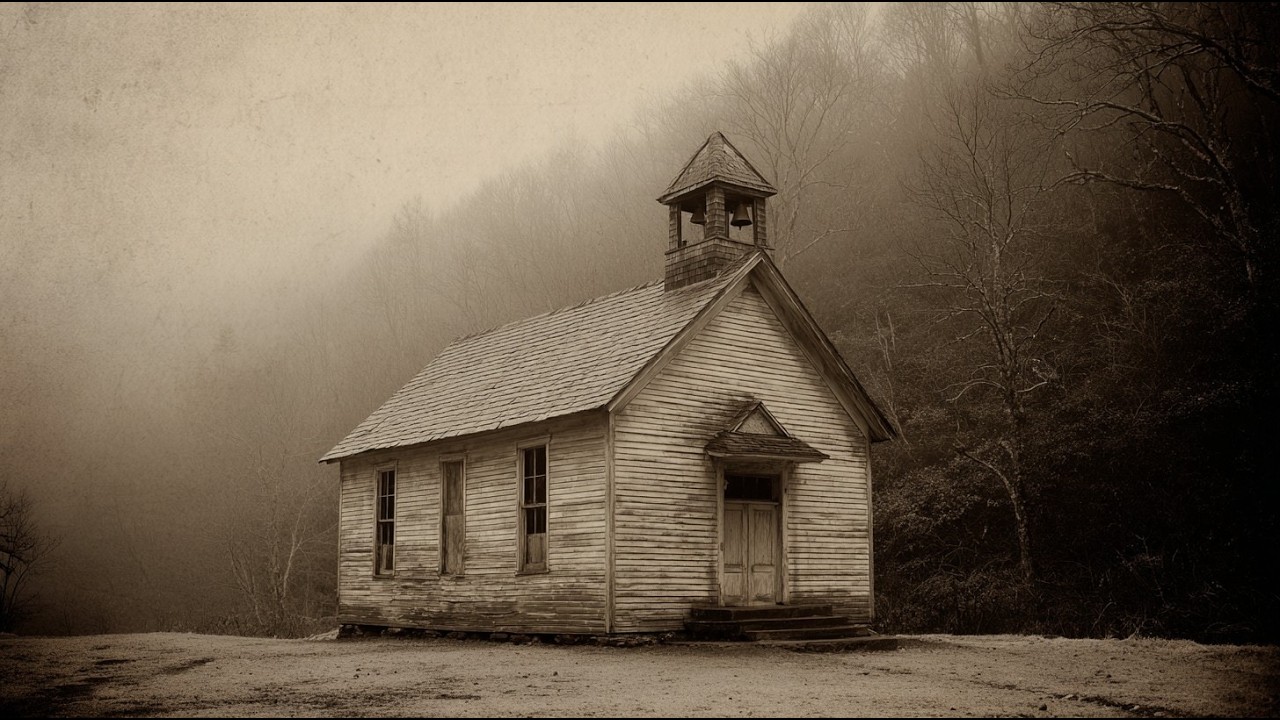
Orpha Sturgill came down from her cabin and asked Lemuel one question: How many? When he told her seven, she said something he did not understand. "It's not counting years lived, Lemuel. Your bell counts up. The other one counts down."
Seven days later, a strong young man named Burl Sizemore was killed by a falling tree. Lemuel tolled the bell 24 times for him in the daylight. That night, the answer came again. It stopped at eight.
Eight days later, an old woman died. The count and the death had matched twice. The hollow was becoming a place that believed. The mockery was dying.
Lemuel went back to Orpha for answers. She told him of an old furnace settlement up the mountain, a hard place where men had dug iron and burned it in a great stone stack. There had been a bell there, too, one that rang day and night to call men to their shifts. One winter, something went wrong. The furnace went cold, the men vanished, and the settlement was abandoned. But the bell had learned the ringing.
When the hollow folks hung their own bell and rang it in the daylight, the old bell heard it. It remembered that a bell is a thing that gets answered. And it started asking for company.
A group of men, including Doss Prophet, went up the mountain to the old furnace. They found the stone stack and the rotted timber frame where a bell should have hung. There was no bell, no clapper, no rope. But the iron staple where a bell had once hung was worn shiny, as if something had been swinging on it every night for a hundred years.
Doss Prophet went pale. "It heard us coming," he said quietly. He would not say another word.
That night, the bell did not wait for theirs. It led. It stopped at nine. Nine days later, Doss Prophet was found dead at the foot of the trail leading up the mountain. He had been headed up in the dark with no lamp, as if something had called him.
The night they buried Doss, Lemuel Carroll decided to do the terrible thing Orpha had told him to do. He would make the mountain dumb.
He waited for the dark. He took a sledge and went first to his own church. He climbed into the belfry, took down the rope, and unpinned the clapper from his own bell. He carried it out and buried it in the churchyard among the graves it had tolled for. He made his own bell silent so there would be nothing left to answer.
Then he started up the trail to the furnace. At the foot of the cold stack, he waited. He knew it would not start until somebody listened, so he made himself listen. He said into the dark, "I hear you."
The bell rang out of the empty frame, out of nothing. It rang faster, counting him, trying to make him answer. Some part of him wanted to count, just to keep it company. But he did not. He swung the sledge into the empty frame, into the place the sound was coming from. He swung until it stopped.
He came down at dawn, gray-faced and old. Orpha met him at the foot of the trail and nodded once. The hollow was safe.
They never fixed the church bell. Lemuel stayed sexton the rest of his days, but the bell hung silent, clapperless, dumb. The hollow learned to carry its own dead the slow way, on foot, mouth to mouth.
But on certain still nights in the deep of winter, folks would wake a little after midnight. From up the mountain, they would hear it: one stroke, that shapeless, wrong-made sound rolling down off the ridge. It was ringing still, tolling out its slow count into a silence that would never ring back.
They would lie in their beds and do the one thing they had learned to do. They would not count. All except one.
On those nights, Lemuel Carroll would get up, dress in the dark, and start up the trail toward the sound, as if something were calling and he had decided he could not leave it ringing alone. Every time, near dawn, he would come back down. Every time but the last.
One winter, when Lemuel was very old, he did not come back down. They found his gray coat at the foot of the cold stack, folded and set down neat on a stone, as if a man had taken it off because he was finally going to be staying a while.
After Lemuel went, the mountain went quiet. The bell never rang again. It wasn't alone anymore. It had somebody up there now, somebody who had finally decided to ring back.