The systematic exploitation of human desperation reached its most calculated and brutal form inside the Nazi concentration camp system, where SS administrators transformed sexual violence into a tool of control, turning forced prostitution into a currency of survival that pitted prisoner against prisoner. Newly examined historical records and the extensive research of historian Robert Sommer have laid bare the full, horrifying mechanics of the “special barracks” established within at least ten major camps, including Mauthausen, Buchenwald, and Auschwitz, revealing a chillingly bureaucratic approach to human degradation that operated from 1942 until the final days of the Reich.
The genesis of this atrocity lay not in the perverse leisure of the SS, but in a cold strategic calculation regarding the morale of the male prisoner population. As the war ground on, Nazi leadership, particularly SS chief Heinrich Himmler and the head of the SS Main Economic and Administrative Office, Oswald Pohl, became increasingly concerned with the efficiency of their vast network of camps. Pohl, who took over the administration of all concentration camps, identified a critical vulnerability: the immense frustration and simmering resentment among male inmates, which he believed could erupt into disobedience or even revolt.
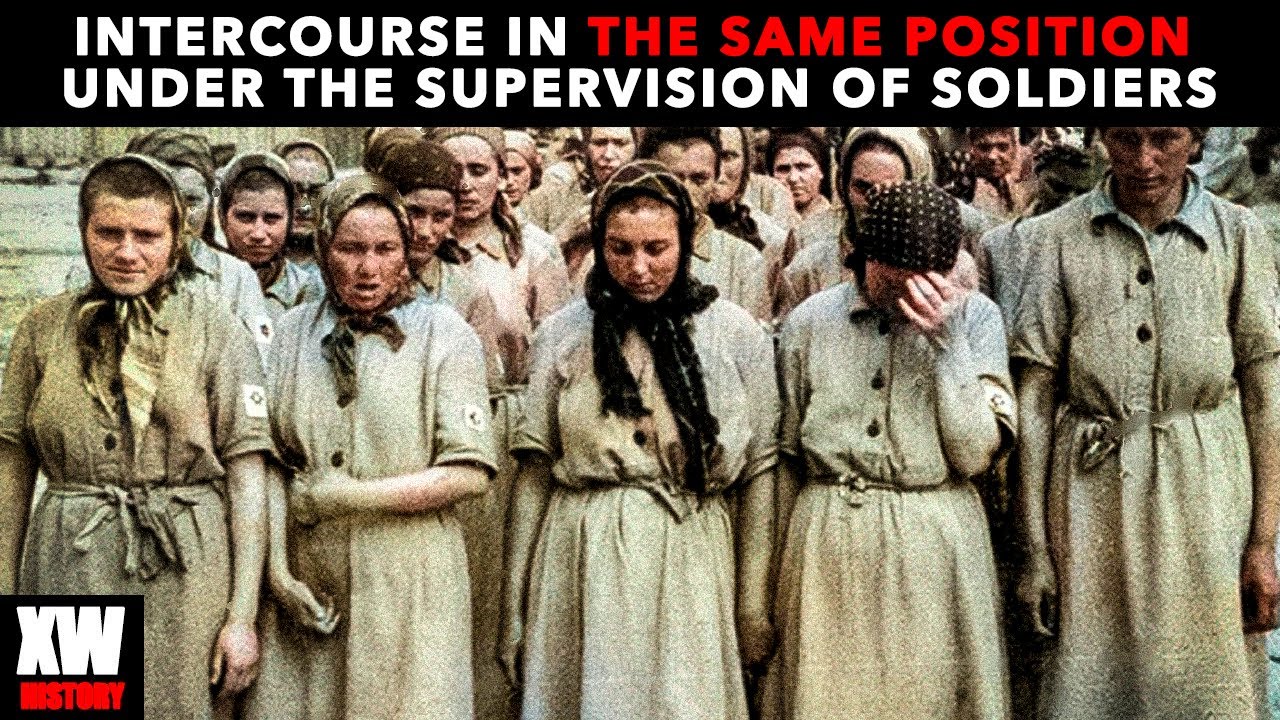 His solution, detailed in a memorandum to Himmler, was to offer a grotesque incentive for compliance and hard work—access to a brothel.
Himmler’s approval was swift, and the first such institution was operational at Mauthausen by June 1942. The project was approached with the same ruthless precision as any industrial endeavor. SS administrators calculated the optimal ratio of women to men, determining that a single woman could be expected to service between 300 and 500 men, with each encounter strictly limited to fifteen minutes.
The mathematics of 𝓪𝓫𝓾𝓼𝓮 were staggering, designed to maximize output while minimizing the number of women required. The women themselves were sourced primarily from the Ravensbrück concentration camp, where the infamous female overseer Maria Mandel personally oversaw their selection, a process that was as much about physical stamina as it was about breaking the will.
For the women forced into these barracks, the experience was a living nightmare of systematic rape, stripped of even the pretense of privacy. Each day, they were required to satisfy up to eight men, all under the constant surveillance of garrison soldiers who observed the proceedings through holes drilled into the walls. Absolute silence was enforced during the acts, and any deviation from the strict rules could result in immediate return to the brutal conditions of the main camp.
Before their shifts, the women were subjected to degrading medical examinations, forced to bathe in disinfectant solutions, and scrubbed with harsh brushes. They were given calcium injections and fed heavily, not out of compassion, but to ensure their bodies could withstand the relentless physical toll, thereby protecting the SS’s investment.
The psychological manipulation was just as calculated as the physical 𝓪𝓫𝓾𝓼𝓮. The SS deliberately created a hierarchy of privilege within the camps, where access to the brothel was a reward reserved for “promoted” prisoners, such as kapos and block elders. This system was designed to foster division and distrust, turning inmates against one another in a desperate competition for a few minutes of grim solace.
The reports filed by camp administrators noted a significant increase in denunciations among prisoners, with men informing on their peers for planned escapes or acts of resistance in exchange for the coveted “reward.” This tactic proved devastatingly effective in breaking down solidarity and maintaining control, as the promise of sexual access became a weapon of psychological warfare.
 This perverse incentive structure was further sharpened by a strict racial policy. While the brothels were ostensibly for the “best” prisoners, Jews were categorically forbidden from entering the special rooms under any circumstances. This exclusion, believed to be a personal edict from Himmler, served to reinforce the Nazi ideology of racial purity even within the confines of the camps.
It was a calculated move to deepen the chasm between Jewish prisoners and others, ensuring that even the most degraded of interactions were filtered through the lens of racial hatred. The policy ensured that the system served not only to control the general population but also to isolate and further dehumanize the primary targets of the Nazi genocide.
Beyond the physical and psychological torment, the SS also used the brothels as a cynical tool for public health management, specifically targeting homosexuality among prisoners. The concern was not moral, but practical; the SS feared the spread of venereal diseases that could incapacitate the workforce. Homosexual prisoners were subjected to forced “treatment” for their orientation and any resulting infections.
If the treatment failed to produce the desired result, the prisoner could be summarily shot. This brutal policy underscored the utilitarian nature of the entire operation, where the health and well-being of individuals were utterly irrelevant, and their value was measured solely by their capacity for labor and their compliance with the camp’s perverse rules.
The toll on the women forced into this system was immense, yet the historical record reveals a grim paradox. According to Sommer’s research, between 200 and 300 women were forced to work in these ten brothels, the vast majority of them ethnic Germans, with a smaller number of Poles and at least one Romanian. While their daily existence was a form of relentless sexual slavery, the women in the brothels were often treated marginally better than those in the main camps.
They received better food and slightly better living conditions, a calculated incentive that made the position a “privilege” for which some desperate women even volunteered, hoping to escape the starvation and back-breaking labor that killed so many others. This tragic calculus meant that for some, the horror of the brothel was a lesser evil than the almost certain death of the main camp.
 The SS exploited this desperation with promises of eventual release. Women were told that if they served “honestly and well” for six months, they might be freed. This was an empty promise, a cruel fiction designed to ensure compliance, yet it offered a sliver of hope that kept the women functioning.
The threat of pregnancy, however, was a constant danger, and the SS’s solution was the ultimate act of bodily violation: forced sterilization. This procedure was the final safeguard to ensure that the “worker” could not be discharged from her duties due to an accidental pregnancy, cementing the SS’s absolute control over the women’s bodies and their futures. The combination of hope and terror was a potent cocktail, ensuring the system ran with grim efficiency until the camps were liberated.
For decades after the war, the existence of these camp brothels remained a taboo subject in Germany, a secret that was actively suppressed. The reasons were clear: the revelations of forced prostitution, systematic rape, and criminal forced sterilizations cast a devastating shadow over the post-war narrative of a nation coming to terms with its past. It was not until 2009 that historian Robert Sommer broke the silence with his monumental study, “Brothel in the Concentration Camp,” a 450-page work that meticulously documented the establishment, operation, and conditions of these institutions.
Sommer’s research, which took 34 years to complete, provided the first comprehensive account, listing names, dates, and locations, and debunking the myth that the Nazi regime had fought against prostitution. Instead, it proved that the regime had legalized and instrumentalized it, achieving two goals at once: financial profit and the brutal manipulation of a captive population.
The legacy of these “special barracks” is a stark reminder of the depths of human cruelty and the chilling efficiency with which systematic violence can be organized. The story is not merely one of sexual violence, but of a calculated strategy to break the human spirit, to corrupt social bonds, and to use the most intimate of human needs as a tool of oppression. The women who survived these institutions carried the trauma of their experiences in silence, their suffering compounded by the shame imposed upon them by a society unwilling to acknowledge their ordeal.
The research of Sommer and others has finally brought their stories into the light, ensuring that this dark chapter of history is not forgotten.
 The revelation of these brothels forces a re-evaluation of the concentration camp system as a whole, moving the understanding beyond simple starvation and labor to include a more insidious form of psychological warfare. It demonstrates that the Nazis were not merely seeking to exterminate and exploit, but also to degrade and divide, using every tool at their disposal to maintain absolute dominion. The fact that the system was implemented across ten major camps indicates it was not an aberration but a core component of the SS’s administrative strategy.
The “special barracks” were a testament to the regime’s ability to industrialize even the most intimate forms of violence, transforming human misery into a mechanism of control.
As the world continues to grapple with the horrors of the Holocaust, the story of these women and the men who were manipulated by this system serves as a profound warning. It illustrates how easily human dignity can be stripped away when institutions are given unchecked power and when individuals are reduced to mere cogs in a bureaucratic machine. The meticulous planning, the cold calculations of stamina and output, and the deliberate fostering of internal conflict all point to a form of evil that was not chaotic, but deeply, terrifyingly organized.
The echoes of this system can be seen in other conflicts and regimes, a grim reminder that the capacity for such atrocity is not confined to one time or place.
The silence that surrounded this topic for so long was a second victimization of the women involved. Their experiences were erased from the public narrative, leaving them to suffer alone with the memory of what was done to them. The work of historians like Sommer is therefore not just an academic exercise; it is an act of justice, a restoration of their stories to the historical record.
By naming the camps, the administrators, and the victims, the research challenges the sanitized versions of history and forces a confrontation with the full, unvarnished truth of the Nazi regime. The “special barracks” stand as a monument to the darkest aspects of human nature, a place where hope was weaponized and the body became a battleground for ideological control.