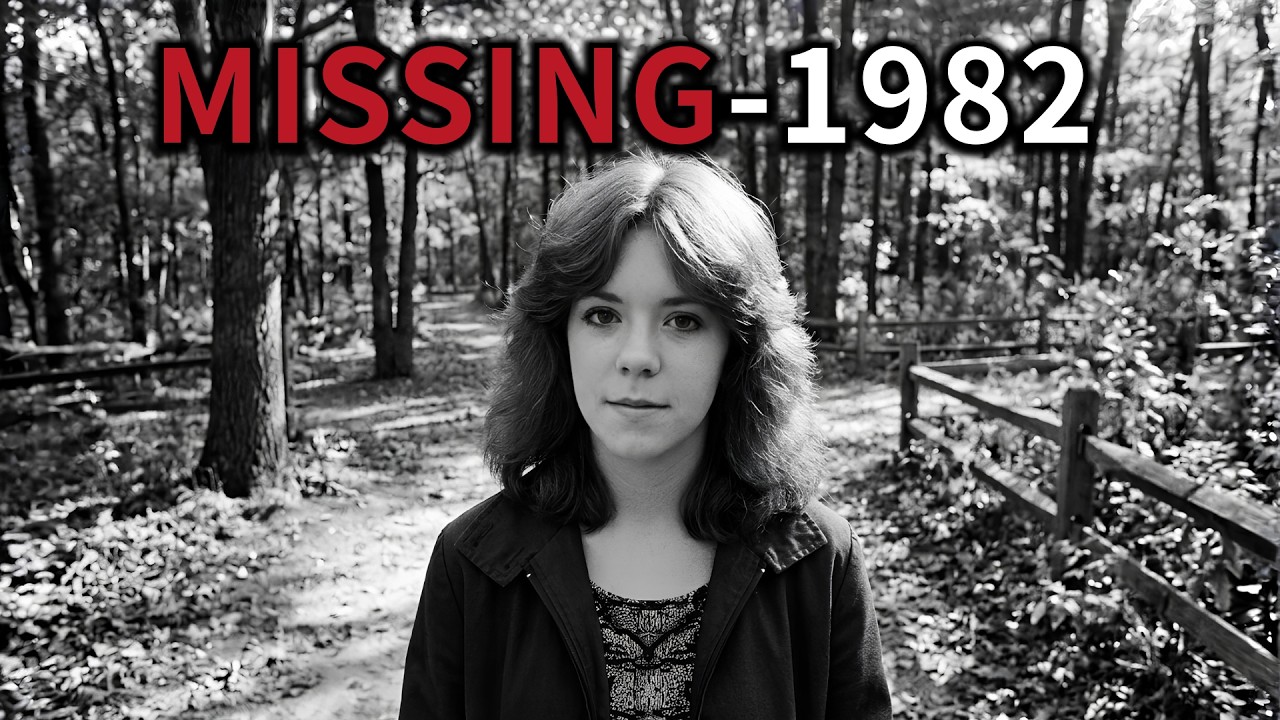
On the evening of March 20, 1982, 16-year-old Kimberly Louiselle was at her boyfriend’s house in Redford, Michigan. The couple broke up that day, and her boyfriend left for his night shift. Kimberly had no car and no ride home to South Lyon, about 25 miles away.
She began hitchhiking from the area of 8 Mile and Inkster. She got a ride part of the way, to the area of 8 Mile and Merriman in Livonia. Around 6:30 p.m., she stopped at a gas station to use a payphone.
She called her mother to say she was on her way home. Then she made at least four more calls, trying to reach acquaintances who could drive the 20 miles to pick her up. No one came.
That was the last confirmed sighting of Kimberly alive. She continued hitchhiking after her calls failed. She never made it home.
When Kimberly didn’t return, her mother, Joanna Louiselle, began contacting friends and acquaintances. On the morning of March 21, 1982, she went to the Green Oak Township Police Department to report her daughter missing.
Police repeatedly asked whether Kimberly might be a runaway. Joanna denied it every time. Her daughter had called to say she was coming home.
There were no witnesses who saw her get into a car. There were no security cameras along that route in 1982. She vanished without a trace.
On April 14, 1982, her body was found at Island Lake Recreation Area, a state park about five miles from her home. She had been sexually assaulted, beaten, and strangled.
The autopsy revealed something even more disturbing. Her body showed multiple wounds at different stages of healing. These were not injuries from a single attack, but from repeated assaults over multiple days.
Although Kimberly had been missing for 25 days, she had only been dead for 4 to 5 days. That meant she had been held alive somewhere for roughly 20 days after her abduction before being killed.
Investigators collected biological evidence from her body, including DNA samples from the attacker. In 1982, DNA forensics did not yet exist as an investigative tool. The samples were stored in the Michigan State Police Evidence Vault.
The investigation hit a dead end. There were no witnesses, no suspects, and no leads that produced results.
In 1983, someone came forward to police with information about a man named Charles David Shaw. Shaw lived near the South Lyon area, less than five miles from where Kimberly disappeared. The tipster said Shaw had recently destroyed his apartment in a suspicious manner, cleaning and disposing of items as if trying to eliminate evidence.
The information was recorded in the investigation file. No further action was taken. Shaw was never interviewed, never investigated, and never asked for an alibi.
His name sat in the file as a marginal note from 1983 and remained there for the next 40 years.
If Shaw had been investigated in 1983, another woman might have survived. Christina Lynn Castiglione, 19, was last seen on the evening of March 19, 1983, walking west on 5 Mile Road in Redford Township. Her body was found on March 29, 1983 in the Oak Grove State Game Area. She had been raped and strangled.
That case also remained unsolved for nearly 40 years.
Meanwhile, Kimberly’s younger sister, Cindy Arthur, never gave up. Around the mid-2000s, she typed her sister’s name into a search bar. The results were two old newspaper articles with inaccurate information.
Cindy created a Facebook page about her sister’s case. She posted detailed information, corrected errors in old articles, and shared photos of Kimberly. She put up flyers and reached out to old friends. She kept her sister’s name alive in the community for 15 years.
In the summer of 2022, the Michigan State Police First District Cold Case Unit launched a partnership with Michigan State University’s School of Criminal Justice. Students were given access to real case files and asked to review evidence for anything that might have been overlooked.

A group of students reviewed the Louiselle case file. In the pile of documents, they noticed a note from 1983. The name Charles David Shaw stood out. He had been reported for destroying his apartment in a suspicious manner, but had never been investigated.
The students flagged Shaw’s name for further investigation.
At the same time, the Livingston County Cold Case Team was working on the Castiglione case. In May 2022, they received funding from Season of Justice, a non-profit that provides grants for advanced DNA testing in cold cases.
The evidence was sent to Othram Inc., a private forensic laboratory in Texas. Othram uses forensic grade genome sequencing, analyzing millions of points of variation across the entire genome. This allows investigators to build family trees from degraded samples that have been in storage for decades.
By the end of 2022, results from Othram and subsequent forensic genealogy led to three separate and independent familial DNA comparison tests. All three confirmed the same name: Charles David Shaw.
Shaw’s DNA profile was entered into CODIS, the national DNA database. In February 2023, the Livingston County Sheriff’s Office publicly named Shaw as a suspect in the Castiglione case.
In June 2023, with Shaw’s name already flagged by the students and his DNA now in CODIS, the Michigan State Police resubmitted evidence from the Louiselle case. The DNA collected from Kimberly’s body in 1982 matched Charles David Shaw’s DNA profile.
It was a full confirmation. The person who abducted, held, and killed Kimberly Louiselle was Charles David Shaw.
Charles David Shaw was born around 1956 or 1957. He lived in the Livonia and Redford area of Michigan. His criminal record escalated over the years: burglary in 1973, drug possession in 1977, and in 1981, the attempted abduction of a woman at a McDonald’s parking lot in Fowlerville, for which he received two weeks in jail and probation.
In 1982, the same year he killed Kimberly, he was arrested for stealing women’s shoes at Kmart.

Shaw died in November 1983, about eight months after killing Castiglione and about 20 months after killing Kimberly. He was 26 years old. The Wayne County Medical Examiner’s Office determined the cause of death as accidental sexual asphyxiation.
Investigators found no connections between Shaw and either victim. They were not acquaintances, not neighbors. These were purely opportunistic crimes.
On September 14, 2023, the Michigan State Police held an official press conference in Lansing. They announced that Charles David Shaw had been identified by DNA as the suspect in the 1982 murder of Kimberly Louiselle.
Because Shaw had died in November 1983, there would be no arrest, no trial, and no conviction. The case file was closed with the notation that Shaw was the DNA confirmed suspect.
The Michigan State Police continue to review the case of Anna Marie Dorogazi, 20, who was found murdered on September 29, 1981, six months before Kimberly was abducted. She was raped and strangled under similar circumstances. If DNA confirms Shaw in that case, he would officially be classified as a serial killer with at least three victims between 1981 and 1983.
The MSP is reviewing all unsolved criminal cases in Michigan from 1970 to 1983. They continue to ask anyone with information about Shaw’s activities to contact Detective Sergeant Larry Rothman at the MSP.
One question remains unanswered. Where was Kimberly during those 20 days? Where did Shaw take her after picking her up on 8 Mile? He died in November 1983 and took those answers with him.
The case became real-world proof of the power of academic police collaboration. Students without preconceptions read the file as if for the first time and saw a name that others had looked past for decades.
Cindy Arthur had no investigation training and no budget. She only had a Facebook page and the patience of a younger sister who refused to let her sister be forgotten. That simple action created the conditions for the case to be selected for review in 2022.
The case also highlights the power of nonprofit organizations. Season of Justice funded the DNA testing that led to Shaw’s identification. Without that funding, Shaw’s DNA would not have entered CODIS, and the Louiselle case might never have been solved.
After 41 years, Joanna Louiselle finally received confirmation that she had been right from the beginning. Kimberly had not run away. She was on her way home.