On July 3, 1863, Major General George Pickett sent 12,000 men across open farmland and into the teeth of Union artillery at Gettysburg. The assault became the most famous charge in American history. But the man who led it never recovered from what he saw that day.
Half of Pickett’s division was killed, wounded, or captured. Every brigade and regimental commander under him fell. Pickett himself walked away physically unharmed, but emotionally shattered.
General Robert E. Lee tried to frame the disaster as a noble sacrifice. Pickett refused to accept that narrative. He saw the dead Virginians as the result of unnecessary slaughter, and the realization broke something inside him.
Lee asked Pickett to submit an official report on the assault. Instead of a standard military account, Pickett wrote a bitter document that criticized the Confederate command structure. According to legend, Lee read it, recognized how damaging it was, and destroyed it.
Pickett was ordered to write a milder version. The damage was already done. He had openly rejected the story his superiors wanted to tell, and from that moment, he spiritually abandoned the war.
Observers noticed the change as the army retreated into Virginia. The once flamboyant commander, known for his styled ringlets and dramatic presence, became quiet and withdrawn. He avoided meetings, spoke in clipped tones, and stared at the horizon for hours.
The war continued, but Pickett moved through it like a spectator.
In the spring of 1865, he was sent to Five Forks, a critical position defending Richmond. While Union forces under General Philip Sheridan overwhelmed his troops, Pickett was miles away at a shad fishing picnic. By the time he realized the distant firing was not a minor skirmish, his command had collapsed.
Lee’s patience was gone. At Appomattox, reports suggest Lee saw Pickett and coldly asked an aide, “Is that man still with this army?” It was a crushing rejection from the commander who had sent his men to die.
With the Confederacy defeated and Lee’s disdain clear, Pickett faced a new threat. Northern press reports suggested federal authorities planned to try former Confederate officers for war crimes. Pickett had ordered the execution of 22 Union soldiers earlier in the war, and he feared he would be at the top of the list.
He disguised himself, slipped past federal guards, and fled to Montreal, Canada. Living under an assumed name in a boarding house, the famous general spent his days in fear, certain that every knock on the door was an agent coming to arrest him.
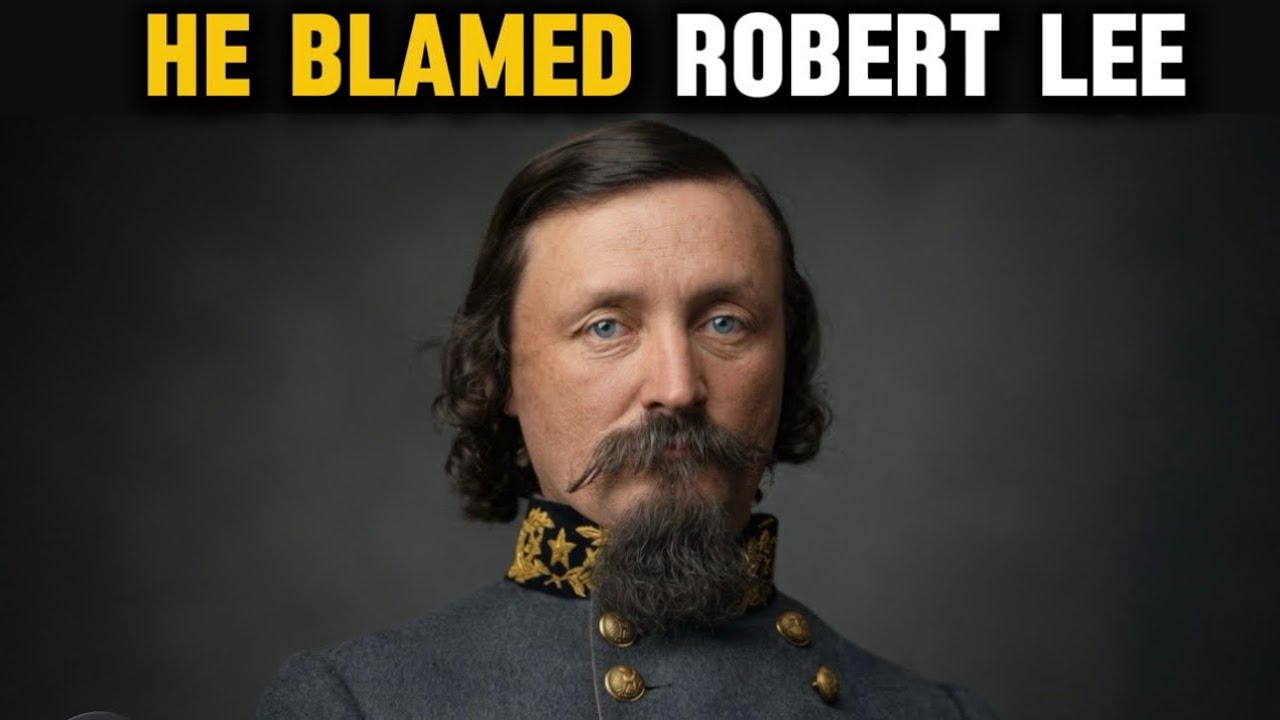
It was Ulysses S. Grant who saved him. Grant, a former West Point classmate, insisted that the surrender terms at Appomattox be honored. With Grant’s intervention, Pickett was protected from prosecution and returned to Virginia in late 1866.
The man who came back bore little resemblance to the general who had ridden north three years earlier. His estates were ruined. His wealth was gone. His health was failing.
Pickett refused invitations to Confederate reunions. He declined offers to write his memoirs. He turned down political positions and public roles that his former colleagues eagerly accepted.
Instead, he took a low-paying job as an insurance agent in Richmond. He sat in a small, dusty office and sold policies to local merchants. Few people recognized the quiet, haggard man behind the desk as the commander of the famous charge.
He refused to discuss the war. He cut ties with former military associates. He spent his evenings alone.
Years later, he made a rare visit to Robert E. Lee, shortly before Lee’s death. The meeting was cold and brief. As Pickett left, an associate asked how it went. Pickett reportedly spat on the floor and said, “That man destroyed my division.”
It was a rare outburst from a man who had otherwise chosen silence.
Pickett’s health deteriorated quickly. He suffered from stomach ailments and chest pains, conditions modern historians believe were worsened by years of unaddressed trauma. He grew frail and spent his final months in bed, cared for by his wife, LaSalle.
On July 30, 1875, at the age of 50, George Pickett died in Norfolk, Virginia. It was 12 years after the battle that defined his life.
He did not call out for military honors. He did not ask for his general’s coat. He died in quiet obscurity.
After his death, his widow and Southern mythmakers reshaped his story into a romantic symbol of the Lost Cause. But the real story is found in the 12 years of deliberate silence that followed Gettysburg.
Pickett chose to vanish rather than glorify a disaster he knew was built on unnecessary graves. His disappearance from public life was his final statement. The man who led the assault on Cemetery Ridge proved that sometimes the hardest casualty to find after a war is the leader who survived it.