On the night of 10 May 1941, Rudolf Hess, the Deputy Führer of Germany, parachuted into Scotland wearing a leather flying suit over the blue uniform of a Luftwaffe captain. He initially identified himself as Hauptmann Horn, a pilot of a Messerschmitt Bf 110 that lay burning in a farmer’s field. The basic facts of that bizarre mission are well known, but the fate of the uniform Hess wore that night has become a mystery that has only deepened since his death in 1987.
Hess spent 46 years as a prisoner in Berlin’s Spandau Prison, from his capture in 1941 until his death in August 1987 at the age of 93. What is less widely known is that his uniform was not discarded after his capture. Instead, it was kept in storage within the prison itself, remaining with him throughout his entire imprisonment.
Remarkably, Hess was permitted to visit and inspect his flying suit and uniform while he was incarcerated. This was an unusual privilege for a man who was otherwise forbidden from reading any literature related to the Nazi era. Photographs from the period show an elderly Hess examining his leather flying helmet in the prison’s property store just a few years before his death.
The location of these items today remains a significant puzzle. Hess wore the uniform of a Luftwaffe captain because he was a reserve officer in the air force, though evidence for this is thin. However, there is no doubt that Hess was a pilot. Like Hermann Göring, he served as a fighter pilot in the First World War, training near the end of the conflict after being wounded several times in infantry combat.
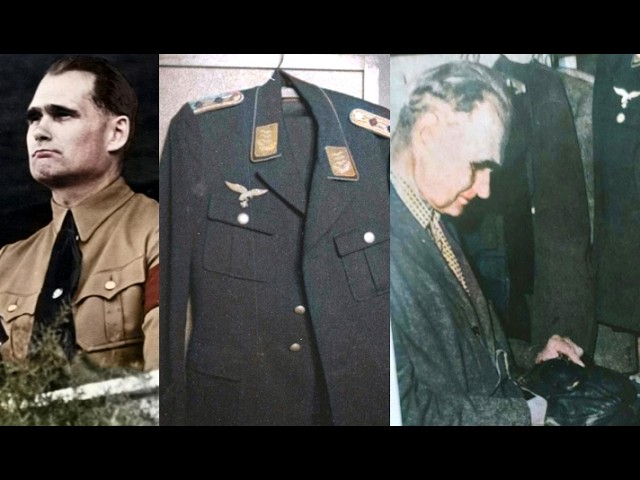
During the First World War, Hess earned the Iron Cross Second Class and the Bavarian Military Merit Cross. He was nominated for the Iron Cross First Class in 1918 but never received it. After being promoted to the rank of second lieutenant, he flew with Jagdstaffel 35b in a Fokker D.VII, although the war ended before he saw any aerial combat.
In the interwar years, Hess maintained his flying credentials. He obtained a private pilot’s licence in 1929 and purchased a BFW M.23b monoplane in 1930. He later acquired two more Messerschmitt aircraft during the 1930s. In October 1940, he began secret training on the twin-engine Bf 110 E-1, the aircraft he would use for his flight to Scotland the following year.
The Luftwaffe uniform Hess wore on that flight carried no military decorations, only the insignia of a captain. This detail has added to the intrigue surrounding the items.
After Hess’s death, the prison was being cleared for demolition when a British prison guard allegedly stole the leather flying suit, two leather flying helmets, and Hess’s dentures from the storage area. The guard, Stephen Timson, was 33 years old at the time. He attempted to extort money from Hess’s son, Wolf Rüdiger, demanding $280,000 for the return of the items and threatening to sell them to an American collector if his demands were not met.

Wolf Rüdiger reported the attempt to the police. German authorities set up a sting operation and arrested Timson at a hotel where he had gone to complete the deal. In April 1989, Timson received a suspended one-year prison sentence for theft and extortion. His brother-in-law, Paul Worman, was fined $1,200 for his role in the conspiracy.
The items were recovered and returned to the Hess family. Wolf Rüdiger Hess died in 2001 at the age of 63. What happened to his father’s belongings after that is unknown, though it is possible they remain with the Hess family.
But these items represent only part of the uniform. The fate of the Luftwaffe tunic and cap Hess carried with him is another matter entirely. The last British governor of Spandau Prison was Lieutenant Colonel Tony Le Tissier of the Royal Military Police. He later became a well-known historian, particularly regarding the 1945 Battle of Berlin.
Le Tissier claimed that he took the uniform and cap and burned them, along with other items from Hess’s cell, shortly after Hess’s death. He said he did this to prevent them from becoming neo-Nazi relics. However, given that Le Tissier was a historian, he would certainly have understood the historical significance of the uniform worn by Hess when he was captured in Scotland in 1941.
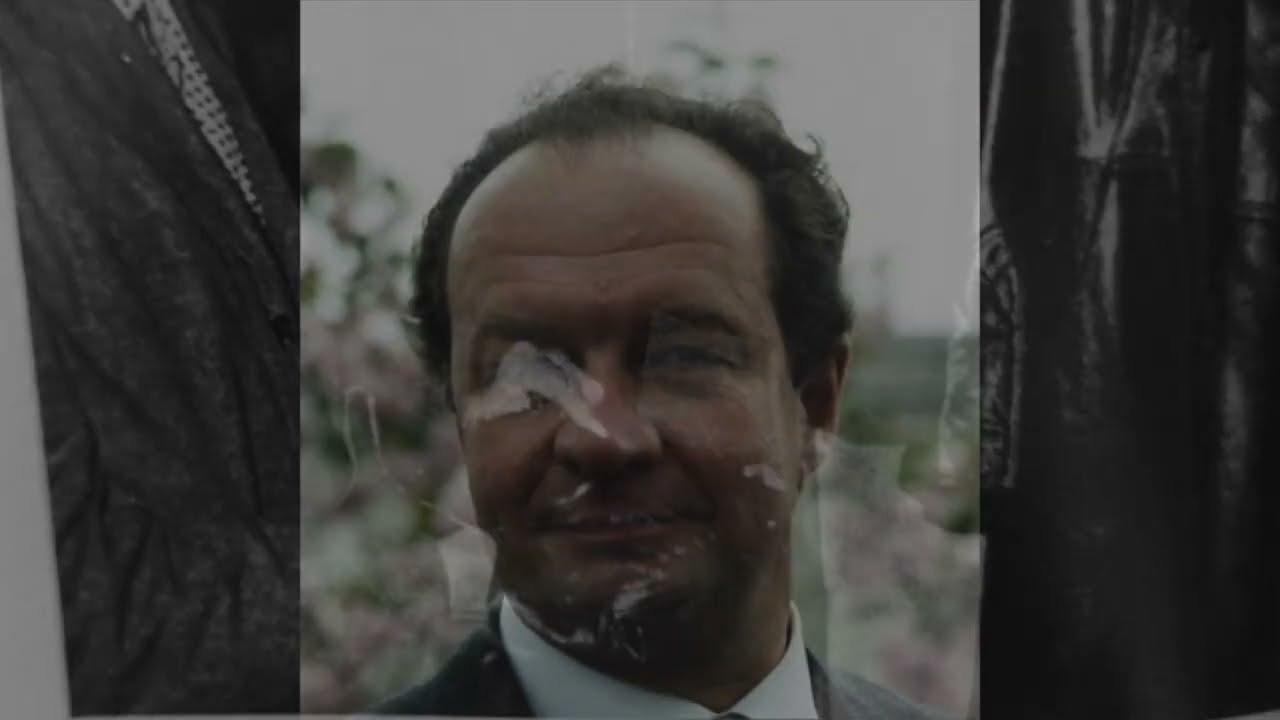
The destruction of such historically important and valuable material seems out of character for a man of his background. Le Tissier died in 2025 before he could be questioned further about this unusual claim.
Wolf Rüdiger Hess viewed his father’s death as highly suspicious, and he was also deeply concerned by Le Tissier’s actions. He wrote that the British prison director oversaw the immediate destruction of all conclusive evidence, referring to the summer house on the prison grounds where Hess died and the method of death, strangulation with an electrical cable.
These items were destroyed very quickly by the British, who also investigated the death. Along with the summer house and the cable found around Hess’s neck, Le Tissier admitted to burning Hess’s Luftwaffe uniform, side cap, and flying suit from 1941. This behaviour, which must have been ordered by a higher authority, has fuelled conspiracy theories surrounding the 1987 death.
A key theory suggests the British deliberately destroyed forensic evidence. Le Tissier strongly defended the official verdict that Hess had taken his own life. The question remains whether Hess’s Luftwaffe uniform was truly burned, or whether it was kept by British authorities or Le Tissier himself. It may still exist in some obscure archive, alongside other missing Nazi relics from the highest levels of the regime.