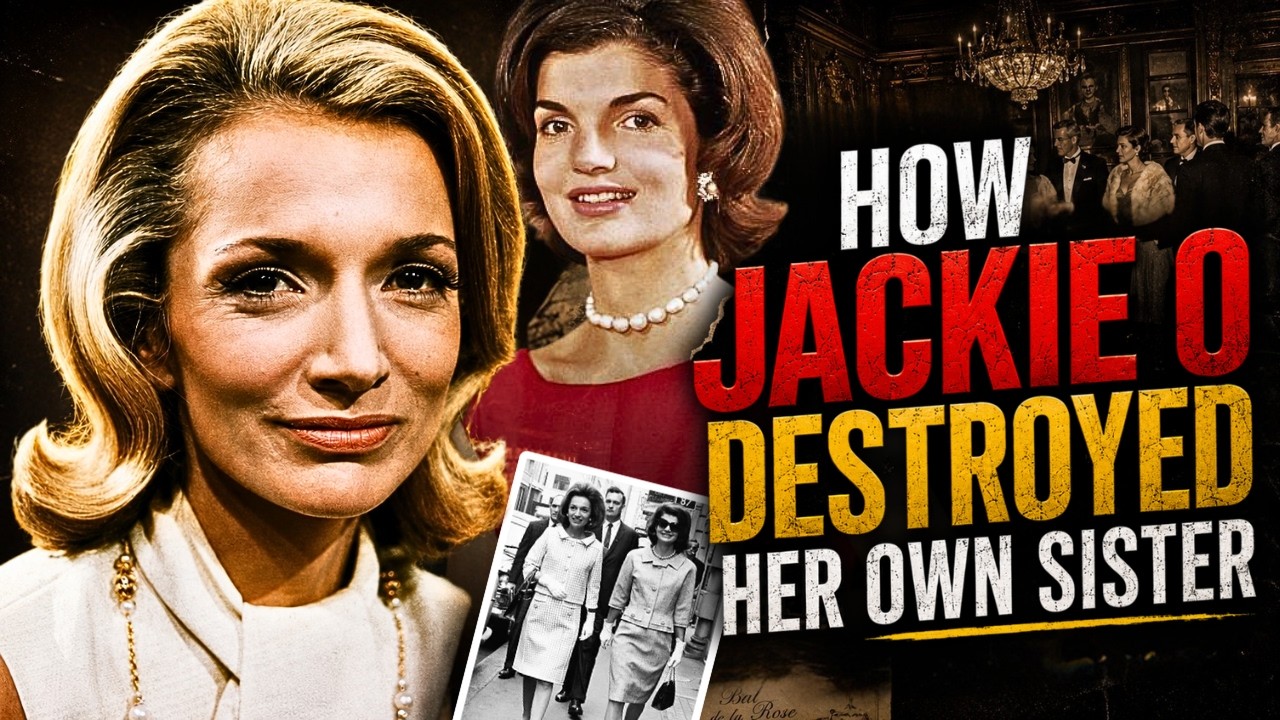
The public memory of Jacqueline Kennedy Onassis is often that of an American saint: a figure of grace, composure, and style. But for her younger sister, Lee Radziwill, the reality was far darker. Lee spent her life trying to build an identity of her own, while the shadow of her older sister loomed over every attempt. From childhood favoritism to a stolen billionaire, from financial ruin to a final, public humiliation in a last will and testament, the story of the Bouvier sisters is a bitter study in family rivalry.
Caroline Lee Bouvier was born on March 3, 1933, into a world that demanded perfection but was built on lies. In the 1930s, upper-class America ran on strict rules of wealth and lineage. The Bouvier family presented itself as the pinnacle of this society, living in a sprawling Park Avenue apartment and claiming direct descent from French nobility. Their father, John Vernou "Black Jack" Bouvier III, even owned a published family tree detailing their aristocratic origins and a royal coat of arms.
None of it was true. The Bouviers were actually descendants of ordinary, working-class French immigrants who had been shopkeepers and hardware dealers. Their mother, Janet Norton Lee, was also trapped in a false performance. She claimed connection to the prestigious Lee political dynasty of Maryland, desperately trying to hide the fact that her own ancestors were working-class Irish Catholic immigrants. In the harsh social hierarchy of New York, exposure meant social exile.
Lee was not just born into a wealthy family; she was born into a fiercely competitive environment. From a young age, she learned that appearances were the only currency that mattered. But the deepest tragedy of her early life came from her father. Black Jack Bouvier was a charismatic Wall Street broker and an alcoholic who viewed his children as mirrors for his own ego. He saw himself in his eldest daughter, Jacqueline, who inherited his wide eyes, strong jaw, and athletic build. He favored her openly and without mercy.
Lee, with her softer, finer features, took after her mother. In Black Jack’s eyes, this made her insignificant. He largely ignored his younger daughter, and when he did pay attention, it was to remind her that she did not measure up to her sister. This blatant favoritism inflicted a deep narcissistic wound. Lee was immediately cast in the role of the invisible child, always second in a two-person race.
If her father ignored her, her mother managed her with a suffocating precision. Janet was a cold woman obsessed with her public image and physical perfection. She constantly criticized Lee’s appearance, imposing strict diets from a young age and comparing her to other girls in their social circle. Lee learned early that she was inherently flawed. To survive, she developed an intense obsession with beauty. If she could not be the favorite daughter, she would strive to be the most perfect one.
In 1940, the toxic facade of the Bouvier marriage collapsed. Black Jack’s alcoholism and blatant infidelities became unbearable for Janet’s carefully crafted public image, and she filed for divorce. For seven-year-old Lee, the separation meant her father’s visits were limited to weekends. These visits became painful tests for his affection, tests that Jackie won easily every time.
Two years later, Lee’s reality shifted again. Janet married Hugh Dudley Auchincloss Jr., a wealthy heir to a Standard Oil fortune. Suddenly, nine-year-old Lee was uprooted from New York and thrust into a life of stunning, cold luxury. She moved between Merrywood, a sprawling 46-acre estate in Virginia, and Hammersmith Farm, a grand 28-room mansion in Rhode Island. But this new wealth came at a heavy psychological price. Lee found herself in a blended family of step-siblings and half-siblings, yet in a home full of servants and sprawling grounds, she never felt so isolated.
In this emotional vacuum, the competition between Lee and Jackie turned into a permanent, bitter war. They were the only two people who understood the chaos of their shared past, but instead of allying, they competed fiercely. Jackie dominated the academic and equestrian fields. Lee realized she needed a different weapon and chose fashion. She developed an exceptional, avant-garde taste that far surpassed her older sister’s. She did not use clothes just to dress; she used them to draw attention.
This silent rebellion exploded publicly in August 1947, at Jackie’s debutante ball at the Newport Country Club. High society rules dictated the debutante be the center of attention, usually in stark white, while younger sisters were expected to appear in quiet pastels. Fourteen-year-old Lee refused to play her part. She descended the stairs in a strapless, hot pink dress heavily encrusted with rhinestones. It was calculated psychological warfare. Every time a camera flashed, the eye was drawn from Jackie to the neon pink dress. Lee was visually declaring she would no longer be a supporting character.
However, her intense craving for the spotlight often backfired, highlighting her insecurities. In 1951, during a high-profile European tour with Jackie, 18-year-old Lee attended a formal dinner in Venice. Determined to impress a prominent international ambassador, she wore an elaborate, flashy dress designed for an older woman. In a sudden movement, the bodice of her ornate dress broke, and her slip fell completely in the middle of a refined European dining room. The ambassador looked away in embarrassment while a crying Lee had to leave the table. It was a harsh reminder that beneath her polished veneer, she was still a scared little girl trying to be seen.
By 1952, 19-year-old Lee felt completely trapped. She was highly educated and elegant, but suffocated. She realized she could not win in the Auchincloss household, could not outshine Jackie, and could not win her father’s love. In the 1950s, there was only one acceptable path for a woman to achieve immediate independence and a new identity: marriage. For Caroline Lee Bouvier, the early 1950s were not a time for romance but for strategy. She needed to achieve a major life milestone before her older sister.
She found her target in Michael Temple Canfield, a handsome publishing executive and Harvard graduate working in London. His real appeal lay in the scandalous rumors surrounding his birth. He was widely believed to be the illegitimate son of Prince George, Duke of Kent, and Kiki Preston, a notorious American socialite. For Lee, this uncertain royal lineage gave Michael an aura of aristocratic danger. They married on April 18, 1953. Lee was frank about her motives, later admitting to friends that deep love was not the primary driver. She wanted her own apartment, the status of a married woman, and the psychological victory of beating Jackie to the altar.
The marriage quickly soured. Lee had been raised on oil wealth and expected designer clothes, European travel, and fully staffed homes. Michael had a comfortable executive salary, but he simply could not afford the life Lee believed she deserved. They moved to London, where Lee indulged in high society, but the financial pressure was immediate and severe. Lee spent recklessly, accumulating huge debts at high-fashion houses. Michael turned to alcohol to cope with his demanding, dissatisfied young wife. The couple also faced fertility problems, suffering a series of miscarriages.
Five months after Lee’s wedding, her brief triumph evaporated completely. In September 1953, Jacqueline Bouvier married John F. Kennedy, the handsome, extremely wealthy senator from Massachusetts. The wedding was the social event of the decade, attended by over 800 guests. From her modest home in London, Lee watched her sister become the jewel of the most powerful political dynasty in the United States.
In a moment of despair, Michael Canfield asked Jackie for advice on saving his marriage. Jackie’s response stripped their relationship of any romance and revealed the cold pragmatism of the Bouvier women. She looked at her struggling brother-in-law and gave him one icy piece of advice: "Make more money, Michael. I mean real money." Canfield was not capable of making real money, and Lee was no longer willing to wait. Her attention had already turned to a man offering a different kind of power: Prince Stanislas Albrecht Radziwill, known as Stas.
Stas was a Polish nobleman, 19 years Lee’s senior, who had fled Poland during World War II. He had lost his inherited lands and family fortune but had rebuilt his life in London as a highly successful real estate investor. He was wealthy, seasoned, and, most importantly, held a title. When Lee met Stas, he was married for the second time, and Lee was still married to Michael. Neither let that stop them, and they began a secret, deep affair. For Lee, Stas represented everything she lacked. His title gave her a unique weapon in her silent war against Jackie. Jackie might marry an American politician, but Lee could become a European princess.
Marriage required navigating strict legal and religious hurdles. The Bouviers were Catholic, and Lee needed an annulment from the Church to marry Stas. The Kennedy political machine quietly went to work, using its extensive influence within the highest ranks of the Catholic Church. The annulment was granted with a speed and efficiency that demonstrated the immense, even frightening, power Jackie now wielded. Lee had to rely on her sister’s influence to secure her own freedom.
In March 1959, Lee married Stas Radziwill. They moved into a grand Georgian home steps from Buckingham Palace and bought a sprawling country estate. Lee gave birth to two children, Anthony and Tina. On the surface, she had achieved a stunning victory. She insisted everyone address her exclusively as Her Highness, Princess Caroline. She printed the Radziwill coat of arms on her stationery, her linens, and the doors of her cars. She hosted lavish dinner parties attended by British royalty and prominent artists.
But like the Bouvier family history, Lee’s new royal life was built on historical fiction and financial illusion. The title of prince was never legally recognized. The Second Polish Republic had officially abolished all noble titles in 1921. In the modern world, Stas was a regular British citizen and businessman, not a ruling monarch. More concerning was their financial reality. Stas was rich, but not generationally wealthy. They were living a billionaire lifestyle on a millionaire’s budget. To maintain the illusion, Stas dangerously overextended his real estate company. They borrowed heavily and lived on credit.
As the 1950s came to a close, Lee believed she had successfully insulated herself. She had her title, her properties, and her wealthy husband. She felt ready to stand as an equal to Jacqueline Kennedy. She was not prepared for what came next. In 1960, John F. Kennedy announced his candidacy for President of the United States. The ensuing campaign elevated Jackie to a level of global fame that shattered Lee’s fragile, expensive royal image.
On November 8, 1960, the ground shook under Lee Radziwill’s feet. John F. Kennedy defeated Richard Nixon to become the 35th President. At just 31 years old, Jackie became the First Lady of the United States. Overnight, the world’s attention turned to the Kennedys. They were young, brilliant, and ambitious. In the bright glare of this new American royalty, Lee’s carefully built European illusion simply dissolved. The Polish title, especially an unrecognized one, was worthless compared to the immense power of the White House.
The psychological impact on Lee was immediate. The lifelong sibling rivalry was over, and Jackie had won the grand prize. This explains one of the most notable absences in American political history. On January 20, 1961, John F. Kennedy was inaugurated. Jackie stood on the Capitol steps, becoming a global symbol. All of the Bouvier and Kennedy families were present. Lee was not. She stayed in London, citing the recent premature birth of her daughter, Anna Christina. While the premature birth was a fact, those close to the family understood the deeper, unspoken truth. Lee was physically capable of making the trip, but she could not bear the psychological torment of watching her sister be crowned queen of the modern world.
The Kennedy administration was impossible to ignore. Jackie’s face was on every magazine cover. The most frustrating and painful irony for Lee was that the world was praising Jackie for a skill that was actually Lee’s. The entire injustice revolved around fashion. In the public eye, Jackie Kennedy was hailed as the undisputed fashion icon of the 20th century. But behind closed doors, family, close friends, and fashion experts knew the real story: Lee was the true visionary. She possessed a sharper, bolder, more sophisticated taste. Jackie was practical by nature. It was Lee who understood the power of design and the hidden messages of haute couture.
When John Kennedy entered the White House, he issued strict directives regarding his wife’s wardrobe. He insisted the First Lady wear American designs. To satisfy the press, Jackie appointed American designer Oleg Cassini as her official style secretary. But Jackie craved the unmatched craftsmanship of Paris. She wanted Balenciaga. To get it, she needed a smuggler. She turned to her sister. Lee became the hidden engineer of the Camelot image. Operating from London and Paris, Lee acted as Jackie’s private fashion buyer. She would visit the ultra-exclusive showrooms of Hubert de Givenchy, select the most striking pieces, and secretly send them across the Atlantic to the White House. The bills were paid through secret third parties, often using the immense wealth of Jackie’s father-in-law, Joseph Kennedy, to hide the transactions from the American press.
The pinnacle of this secret collaboration came in May 1961 during the Kennedys’ historic visit to Paris. Jackie charmed the critical French public, speaking fluent French and wearing a stunning ivory silk Givenchy gown at a formal dinner at the Palace of Versailles. John Kennedy famously told the press, "I am the man who accompanied Jacqueline Kennedy to Paris, and I have enjoyed it." Lee was in Paris too. She helped orchestrate the success, but she remained in the shadows, unnamed.
The legendary British photographer Cecil Beaton, a close friend of Lee’s, documented this era. He noted a harsh truth: away from the cameras, Lee was objectively the more beautiful and striking of the two sisters. But the camera was fascinated with Jackie. She possessed an unusual, wide face that photographed perfectly. She had a magnetic, almost cinematic aura that Lee could never replicate on film.
This dynamic pushed Lee to a breaking point during the highly publicized goodwill tour of India and Pakistan in the spring of 1962. The trip was meant to be a diplomatic triumph, but for Lee, it was a prolonged psychological ordeal. When the motorcades wound through the dusty streets of New Delhi, millions of people lined the roads. They were not cheering for the princess; they were cheering for the First Lady. Lee was marginalized. In official photographs, she was often placed a few steps behind Jackie. At formal dinners, she was seated further down the table. In several instances, photo editors at major American magazines cropped Lee out of the pictures entirely, focusing only on Jackie. The public erasure was devastating.
Her resentment festered. In a frantic search for recognition and power, Lee looked outward. She needed someone who could rival the immense influence of the Kennedy machine. She found him in Aristotle Onassis. Onassis was a Greek shipping magnate, one of the richest and most ruthless men on the planet. He was also already deeply involved in a volatile, highly publicized relationship with the legendary opera singer Maria Callas. None of this stopped Lee. She engaged in a serious, quiet affair with the billionaire. For Lee, Onassis was an emotional lifeline. He commanded fleets of ships, politicians, and economies. When she was with him, she was the center of a powerful man’s world.
In the summer of 1963, tragedy struck the Kennedy family. Jackie gave birth to a son, Patrick Bouvier Kennedy, five and a half weeks prematurely. The infant suffered from severe respiratory distress and died after just two days. Jackie fell into a deep, paralyzing depression. Seeing her sister completely broken, Lee intervened. She contacted Onassis and proposed a solution: allow Jackie to use his legendary luxury yacht, the Christina, for a private, secure recovery cruise in the Mediterranean. Onassis agreed enthusiastically.
In October 1963, Jackie, Lee, and a small group of aides boarded the yacht. Initially, the trip achieved its goal. The warm Mediterranean sun and absolute luxury helped Jackie emerge from her darkest grief. But as the days passed, a sinister shift occurred in the social dynamics on board. Onassis was a man who coveted rare and powerful things. He had dated movie stars and opera legends, but he had never possessed an American First Lady. As he spent time with Jackie, he became fascinated. She was not just beautiful; she had a captivating aura of global dominance. She was the most famous woman in the world.
Right in front of Lee’s eyes, the tycoon’s attention shifted. He began to focus entirely on Jackie, catering to her every whim. Lee, who had initiated the trip and brought the billionaire to the table, was suddenly ignored on the very yacht she had arranged. The ultimate insult came at the end of the cruise. It was customary for Onassis to give lavish gifts to his departing guests. On the final night, he presented Jackie with a stunning piece of jewelry: a massive, intricate necklace of heavy gold set with brilliant diamonds and dark rubies. It was a museum-quality piece, a gift fit for an empress.
Then Onassis turned to Lee, the woman he had been having an affair with, the woman who had orchestrated the entire meeting. He handed her a small box. Inside was a set of simple, relatively cheap bracelets, the kind of trinket one might buy at a local tourist market. The disparity was not accidental. It was a calculated, cruel message. Onassis was declaring the new hierarchy: Jackie was the prize; Lee was entirely expendable. The shock of this orchestrated insult shattered whatever pride Lee had left. She was forced to smile, accept the modest gift, and watch her sister try on the diamonds.
When the yacht docked and the sisters returned to their lives in the late fall of 1963, the rift between them had widened and hardened. The resentment crystallized into a seething, silent enmity. This toxic atmosphere was rooted in one of the darkest, most guarded secrets in their family history. It is a rumor so damaging that historians and biographers still debate its exact details. The rumor involves an act of ultimate betrayal. According to Michael Canfield, Lee’s first husband, Lee had a brief, highly secret affair with John F. Kennedy before he became president. More horrifying than the affair itself is Canfield’s claim that Lee boasted about it in private circles.
If true, it requires deep psychological analysis. Why would a woman sleep with her sister’s husband, especially a man in the highest political office? For Lee, it was never about romance; it was about power. It was the ultimate means available to a marginalized sister to assert dominance. Since childhood, Jackie had taken everything: her father’s love, public adoration, historical legacy, and eventually, the attention of Aristotle Onassis. Lee’s affair with John Kennedy was a way to claim the one thing Jackie valued most. It was a desperate, destructive attempt to heal her narcissistic wounds. Whether the affair was fact or exaggerated boasting, the deep suspicion poisoned the air between the two women.
This toxic foundation was the reality they lived in when November 22, 1963, arrived. The assassination of John F. Kennedy in Dallas, Texas, stopped the world. For Lee, watching the news unfold from London, it triggered a complex psychological reaction. She immediately packed her bags and flew to Washington D.C., leaving behind a handwritten note expressing deep, sincere support for her sister. On the surface, she played the role of the grieving, beautiful sister perfectly. She moved into the White House and stood by Jackie throughout the grueling official funeral ceremonies.
Behind the closed doors of the White House family quarters, the atmosphere was entirely different. Grief did not bring the sisters together; it acted as a pressure cooker that finally blew the lid off decades of pent-up anger. Jackie was suffering from acute, undiagnosed PTSD. She was terrified, paranoid, and psychologically shattered. She could not sleep and paced the hallways at night, relying heavily on medication and alcohol to numb the paralyzing shock. In this atmosphere of absolute despair, Lee was asked to be a caregiver. She secretly hated every second of it. Lee bitterly complained to her inner circle about her sister’s behavior, describing the experience as hell. She showed a shocking lack of empathy for a woman who had just lived through a public nightmare.
The tension finally exploded in a violent physical altercation. During one of their many arguments in the narrow hallways of the White House, Jackie’s grief turned outward. In a fit of raw emotion and frustration, she lashed out and slapped Lee hard across the face. It was a physical manifestation of a lifelong grudge. The slap drew a line that could not be uncrossed. Lee realized that even in the darkest moment of tragedy, Jackie remained the center of the universe. The whole world was mourning for Jackie, consoling her, and cementing her legacy as a tragic historical heroine. Lee was once again just a supporting character holding the tissues.
Years later, Lee made a shocking confession about that period. She admitted that the death of John Kennedy, despite its tragedy, gave her a profound sense of liberation. The assassination destroyed the Kennedy machine that had kept her in the shadows. She was finally free from the oppressive rules of the White House. To reinvent herself, Lee convinced her husband Stas to spend more time in America. They bought a spacious, magnificent apartment on Fifth Avenue in New York City. Freed from the political constraints of Washington and the polite monotony of London, Lee threw herself into the heart of New York’s cultural elite.
She soon caught the attention of Truman Capote, America’s most famous, controversial, and brilliant writer at the time. He was known for his social climbing, collecting beautiful, wealthy, insecure women he called his "swans." Capote became obsessed with Lee. He recognized her deep, burning desire for fame in her own right. He told her what she had waited her whole life to hear: that she was more beautiful than Jackie, smarter than Jackie, and even compared her to the legend Audrey Hepburn. Capote’s flattery was a drug, and Lee became addicted.

Exploiting this, Capote urged Lee to do something bold, something Jackie could never do. He convinced her that her true calling was to be a serious actress. When Lee announced her intention to go on stage, her husband Stas was furious. In his aristocratic world, acting was a vulgar, working-class profession. He forbade it. But Lee, driven by Capote’s toxic encouragement and her own blind ambition, ignored him. In the summer of 1967, Lee made her highly publicized acting debut, starring as Tracy Lord in a stage production of "The Philadelphia Story" at the Ivanhoe Theatre in Chicago.
The pressure was immense. On opening night, the theatre was packed with critics, celebrities, and socialites. But the most notable sight of the evening was an empty seat. Jackie refused to attend. She offered no public support, no telegrams of encouragement, nothing. It was a devastating silent boycott. When the curtain rose, Lee’s lack of training was painfully obvious. She was paralyzed with stage fright, trembling so badly she could barely hold her props. Her voice was weak, and she moved stiffly. The critics were cruel. The morning papers destroyed her performance, calling it stiff, amateurish, and wholly unqualified.
Most people would have withdrawn. But Capote refused to let her quit. He used his immense influence to secure her a television contract. He wrote a script specifically for her, an adaptation of the classic mystery "Laura," to be broadcast nationally on ABC in early 1968. In a telling psychological move, Lee decided to drop her royal title for the broadcast. She was introduced simply as Lee Bouvier. She wanted to prove she could succeed on her own name alone. It did not work. When "Laura" aired, it was a critical and ratings disaster. The television critics were even harsher than the theatre critics. Her acting career was declared over before it began.
The consequences were severe. Stas was humiliated by the public mockery of his family. He threatened to seek full custody of their children if she did not abandon this foolish endeavor. In retrospect, friends and historians began to realize the bitter truth behind Lee’s theatrical disaster. Fashion designer Ralph Rucci provided a chilling perspective on Truman Capote’s role. Capote was not a supportive friend; he was a deceptive one. He possessed a wicked, sadistic streak. He knew exactly what he was doing when he pushed an untrained, insecure socialite onto the national stage. He did not want Lee to succeed; he wanted to watch her fail. He found a sick pleasure in taking a wealthy, spoiled woman who thought she was better than everyone and orchestrating her public downfall.
By the spring of 1968, Lee was exhausted. Her marriage to Stas was hanging by a thread. Her dream of becoming an independent star had completely evaporated. She retreated to her Fifth Avenue apartment to lick her wounds. She thought the worst was over. She did not know that her sister, watching quietly from afar, was preparing to deliver a knockout blow that would forever destroy what was left of Lee’s fragile world.
1968 was a crucible of violence and shifting power in the United States. For Lee, the year began as a period of quiet isolation. She was licking her wounds and trying to save her marriage. During this fragile period, she maintained her close, complex relationship with Aristotle Onassis. She had cooled their romance into a risky friendship, but she still viewed the billionaire as her own. He was her ally, the one piece on the global chessboard she had secured before Jackie.
Then came June 5, 1968. Robert F. Kennedy was assassinated in Los Angeles. The death of John Kennedy’s younger brother shattered whatever composure Jackie had left. The trauma of Dallas came rushing back, but this time it was coupled with absolute terror. Jackie became convinced there was a conspiracy actively targeting the Kennedy family. She looked at her two young children and made a cold, calculated decision. She believed staying in the United States was a death sentence. She needed an exit. She needed an impenetrable fortress, independent security, and unlimited financial resources. There was only one man on earth capable of providing that level of security. Jackie turned her sights on Aristotle Onassis.
What followed was one of the most secretive and ruthless negotiations in modern social history. Jackie and Onassis began coordinating quietly. They met in secret and discussed terms. Onassis saw the ultimate prize: securing the most famous, most revered woman on earth. Jackie saw a heavily armed private island, inexhaustible money, and an immediate exit from the United States. Throughout this high-stakes courtship, one person was kept entirely and deliberately in the dark: Lee Radziwill.
The cruelty of what happened next lay not just in the theft, but in the execution. Jackie knew exactly what Onassis meant to her sister. She knew Lee had brought him into their circle. Yet Jackie made no phone call to her sister to warn her. She offered no explanation and no apology. Jackie built a wall of absolute silence, allowing the marriage machinery to proceed without giving Lee a chance to prepare. In October 1968, the trap was finally sprung. Jackie did not deliver the news herself; she left that task to Onassis. The billionaire coldly informed Lee that he would be marrying Jackie in a few days on his private Greek island, Skorpios.
The psychological impact of this moment on Lee cannot be overstated. It was a suffocating, final blow to her sense of self. Nothing she owned was safe if Jackie wanted it. Her sister had taken their father’s attention, public admiration, and historical legacy. Now, in a stunning display of dominance, she reached out and took Lee’s most powerful ally. Publicly, Lee was trapped. The unwritten rules of aristocratic survival demanded absolute composure. She was forced to smile and issue polite, measured statements of congratulations. She even flew to Greece to attend the wedding on October 20, 1968. She stood in the rain on the island of Skorpios, watching her sister marry the man who used to shower her with attention. She played her part flawlessly, but behind closed doors, the mask shattered completely.
The betrayal sent her into a complete emotional breakdown. In the middle of the night, Lee picked up the phone and called Truman Capote. The writer later recounted the conversation, describing a woman on the edge of a mental collapse. Lee sobbed into the phone, screaming in pain, repeating one unanswerable question: "How could she do this to me? How could she do this to me?" The Skorpios wedding severed forever the thin, frayed bond that held the Bouvier sisters together. They continued to pose for photos at later events, maintaining a diplomatic, emotionless front for the cameras, but the sisterhood was over.
Stripped of her dignity, her lover, and her family loyalty, Lee underwent a radical psychological transformation. She looked at her life and realized a bitter truth: playing by the rules had gotten her nowhere. She had spent decades carefully cultivating the image of the perfect European aristocrat. She had married a prince, maintained high morals, and worn the finest clothes. What had these traditions protected her from? Nothing at all. If the rules of aristocracy offered no protection, Lee decided to discard them. As the 1960s turned into the 1970s, Lee Radziwill made a radical, shocking lifestyle change. She abandoned the rigid traditions of high London society and threw herself into the American counterculture. She transformed from a quiet lady into a bohemian icon.
She began spending her time in New York and Montauk, immersing herself in the world of modern art and loud, chaotic, drug-fueled rock and roll. She became a prominent figure at "The Factory," Andy Warhol’s famous silver-lined studio. Warhol was fascinated by her, seeing her as a piece of high-art pop culture, a tragic aristocratic figure who fit perfectly into his rebellious world. During this era of radical rebellion, Lee began a bold, public affair with Peter Beard. Beard was a wildlife photographer and a handsome, reckless adventurer, deeply rooted in the rock and roll lifestyle. The affair was a blatant rejection of the hidden betrayals of the past. She flaunted it before the world. She joined the Rolling Stones on their infamous 1972 American tour, traveling with them, drinking heavily, and indulging in a world of pure hedonism.
She rented a property in Montauk, a rugged, isolated beach town at the tip of Long Island. There, she threw sprawling, raucous parties for Mick Jagger, Warhol, and countless artists, writers, and hangers-on. She wore loose pants instead of formal suits. She let her hair grow. She walked barefoot on the beach. It was a desperate attempt to reclaim a sense of youth and absolute freedom by surrounding herself with artists who defied convention. But this radical lifestyle change came with an inevitable, heavy price.
Prince Stas Radziwill watched his wife’s public unraveling with a mixture of horror and coldness. He had tolerated her extravagant habits and survived the embarrassment of her acting career, but he could not and would not tolerate being publicly cuckolded by a bohemian photographer while his wife toured with a rock band. The marriage, strained for years by financial and emotional distress, finally collapsed under the weight of Lee’s rebellion. In 1974, Lee and Stas officially divorced. The legal dissolution of the marriage was not just the end of a relationship; it was the final loss of her last anchor. With the divorce, Lee officially lost her title of princess. She lost her properties in England. She lost the European royal protection she had fought so fiercely to obtain 15 years earlier.
At 41, Lee Radziwill found herself completely stripped. She was no longer a princess, no longer an actress. She was a stranger to her sister. She was a lost woman floating on the fringes of the 1970s pop art scene, trying to convince the world and herself that she was finally free. She did not yet realize that the real price of this freedom was imminent financial ruin.
By the mid-1970s, Lee Radziwill’s illusion was fading. She had given up her royal title and distanced herself from the suffocating rules of high society. She was living as a free, independent woman in New York. But this freedom was entirely superficial. Underneath the bohemian clothes and the late nights at Andy Warhol’s Factory, a harsh reality was waiting to catch up with her. Freedom, especially in the circles Lee moved in, required money, and Lee had none. Throughout her life, Lee had never earned a steady salary. Women of the Bouvier family were raised to marry wealthy men, not to build wealth. Her brief, disastrous acting career had yielded no financial independence. She relied entirely on the massive lines of credit provided by her ex-husband, Prince Radziwill, to fund her transatlantic lifestyle.
In July 1976, that safety net vanished. Prince Stas Radziwill died suddenly of a heart attack. He was 62. The initial shock of his death turned to sheer panic when accountants and lawyers opened his books. The public had always assumed the Radziwills possessed an immense, unassailable European fortune. The truth was fragile. Stas was a high-risk real estate investor who had borrowed millions against properties to fund new developments, constantly refinancing his debts to maintain cash flow. With his death, everything stopped. Creditors demanded immediate repayment. The final audit was shocking. The Radziwill estate was not just empty; it was drowning in debt. Stas died owing nearly $30 million. He was completely bankrupt. The sprawling country estates were liquidated. The London homes were sold to pay off bank debts. When the dust settled, nothing was left. The two children, Anthony and Tina, received no inheritance.
For Lee, the financial collapse was an immediate existential threat. She was 43, had no marketable skills, and her expenses for clothing, staff, and travel were exorbitant. She found herself facing total ruin. With no other options, Lee was forced to face the most humiliating situation of her life. She had to pick up the phone, swallow her pride, and beg her sister for money. Jacqueline Kennedy Onassis was now a widow for the second time. Having inherited a vast fortune of hundreds of millions of dollars after Aristotle Onassis’s death in 1975, Jackie had the power to instantly eliminate Lee’s financial anxiety. But Jackie did not hand her sister a blank check. She exploited the opportunity with calculated intelligence.
Jackie intervened and established carefully structured trust funds specifically designated to cover the education and living expenses of Lee’s children, Anthony and Tina. She paid off Lee’s urgent debts, but she did it on her own terms. Jackie controlled the lawyers, the trusts, and the purse strings. This financial rescue operation established a permanent, inescapable dynamic of dominance and submission. Lee was no longer just the less famous sister; she was a financial dependent. Every dollar spent on her children’s education was a silent reminder of Jackie’s absolute supremacy.
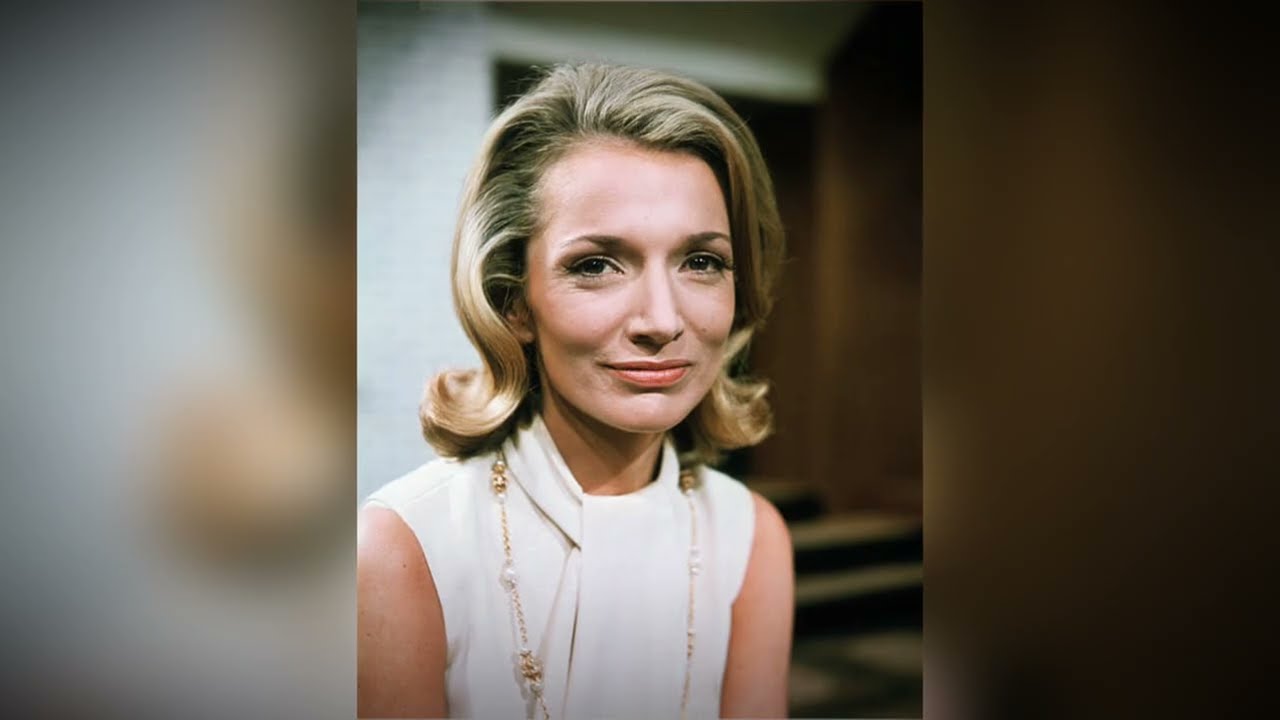
The psychological burden of living at the mercy of her bitter rival drove Lee to a state of deep despair. She needed to escape Jackie’s control. She needed her own source of wealth, and fast. She returned to the only survival strategy she knew: finding a wealthy husband. In 1977, Lee thought she had found her savior. His name was Newton Cope. Cope was a prominent, highly successful hotel magnate and real estate developer on the West Coast. He was robust, rich, and practical. For Lee, Cope represented a perfect escape. He offered immense wealth, a new location, and total financial independence from Jackie.
Their relationship moved quickly. By the summer of 1977, they were engaged. The wedding was to be held in San Francisco, an intimate, ultra-exclusive affair. The guests arrived. The champagne was chilled. The media was positioned outside the venue, ready to document the princess’s return to the altar. Then, exactly one hour before the ceremony was to begin, the wedding was abruptly cancelled. The official statement cited a sudden change of heart and irreconcilable differences, but the real story, which leaked out years later, was a chilling display of family manipulation.
The sabotage came directly from the Onassis camp. As the wedding date approached, Jackie had become heavily involved in the financial aspects of the marriage. Hours before the ceremony, Jackie’s powerful legal team contacted Newton Cope. They did not call to congratulate him; they called with a demand. The lawyers presented Cope with a harsh, non-negotiable prenuptial agreement drafted on Lee’s behalf. The document demanded Cope legally guarantee Lee a strict, irrevocable $20,000 per month for life, regardless of the length of the marriage. In 1977, this was an astronomical sum. Cope was a seasoned businessman. He was not opposed to prenuptial agreements, but he was disgusted by the aggressive, extortionate nature of the last-minute demand. More importantly, Cope suddenly realized the terrifying truth of the family he was about to marry into. He realized Lee was not the one running these negotiations. Lee was terrified. She was a puppet being manipulated by her older sister’s invisible hand. Angry and resentful at the ambush, Cope refused to sign. He cancelled the wedding immediately.
For Lee, the cancellation was a devastating public humiliation. She was forced to pack her bags and return to New York, single, broke, and utterly defeated. This moment cemented a bitter truth in her mind. Jackie would not even allow her to marry without exerting control. The accumulated weight of these failures—the loss of her title, the financial bankruptcy, the dependence on her sister, and the humiliating collapse of her engagement—finally broke Lee’s psychological resilience. She could no longer hide her pain behind high fashion or bohemian parties. Her nervous system was exhausted. She turned to the one coping mechanism that had always been present in the Bouvier family: alcohol.
As the 1970s turned into the 1980s, Lee’s drinking escalated from a social habit into a severe addiction. Alcohol was a highly effective anesthetic, dulling her constant anxiety about financial instability and masking the reality of her diminished social standing. But the physical and social cost was high. Lee, once known for her perfect discipline and sharp wit, became unpredictable. She would slur her speech at dinner parties and miss appointments. Her appearance, once considered a global standard of elegance, began to show the unmistakable signs of chronic addiction. In the cruel, high-society circles of New York, weakness was never tolerated. The invitations began to dwindle, and the whispers grew louder.
Jackie watched her sister’s decline with a mixture of cold calculation and familial obligation. Jackie was fiercely protective of the Bouvier-Kennedy reputation, and it was unacceptable for her sister to slide publicly into severe alcoholism. In 1981, Jackie decided to intervene, not with emotion or support, but with the precision and firmness of a military commander. Jackie personally arranged for Lee to attend Alcoholics Anonymous meetings in the Hamptons. The scene of this intervention perfectly encapsulated their relationship. Jackie drove Lee to the church where the AA meetings were held in the basement, but she did not go inside to support her sister. Instead, she sat outside in a chauffeured limousine, parked directly in front of the exit, acting as a guard. She sat there in the dark, watching the doors, making sure her sister would not try to escape the meeting.
For Lee, entering a basement full of strangers to admit her addiction was painful. But knowing her sister was sitting outside in a limousine, monitoring her sobriety, was a profound, suffocating humiliation. It was a stark power imbalance. Jackie, the immaculate, untouchable icon, was in the back seat of the car. Lee, the broken, dependent addict, was in the basement. Lee eventually managed to pull herself out of the darkest depths of her addiction. She settled her life, taking on some interior design projects for wealthy friends to earn a modest income. But the underlying desperation for a permanent shield of wealth remained.
In her mid-50s, Lee made one final, desperate attempt at security. In September 1988, she married for the third time. The groom was Herbert Ross, a wealthy, highly successful Hollywood film director known for massive commercial hits like "Footloose" and "Steel Magnolias." On the surface, it was a purely transactional arrangement. Ross was a self-made man who craved the elegance, lineage, and prestige of the Bouvier-Radziwill name on the East Coast. He wanted a velvet-class wife, while Lee wanted access to his vast bank accounts. They married in a private ceremony in New York, but the deal was flawed from the start.
Ross soon discovered that marrying Lee was a financial vortex. Lee lived in the illusion that she was still a crowned European princess, demanding a lifestyle that exceeded the budget of even a successful Hollywood director. She insisted on completely renovating his homes, spending vast sums on decorators, flying them across the country to change the color of a single wall, and refusing to travel on commercial flights. The marriage quickly turned into bitter, constant arguments over money. Ross complained to his Hollywood friends that Lee was systematically draining his assets. He felt he had bought a title, only to discover it was a bottomless pit of debt.
Meanwhile, Lee looked down on Ross’s Hollywood friends with obvious disdain. She clung fiercely to her aristocratic identity, even though she no longer had the legal right to use it. This tragic obsession with her former status reached a peak in a highly embarrassing, widely publicized incident in London. During a major royal performance, Lee caused a public scene over the seating plan. She discovered she had not been seated in the VIP section reserved for royalty. Furious and insulted, she blatantly breached protocol and literally stole the seat reserved for a young, up-and-coming actress named Julia Roberts. Lee sat down next to Prince Charles and refused to move. It was a stark, pathetic spectacle: a woman in her late 50s, married to a film director, publicly squabbling with a young actress over a chair near a prince. It was a desperate attempt to force the world to acknowledge a royal status she no longer possessed.
The incident deeply embarrassed Herbert Ross. It alienated his peers and proved how detached his new wife was from reality. The marriage was effectively dead. They lived entirely separate lives, bound only by legal papers and mutual resentment. As the 1980s came to a close, Lee Radziwill found herself stuck in another failed marriage, still struggling with financial instability, and still utterly unable to escape the dominant shadow of Jacqueline Kennedy Onassis. The final chapter of her life was approaching, and the harshest punishments were yet to come.
As the 1980s drew to a close, the turbulent saga of the Bouvier women entered its final chapter. The fierce competition for status, men, and media attention began to recede, replaced by the inescapable realities of aging and mortality. The first crack in the family foundation appeared in their mother, Janet Lee Auchincloss. Janet had spent her entire life managing a perfect public image. She had pitted her daughters against each other, favoring Jackie’s triumphs publicly while criticizing Lee mercilessly. But in her final years, Janet was stricken with Alzheimer’s disease. As her memory deteriorated and her grip on reality weakened, those rigid social constraints faded away. What emerged in their place was a wave of maternal guilt.
In a rare moment of lucidity, Janet made a shocking, secret financial move. She quietly transferred $750,000 directly to Lee. It was a huge sum, but its true value was purely psychological. For Lee, this was not just a bank deposit. It was an acknowledgment. It was a tangible, undeniable admission from her mother that the favoritism had been real all along. This confession validated Lee’s lifelong suffering. It proved she had not been imagining the imbalance. Her mother was trying to buy forgiveness for decades of emotional neglect. But a check could not change fifty years of history. The money gave Lee a temporary sense of financial relief, but it did not heal the wound. On the contrary, it highlighted the tragedy of their relationship. Janet died in 1989, taking her apologies to the grave, leaving her daughters with a legacy of unhealed bitterness.
Five years later, the decisive shift occurred. In early 1994, Jacqueline Kennedy Onassis, the untouchable icon of the 20th century, was diagnosed with non-Hodgkin’s lymphoma. The cancer was aggressive. By May 1994, it was clear the end was near. She was brought back to her Fifth Avenue apartment to die, surrounded by books, art, and her closest confidants. When Lee received the news, decades of fierce rivalry, stolen lovers, and cancelled weddings temporarily dissolved. Blood and shared history trumped the animosity. Lee went to Jackie’s apartment. She stood by the bed of the sister who had overshadowed her entire life. Witnesses recall Lee weeping openly. In those final hours, they were no longer the First Lady and the Princess. They were just two sisters who had survived a troubled, toxic childhood together.
On May 19, 1994, Jacqueline Bouvier Kennedy Onassis died at the age of 64. The world mourned the passing of a legend. Lee mourned the loss of her only sister. But that tender deathbed moment was about to be violently shattered by the cold reality of legal proceedings. Jackie was a woman who understood the power of narrative better than anyone. She had controlled her image brilliantly in life, and she was determined to control it after death. When her last will and testament was entered into public probate, it became a global news event. Jackie left behind a massive estate valued in the hundreds of millions of dollars. The will distributed her wealth generously to her two children, Caroline and John Jr., and left substantial sums to her personal staff, close friends, and longtime companion Maurice Tempelsman.
But when it came to her only sister, the will was starkly clear. Lee Radziwill’s name was deliberately excluded. Jackie did not just omit her sister; she added a definitive clause that the whole world would read. The will stated: "I have made no provision in this my Will for my sister Lee B. Radziwill, for whom I have already made provision during my lifetime." It was a masterpiece of posthumous public relations. In one sentence, Jackie cemented her legacy and destroyed Lee’s dignity. The wording was dry, polite, and utterly damning. It portrayed Jackie as the generous, patient older sister who had rescued her reckless sibling for decades. It portrayed Lee as a financial burden, a dependent who had finally been cut off. It was the ultimate punishment. Jackie knew her will would be published in every major newspaper in the world. She used her final legal act to publicly humiliate Lee one last time.
Historians and insiders viewed this decision not as a mere financial one, but as Jackie’s final, lasting revenge for Lee’s relationship with Aristotle Onassis, and perhaps for the dark rumors that still swirled about John F. Kennedy. Lee was completely shocked. She had assumed, given their touching reconciliation at the deathbed, that she would be treated with familial respect in the estate. Instead, she received a public slap from beyond the grave. She issued no statement. She simply withdrew, absorbing the humiliation in silence.
The exclusion of Lee Radziwill from the estate did not stop with Jackie’s will. The line was drawn, and the next generation enforced it with firmness. Two years later, in 1996, John F. Kennedy Jr. married Carolyn Bessette. It was the most closely guarded secret in the country. The ceremony was held on a remote island off the coast of Georgia. The guest list was tiny, limited to close, trusted family members. Lee, his aunt, the woman who had stood by him in the White House at the moment of his father’s assassination, was not invited. She was deliberately excluded from this landmark moment in her nephew’s life. The Kennedy-Bouvier machine had officially cast her out. She was no longer considered family.
But the true tragedy of Lee’s life was not the loss of money or social standing. The real catastrophe came in the summer of 1999. Lee’s son, Anthony Radziwill, was battling a rare and aggressive form of cancer. Anthony was the light of Lee’s life. He was a brilliant, kind, and highly successful television producer. He was also the close friend of his cousin, John F. Kennedy Jr. Despite the bitter, lifelong struggle between their mothers, Anthony and John loved each other like brothers. John had been a witness at Anthony’s wedding. They were inseparable. As the summer of 1999 began, Anthony’s health deteriorated rapidly. He was dying. Lee devoted every waking moment to caring for her son, aching over his dwindling strength.
Then, on July 16, 1999, the unthinkable happened. John F. Kennedy Jr.’s private plane crashed into the Atlantic Ocean, killing him, his wife Carolyn, and her sister Lauren. The sudden, violent death of his closest friend shattered whatever will to fight remained in Anthony. Just three and a half weeks later, on August 10, 1999, Anthony Radziwill died of cancer. He was 40 years old. Within a single month, the Bouvier family was devastated. For Lee, the loss of Anthony was a fatal emotional blow. Losing a son is the worst nightmare any parent can face. For Lee, it was her final, destructive stripping of identity. She had lost her sister to cancer. She had lost her nephew to the ocean. Now she had lost her son. All the wealth, all the titles, and all the frantic pursuit of social elevation in her youth meant nothing as she stood over the grave of her 40-year-old son.
The woman who emerged from the tragedy of 1999 was a ghost. In 2001, she officially separated from Herbert Ross, ending her third and final disastrous marriage. She withdrew completely from the spotlight. The era of Truman Capote, Studio 54, and White House fashion smuggling was over. She was a survivor stuck in a new century that no longer cared about the social rules she had spent her life trying to master. Lee spent the last two decades of her life in strict, quiet seclusion. She divided her time between Paris and a beautifully decorated apartment on the Upper East Side of Manhattan. She walked her dog. She gave very few interviews. When journalists did manage to get time with her, they were strictly forbidden from asking about Jacqueline Kennedy. If a reporter brought up her sister, Lee would stare at them with a cold, terrifying silence until they changed the subject.
She remained impeccably stylish until the very end. Even in her 80s, her figure was perfect, her hair flawless, her sunglasses hiding her eyes. She maintained the beauty armor she had built since childhood. Caroline Lee Bouvier Canfield Radziwill Ross died in New York City on February 15, 2019, at the age of 85. The tragedy of Lee Radziwill is not that she was forgotten, but that she was remembered in the way she always feared. She was a woman of undeniable intelligence, sharp wit, and a keen eye for elegance that quietly shaped the aesthetics of an entire American era. She had the courage to rebel, the charm to captivate the most powerful men in the world, and the toughness to survive unimaginable grief. But she spent her entire life running a race that was rigged from the start. In the end, Lee Radziwill fought a lifelong, exhausting war to escape the shadow of the crown, never realizing that the shadow was the one thing she could never outrun.