In November 1943, US Marines stormed the beaches of Tarawa, expecting a three-day battle. What they found instead was a nightmare that would last 76 hours and claim over 6,000 lives. But the real horror wasn't discovered until decades later, when investigators descended into the labyrinth of bunkers beneath the island.
What they found in those concrete tombs would rewrite everything we thought we knew about one of the Pacific War's bloodiest battles. 1,417 bodies, most of them Japanese. All of them trapped underground in a network of tunnels and bunkers that became both fortress and grave.
This is the story of what really happened beneath Tarawa, and why those men never made it out.
Betio Island, part of the Tarawa atoll, was barely 2 miles long and 800 yards wide. You could walk across it in 20 minutes. But in 1943, it was the most heavily fortified piece of real estate in the entire Pacific Ocean.
The Japanese knew Tarawa was strategically vital. Whoever controlled this tiny speck of coral controlled the shipping lanes to Australia and the approaches to the Marshall Islands. So they turned it into what they called an unsinkable aircraft carrier.
Admiral Keiji Shibasaki, commander of the Japanese forces, had 4,836 troops at his disposal. But more importantly, he had time, concrete, and a plan.
For over a year, the Japanese had been building. And they weren't building on the surface. They were building down.
The fortifications were unlike anything the Americans had seen before. Massive bunkers constructed from steel reinforced concrete, some with walls 5 feet thick. Coconut logs layered over the top for additional protection. Command posts built so deep that naval bombardment couldn't touch them.
But the most ingenious and terrifying feature was the tunnel system. Miles of interconnected passages linking hundreds of pillboxes, bunkers, and fighting positions. The Japanese had essentially built an underground city, a three-dimensional battlefield where they could move unseen beneath the island's surface.
Shibasaki was confident. He famously declared that the Americans couldn't take Tarawa with a million men in a hundred years. He had reason for such arrogance. The defenses were designed to withstand anything the US Navy could throw at them.
What Shibasaki didn't account for was what would happen when those tunnels became a trap instead of an advantage.
November 20th, 1943, 5:07 a.m. The pre-invasion bombardment began with a fury that shook the entire atoll. Battleships, cruisers, and destroyers unleashed thousands of shells on Betio. The barrage was supposed to last 3 hours. It lasted two and a half.
Military planners were confident. They believed nothing could survive what they'd just unleashed. They were catastrophically wrong.
At 8:30 a.m., the first wave of Marines hit the water in their Higgins boats. That's when the problem started. The tide was lower than expected, much lower. The landing craft couldn't clear the reef.
Marines had to wade through 700 yards of chest-deep water while Japanese machine guns tore them apart. The casualties were immediate and horrific. Some companies lost half their men before reaching the beach. The water turned red. Bodies floated in the lagoon.
The Marines who made it to shore found themselves pinned against a seawall with nowhere to go.
But here's what most people don't understand about Tarawa. The beach battle was only the surface. Literally.
As Marines pushed inland, they discovered the true nature of what they were fighting. The Japanese weren't just in pillboxes. They were everywhere and nowhere. Trap doors would open in the ground and grenades would fly out. Marines would clear a position, move forward, and then get shot from behind by soldiers emerging from tunnels.
The bunker system was a masterpiece of defensive engineering. Firing ports positioned for interlocking fields of fire. Reinforced positions that could take direct hits from tanks and keep functioning. And most critically, those tunnels allowing defenders to reinforce threatened positions or escape from ones about to be overrun.
Rear Admiral Shibasaki commanded from his bomb-proof headquarters bunker near the island's center. Through telephone lines running through the tunnels, he could communicate with every defensive position. He could shift troops underground to wherever they were needed most.
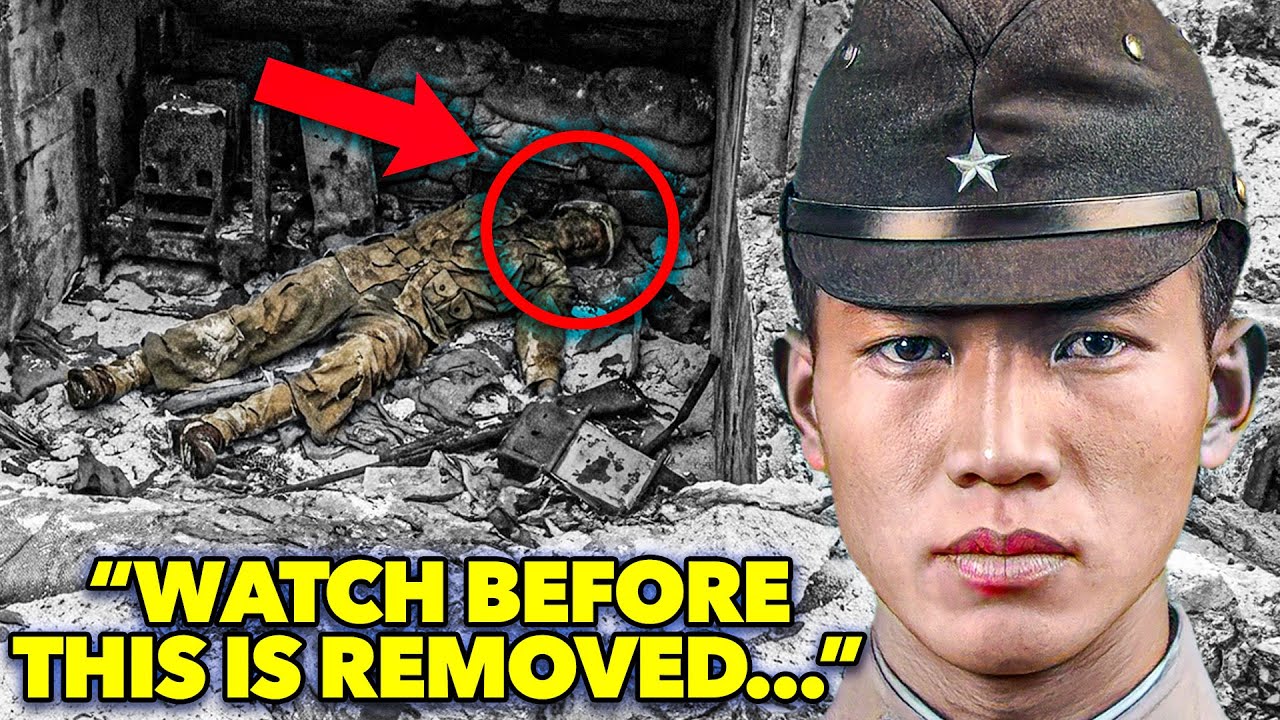
The Marines were fighting an enemy that could appear anywhere.
But on the morning of November 21st, something changed. American intelligence officers noticed that Japanese radio traffic had gone silent. Completely silent. Command and control seemed to have broken down.
What they didn't know was that Shibasaki's command bunker had taken a direct hit from a US Navy shell. The admiral and his entire staff were dead.
Suddenly, the sophisticated defense network had no brain. Individual positions kept fighting, but coordinated defense collapsed.
This should have been good news for the Marines. It wasn't. Because when the command structure fell apart, something worse happened in those tunnels.
As Marines fought bunker to bunker, they developed brutal tactics. Flamethrowers, satchel charges, pouring gasoline into ventilation shafts and lighting it. Some bunkers they sealed shut with explosives and bulldozers, entombing the defenders alive.
But the tunnel system created a horrifying problem. Cause and effect became separated by concrete and coral. When Marines attacked one bunker, they couldn't see what was happening in the connected tunnels. Explosions would collapse passages. Fire would consume oxygen from interconnected chambers. Smoke would funnel through the ventilation system, suffocating men hundreds of feet away from the actual combat.
One Marine flamethrower operator later described watching Japanese soldiers emerge from a bunker he'd just attacked, their uniforms on fire, only to disappear back underground. He assumed they'd gone back to die in the bunker.
What actually happened was far worse. Those burning men ran through the tunnels, spreading fire and panic before collapsing in chambers filled with their comrades.
The Japanese doctrine was to fight to the death. Surrender was not an option. When positions became untenable, defenders were supposed to mount banzai charges. But in the claustrophobic darkness of those tunnels, with smoke and fire everywhere and command structure destroyed, organization broke down.
Japanese soldiers found themselves cut off. Tunnel entrances sealed or collapsed. No orders coming through the phone lines. No way to know what was happening on the surface.
Some tried to escape through alternate exits and were shot down. Others stayed underground, waiting for orders that would never come.
The Marines didn't know how many Japanese were still down there. They couldn't know. Every time they thought they'd cleared a section, more soldiers would emerge from unexpected places. The island became a killing ground where death could come from any direction, including straight up from the ground beneath your feet.
By November 22nd, the third day of fighting, most of the organized resistance had been crushed. But the battle wasn't over. Isolated groups of Japanese soldiers trapped in their bunkers and tunnels continued fighting. Some positions held out for another full day.
And then there were the ones who never came out at all.
On the night of November 22nd into the 23rd, the last major Japanese counterattack came. It wasn't organized. It couldn't be. It was desperation. Around 300 Japanese soldiers, many of them already wounded, launched themselves at Marine positions in a final banzai charge.
They carried rifles, swords, even sharpened sticks. Many were shot down within seconds. The charge was suicide, and everyone involved knew it.
But this suicidal attack actually revealed something crucial. There were far fewer Japanese soldiers on the surface than the Marines expected. Estimates suggested at least 2,000 Japanese should still be fighting.
Where were they? Underground.
As the battle wound down and Marines began the grim work of securing the island, they started to understand the true scope of what had happened beneath their feet. Bunkers that had been sealed days earlier still contained live Japanese soldiers. Some positions had been bypassed in the chaos of battle and forgotten.

Marine engineers began the dangerous work of clearing the bunker system. What they found defied imagination.
In one large command bunker near the island's center, they discovered over 200 bodies. Some showed signs of combat wounds. Most didn't. They'd suffocated when an explosion sealed the ventilation system. The men had died in complete darkness, probably not even knowing the battle above them was over.
Another bunker contained evidence of a massacre that had nothing to do with American action. Japanese officers had executed their own wounded men rather than let them fall into enemy hands. The bodies were found with bullet wounds to the head, lined up in rows.
Some chambers contained Japanese soldiers who had committed suicide when escape became impossible. Grenades clutched to chests. Officers who had performed seppuku while their men watched.
But the most disturbing discoveries were the bunkers where men had simply been trapped. Tunnel collapses, blocked exits, sealed doors. These soldiers had survived the bombardment, survived the close combat, only to die slowly in the dark as their air ran out and their water supplies dwindled.
One tunnel entrance, when finally opened, released a smell so horrific that Marines vomited. Inside, they found 47 bodies in various states of decomposition. The men had clearly survived for several days after being trapped. Scratch marks on the concrete walls showed where they'd tried to dig their way out.
The initial casualty count for Japanese forces was 4,690 killed out of 4,836 defenders. Only 146 prisoners, most of them Korean laborers forced to work for the Japanese. A 97% death rate.
But that number would prove to be incomplete. Because many of the dead were never found. They were still down there, buried in collapsed tunnels or sealed in bunkers that would never be opened.
The Marines left Tarawa on November 28th. The island was secured. The butcher's bill was paid. 1,696 Americans dead. Another 2,101 wounded. The bloodiest 76 hours in Marine Corps history up to that point.
But the story of Tarawa's underground war wasn't over. In fact, it had barely begun.
For decades after the battle, Tarawa remained a remote backwater. The local population returned. Life went on. The battlefield became overgrown. Concrete bunkers weathered in the tropical sun.
And beneath it all, the dead remained.
In the 1970s and 80s, construction crews occasionally uncovered remains while digging. A skull here, some bones there. These were usually assumed to be individual casualties, buried by the battle's chaos. The remains would be reinterred in the local cemetery, and work would continue.
But in 2010, a nonprofit organization called History Flight began a systematic search for American remains on Tarawa. What they discovered would change everything we thought we knew about the battle.
Using ground penetrating radar and historical records, the team identified a site they believed contained American graves. When they began excavation, they found something unexpected. A large bunker complex that had been completely buried by post-war construction. The entrance had been sealed with coral fill decades earlier.
When they finally breached the seal and entered the complex, the smell hit them immediately. Even after 67 years, the odor of death lingered in the stale air.
The first chamber contained skeletal remains of 27 Japanese soldiers. They were positioned throughout the room in ways that suggested they'd been alive when the bunker was sealed. Some near the entrance as if they'd been trying to dig out. Others slumped against walls.
One skeleton was found with its hand still gripping a telephone handset, frozen in the moment of trying to call for help that never came.
But this was just the beginning. The bunker complex was far larger than anyone had realized. Multiple chambers connected by narrow passages. As the team explored deeper, they found more bodies, then more, then more.
In one chamber, they discovered what appeared to be a field hospital. Medical supplies scattered everywhere. Bloody bandages still clinging to bones. The wounded and their caretakers all trapped together when the entrance collapsed.
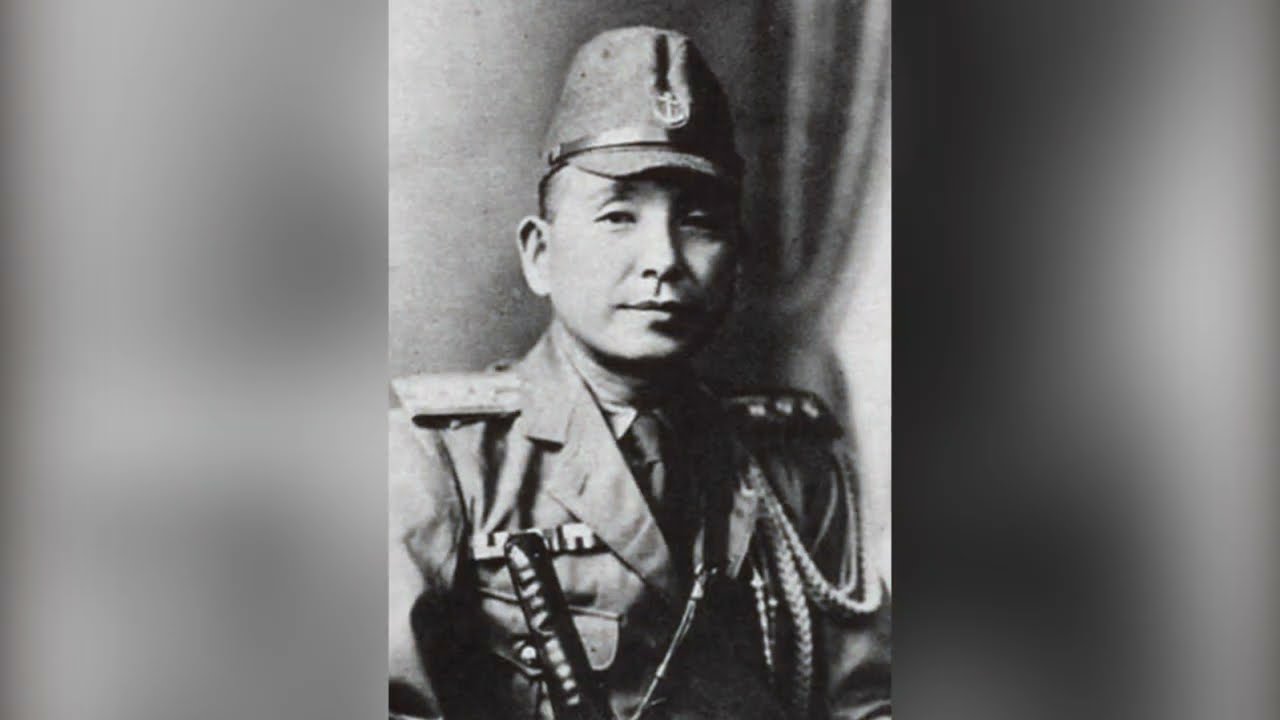
Another passage led to what must have been an ammunition storage room. Thousands of rounds of small arms ammunition, mortar shells, grenades, all surrounded by the remains of the soldiers who died guarding it.
The deepest chamber, nearly 40 feet underground, contained the most haunting discovery. A large group of remains positioned in formation as if the men had lined up for roll call. In the center, a single skeleton in a seated position, distinguished by remnants of an officer's uniform.
They'd maintained military discipline to the very end, even as they suffocated in the dark.
As excavation continued over the following years, more bunker complexes were found. Each one told a similar story. Men trapped, men dying slowly, men whose last moments were spent in darkness, knowing they would never leave.
By 2019, History Flight and other organizations had excavated 17 major bunker complexes on Betio. The number of Japanese remains recovered was staggering. 1,417 individuals.
But here's what makes this number so significant. These weren't casualties of combat. These were men who survived the battle's initial fury only to die in the aftermath, trapped in sealed bunkers, suffocated by fires burning above them, cut off from air and water with no way out.
The original casualty count of 4,690 had been based on surface recovery after the battle. Bodies that could be found and counted. But the Marines who secured Tarawa never knew about the hundreds of men dying slowly in sealed bunkers beneath their feet. Never knew about the tunnel collapses that had entombed entire squads. Never knew that the war underground continued long after the surface battle had ended.
When you add these 1,417 newly discovered remains to the original count, the total rises to over 6,100 Japanese dead. The actual death rate wasn't 97%. It was 99.7%. Out of 4,836 defenders, only 146 survived. Everyone else died on that island or beneath it.
The excavations also revealed why post-battle counts had been so inaccurate. Entire sections of the tunnel network had collapsed during the fighting. The Marines conducting initial casualty assessments simply didn't know these sealed sections existed. They counted the bodies they could find and assumed that was everyone.
For the Japanese families who lost loved ones on Tarawa, these discoveries brought both closure and new pain. After 70 years, they finally knew what happened to their grandfathers, great uncles, and fathers. But the truth was harder than the unknown.
These men hadn't died in glorious battle. They'd died slowly in the dark, forgotten by history, until ground penetrating radar found them seven decades later.
The recovery teams treated each set of remains with respect, regardless of nationality. Japanese and American dead, all handled with the same care. Many remains were eventually repatriated to Japan for proper burial.
But the excavations also revealed something else. There are still more bunkers down there, more chambers yet to be opened, more dead yet to be found. The current estimate suggests at least 200 to 300 more Japanese remains are still buried in unexplored sections of the tunnel network.
Tarawa's underground war claimed its last victims in 1943, but it's still giving up its dead today.
The Battle of Tarawa taught the US military crucial lessons about amphibious assault. Better naval bombardment techniques. Improved landing craft that could clear reefs. More effective tactics for bunker warfare. These lessons saved thousands of American lives in later battles.
But those 1,417 bodies found in Tarawa's bunkers tell a different story. They remind us that the true cost of war isn't always visible. That some casualties don't appear in the initial count. That men can die long after the shooting stops. Their fate sealed by events they couldn't control and choices they didn't make.
Admiral Shibasaki was right about one thing. His fortifications were nearly impregnable. Those bunkers withstood everything the US Navy threw at them. But he didn't anticipate that his greatest defensive achievement would become the tomb of his entire command.
The tunnel system that was supposed to make Betio impregnable instead ensured that almost no one left alive. The very thing meant to save them killed them. The fortress became a grave.
Today, Betio Island is home to about 15,000 people. They live and work above one of the Pacific War's largest mass graves. Most are aware of what lies beneath their feet. Some construction is prohibited in certain areas because of what's still down there.
Occasionally, someone will find a rusted helmet, a bone fragment, a piece of uniform. Reminders that the war hasn't truly ended for those still buried in the tunnels.
1,417 bodies found. 200 to 300 still missing. Each one a man who went into the darkness and never came out. Each one a soldier who survived the most intense 76 hours of combat in Marine Corps history, only to die alone in a sealed bunker, waiting for rescue that would never come.
That's what really happened underground at Tarawa. And that's why, 80 years later, we're still finding the dead.