The final shots of the Civil War had barely faded into history when the fate of the Confederacy’s most celebrated military minds began to diverge in dramatic and unexpected ways. The surrender at Appomattox Courthouse in April 1865 did not simply end a bloody four-year conflict; it launched a new, often turbulent chapter for the generals and politicians who had led the Southern rebellion. While some faced imprisonment, exile, and financial ruin, others navigated the treacherous waters of Reconstruction to reclaim positions of power and influence, leaving a complex and contested legacy that continues to shape the American narrative.
The most prominent figure to face the immediate wrath of the Union was Jefferson Davis, the Confederacy’s only president. As Union forces shattered Confederate lines in late March 1865, Davis and his cabinet fled the burning capital of Richmond, racing southward in a desperate attempt to rally remaining troops. Their flight ended in Irwinville, Georgia, where Union cavalry captured the president and his party.
 Davis was transported to Fort Monroe, Virginia, where he was held in a damp casemate cell, shackled in heavy irons and isolated from the world, with only a Bible for company. The harsh conditions sparked public outrage, and by September 1866, he was moved to more comfortable quarters within the fortress, where he was reunited with his wife, Varina.
Federal prosecutors sought to make an example of Davis, initially considering charges related to the assassination of Abraham Lincoln or the atrocities at Andersonville prison. However, lacking solid evidence, they ultimately settled on a charge of treason. Davis’s legal team mounted a formidable defense, arguing that he could not betray a country to which he no longer owed allegiance, as Mississippi had seceded from the Union.
The case was a legal quagmire, and Davis was released on bail in 1867. He faced what many considered his harshest ordeal yet: exile. He joined his children in Canada, where he remained for about a year before President Andrew Johnson’s Christmas pardon in 1868 allowed him to return home.
Back in the United States and financially ruined, Davis declined several lucrative offers, including teaching positions at Randolph-Macon College and the University of the South, fearing his controversial reputation would harm those institutions. He attempted business ventures in Britain and France, but found no success. He turned down numerous speaking invitations, making a single notable exception to deliver the eulogy at the funeral of his old comrade, Robert E.
Lee. In 1870, he became president of the Carolina Life Insurance Company, only to resign three years later when the Panic of 1873 bankrupted the firm. His fortunes changed in 1877 when he moved to Beauvoir, a Mississippi estate owned by Sarah Dorsey, who offered to help him write his memoirs.
When Dorsey died in 1879, she left the property to him, and Davis lived there quietly until his death in 1889 while on a trip to Louisiana.
Davis’s post-war life was a stark contrast to that of his vice president, Alexander H. Stephens. Despite holding the second-highest office in the Confederacy, Stephens had been a vocal opponent of secession and frequently clashed with Davis over policy.
 After the war, he was arrested for treason and spent five months in prison. He was elected to the U. S.
Senate in 1866, but was barred from taking his seat due to the restrictions placed on former Confederates. Undeterred, Stephens channeled his energy into writing a two-volume history of the war, in which he vigorously defended secession and blamed the conflict on Northern aggression. His political rehabilitation was swift and remarkable.
In 1873, he won a seat in the U. S. House of Representatives, where he served for four consecutive terms.
In 1882, he was elected Governor of Georgia, but his tenure was tragically short, as he died just four months into his term.
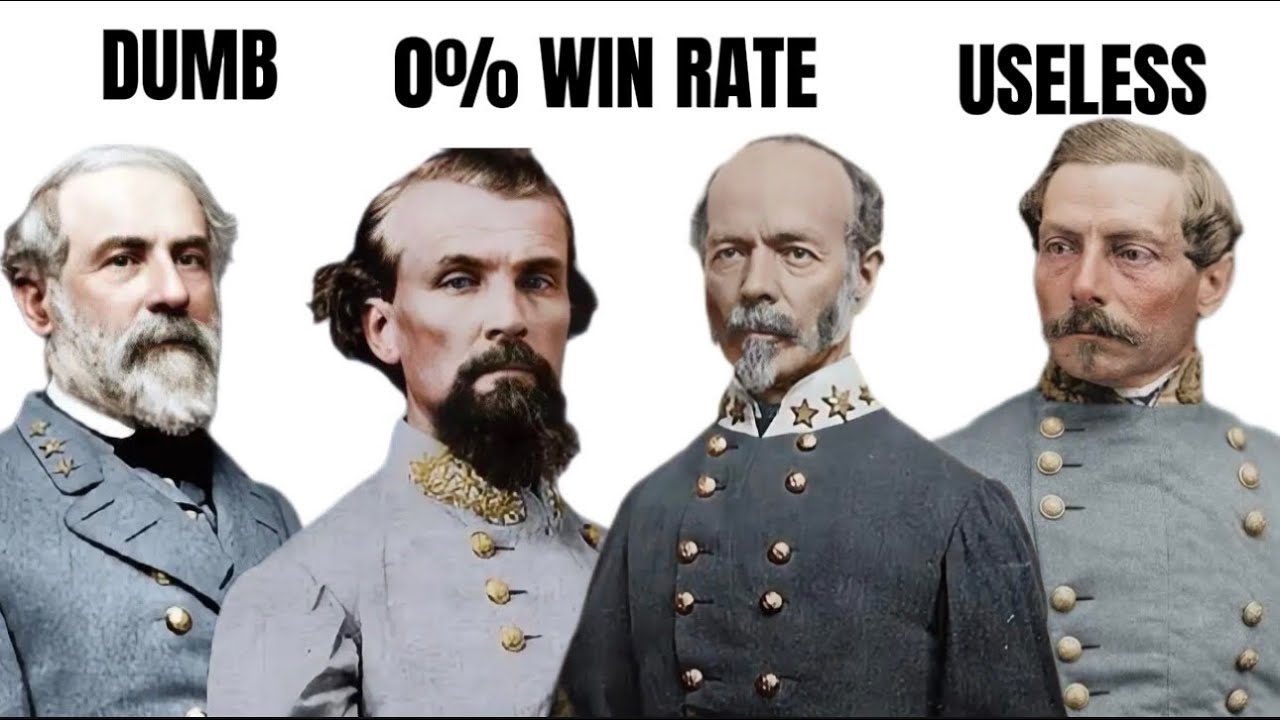
The most iconic figure of the Confederacy, Robert E. Lee, faced a surprisingly lenient post-war reality. After surrendering his Army of Northern Virginia to Ulysses S.
Grant, Lee was never imprisoned or tried. He suffered only the temporary loss of voting rights and the seizure of his family’s estate, which would later become Arlington National Cemetery. Lee publicly urged all remaining Confederate soldiers to lay down their arms and accept the war’s outcome.
 For the rest of his life, he championed reconciliation over bitterness, even supporting free public schooling for African Americans, though he opposed the 15th Amendment. He accepted the presidency of Washington College in Lexington, Virginia, a role he used to heal old wounds. He actively recruited students from the North and ensured they were treated with respect by their Southern peers.
In a powerful gesture of unity, Lee even met with his former adversary, President Ulysses S. Grant, at the White House in 1869. He largely withdrew from political life, quietly supporting a few Democratic candidates but never seeking office himself.
His life was cut short on September 28, 1870, when he suffered a stroke just five years after Appomattox. He died two weeks later and was laid to rest on the grounds of Washington College, which would later be renamed Washington and Lee University in his honor. Lee’s legacy as a brilliant commander and a symbol of Southern honor was cemented, though it remains a subject of intense debate in the modern era.
Another top commander, Joseph E. Johnston, had a more successful post-war career than many of his peers. A brilliant strategist, Johnston’s military record was often overshadowed by his bitter feud with President Davis.
After the war, he built a successful career in the railroad and insurance industries and even served a single term in the U. S. House of Representatives.
He maintained lifelong friendships with Union generals Grant and Sherman, a testament to the bonds forged on the battlefield. Johnston’s death was as poignant as it was ironic. He died of pneumonia just ten days after standing bareheaded in the pouring rain at Sherman’s funeral, a final act of respect for a man he had come to admire.
 The post-war paths of other Confederate figures were far more controversial. Nathan Bedford Forrest, a wealthy plantation owner and slave trader before the war, became one of the Confederacy’s most feared cavalry commanders. He was implicated in the massacre of surrendering Union soldiers, many of them African Americans, at Fort Pillow.
Two years after the war, Forrest became the first Grand Wizard of the newly formed Ku Klux Klan, a terrorist organization that used violence to suppress Black voters. Disgusted by the group’s brutality, he eventually quit. In a remarkable turn, he later entered politics and began advocating for Black civil rights, demanding harsh punishment for whites who committed violent crimes against African Americans.
He died at home in Tennessee in 1877 from complications of diabetes.
Stonewall Jackson, Lee’s right-hand man, was the only general on this list who did not survive the war. His death was a tragic case of friendly fire. On May 2, 1863, while returning to camp after a successful night attack at the Battle of Chancellorsville, Jackson and his men were mistakenly fired upon by their own troops, who believed they were Union cavalry.
Jackson was hit multiple times and died eight days later from complications, including pneumonia. His death was a devastating blow to the Confederate cause and robbed the South of its most audacious battlefield leader.
George Pickett, forever remembered for the disastrous and bloody charge at Gettysburg that bears his name, fled to Canada after the war, fearing arrest. He returned to Virginia at the urging of Ulysses Grant, but was denied a chance to rejoin the U. S.
Army. He tried his hand at farming and then settled into the insurance business. He died in 1875 at the young age of 50, his legacy forever tied to the single most catastrophic assault of the Civil War.
The divergent fates of these men paint a complex picture of a nation trying to stitch itself back together, where former enemies could become friends, and where the architects of a failed rebellion could either face ruin or rise again to shape the future.